
![[IPWatchdog Logo]](https://ipwatchdog.com/wp-content/themes/IPWatchdog%20-%202023/assets/images/temp/logo-small@2x.png)

 1
1 “Comments from the Second Circuit panel of judges during oral argument appear to suggest the court’s desire to reach a decision that carefully balances protecting artistic expression against trading on the goodwill associated with another’s marks to market one’s own goods.”
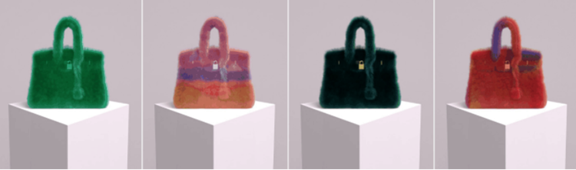 On October 23, 2024, the U.S. Court of Appeals for Second Circuit heard oral argument in Hermès Int’l et al. v. Rothschild, an appeal brought by Rothschild that challenges the jury’s February 2023 verdict and certain related legal rulings made by the U.S. District Court for the Southern District of New York. This case will undoubtedly impact the ability of third parties to use a brand’s trademark in artistic endeavors or the ability of brands to restrict the use of their trademarks by third parties, or both. Based on comments from the panel of judges during the October 23, 2024, oral argument, it appears that there are more questions than answers.
A Brief History
In early 2022, Hermès sued Sonny Estival (aka Mason Rothschild), the creator of NFT-linked digital images referred to as “MetaBirkins” that portrayed fur-covered versions of Hermès’ famous Birkin bag. The lawsuit was brought in the U.S. District Court for the Southern District of New York. The jury found that the MetaBirkins creator was liable for trademark infringement and dilution, and cybersquatting, and that he is was not shielded by First Amendment protections that apply to artistic and non?explicitly?misleading works because his MetaBirkins created a likelihood of consumer confusion and were intentionally designed to mislead the public into believing that Hermès was associated with MetaBirkins. The jury awarded Hermès approximately $133,000 in damages. Rothschild appealed the jury’s verdict and certain legal rulings made by the District Court to the Second Circuit Court of Appeals.
Rothschild’s Arguments on Appeal
Rothschild argues that the District Court Judge Rakoff erred in his application of the Second Circuit’s Rogers v. Grimaldi test (the “Rogers” test). Specifically, Rothschild claims Judge Rakoff improperly focused on Rothschild’s intent to profit from Hermès’ goodwill and refused to dismiss the case based on Hermès allegation that Rothschild “entirely intended to associate the ‘MetaBirkins’ mark with the popularity and goodwill of Hermès’ Birkin mark, rather than intending an artistic association.” Rothschild also claims that “there has never been any plausible allegation, let alone evidence, that Rothschild’s use of the MetaBirkins title was explicitly misleading.” Under the Rogers test, an unauthorized use of a trademark owner’s mark is protected under the First Amendment if the unauthorized use is: (1) an artistic expression, and (2) does not explicitly mislead consumers.
Rothschild further argues that based on the U.S. Supreme Court’s decision in Dastar v. Twentieth Century Fox, trademark law does not apply to intangible goods like NFTs and, as a result, Hermès’ claims of trademark infringement are not legally viable.
Hermès’ Counter Arguments
Hermès’ counters that Rothschild’s use of the Birkin mark was “explicitly misleading” and, as a result, falls outside the protections provided by Rogers.
Hermès further argues that Rothschild’s use of the “MetaBirkins” name as the brand for his NFTs is an example of source identification. Citing the U.S. Supreme Court’s ruling in Jack Daniel’s Properties v. VIP Products LLC, which clarified that the Rogers test does not apply when trademarks are used for source identification, Hermès further argues that Rogers does not apply to Rothschild’s MetaBirkin because Rothschild’s use of the Birkin mark “was not simply part of an artistic work but instead functioned as a brand.”
The Second Circuit’s Comments
Comments from the Second Circuit panel of judges during oral argument appear to suggest the court’s desire to reach a decision that carefully balances protecting artistic expression against trading on the goodwill associated with another’s marks to market one’s own goods. In this context, the panel made numerous comments.
For example, on one hand, one judge asked, “[w]asn’t there significant evidence that Rothschild was trying to take advantage of Hermès’ goodwill”? Another judge, on the other hand, queried, “say there is a painting that exalts the Rolls Royce, and its title is ‘Rolls Royce,’ how does that work survive a trademark infringement challenge? Would the artist be trading on the good will of the [Rolls Royce] mark?” If so, “there could be no circumstance in which an artist makes a work of art whose basis is to comment on some famous thing in commerce that is trademarked.” In another example, the panel asked, “[w]hat does it mean to use [another’s] mark in a non-source identifying way?”
Remaining comments from the panel focused on what legal standards should apply in the present and future cases. For example, is an alleged infringer’s “intent” relevant to a Rogers test analysis? At least one judge said it does not apply. And, relatedly, does the “”explicitly misleading” prong of the Rogers test require a Polaroid factor analysis? At least one member of the panel further commented that the Supreme Court’s decision in Jack Daniels “doesn’t say what to do if Rogers does not apply.”
In sum, the Second Circuit’s decision in Hermès Int’l et al. v. Rothschild is likely to have far reaching effects on the extent to which third parties can use the trademarks of luxury and similarly well-known brands as a source of inspiration in their own “creative” endeavors.
![[Advertisement]](https://ipwatchdog.com/wp-content/uploads/2026/09/MarqVision-Oct-6-2026-sidebar-700x500-1.jpg)
![[Advertisement]](https://ipwatchdog.com/wp-content/uploads/2026/10/IP-Copilot-Oct-13-2026-sidebar-700x500-1.jpg)
![[Advertisement]](https://ipwatchdog.com/wp-content/uploads/2026/10/Junior-Oct-15-2026-sidebar-700x500-1.jpg)
![[Advertisement]](https://ipwatchdog.com/wp-content/uploads/2026/09/WE-BUY-PATENTS-SIM-IP-Ad-1-revised-on-Sep-28-2026-700x500-1.jpg)
![[Advertisement]](https://ipwatchdog.com/wp-content/uploads/2026/09/Life-Sciences-2026-sidebar-early-bird-date-corrected-700x500-1.jpg)
![[Advertisement]](https://ipwatchdog.com/wp-content/uploads/2024/09/Patent-Prosecution-Training-sidebar-700x500-2025-03-27.jpg)






![[Advertisement]](https://ipwatchdog.com/wp-content/uploads/2021/12/WEBINAR-336-x-280-px.png)
![[Advertisement]](https://ipwatchdog.com/wp-content/uploads/2021/12/Ad-4-The-Invent-Patent-System™.png)





Join the Discussion
One comment so far.
Yenrab
November 20, 2024 02:02 pm“Birkin” is itself primarily merely a surname, and the Birkin Bag was named for a specific person, Jane Birkin. Has the Birkin Bag acquired secondary meaning, and if so was that something they offered proof of? Doesn’t that throw a monkey wrench into the already messy question?