
![[IPWatchdog Logo]](https://ipwatchdog.com/wp-content/themes/IPWatchdog%20-%202023/assets/images/temp/logo-small@2x.png)

 0
0 “Noting the issues at play in Twitter [v. Taamneh], the ISPs contend that the Fourth Circuit’s contributory liability standard could create effects across all torts, not just copyright infringement.”
 Last week, amicus briefs were filed with the U.S. Supreme Court by music publishers and Internet service providers (ISPs) seeking to support competing petitions for writ of certiorari challenging different aspects of the U.S. Court of Appeals for the Fourth Circuit’s ruling on secondary liability in the billion-dollar copyright infringement case between Sony Music Entertainment and Cox Communications. If the Supreme Court grants either or both of the petitions, it could result in the Court’s greatest foray into indirect liability in the digital copyright infringement context since its 2005 ruling in MGM Studios v. Grokster.
Music publishers including Sony, Arista Records, Warner Music and Universal Music Group filed copyright claims against Cox in July 2018, alleging that Cox was liable for the infringement of 10,017 musical works that were illegally distributed by the ISP’s subscribers. A jury verdict entered in late 2020 found that Cox had both vicarious liability and contributory liability, leading to a $1 billion damages verdict against Cox after damages were increased for the jury’s willfulness finding. This February, the Fourth Circuit ruled on Cox’s appeal, affirming the willful contributory infringement finding but remanding for a new trial on damages after overturning the vicarious liability finding for lack of Cox’s profit directly attributable to its subscribers’ acts of infringements.
Brief of ISPs Altice, Frontier, Lumen and Verizon Supporting Cox Communications
Cox Communications filed its petition for writ in mid-August to challenge the Fourth Circuit’s contributory infringement finding. Cox’s petition asks whether the Fourth Circuit erred in finding that Cox materially contributed to infringement merely because it did not terminate Internet access to subscribers who were alleged to have committed infringement without proof. Cox also questions whether mere knowledge of infringement suffices to find willfulness under 17 U.S.C. § 504(c).
On September 16, Altice and other ISPs filed their brief supporting Cox’s petition, arguing that the Fourth Circuit’s decision conflicts with common law limits on secondary liability outlined by the Supreme Court in Twitter v. Taamneh (2023). In that ruling, which involved the liability of social media platforms for allowing terrorist groups like ISIS to use those platforms for recruiting purposes, the Court found no contributory liability for Twitter’s provision of communication services, which was mere passive nonfeasance and did not rise to the aiding and abetting standard required to find contributory liability under common law principles.
According to the ISP amici, contributory liability requires that the defendant commit some act that supports the alleged wrongdoing; the aiding and abetting standard cannot be met by the knowledge of customers committing infringing acts. As well, the ordinary provision of Internet services does not qualify as substantial assistance with respect to the unlawful act of infringement. Under the proportionality test recited by the Restatement (Third) of Torts, more assistance must be provided to support contributory liability for an economic harm such as was alleged by Sony.
Noting the issues at play in Twitter, the ISPs contend that the Fourth Circuit’s contributory liability standard could create effects across all torts, not just copyright infringement. Creating an overbroad requirement to terminate Internet access based on infringement allegations risks wrongful termination that eliminates access for educational or medical purposes. Copyright owners use automated processes to flag infringement that often result in incorrect notices, and requiring account termination for potentially flawed notices undercuts policies implemented by ISPs and the Federal Communications Commission (FCC) to maintain Internet access for Americans in response to the COVID-19 pandemic, amici argue.
Brief of Music Rightsholders NMPA, RIAA and NSAI Supporting Sony Music
Sony Music filed its petition for writ one day after Cox to challenge the Fourth Circuit’s vacatur of the jury’s vicarious liability finding. Sony’s petition asks whether the profit requirement for vicarious liability only permits liability where the defendant expects commercial gain from the alleged infringing act, or whether other circuits are correct in holding that this requirement is fulfilled when the defendant expects to gain from the enterprise allowing infringement to occur.
On September 19, the National Music Publishers’ Association (NMPA) and other music recording organizations filed an amicus brief supporting Sony’s petition. Calling the Fourth Circuit’s approach “cramped,” the music publisher amici notes that common law principles surrounding vicarious liability embrace an enterprise-wide financial interest test that is more flexible and doesn’t limit liability to situations where the profit arises specifically from the infringement itself.
Citing to the Second Circuit’s 1963 decision in Shapiro, Bernstein & Co. v. H.L. Green Co., music rightsholder amici note that the touchstone of vicarious liability is that the cost of infringement should fall on the entity that benefits and can police against infringement. While the impact that infringing acts have in drawing customers is a consideration in the financial interest test, decisions from the First, Third and Ninth Circuits have found vicarious liability from other factors.
Without Supreme Court review, the music rightsholder amici argue that the Fourth Circuit’s narrow view that the infringing act must specifically draw the consumer provides a roadmap to profit from infringement by charging tiered flat fees for Internet access and being quietly lenient toward repeat infringers. Further, the music rightsholders argue that the Fourth Circuit’s decision effectively confers the benefits of safe harbor under the Digital Millennium Copyright Act (DMCA) while eliminating the statutory requirement of implementing a repeat infringer policy.
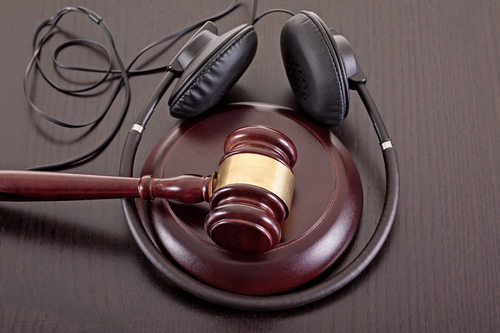
Image Source: Deposit Photos
Author: Quasarphoto
Image ID: 21832357
![[Advertisement]](https://ipwatchdog.com/wp-content/uploads/2026/03/NLPatent-Apr-2-2026-sidebar-700x500-1.jpg)
![[Advertisement]](https://ipwatchdog.com/wp-content/uploads/2026/02/Junior-Apr-7-2026-sidebar-700x500-1.jpg)




![[Advertisement]](https://ipwatchdog.com/wp-content/uploads/2021/12/WEBINAR-336-x-280-px.png)
![[Advertisement]](https://ipwatchdog.com/wp-content/uploads/2021/12/Ad-4-The-Invent-Patent-System™.png)




Join the Discussion
No comments yet.