
![[IPWatchdog Logo]](https://ipwatchdog.com/wp-content/themes/IPWatchdog%20-%202023/assets/images/temp/logo-small@2x.png)

 0
0 “PTOT’s unsubstantiated speculation about a threat of future suit is insufficient to show a substantial risk of future infringement….” – CAFC opinion
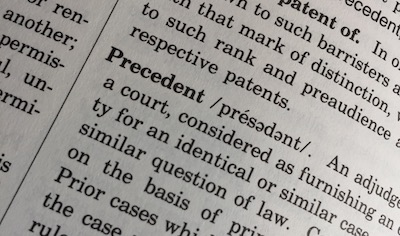 The U.S. Court of Appeals for the Federal Circuit (CAFC) held in a precedential decision Friday that Platinum Optics Technology, Inc. (PTOT) had failed to establish an injury in fact sufficient to confer standing to appeal from a Patent Trial and Appeal Board (PTAB) decision that found PTOT hadn’t proven claims of Viavi Solutions, Inc.’s patent unpatentable. The opinion was authored by Judge Claire C. Cecchi of the United States District Court for the District of New Jersey, sitting by designation, and the panel included CAFC Chief Judge Moore and Judge Taranto.
Viavi owns U.S. Patent No. 9,354,369, titled “Optical Filter and Sensor System.” Viavi sued PTOT in district court in two separate suits, and the infringement claims were dismissed with prejudice in both. PTOT then petitioned for inter partes review (IPR) at the PTAB and the PTAB’s final written decision found PTOT had failed to prove the asserted prior art proved the claims unpatentable as obvious.
In its appeal to the CAFC, PTOT said it had standing to appeal due to potential infringement liability as a result of it: (1) supplying its bandpass filters accused in Viavi II to parts integrators overseas, and (2) developing new models of bandpass filters.
The CAFC explained in its opinion that “to establish a case or controversy, the appellant must meet the ‘irreducible constitutional minimum of standing'” by showing that it “(1) suffered an injury in fact, (2) that is fairly traceable to the challenged conduct of the
defendant, and (3) that is likely to be redressed by a favorable judicial decision.” Establishing an injury in fact requires showing that the alleged harm must be “concrete and particularized” and “actual or imminent, not conjectural or hypothetical.”
With respect to its first argument, PTOT relied on a letter from Viavi which stated “‘[b]ased on the broad and varying scope of Viavi’s U.S. Patents’ claims, [Viavi] do[es] not believe’ it would be possible for PTOT to fulfill its supply agreements with non-infringing products,” said the CAFC opinion. Besides the speculative nature of the argument and the lack of specificity as to why the patent owner would assert the ‘369 patent against particular future products, PTOT failed to address the fact that the letter was sent prior to the two district court cases in which the claims were dismissed with prejudice. The court continued:
“PTOT’s unsubstantiated speculation about a threat of future suit is insufficient to show a substantial risk of future infringement or that Viavi is likely to assert a claim against it for the continued distribution of bandpass filters accused in Viavi II.”
As to PTOT’s argument that it expects Viavi to sue again when PTOT introduces its new bandpass filters, the court said a letter from the company’s Deputy Director of Operation Management, Yiwei Lin, noting that “PTOT continues to develop new models of bandpass filters and that PTOT anticipates Viavi will again assert the ’369 patent…. fails to identify any specific, concrete plans for PTOT to develop a product that may implicate the ’369 patent.” The lack of detailed plans, specifics of the new models and how they relate to the ‘369 patent, etc., is insufficient to show standing and amount to merely “vague and conclusory statements.”
Because PTOT failed to establish that it has concrete plans for future activity that create a substantial risk that Viavi will sue it for infringement again, it failed to prove standing to appeal. The court therefore dismissed the appeal and did not reach the merits of the PTAB decision.
![[Advertisement]](https://ipwatchdog.com/wp-content/uploads/2026/09/MarqVision-Oct-8-2026-sidebar-700x500-rev.jpg)
![[Advertisement]](https://ipwatchdog.com/wp-content/uploads/2026/10/IP-Copilot-Oct-13-2026-sidebar-700x500-1.jpg)
![[Advertisement]](https://ipwatchdog.com/wp-content/uploads/2026/10/Junior-Oct-15-2026-sidebar-700x500-1.jpg)
![[Advertisement]](https://ipwatchdog.com/wp-content/uploads/2026/09/WE-BUY-PATENTS-SIM-IP-Ad-1-revised-on-Sep-28-2026-700x500-1.jpg)
![[Advertisement]](https://ipwatchdog.com/wp-content/uploads/2026/09/Life-Sciences-2026-sidebar-early-bird-date-corrected-700x500-1.jpg)
![[Advertisement]](https://ipwatchdog.com/wp-content/uploads/2024/09/Patent-Prosecution-Training-sidebar-700x500-2025-03-27.jpg)





![[Advertisement]](https://ipwatchdog.com/wp-content/uploads/2021/12/WEBINAR-336-x-280-px.png)
![[Advertisement]](https://ipwatchdog.com/wp-content/uploads/2021/12/Ad-4-The-Invent-Patent-System™.png)






Join the Discussion
No comments yet.