
![[IPWatchdog Logo]](https://ipwatchdog.com/wp-content/themes/IPWatchdog%20-%202023/assets/images/temp/logo-small@2x.png)
Posts Tagged: "Guest Contributor"
Top Tips for Maintaining Adequate Quality Control Over Trademark Licensees
In order for rights in a trademark to persist, the mark must be used in commerce continuously. Wallack v. Idexx Labs., Inc., No. 11CV2996-GPC(KSC), 2015 WL 5943844, at *4 (S.D. Cal. Oct. 13, 2015). Abandonment of a mark is, therefore, an affirmative defense to a trademark infringement claim. One form of trademark abandonment is non-use of the mark. A second form of trademark abandonment is uncontrolled or “naked” licensing of one’s trademark. The policy behind prohibiting uncontrolled licensing is reflected in 15 U.S.C. § 1127, which states that “[a] mark will be deemed abandoned … [w]hen any course of conduct of the owner, including acts of omission as well as commission, causes the mark to … lose its significance as a mark.” 15 U.S.C. § 1127 (emphasis added); Already LLC v. Nike Inc., 568 U.S. 85, 99 (2013). “Naked licensing is an uncontrolled licensing of a mark whereby the licensee can place the mark on any quality or type of goods or services, raising a grave danger that the public will be deceived by such a usage.” Doeblers’ Penn. Hybrids, 442 F.3d at 823 (internal quotations and citations omitted). The way to protect against this danger to the consuming public is to require the licensor to actively police use of the licensed mark.
How to Prepare and Prosecute Patents in Light of the USPTO’s Post-Alice Focus on Eligibility
Since the issuance by the United States Supreme Court of its opinion in Alice Corporation Pty Ltd. v. CLS Bank International, 573 U.S. 208, 134 S. Ct. 2347 (2014), the United States Patent and Trademark Office (USPTO) has increased its focus on patent eligibility. As a consequence, patent applicants now receive more claim rejections under 35 U.S.C. § 101, leading to protracted prosecution. While rejections under 35 U.S.C. § 101 are likely unavoidable, patent attorneys and agents can take steps during application preparation and prosecution to minimize the likelihood of such rejections and to successfully rebut such rejections when they do arise.
This Thanksgiving: What Is the IP Community Thankful For?
This year has included many twists and turns for IP stakeholders, particularly on the patent side. Most recently, the Federal Circuit’s decision in Arthrex has called into question the constitutionality of Patent Trial and Appeal Board decisions, and perhaps the Board itself. Elsewhere, Congress has been—unsuccessfully—attempting to step in and clarify U.S. patent law since early in the year, while the courts have continued to muddy the waters of patent eligibility law. The Federal Trade Commission’s case against Qualcomm, and Judge Lucy Koh’s decision in the case, have further called into question the United States’ ability to compete on the innovation front going forward. And yet, there have been some wins in other areas this year, including at the U.S. Patent and Trademark Office (USPTO), and there remain many reasons to be hopeful about the year ahead. IPWatchdog asked some IP experts to share what they have to be thankful for on the IP front this Thanksgiving, despite all the uncertainty. Hopefully, as those of you who celebrate the holiday enjoy your Thanksgiving dinners, these sentiments will inspire you to be thankful too.
Unitaid’s Contradictory Approach to IP Rights Risks Progress
Founded in 2006 by the governments of France, the United Kingdom and several others, and financed by a combination of a tax on airline tickets and government grants, Unitaid is one of the lesser known players in the crowded world of global health. Unitaid’s most distinctive contribution is its Medicines Patent Pool (MPP), now approaching its tenth year of operation. It is a “one-stop shop” for patented medicines owned by different companies and available for voluntary licensing in low- and middle-income countries, so generic versions can be manufactured cheaply. At the moment, it focuses on medicines for HIV, malaria, tuberculosis and Hepatitis C. Respecting existing intellectual property rights (IPRs) for new medicines is key to the success of the MPP, as it allows rights-holders of innovative medicines to widen access to their medicines in lower-income markets without compromising their markets in wealthier parts of the world from where they derive the majority of their profits. This in turn ensures the funds for the research and development that drives medical progress. Despite demonstrating how the market-based system of IPRs can be used to promote access to medicines, Unitaid has also started to pursue energetically what it describes as a “complementary” strategy of encouraging middle-income countries to undermine and attack IP rights.
Don’t Undermine U.S. Innovation While Standing Up to China
One of the few areas of bipartisan agreement in Washington is that it’s time to respond to Chinese economic and military aggression. The need is underscored by a sobering report from the Senate Homeland Security & Governmental Affairs Committee’s Permanent Subcommittee on Investigations titled “Threats to the U.S. Research Enterprise: China’s Talent Recruitment Plans.” The report documents how China exploits our culture encouraging the open exchange of science in order to achieve their commercial and military objectives. In its editorial, “China’s Bid on American Science,” The Wall Street Journal aptly summarizes the report: “It found the U.S. government is funding research for hundreds of scientists at American universities and labs who are effectively under contract to turn over their findings to China.” No nation can allow others to steal its cutting-edge technologies. While we must effectively respond to China and others looking to do us harm, we must avoid inadvertently undermining the policies which made us the leader in turning government funded R&D into highly innovative products. Unfortunately, an initial agency response is not reassuring on that score.
Federal Circuit Tackles Analogous Art Arguments
In Airbus S.A.S v. Firepass Corporation, Appeal 2019-1803 (November 8, 2019), Airbus appealed the Patent Trial and Appeal Board’s (PTAB’s) reversal of the examiner’s rejection of new claims presented by Firepass in an inter partes reexamination of U.S. Patent No. 6,418,752 (“the ‘752 patent”). In particular, the inter partes reexam returned to the Court from a prior appeal (Airbus SAS v. Firepass Corp., 793 F.3d 1376 [Fed. Cir. 2015]) in which the Court vacated and remanded to the Board to consider Airbus’s challenge to the newly presented claims. Airbus disputes the Board’s finding that an asserted prior art reference, which just so happens to be a patent issued to the same inventor as the ‘752 patent, is nonanalogous art.
U.S. Government Patent Enforcement: A Ripple or a Coming Tempest?
In most respects, the widely reported patent complaint recently filed against Gilead is perfectly ordinary. It was filed in the U.S. District Court for the District of Delaware, the most common venue for patent infringement lawsuits, and alleged that a pharmaceutical company’s drug sales infringed the plaintiff’s patents on uses of the sold drug. The defendant’s response has so far been similarly unexceptional: Gilead has filed petitions for Inter Partes Review (IPR) of each asserted patent (see links below), arguing that those patents are invalid over the prior art, either as obvious or as entirely anticipated. What is remarkable about this lawsuit, however, is that the plaintiff is the government of the United States.
Artificial Intelligence Will Help to Solve the USPTO’s Patent Quality Problem
About a month ago, Steve Brachmann authored an article concerned with a brief given to Capitol Hill staff by Professors Frakes and Wasserman. The article highlighted fundamental, as well as practical, problems with Professors Frakes’ and Wasserman’s proposal (i.e. doubling the number of patent examiners as a means to reduce the number of invalid patents and thereby prevent societal harms) and how it could be detrimental to the U.S. patent system. The IPWatchdog article points to several issues with Frakes’ and Wasserman’s proposal, but does not discuss other approaches or options, such as using artificial intelligence tools to improve the patent application review process—an option that USPTO Commissioner for Patents Drew Hirshfeld said in a recent Senate IP Subcommittee hearing that the Office is actively pursuing. According to PWC, 72% of executives testify that AI improves internal operations while freeing up workers to perform more creative and meaningful tasks. In fact, while some might fear that “robots” will take human jobs, technological innovation has been proven to generate more jobs than it takes, while automating tasks, like patent search.
Celgene Corp. v. Peter: Should the Federal Circuit Leave PTAB ‘Patent Takings’ Issue for Another Day?
Nearly four months ago, the Federal Circuit for the first time addressed the applicability of the Takings Clause of the Fifth Amendment to IPRs, holding in Celgene Corp v. Peter “that the retroactive application of inter partes review (IPR) proceedings to pre-America Invents Act (AIA) patents is not an unconstitutional taking under the Fifth Amendment” Celgene Corp. v. Peter, 931 F.3d 1342, 1362 (Fed. Cir. 2019). Since then, the court has continued to reject similar Patent Trial and Appeal Board (PTAB)-related Takings Clause claims on the merits. E.g., Collabo Innovations v. Sony Corp., No. 2018-1311 (Fed. Cir. Aug. 5, 2019). Unsurprisingly, Celgene filed a request for an en banc rehearing, and the government has just this week filed its response. Both Celgene’s en banc petition and the government’s response address the merits of Celgene’s constitutional claim—but as we hinted at in an earlier article analyzing the Celgene decision, there is a serious question whether the Federal Circuit should have even reached the merits of the Takings Clause issue in its panel opinion. In light of Supreme Court Takings Clause precedent, the Federal Circuit may want to either request supplemental briefing to decide whether it should have addressed the constitutional question in the first place, or potentially even revise the panel opinion and leave this issue to be decided in another case.
The Most Common Design Patent Application Rejections (and How to Avoid Them) – Part II
In Part I of this article, we examined the top three rejections for design patent applications, which are due to non-enablement, inconsistency, and ambiguousness. The fourth most common reason for rejection of design patents is for objections to the drawing disclosure, which we will discuss here. Objections to the drawings occur when something is incorrectly shown in the drawings, but the drawings are still understood by the Examiner. In the stereo receiver example above, if the bottom plan view was present in the original disclosure but the front elevational view did not show shading on the feet, the Examiner would likely issue an objection, stating that shading was not shown on the front surface of the feet and should be. (If the bottom plan view was not part of the originally filed drawings, then the Examiner would be issuing a Sec. 112 rejection instead of merely an objection since there’s not enough information to understand the shape of the feet and the feet will have to be disclaimed by converting them to broken lines.) Objections to the drawings are usually easy to overcome, but they still must be overcome by submitting replacement sheets. This decreases the efficiency of your operation and increases client costs, so objections are important to minimize by carefully reviewing your drawings before submission.
From the Flea Market to the Online Marketplace: How Brand Owners are Fighting to Keep Infringers at Bay
Trademark and copyright enforcement remains a significant challenge for licensors of popular brands across sports, entertainment, fashion and other industries. The Organization for Economic Cooperation and Development, a group of three dozen industrial countries, estimates counterfeit goods account for 3.3% of global trade. Brand owners cannot rely on the belief that their trademark and copyright registrations will be respected, and they cannot confine their enforcement to demand letters and traditional intellectual property litigation. Rather, a brand owner must avail itself of additional approaches to address both traditional and newer platforms offering infringing products. We continue to see an increase in online infringements, especially in connection with certain e-commerce sites and targeted advertisements on social media. Under the current law, enforcement against online providers can be difficult, particularly when compared to traditional infringement hot sports in the brick-and-mortar marketplace. Flea markets, swap meets and other brick-and-mortar shopping venues reported verdicts and settlements in the last 10 years that confirm commercial landlords/owners can be held liable for the trademark infringement activity of their tenants, with courts around the country extending liability for trademark infringement beyond just the party selling infringing products.
Advising a Department Store on Its Brand Strategy? Get Creative or Go the Way of Barneys
Whenever I wanted my grandmother to reveal a deep secret—such as what I was getting for my birthday—she would reply by asking, “Does Gimbels tell Macy’s?” That was when the Gimbels and Macy’s department stores battled for market share like colossi astride Herald Square. Gimbels is long gone from the New York metropolitan area retail market—as are, from all levels of pricing—Alexander’s, B. Altman and Company, Bamberger’s, Bonwit Teller, Galleries Lafayette, E. J. Korvette, the Lord & Taylor flagship on Fifth Avenue, Stern’s, Takashimaya, and Two Guys, among others. And to that list we can now add Barneys. As I never tire of advising our clients, trademarks are the awards that the law bestows upon a well-operated brand, and brand—in fashion and luxury, and in retailing of all but the most elemental variety—is about story. That is, the brand has to tell a story that is clear and identifiable to the customer—a story so compelling that he or she will elect to participate in it by making purchases. Enter an Hermès and you are sharing in a gentrified vision of France as authentic to the XVIe arrondissement as to a canter on horseback through the fields of the Loire. Walk down the block to Salvatore Ferragamo and inhabit that world of Florentine grace and worldliness that has guided the West since the Renaissance. Maintaining a distinct brand image is often challenging for a manufacturer/design company, especially if it operates its own boutiques. But it can by even more demanding for a large, multi-brand retailer, especially now.
The Most Common Design Patent Application Rejections (and How to Avoid Them) – Part I
As one of about 46,000 registered practitioners in the United States, most of us are unfortunately too well acquainted with Section 101, 102, and 103 rejections from the U.S. Patent and Trademark Office (USPTO). But it may be surprising that most rejected design patent applications are not rejected under these sections. Instead, the least favorite number of the design patent practitioner is 112. While Section 112 rejections on utility applications are generally easily overcome, that is often not always the case with such rejections on design applications. Since there are only about 30,000 design applications issued each year, each of the 46,000 registered practitioners handle on average less than one design application per year! So, for those unfamiliar with the quirks of design patent practice, which is most of us, and since design patent applications have a relatively high allowance rate of 84% (see the USPTO Data Visualization Center/Design Data page, it might be tempting to rely on your patent draftsperson to prepare what they think are adequate drawings, copy the mostly boiler-plate specification language, and just file the application. But that can be a costly mistake.
Lessons from an Independent Female Inventor: Today’s Patent Laws Preclude ‘SUCCESS’
It has been one year since my software patent was invalidated in the U.S. District Court for the Southern District of New York. Now, this intellectual property is considered worthless and my dream of paying off extensive student loans with the proceeds from patent licensing fees are in the past. The irony being that if it were not for these extensive student loans, this invention, most likely, would not have come to into being. My patent No. 6,769,915, issued in 2003, was invalidated under Section 101 and struck down on appeal. The patent covers “a user-interactive behavior modification system” that is in competition with technology pursued by the companies including Nike, FitBit, Apple, and Samsung. The rules that existed when I applied for this software patent in 2000 no longer guarantee myself and hundreds of other independent inventors the right to collect patent licensing fees. This right was granted to all with The Patent Act of 1790. Yet, over the last 15 years, the U.S. patent laws have been changed drastically by extremely well-financed lobbyists on behalf of the U.S. Patent and Trademark Office’s (USPTO’s) largest customers— global corporations, including the Big Tech industry. This has relieved Apple, Google, Facebook, etc. from the necessity of having to pay independent inventors software licensing fees. With this shift in intellectual property laws, the once small startups of Silicon Valley have become the large monopolies they are now.
The Problem of IPR Infringement in India’s Burgeoning Startup Ecosystem
For a country of 1.3 billion people who pride themselves on ingenuity, entrepreneurial spirit, and innovative thinking, a significant percentage of the Indian population is woefully unaware of trademark infringement and intellectual property theft. At the beginning of 2010, the Indian e-commerce scene was still in its nascent stage but within the next five years, the growth was unprecedented. This was a result of the rapid internet access proliferation combined with the telecom boom. The budget phone segment and the affordable data tariff pushed the tier-II and tier-III cities into the fore. Just to put things in perspective, according to recent studies, there are close to 600 million phone users in India with over 300 million smartphone owners, which is just 20 million shy of the population of the United States (as per 2018 records). With a sizeable portion of the population heavily consuming online media and transacting digitally, there is a huge market for service providers and aggregators. Leveraging the demand for such service providers, startups from all over the country have mushroomed in a frenzy. Under the current government, initiatives like “Make In India” and “Startup India” have further bolstered the growth of these SMEs.
Varsity Sponsors
![[Advertisement]](https://ipwatchdog.com/wp-content/uploads/2026/02/Junior-Apr-7-2026-sidebar-700x500-1.jpg)
![[Advertisement]](https://ipwatchdog.com/wp-content/uploads/2026/04/IP-Author-Apr-14-2026-sidebar-700x500-1.jpg)

Latest IPW Posts
Federal Circuit Upholds District Court’s View That Omission of Coinventor Invalidates Patent
April 2, 2026 @ 11:11 amUSPTO Life Sciences Listening Session: Remarks of Peter-Anthony Pappas and Henry Hadad
April 2, 2026 @ 10:30 amFederal Circuit Affirms PTAB Finding that Centripetal Patent Claims are Unpatentable as Anticipated
April 2, 2026 @ 10:15 amPolicymakers Are Falling for a Drug-Pricing Myth
April 2, 2026 @ 08:54 amThe USPTO is Trying—But the Most Abusive Practices to Kill Patents Are Still in Play
April 1, 2026 @ 05:58 pm
Latest Podcasts
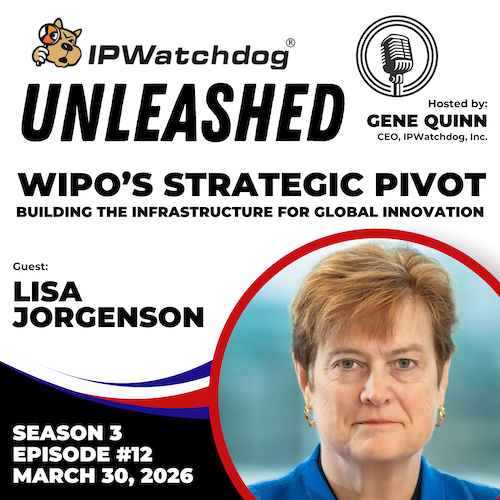

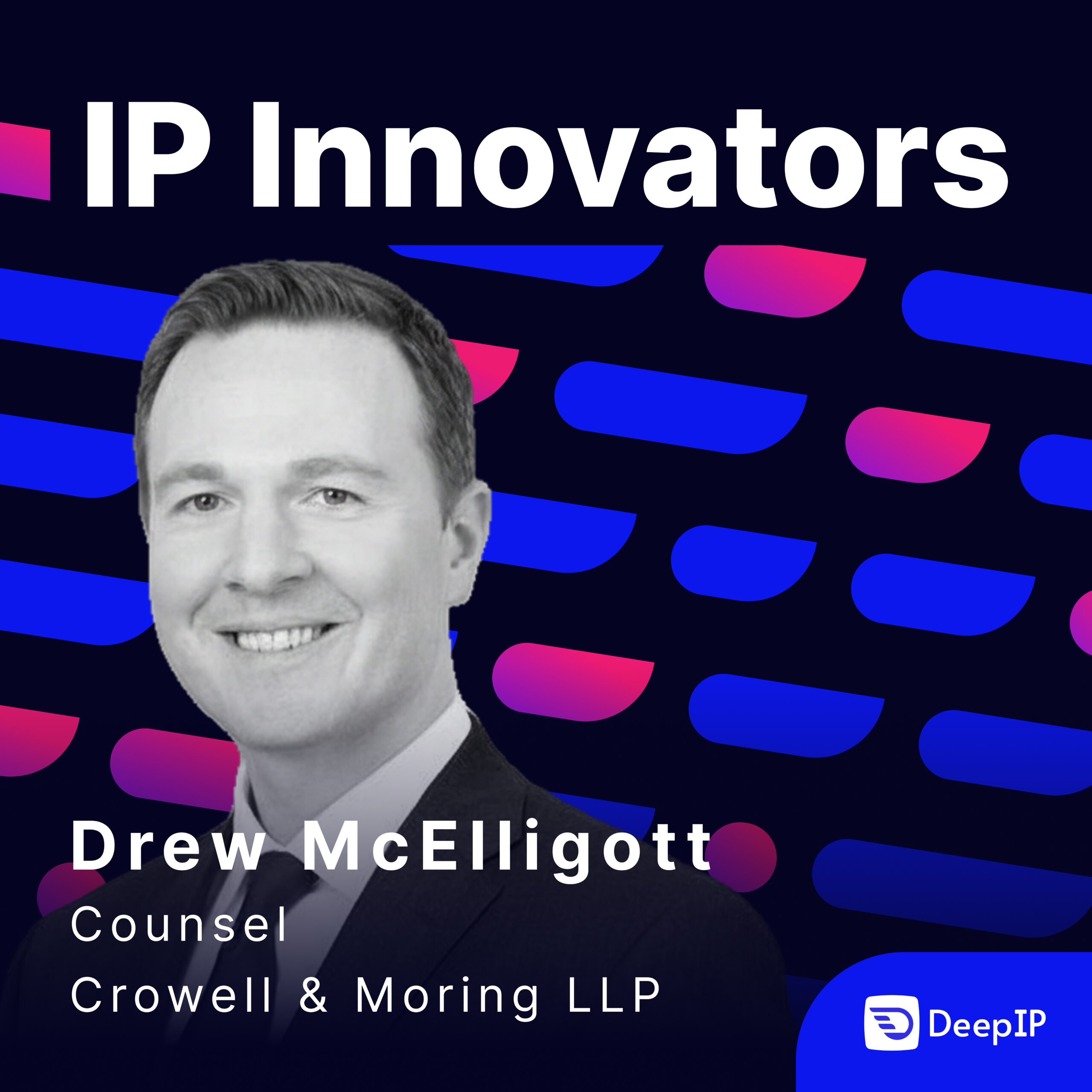
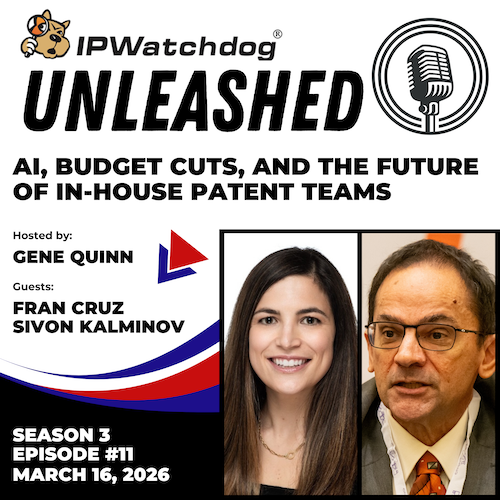

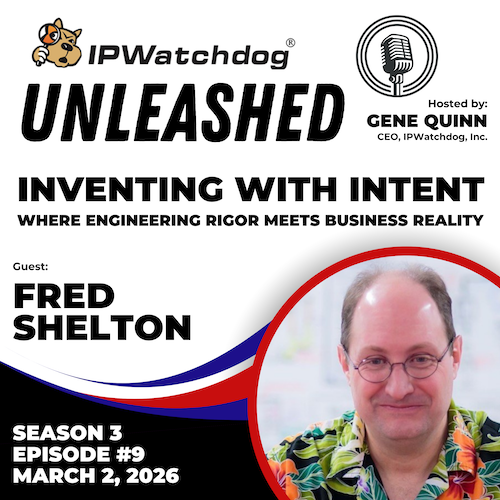
IPWatchdog Events
CLE Webinar: All in the Prompt – Crafting AI Prompts for Precision Outputs
April 7 @ 12:00 pm - 1:00 pm EDTWebinar: From Patent Tools to AI Agents – The Next Evolution of Patent Practice
April 14 @ 12:00 pm - 1:00 pm EDTWebinar: The Economics of AI in Patent Practice – Who Captures the Value?
April 16 @ 12:00 pm - 1:00 pm EDTPatent Masters™ 2026 – Portfolios, Licensing and Enforcement
June 8 @ 8:00 am - June 10 @ 5:00 pm EDT
Industry Events
24th Annual Rocky Mountain Intellectual Property & Technology Law Institute
May 28 @ 8:30 am - May 29 @ 4:30 pm MDTFrom IPWatchdog
![[Advertisement]](https://ipwatchdog.com/wp-content/uploads/2021/12/WEBINAR-336-x-280-px.png)
![[Advertisement]](https://ipwatchdog.com/wp-content/uploads/2021/12/Ad-4-The-Invent-Patent-System™.png)