
![[IPWatchdog Logo]](https://ipwatchdog.com/wp-content/themes/IPWatchdog%20-%202023/assets/images/temp/logo-small@2x.png)
Posts in Courts
Federal Circuit Upholds Sanctions and Attorney’s Fees for Vexatious Litigation and Frivolous Appeal
The Court upheld the district court’s award of attorneys’ fees and costs, finding ample support in the record for Walker’s vexatious conduct, and no legitimate reason for Walker to continue litigating after the Agreement. Further, Walker’s arguments on appeal mischaracterized clear authority on the courts’ ability to award attorneys’ fees. The Court also sanctioned Walker and his attorneys for pursuing a frivolous appeal and awarded attorneys’ fees and costs.
Understanding the Geographic Scope of a Trademark Injunction: Guthrie v. Context Media
Trademark injunctions must take into account both online promotion and future expansion plans. A narrowly-tailored geographically limited injunction can be particularly damaging to growing businesses if the business is forced to accept trademark confusion in the event of future expansion. The geographic scope of a trademark injunction should, therefore, carefully take into consideration the total services, activities, and growth plans of the successful plaintiff’s business endeavors.
CAFC: When Relying Common Sense There Must be Explicit and Clear Reasoning
The Board’s determination was “potentially lawful but insufficiently or inappropriately explained.” The finding of obviousness was vacated and the case was remanded for further proceedings… Obviousness findings grounded in common sense must contain explicit and clear reasoning that provides some rational underpinning as to why common sense compels such a result.
CAFC Reverses on Indefiniteness Because Claim Terms Sufficiently Supported by Examples
The Court was careful to explain that its “holding in this case does not mean that the existence of examples in the written description will always render a claim definite, or that listing requirements always provide sufficient certainty.” Instead, its holding is simply that “visually negligible” is sufficiently supported by Sonix’s patent “to inform with reasonable certainty those skilled in the art of the scope of the invention.” Practitioners prosecuting applications in which arguably subjective terms exist should include as much guidance as possible in the specification to define that term. It may prove vital to include requirements or examples.
Federal Circuit Clarifies Injury in Fact Standing to Challenge Final Agency Decision in IPR
In appealing from a final IPR decision, the appellant must have standing, based on evidence of record or supplemental evidence showing an “injury in fact.” Alleged economic injury must be specific and proven, and does not arise just from statutory appeal provisions or from IPR litigation estoppel when appellant’s infringement of the challenged patent is not a potential issue.
Rule 36: Unprecedented Abuse at the Federal Circuit
The principal manner in which the district courts are divining their guidance from the Federal Circuit is by review of the precise language of claims that court finds non-statutory and comparing them to those at issue before the lower court. In Enfish v. Microsoft, Judge Hughes openly acknowledged that the test for patent eligibility is an ex post facto test that compares the instant claims against other cases where there is an opinion and then figures out which case is most similar to the claims in the instant case. Essentially, the patent eligibility test is a matching test without any semblance of intellectual rigor. How then could it be possible that more written opinions would not shed important light and have precedential value? Indeed, given the nature of the 101 test accurately described by Judge Hughes in Enfish, the Federal Circuit should review as many different claims as possible to expand its guidance to the lower courts. Any Section 101 case in the present state of affairs would necessarily have precedential value. How does this continuing affirmance of multiple district fact patterns without written opinions not violate the clear language of Rule 36 itself?
Cisco v. Arista patent and copyright infringement cases see conflicting rulings at ITC, N.D. Cal.
A patent and copyright squabble involving two players in the networking space for information technology (IT) development, which has ramped up in recent years, saw an interesting round of events play out in federal court and regulatory agencies this past December. At the center of the brouhaha is American networking and telecommunications giant Cisco Systems (NASDAQ:CSCO) of San Jose, CA, which has filed multiple legal actions against Arista Networks (NYSE:ANET) of Santa Clara, CA, alleging that Arista has moved into the networking equipment market using technologies developed and patented by Cisco, specifically through former Cisco employees who founded Arista.
The Future of Forum-Shopping in a Post-TC Heartland World
The Federal Circuit’s broad interpretation of the patent-venue statute has led to widespread forum-shopping with a disproportionate number of cases being filed in the Eastern District of Texas. For example, since 2011, roughly a quarter of all patent-infringement cases have been filed in the Eastern District, with 2015 being a peak year when 44% of all patent-infringement cases were filed. This despite the fact that the Eastern District of Texas is home to relatively few companies and home to little more than 3.5 million people. By comparison, the Northern District of California, a district with nearly 8 million people and home to many companies, only made up 4-5% of all patent-infringement filings annually.
Nokia, Apple drag the world back to patent war
Being targeted by PAEs is nothing new for Apple — but in an anti-trust complaint dated December 20, 2016, Apple finally said enough was enough. Pulling no punches, Apple accused the PAEs of “conspiring with Nokia in a scheme to diffuse and abuse [standard essential patents] and, as the PAEs and Nokia fully intended, monetize those false promises by extracting exorbitant non-FRAND royalties in way Nokia could not”. Using PAEs for direct attacks against Apple would be a smart, albeit sneaky, strategy for Nokia. Since PAEs do not themselves sell any products, there would be little risk of a countersuit from Apple – as well as a general lack of commitment to FRAND licensing terms that spell lower royalties.
Politics of Patent Venue Reform: SCOTUS Taking TC Heartland to Delay Push for Venue Reform
The genesis of the patent venue “problem” is simple: Many patent infringement defendants complain about traveling to the Eastern District of Texas. They feel that it is too pro-patent, too pro-enforcement, or too difficult for defendants to win on a motion to dismiss… With the US Supreme Court agreeing to hear TC Heartland the perennial patent venue issue is front and center for patent reform in 2017. This case will attract much amicus, media, Congressional, law school, and fake news attention. It should influence how patent owners and litigation investors look at venue options in general and perhaps also with regard to growth markets like Germany and China. It will also tell us how the Trump administration thinks about patent issues.
Patent Forecast 2017: Will Patent Courts Be Great Again?
While Congress seems to pass some form of patent legislation roughly every 9 to 11 years, the more important changes with regard to business predictability and economic growth tend to come from specific Court decisions. Just look at what Alice has done to ruin software patents with uncertainty, and now with the PTAB actually finding that an MRI machine is an unpatentable abstract idea. Worse it has placed the US behind Europe and even China in terms of protecting computer implemented inventions… Courts can make patents great again in America. And if not they will at least be as active as they have been in the past 10 years in terms of shaping the patent dialogue.
While Congress does seem to pass some form of patent legislation roughly every 9 to 11 years, the more important changes with regard to business predictability and economic growth tend to come from specific Court decisions. Just look at what Alice has done to ruin software patents with uncertainty, and now with the PTAB actually finding that an MRI machine is an unpatentable abstract idea. Worse it has placed the US behind Europe and even China in terms of protecting computer implemented inventions.
Israeli District Court Rejects Disney’s Forum Shopping in Infringement Case
Disney decided to add the State of Israel as a defendant since the Haifa port Customs unit that held the allegedly infringing goods is an Israeli government entity. Adding the state as a defendant, albeit a technical one, would allow, according to the Israeli territorial jurisdiction regulations, the Tel Aviv District Court to have jurisdiction… The Court rejected Disney’s claim and transferred the case to Haifa. In his decision, Judge Maor stated that ‘the dispute is between the Petitioners and the Plaintiff. The State is not a necessary and not a substantial party to the disagreements between them, but merely a “technical” one since it is holding the allegedly infringing goods…’.
Facebook, IV and Nintendo lead in VR headset patents ahead of Google, Sony and Intel
Although the patent space surrounding VR headsets still looks very open, it’s interesting to note that Nintendo has an early lead over other top tech firms which have reportedly been working on their own virtual reality technologies. Fourth place in the VR headset space is Microsoft Corporation (NASDAQ:MSFT) which owns nine IP assets in the sector. This total seems low given Microsoft’s work on developing its HoloLens mixed reality platform. Trailing closely behind in fifth place is Alphabet Inc. (NASDAQ:GOOGL) with seven IP assets in the sector. Again, given research and development conducted by Alphabet’s Google subsidiary for its Google Glass head-mounted device, it’s interesting to see that the company hasn’t invested heavily in the virtual reality headset space. Following further behind in seventh place is Japanese electronics conglomerate Sony Corp. (NYSE:SNE). Tied in eleventh place are Intel Corp. (NASDAQ:INTC) of Santa Clara, CA, and the Walt Disney Company (NYSE:DIS) of Burbank, CA.
Tiffany & Co. Successfully Asserts Trademark Infringement Claims Against Costco
On October 5, 2016, a jury in Tiffany and Co. v. Costco Wholesale Corp. – litigated before Judge Swain of the Southern District Court of New York – awarded Tiffany & Co. (Tiffany) $8.25 million in punitive damages for willful and bad faith infringement of their trademark by defendant Costco Wholesale Corp. (Costco). This award, in combination with an earlier award of $5.5 million in profits and statutory damages, brings the total damages owed by Costco to $13.75 million. The case is particularly notable for several reasons, but specifically because punitive damages were awarded.
Federal Circuit to consider reviewability of IPR institution decisions en banc
In a Per Curiam Order the Federal Circuit granted the petition for en banc rehearing and vacated the court’s three prior opinions in Wi-Fi One v. Broadcom Corp. The Federal Circuit will consider whether IPR institution decisions are reviewable in light of the Supreme Court’s decision in Cuozzo Speed Technologies v. Lee.
Varsity Sponsors
![[Advertisement]](https://ipwatchdog.com/wp-content/uploads/2026/02/Junior-Apr-7-2026-sidebar-700x500-1.jpg)
![[Advertisement]](https://ipwatchdog.com/wp-content/uploads/2026/04/IP-Author-Apr-14-2026-sidebar-700x500-1.jpg)

Latest IPW Posts
Federal Circuit Upholds District Court’s View That Omission of Coinventor Invalidates Patent
April 2, 2026 @ 11:11 amUSPTO Life Sciences Listening Session: Remarks of Peter-Anthony Pappas and Henry Hadad
April 2, 2026 @ 10:30 amFederal Circuit Affirms PTAB Finding that Centripetal Patent Claims are Unpatentable as Anticipated
April 2, 2026 @ 10:15 amPolicymakers Are Falling for a Drug-Pricing Myth
April 2, 2026 @ 08:54 am
Latest Podcasts
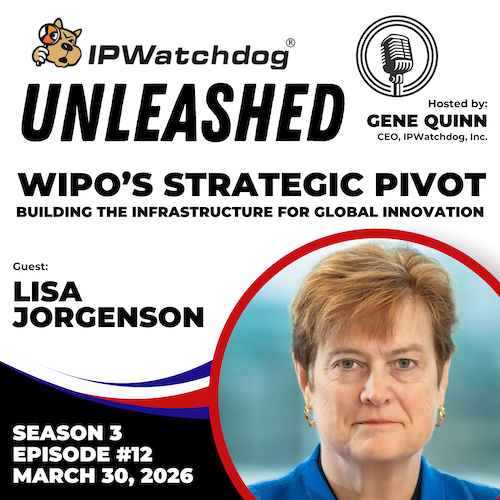

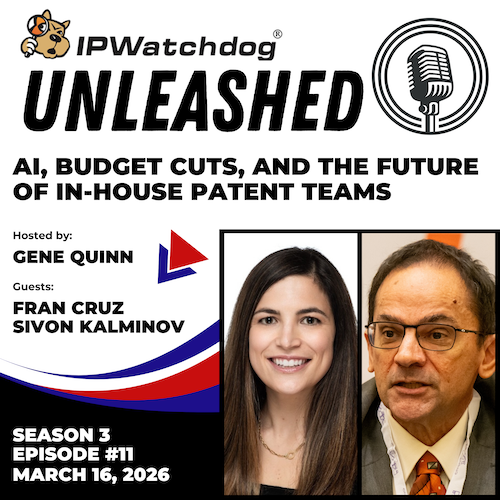

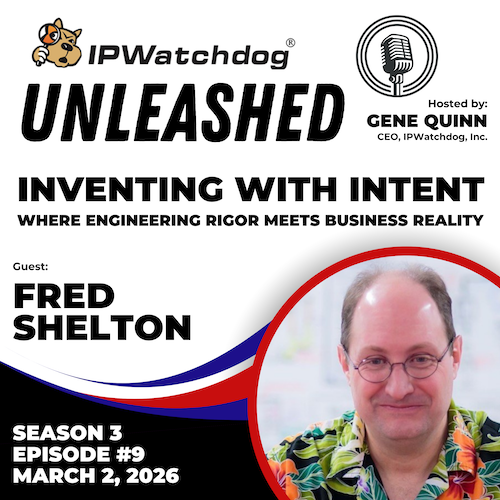
IPWatchdog Events
CLE Webinar: All in the Prompt – Crafting AI Prompts for Precision Outputs
April 7 @ 12:00 pm - 1:00 pm EDTWebinar: From Patent Tools to AI Agents – The Next Evolution of Patent Practice
April 14 @ 12:00 pm - 1:00 pm EDTWebinar: The Economics of AI in Patent Practice – Who Captures the Value?
April 16 @ 12:00 pm - 1:00 pm EDTWebinar: Beyond Patent Data – Unifying IP and R&D with AI-Driven Intelligence
April 23 @ 12:00 pm - 1:00 pm EDT
Industry Events
24th Annual Rocky Mountain Intellectual Property & Technology Law Institute
May 28 @ 8:30 am - May 29 @ 4:30 pm MDTFrom IPWatchdog
![[Advertisement]](https://ipwatchdog.com/wp-content/uploads/2021/12/WEBINAR-336-x-280-px.png)
![[Advertisement]](https://ipwatchdog.com/wp-content/uploads/2021/12/Ad-4-The-Invent-Patent-System™.png)