
![[IPWatchdog Logo]](https://ipwatchdog.com/wp-content/themes/IPWatchdog%20-%202023/assets/images/temp/logo-small@2x.png)
Posts in District Courts
Prost Dissents from CAFC’s Denial of New Trial on Damages for Google
The U.S. Court of Appeals for the Federal Circuit (CAFC) on Monday, June 3, issued a precedential decision affirming a district court’s orders in favor of EcoFactor, Inc. against Google, whose appeal in part asked for a new trial on damages due to prejudicial error. Judge Prost dissented-in-part. EcoFactor sued Google for infringement of its U.S. Patent No. 8,738,327 relating to smart thermostat technology. EcoFactor said Google’s Nest thermostat products in particular were infringing. Google moved for summary judgment that certain claims of the patent were invalid as abstract under Section 101 but the district court denied the motion, and also denied Google’s Daubert motion to exclude the opinion of EcoFactor’s damages expert, Mr. Kennedy, whose testimony Google argued was “unreliable and therefore prejudicial,” according to the CAFC.
CAFC Vacates Win for Nokia on Standing Issue
The U.S. Court of Appeals for the Federal Circuit (CAFC) on Tuesday, May 21, issued a precedential decision vacating and remanding a district court’s finding that Core Optical Technologies didn’t have standing to sue Nokia due to the language of a contract between the inventor and his employer. Judge Mayer dissented. Core Optical alleged infringement of U.S. Patent No. 6,782,211 by Nokia Corp., ADVA Optical Networking SE, and Cisco Systems, Inc. (Nokia). Nokia moved for summary judgment arguing that Core Optical lacked standing to sue because the inventor named on the patent, Dr. Mark Core, had already assigned the invention to his employer, TRW, Inc., where he worked at the time of the invention.
CAFC Says IPRs are Voluntary, Fees Not Recoverable Under ‘Exceptionality’ Rule
The U.S. Court of Appeals for the Federal Circuit (CAFC) on Monday, May 20, said in a precedential decision that fees incurred during inter partes review (IPR) proceedings are not recoverable under the “exceptionality” rule of 35 U.S.C. § 285. The court also rejected Dragon Intellectual Property, LLC’s argument that the case should not qualify as exceptional and rejected DISH Network, LLC’s argument that Dragon’s counsel should be held jointly and severally liable for the award of attorneys’ fees.
Patent Filings Roundup: Samsung Challenges Key Patent Innovations Patent, Theseus LF Asset Holdings Entity Launches New Campaign
It was a slow week for new patent filings at the Patent Trial and Appeal Board (PTAB) and above average week for district courts. This week saw only 15 new filings at the PTAB (one PGR and 14 inter partes reviews (IPRs)). Abbott Diabetes Care, Inc. filed one third of the IPRs at the PTAB, challenging three Dexcom Inc. Patents in five IPRs. Amazon filed two IPRs against one Nokia Technologies OY [associated with Nokia Corporation] patent while Voltage LLC filed two IPRs challenging two Shoals Technologies Group, LLC patents. Pictiva Displays International Ltd. [associated with Key Patent Innovations Limited] had one patent challenged in an IPR by Samsung (discussed below).
Panelists Push for Predictability at IPWatchdog’s 2024 Patent Litigation Masters Program
“Make it happen.” That was the request U.S. Court of Appeals for the Federal Circuit (CAFC) Judge Pauline Newman made of attendees of IPWatchdog’s Patent Litigation Masters 2024 program on Monday, imploring them to “think creatively” to solve the intellectual property problems of today. Pointing to developments such as the Unified Patent Court (UPC), Newman said “it’s a time of change and flux, and we can learn a good deal, not only from the UPC, but the way the law is developing in jurisdictions like Japan and China.”
G+ Communications v. Samsung: The Perils of Being ‘Half-Committed’ to FRAND
Earlier this year, a jury trial was held in the matter of G+ Communications, LLC v. Samsung Electronics Co., Samsung Electronics America, Inc., Case No: 2:22-CV-00078-JRG (E.D. Texas). Pursuant to the jury’s verdict, two of the three patents asserted were found to be infringed by Samsung, and compensation was awarded to G+ in the amount of $45 million for one patent and $22.5 million for the other. The verdict further indicated these amounts were running royalties as opposed to lump sum royalties. Additionally, the jury found G+ had not “breached its [fair, reasonable and non-discriminatory] FRAND obligation by failing to offer a license to the Asserted Patents to Samsung that was fair, reasonable, and non-discriminatory, and by failing to act in good faith regarding negotiations with Samsung as to a FRAND license covering the Asserted Patents.”
CAFC Reverses Dismissal of Declaratory Judgment Suit Linked to Amazon’s APEX Program
The U.S. Court of Appeals for the Federal Circuit (CAFC) reversed a district court’s decision in Snaprays (dba SnapPower), v. Light Defense Group (LDG) on May 2, finding that Lighting Defense Group (LDG) purposefully directed extra-judicial patent enforcement activities at SnapPower in Utah. The opinion was authored by CAFC Chief Judge Moore.
CAFC Vacates Enhanced Damages Judgment Due to Preclusive Effect of Intervening PTAB Decisions
The U.S. Court of Appeals for the Federal Circuit (CAFC) issued a precedential decision today vacating and remanding with instructions to dismiss as moot a district court final judgment that granted enhanced damages for willful infringement to Packet Intelligence LLC. The appeal was brought by NetScout Systems, Inc. against Packet and relates to a co-pending case in which the CAFC today affirmed several decisions of the Patent Trial and Appeal Board (PTAB) holding all challenged claims of four of Packet’s patents unpatentable as obvious.
GSK Says Pfizer Infringed Five Patents Relating to Comirnaty COVID Vaccine
GlaxoSmithKline filed a four-count civil action for patent infringement in the United States District Court for the District of Delaware late last week seeking damages for Pfizer and BioNTech’s infringing manufacture, use, sale and marketing of both the original “monovalent” and “bivalent” Comirnaty COVID-19 vaccines. The COVID-19 vaccine was quickly rolled out compared to other vaccines in the past and many pharmaceutical companies benefited financially. However, GSK contends their competitors, Pfizer Inc. and Pharmacia & Upjohn Co. LLC (collectively Pfizer) and BioNTech SE, BioNTech Manufacturing GMBH and BioNTech US Inc. (collectively BioNTech) developed their vaccines with GSK’s patented inventions created about a decade earlier.
Tenth Circuit Reworks Opinion on Extraterritorial Reach of Lanham Act as Per SCOTUS
The U.S. Court of Appeals for the Tenth Circuit issued a revised opinion on Tuesday in the case of Abitron v. Hetronic, which was on remand from the Supreme Court’s June 2023 decision vacating a $96 million damages award for Hetronic. The Court ruled last year that Sections 1114(1)(a) and 1125(a)(1) of the Lanham Act are not extraterritorial in nature and that “‘use in commerce’ provides the dividing line between foreign and domestic applications of these provisions.” The underlying case involved Hetronic’s radio remote controls, which are used to operate heavy-duty construction equipment, such as cranes. Abitron et. al. began manufacturing and selling the products primarily in Europe under the Hetronic brand and continued to do so following the termination of their distribution agreements with Hetronic.
Stay on Top of Hot Topics in Patent Damages Litigation
In patent litigation, damages issues are sometimes treated as an afterthought when compared to the issues of infringement and invalidity. However, achieving a client’s goals requires an attorney to place damages at the center of the litigation strategy from the very beginning. Damages, quite simply, can make or break a case. And it is a quickly evolving field, rife with inconsistent judicial decisions, vague standards, and new techniques for measuring damages. Below are some of the current hot topics in patent litigation—and tips for practitioners on both sides of the “v” on how to handle them.
Patent Filings Roundup: Slow Week in PTAB and District Court, Ideahub Subsidiary Challenges Instituted; Patent Armory Continues the Offensive
It was a slow week for new patent filings at the Patent Trial and Appeal Board (PTAB) and in the district courts. This week saw only 18 new filings at the PTAB—one of which was a Post Grant Review, while the remaining were inter partes reviews (IPRs). Texas Instruments, Inc. continued challenging Greenthread LLC patents, filing four IPRs against four patents (bringing the total number of IPRs Texas Instruments has filed up to seven). Amazon filed two IPRs against one Nokia Technologies Oy [associated with Nokia Corporation] patents; Apple filed five IPRs against three Resonant Systems Inc. (d/b/a RevelHMI) patents; and Micron filed two IPRs against two Yangtze memory Technologies Company Ltd.
Timberland Loses Fourth Circuit Bid to Protect Trade Dress for Iconic Boots
The U.S. Court of Appeals for the Fourth Circuit on Monday rejected Timberland’s bid to protect its popular boot design. The court explained that the district court did not err in finding that the company failed to prove the design had acquired distinctive meaning…. According to Monday’s ruling, the boot’s design lacks “a distinctive meaning” that identifies them as Timberlands. While the brand’s distinct tree logo remains protected under the Lanham Act, the boot’s design falls short of being “distinguishable” enough to earn the same protection.
SCOTUS Won’t Review District Courts’ Authority to Award Sanctions
The U.S. Supreme Court on Monday denied a petition that challenged the U.S. Court of Appeals for the Ninth Circuit’s decision that found a district court had authority to impose $36 million in sanctions for abusive litigation practices in a trademark case. The underlying case relates to AECOM Energy & Construction, Inc.’s (AECOM) suit against Gary Topolewski, who owned a clothing business called Metal Jeans, Inc., for infringing use of trademarks associated with AECOM’s predecessor, Morrison Knudsen Corporation.
Thaler, Copyright Office Fight Over Human-Authorship Requirement for AI-Created Artwork Continues
On April 10, Dr. Stephen Thaler filed a reply brief at the U.S. Court of Appeals for the D.C. Circuit, continuing the artificial intelligence (AI) technologist’s legal challenge to the U.S. Copyright Office’s refusal to register copyright to an artwork generated by Thaler’s Creativity Machine. The reply brief argues that there is no human authorship requirement under the U.S. Copyright Act preventing Thaler from claiming copyright in the AI-generated work, and that standard principles of property law enables ownership of the work to vest in Thaler, who created the AI system at issue in the case.
Varsity Sponsors
![[Advertisement]](https://ipwatchdog.com/wp-content/uploads/2026/03/NLPatent-Apr-2-2026-sidebar-700x500-1.jpg)
![[Advertisement]](https://ipwatchdog.com/wp-content/uploads/2026/02/Junior-Apr-7-2026-sidebar-700x500-1.jpg)

Latest IPW Posts
How to Draft AI Patents That Survive the Next Guidance Cycle, and the One After That
April 1, 2026 @ 07:15 amTesla Partially Succeeds at CAFC with Ruling Finding Some EV Charging Claims Obvious
March 31, 2026 @ 04:28 pmCAFC Upholds Ineligibility of Targeted Ad Claims in Win for TikTok
March 31, 2026 @ 01:14 pmWIPO in Focus: Beyond Treaties, Toward a Market-Driven IP System | IPWatchdog Unleashed
March 31, 2026 @ 11:00 amAmicus, Sanofi Urge USPTO Appeals Panel to Uphold Ex Parte Baurin’s Approach to ODP Analysis
March 30, 2026 @ 04:48 pm
Latest Podcasts
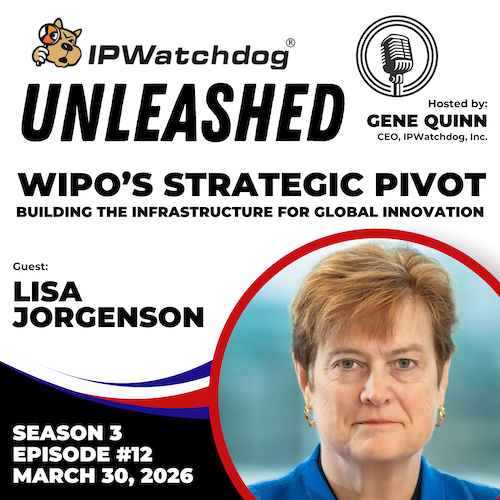

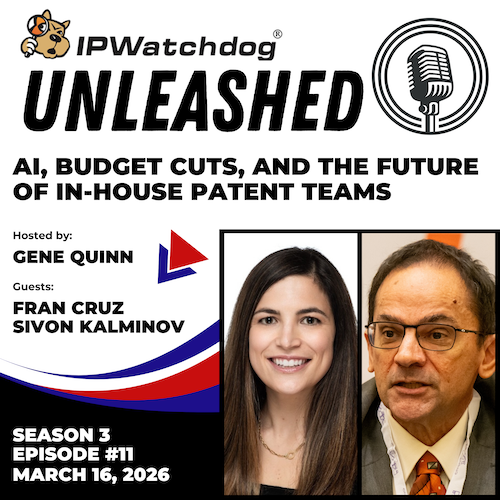

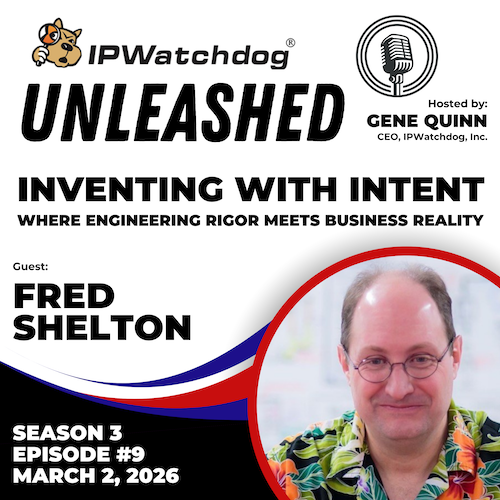
IPWatchdog Events
Webinar: Unlocking New Capabilities – The Real ROI of AI in Patent Practice
April 2 @ 12:00 pm - 1:00 pm EDTCLE Webinar: All in the Prompt – Crafting AI Prompts for Precision Outputs
April 7 @ 12:00 pm - 1:00 pm EDTPatent Masters™ 2026 – Portfolios, Licensing and Enforcement
June 8 @ 8:00 am - June 10 @ 5:00 pm EDT
Industry Events
24th Annual Rocky Mountain Intellectual Property & Technology Law Institute
May 28 @ 8:30 am - May 29 @ 4:30 pm MDTFrom IPWatchdog
![[Advertisement]](https://ipwatchdog.com/wp-content/uploads/2021/12/WEBINAR-336-x-280-px.png)
![[Advertisement]](https://ipwatchdog.com/wp-content/uploads/2021/12/Ad-4-The-Invent-Patent-System™.png)