
![[IPWatchdog Logo]](https://ipwatchdog.com/wp-content/themes/IPWatchdog%20-%202023/assets/images/temp/logo-small@2x.png)

 0
0 “[A]mici note that the institution rate for AIA trials has plummeted from 67% to 25%, ruining the cost-benefit analysis for most petitioners.”
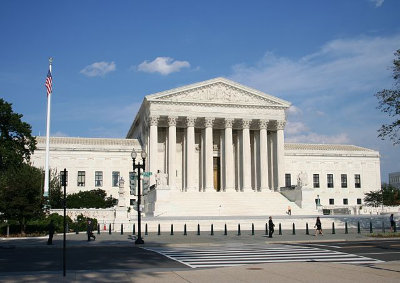 On Friday, an amicus brief was filed at the U.S. Supreme Court on behalf of major trade associations in the computer software, automotive, retail and other industries, urging the Court to grant Tesla’s petition for writ of certiorari following the denial of its petitions for inter partes review (IPR) at the Patent Trial and Appeal Board (PTAB) challenging patent claims owned by self-driving technology company Granite Vehicle Ventures. The industry groups claim that the Court’s review is necessary to address so-called “patent trolls” and policies adopted by the U.S. Patent and Trademark Office (USPTO) that effectively eliminate the use of IPRs to combat these allegedly bad actors.
Industry Groups Challenge Extra-Statutory Bars to IPR Petitions Filed Within Time Bar
Tesla filed its petition for writ of certiorari appealing this case to the Supreme Court this May, following the Federal Circuit’s February order denying Tesla’s petition for mandamus relief from a series of IPR petitions meeting discretionary denials at the PTAB. Citing to its 2021 precedential ruling in Mylan Laboratories v. Janssen Pharmaceutica, which limits reviewability of statutory challenges to institution denials on mandamus, the Federal Circuit dismissed Tesla’s claim as it was a non-constitutional challenge. Tesla’s cert petition asks the Supreme Court whether federal courts have the power to review IPR denials following extra-statutory restrictions based on time-to-trial in separate litigation.
Last Friday’s amicus brief filed by industry trade groups focuses on whether discretionary denials based upon earlier trial dates in parallel litigation in U.S. district courts comport with 35 U.S.C. § 315(b), which provides that IPR petitions may not be filed more than one year after the petitioner is served with a complaint alleging infringement based on the challenged patent claims. The industry groups, which include the Computer & Communications Industry Association (CCIA), the High Tech Inventors Alliance (HTIA), the Alliance for Automotive Innovation and the National Retail Foundation, challenge the agency’s authority to shorten that one-year window to as little as four months using agency discretion that isn’t explicitly referenced in the relevant statute.
Tracing the Congressional record leading up to the enactment of the America Invents Act (AIA) of 2011, industry amici noted that the one-year time bar was originally set at six months before the final negotiations leading up to the bill’s passage. Discretionary denial considerations have existed since Apple v. Fintiv was issued as a precedential PTAB ruling in 2020, but PTAB memorandums issued in March 2025 removed the dispositive nature of Sotera stipulations, which afforded many petitioners a pathway toward IPR institution despite Fintiv.
Other extra-procedural bars highlighted by amici, including USPTO Director John Squires’ taking over institution decisions last October and the establishment of settled expectations doctrine under former USPTO Acting Director Coke Morgan Stewart, have led to the denial of more than 800 IPR and post-grant review (PGR) petitions each costing more than $100,000 to prepare and file. As a result, amici note that the institution rate for AIA trials has plummeted from 67% to 25%, ruining the cost-benefit analysis for most petitioners.
SCOTUS Has Struck Down Judicially-Imposed Deadlines in Petrella, SCA Hygiene
In the context of laches defenses to copyright infringement claims, amici argue that the Supreme Court has previously struck down judicially-created time bars in cases like Petrella v. Metro-Goldwyn-Mayer (2014). The Court’s reasoning in that case, which struck down a bar to infringement claims that were filed within the Copyright Act’s three-year statute of limitations, has been applied to patent law in cases such as SCA Hygiene Products Aktiebolag v. First Quality Baby Products (2016), which similarly struck down a ruling that a patent infringement suit brought within the Patent Act’s statute of limitations was nonetheless barred for unreasonable delay.
The last time that the USPTO experimented with a time-to-trial rule in 2025, amici contend that the agency allowed the Abu Dhabi-based non-practicing entity (NPE) VLSI to obtain $2.3 billion in patent damages by barring IPR proceedings targeting that company’s patents. This “systematic looting of the American industrial economy” is a major problem for amici, who support Congress’ intent in creating additional pathways to invalidity outside of infringement litigation stemming back to the establishment of ex parte reexamination proceedings in 1980.
Industry amici charge the Federal Circuit with reading much into 35 U.S.C. § 314(a), which has been interpreted as supporting discretionary considerations applied by agency decision-makers. Amici point out the same “may not… unless” language cited in support of this discretion has been incorporated into 15 federal statutes governing maritime business licensure, loan origination, automotive sales, criminal appeals and small copyright infringement claims before the Copyright Claims Board (CCB). The agency’s citing of “resource constraints” in denying AIA reviews is further unwarranted given that the statutes governing IPR and PGR institution give the agency authority to set fees recovering the “aggregate costs” of such proceedings.
Along with the industry trade groups, other amici briefing was filed on the same day in support of Tesla’s petition by subscription-based IPR filing provider Unified Patents, who argues that Section 314(d)’s bar against judicial review does not foreclose challenges that the USPTO has exceeded the bounds set by Congress. Also filing an amicus brief on August 28 was Clearing House Payments subsidiary Askeladden, who contends that the Federal Circuit’s ruling below provides a replicable blueprint for administrative overreach across the executive branch.
![[Advertisement]](https://ipwatchdog.com/wp-content/uploads/2026/09/Patently-Sep-22-2026-sidebar-700x500-1.jpg)
![[Advertisement]](https://ipwatchdog.com/wp-content/uploads/2026/06/Womens-IP-Forum-2026-sidebar-regular-price-700x500-rev1.jpg)
![[Advertisement]](https://ipwatchdog.com/wp-content/uploads/2026/09/WE-BUY-PATENTS-SIM-IP-Ad-1-700x500-1.jpeg)
![[Advertisement]](https://ipwatchdog.com/wp-content/uploads/2026/08/OneTransform_700x500_v1-REVISED.jpg)
![[Advertisement]](https://ipwatchdog.com/wp-content/uploads/2024/09/Patent-Prosecution-Training-sidebar-700x500-2025-03-27.jpg)




![[Advertisement]](https://ipwatchdog.com/wp-content/uploads/2021/12/WEBINAR-336-x-280-px.png)
![[Advertisement]](https://ipwatchdog.com/wp-content/uploads/2021/12/Ad-4-The-Invent-Patent-System™.png)
Join the Discussion
No comments yet. Add my comment.
Add Comment