


 0
0 “Recent SEP litigation in Brazil highlights both the strengths of Brazil’s patent system and its capacity for continued evolution.”
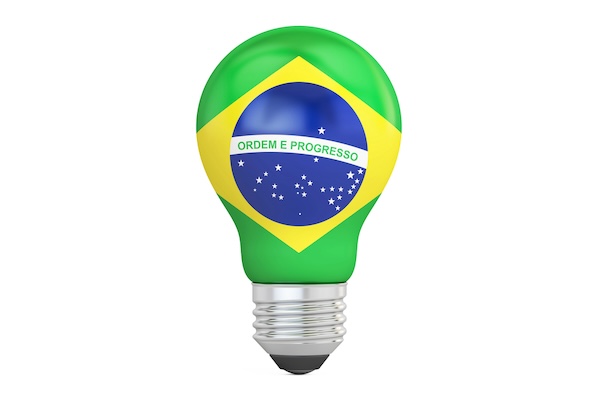 Over the past year, while advising clients on standard essential patent (SEP) matters and following the rapid development of SEP litigation in Brazil, I found myself revisiting a question that foreign clients often ask: Is Brazil really a jurisdiction where patent rights can be effectively enforced?
The question is particularly common among technology companies evaluating enforcement strategies across multiple jurisdictions. While Brazil is one of the world’s largest markets, many foreign patent owners remain less familiar with its courts than those of the United States, Europe, China or Japan.
Recent SEP litigation provides an interesting lens through which to answer that question.
SEP disputes are not representative of every patent case, but they involve some of the most commercially significant and technically sophisticated technologies currently being litigated around the world. If Brazil’s patent system can effectively handle disputes of this nature, it tells us something important about the broader maturity of its patent enforcement framework.
Recent SEP disputes largely confirm what many patent owners have known about Brazil for years, while also highlighting how the system continues to evolve.
SEP Litigation Reflects the Evolution of Patent Enforcement in Brazil
Around the world, SEP litigation often attracts attention because of the technologies involved, the commercial stakes at issue, and the broader discussions surrounding licensing and fair, reasonable and non-discriminatory (FRAND) obligations.
Yet one of the most interesting aspects of recent Brazilian SEP disputes is not simply that courts have been able to address highly sophisticated technologies. It is that these cases have coincided with a broader procedural evolution in how certain patent disputes are handled.
Brazilian courts have long been accustomed to dealing with technically complex patent disputes across industries such as pharmaceuticals, telecommunications, electronics, chemicals, and engineering. The challenge has never been whether judges could handle complex technologies, but rather how the judicial process could most effectively evaluate them.
In recent years, particularly in some of the courts that have become frequent venues for sophisticated patent litigation, new procedural approaches have emerged. Rather than relying exclusively on traditional ex parte injunction practice, courts have increasingly explored mechanisms that allow technical issues to be examined at an earlier stage of the proceedings before deciding requests for preliminary injunctive relief. SEP disputes have become one of the most visible examples of this trend.
A clear example is IP Bridge v. BYD, the first SEP action in Brazil targeting an automaker. There, the presiding judge of the 6th Business Court of Rio de Janeiro appointed two separate court experts — one for technical infringement issues and another for FRAND-related economic data — under a tightly managed schedule before deciding the request for preliminary injunctive relief.
The result is not a departure from Brazil’s patent enforcement framework, but an evolution of it. The system has demonstrated a capacity to adapt procedural tools to increasingly complex disputes while preserving the central role of technical evidence and expert analysis.
Technical Evidence Continues to Drive Outcomes
If there is one characteristic that consistently defines patent litigation in Brazil, it is the importance of technical evidence. And recent SEP disputes have only reinforced this observation.
Brazilian judges routinely rely on court-appointed experts when dealing with highly technical matters. As a result, the quality of the technical record often becomes one of the most important factors influencing the outcome of a case.
What has evolved is not the importance of technical evidence itself, but the stage at which courts may choose to engage with it.
In some recent cases, such as InterDigital v. Disney, in which the preliminary injunction granted against Disney over AVC/HEVC video-codec patents was based on a provisional expert report produced before the adversarial phase, courts have shown a greater willingness to seek technical clarification before deciding requests for injunctive relief. While this may require additional effort at the outset of a dispute, it can also reduce uncertainty and increase confidence in the resulting decision.
This development is particularly significant in SEP disputes, where infringement and validity questions often involve highly sophisticated technologies. Yet its relevance extends well beyond SEPs. Similar procedural approaches have increasingly appeared in other technology-intensive sectors, including pharmaceutical litigation.
For both patent owners and defendants, the attraction of this evolving framework is not simply speed. It is the combination of speed and technical scrutiny.
Predictability Is Becoming One of Brazil’s Greatest Strengths
When discussing patent enforcement, many conversations focus on whether a jurisdiction is considered “pro-patent” or “pro-defendant.”
In practice, however, what many parties seek is predictability: Can disputes be evaluated through established procedures? Can technical issues be analyzed through a framework that courts already understand? Can litigation risks be assessed with a reasonable degree of confidence?
Recent SEP disputes suggest that Brazil continues to move in a positive direction on all three fronts.
The growing use of early technical analysis in complex cases reflects an effort to improve the quality and durability of judicial decisions. Decisions grounded in a more developed technical record are often better positioned to withstand appellate review and provide greater certainty to the parties involved.
What Recent SEP Cases Really Tell Us
Perhaps the most important lesson from recent SEP litigation is that it highlights both the strengths of Brazil’s patent system and its capacity for continued evolution.
Recent decisions further illustrate this evolution. In Ericsson v. Lenovo/Motorola, the Third Business Court of the Rio de Janeiro State Court granted a preliminary injunction over SEPs covering 5G security procedures, later upheld on appeal. In Nokia v. Oppo, an injunction over an AMR-WB speech-codec SEP led Oppo to leave the Brazilian market before the parties reached a global licensing agreement. In Huawei v. MediaTek, preliminary injunctions granted over 4G/LTE and EVS voice-codec patents led the parties to reach a global licensing agreement within six months of filing. In JVC v. Hisense, a preliminary injunction grounded in a court-appointed technical opinion confirming essentiality and infringement prompted Hisense to enter into a global license, ending the Brazilian litigation, while DivX v. Netflix produced one of Brazil’s first final, merits-based rulings on a SEP/FRAND dispute, with the Rio de Janeiro Court of Justice confirming a permanent injunction and rejecting the implementer’s belated attempt to raise a FRAND defense at the appellate stage.
Collectively, these cases demonstrate that Brazilian courts are capable of addressing some of the most sophisticated technologies currently being litigated worldwide. At the same time, they show a judiciary that continues to refine procedural mechanisms in pursuit of greater accuracy, consistency, and predictability.
The growing emphasis on early technical scrutiny, combined with the traditional reliance on expert evidence, reflects a system seeking to balance speed with technical rigor.
For patent owners and companies developing global enforcement strategies, that evolution may be one of the most important developments to watch.
Image Source: Deposit Photos
Image ID: 152227212
Author: alexlmx
![[Advertisement]](https://ipwatchdog.com/wp-content/uploads/2026/10/BlackBox-IP-Oct-20-2026-sidebar-700x500-1.jpg)
![[Advertisement]](https://ipwatchdog.com/wp-content/uploads/2026/10/Questel-Oct-22-2026-sidebar-700x500-1.jpg)
![[Advertisement]](https://ipwatchdog.com/wp-content/uploads/2026/09/Life-Sciences-2026-sidebar-early-bird-ends-Oct-25-700x500-1.jpg)
![[Advertisement]](https://ipwatchdog.com/wp-content/uploads/2026/09/WE-BUY-PATENTS-SIM-IP-Ad-1-revised-on-Sep-28-2026-700x500-1.jpg)
![[Advertisement]](https://ipwatchdog.com/wp-content/uploads/2024/09/Patent-Prosecution-Training-sidebar-700x500-2025-03-27.jpg)







![[Advertisement]](https://ipwatchdog.com/wp-content/uploads/2021/12/WEBINAR-336-x-280-px.png)
![[Advertisement]](https://ipwatchdog.com/wp-content/uploads/2021/12/Ad-4-The-Invent-Patent-System™.png)







Join the Discussion
No comments yet.