


 1
1 “NO FAKES is going to move under my watch.” – Darrell Issa
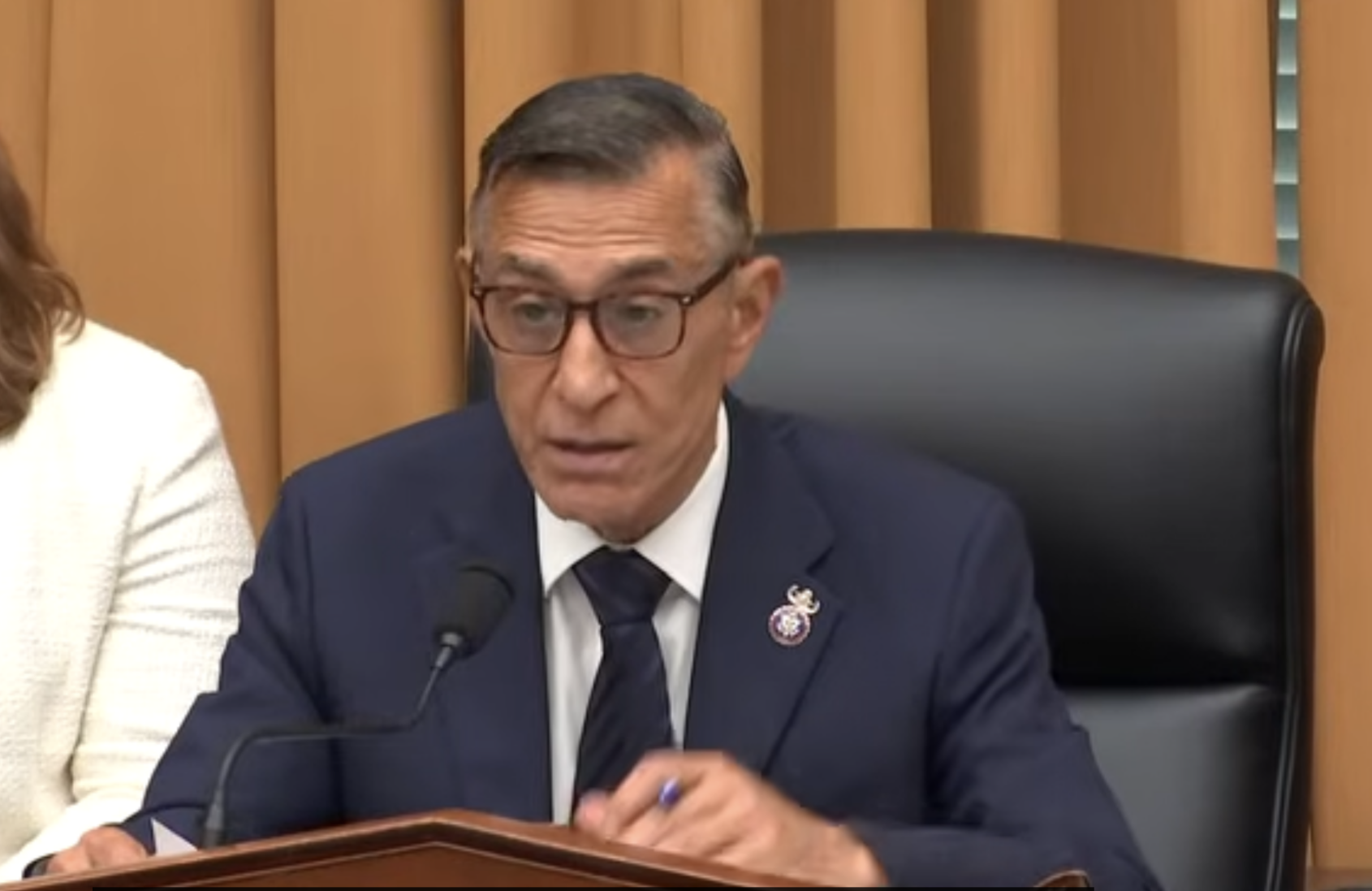
Darrell Issa
The House Judiciary Committee’s Subcommittee on Courts, Intellectual Property, Artificial Intelligence, and the Internet held a hearing on Tuesday, titled “A Midlife Crisis? IP and the Internet After 40.” The hearing examined the changes that have occurred over the last four decades of the internet and featured witnesses including celebrities, academics and computer and media experts.
The goal of the hearing, according to Subcommittee Chair Darrell Issa (R-CA), was to be proactive rather reactive in stopping mass piracy on the internet, and to discuss ways to update the law in light of new technologies like generative AI.
Issa said that, while the Digital Millennium Copyright Act (DMCA) has been useful for rightsholders, the speed at which takedowns operate is inefficient for today’s digital reality. Counterfeiting and piracy are also linked to illicit drug operations and fake pharmaceuticals, which can be lethal to consumers, he noted.
In a video presentation that Issa played, Patrick Crowley, Producer of Jurassic World and Twister film franchises, said that “today, filmmakers have no remedy to combat rampant competition from piracy websites based overseas offering up exact digital copies of our world for free.”
However, congress has the remedy in site blocking legislation, which is already being used in countries around the world.
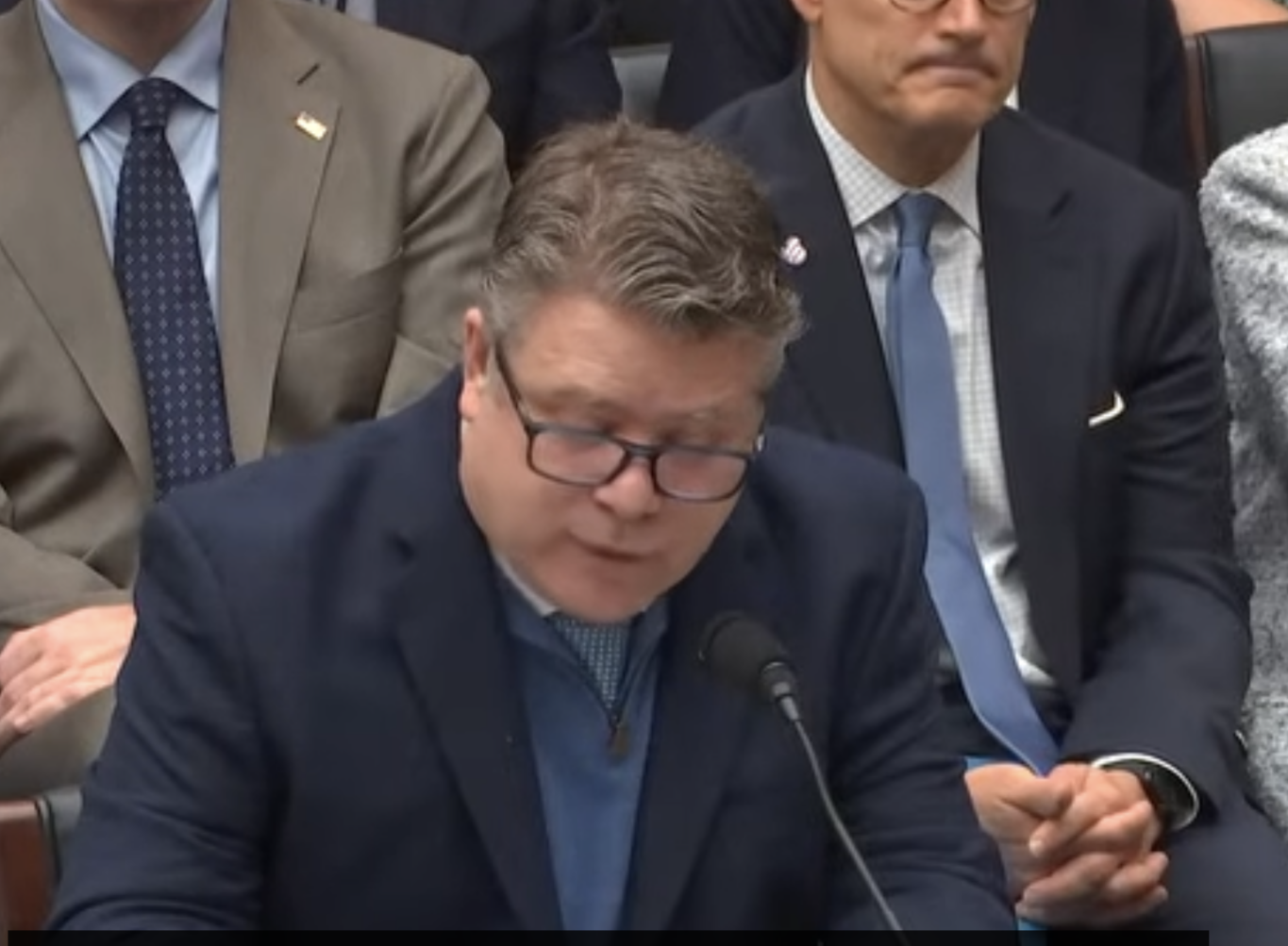
Sean Astin
The witnesses in the room included Sean Astin, actor and President of the Screen Actors Guild-American Federation of Television and Radio Artists (SAG-AFTRA). Astin discussed the problem of AI stealing the voices and likenesses of performers as well as everyday citizens today, and said “our members have almost no ability to protect themselves from this kind of abuse.”
Chris Floyd, Of Counsel at Amblin Entertainment, explained the difficulty of going after pirated films and said that piracy therefore impacts the U.S. economy broadly. He urged the Subcommittee to pass legislation authorizing judicial site blocking, which countries like Portugal have enacted, seeing a 70% drop in traffic to targeted pirate sites, while Australia saw a 25% decrease in one year.
Representative Zoe Lofgren (D–CA) noted that the Foreign Anti-Digital Piracy Act (The FADPA Act (H.R.791)) addresses the gap in judicial remedies to target foreign piracy sites. Introduced in January 2025, it would amend Title 17 to establish a judicial process allowing copyright owners and exclusive licensees to petition U.S. district courts for blocking orders against foreign websites or online services engaged in large-scale copyright infringement.
Another bipartisan bill introduced in the Senate in July 2025 by Senators Thom Tillis (R-NC), Chris Coons (D-DE), Marsha Blackburn (R-TN) and Adam Schiff (D-CA), titled “Block Bad Electronic Art and Recording Distributors Act of 2025’’(the Block BEARD Act), is aimed at blocking foreign websites dedicated to piracy from making stolen content available to U.S. users.
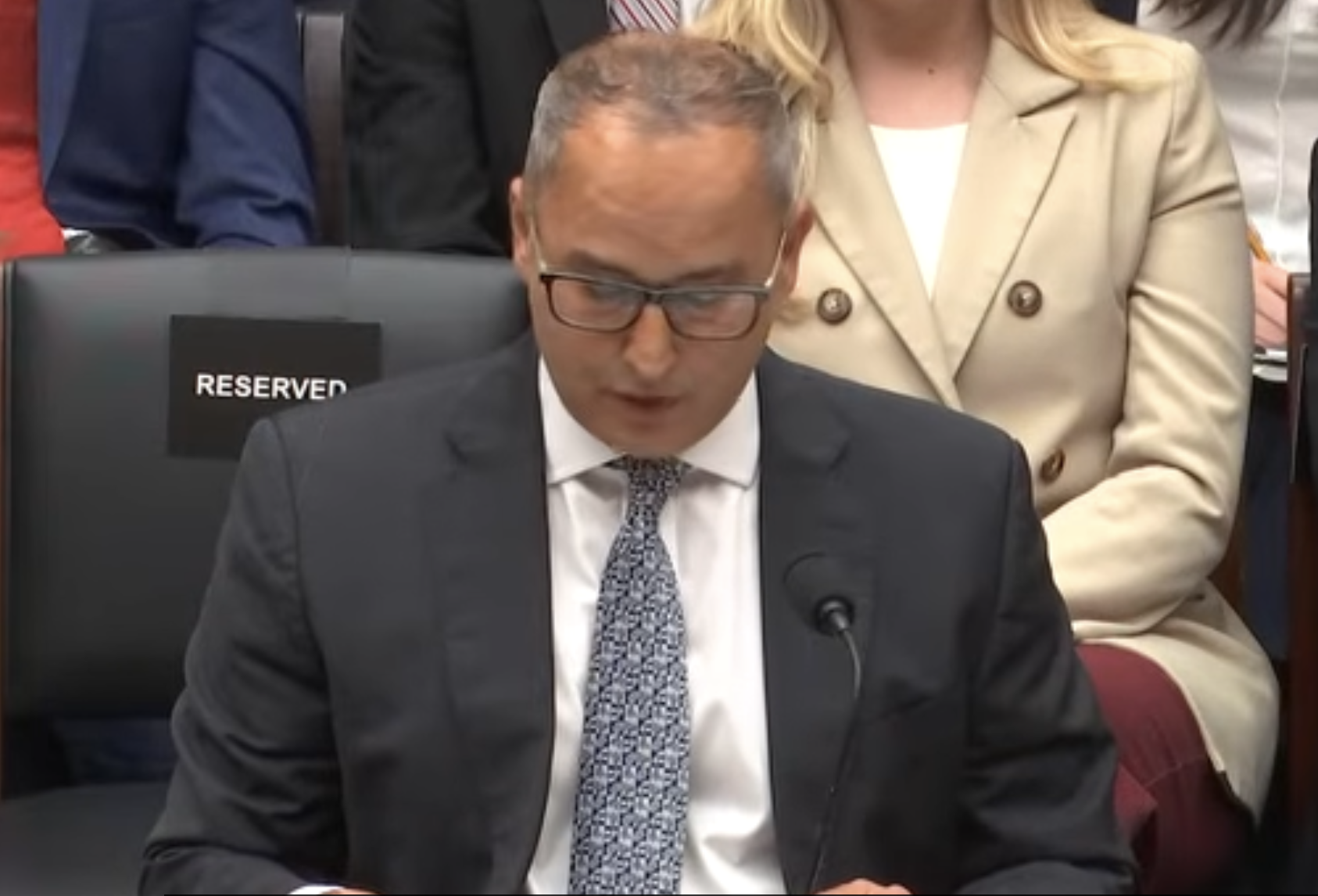
Steve Francis
Steve Francis, Executive Chairman of IP House, said it has become harder to disrupt criminal networks as technology has improved and that Schedule A litigation is one tool that can be used to combat large-scale counterfeiting. “The foreign criminals pushing dangerous IP infringing goods and stolen content into our market should not enjoy a procedural advantage over the U.S. rights holders working to safeguard their brands, their consumers, and the U.S. economy,” Francis said. For that reason, Francis warned against calls to limit or eliminate Schedule A Litigation. “The answer is not to abandon the tool but to apply it with discipline,” he said. “Refinement, not retreat, is the right course.”
Chris Mohr, President, Software and Information Industry Association (SIIA), told the Subcommittee that his organization has concerns about the “Nurture Originals, Foster Art, and Keep Entertainment Safe Act of 2026” (NO FAKES Act), which was recently unanimously advanced by the full Senate Judiciary Committee and would create a federal IP right to an individual’s voice and likeness.
While SIIA supports such a right, Mohr said the bill has several problems, such as failing to deliver on a national standard by only replacing state regimes for expressive works; and making the law too rigid in terms of putting wrongly removed content back up, thus threatening free speech.
SIIA instead supported the TAKE IT DOWN Act, signed into law in May 2025, which “criminalizes nonconsensual intimate imagery, including AI-generated ‘digital forgeries,’ and directs covered platforms to establish a notice-and-removal process.”
Finally, Bhamati Viswanathan, Non-Resident Fellow at the Kernochan Center for Law, Media & Art, Columbia Law School, framed the internet’s mid-life crisis as an opportunity to rethink, and offered three potential solutions: 1) Enactment of judicial site blocking legislation and expeditious removal; 2) encouraging AI companies to create copyright compensation agreements with creators; and 3) regulation of digital replicas.
Issa later in the hearing raised the question whether Congress should be empowering bodies like the International Trade Commission (ITC) to enforce site blocking as part of new legislation, citing ClearCorrect Operating, LLC v. Int’l Trade Comm’n, No. 14-1527 (Fed. Cir. 2015) as evidence of the problem. In ClearCorrect, the U.S. Court of Appeals for the Federal Circuit (CAFC)—with Judge Pauline Newman dissenting—said that the ITC was wrong to conclude that “articles” as described in 19 U.S.C. § 1337(a) “should be construed to include electronic transmission of digital data. . . .”
In response to Issa, Mohr said it is a complicated issue and would hinge on what the remedy is and what the ITC would have to do to stop it.
Issa also said congress may have to consider expanding the definition of Customs to include intangible assets, which would go beyond the purview of the present hearing and Committee.
Issa concluded with a pledge to move forward on NO FAKES. “NO FAKES is going to move under my watch,” he said.
He added: “It’s going to be my intention that we will move it out of this Committee. All of you have made the case that allowing this continued damage is simply no longer possible.”
![[Advertisement]](https://ipwatchdog.com/wp-content/uploads/2026/10/BlackBox-IP-Oct-20-2026-sidebar-700x500-1.jpg)
![[Advertisement]](https://ipwatchdog.com/wp-content/uploads/2026/10/Questel-Oct-22-2026-sidebar-700x500-1.jpg)
![[Advertisement]](https://ipwatchdog.com/wp-content/uploads/2026/09/Life-Sciences-2026-sidebar-early-bird-ends-Oct-25-700x500-1.jpg)
![[Advertisement]](https://ipwatchdog.com/wp-content/uploads/2026/09/WE-BUY-PATENTS-SIM-IP-Ad-1-revised-on-Sep-28-2026-700x500-1.jpg)
![[Advertisement]](https://ipwatchdog.com/wp-content/uploads/2024/09/Patent-Prosecution-Training-sidebar-700x500-2025-03-27.jpg)



![[Advertisement]](https://ipwatchdog.com/wp-content/uploads/2021/12/WEBINAR-336-x-280-px.png)
![[Advertisement]](https://ipwatchdog.com/wp-content/uploads/2021/12/Ad-4-The-Invent-Patent-System™.png)





Join the Discussion
One comment so far.
IP Nerd
July 6, 2026 07:14 am>>>Finally, Bhamati Viswanathan, Non-Resident Fellow at the Kernochan Center for Law, Media & Art, Columbia Law School, framed the internet’s mid-life crisis as an opportunity to rethink, and offered three potential solutions: 1) Enactment of judicial site blocking legislation and expeditious removal; 2) encouraging AI companies to create copyright compensation agreements with creators; and 3) regulation of digital replicas.<<<
This was my favorite part of the article. I do believe these remedies would get more positive flow while creating friction for bad actors in the counterfeit goods space.
I especially intrigued by the thought of copyright compensation agreements for creators. AI has the potential to create unimaginable amount of content in the marketplace. Many of these AI companies are top heavy in equity (shareholder count via population) and have small employee bases. Net result a bunch of capital tired in the future markets with the average market participant with the impression AI companies “only take and never give”. Getting copyright compensation on the streets where people “meet and greet” could burden adoption outside accredited investors and computer science engineers to everyday folk. This allows funneling into the best marketing campaigns so where coordination is strongest noise becomes “signal”