
![[IPWatchdog Logo]](https://ipwatchdog.com/wp-content/themes/IPWatchdog%20-%202023/assets/images/temp/logo-small@2x.png)

 0
0 “I don’t hear from patent owners on a daily basis that EPRs are unfair or subject to abuse [but] attention is shifting there right now.” – Coke Stewart
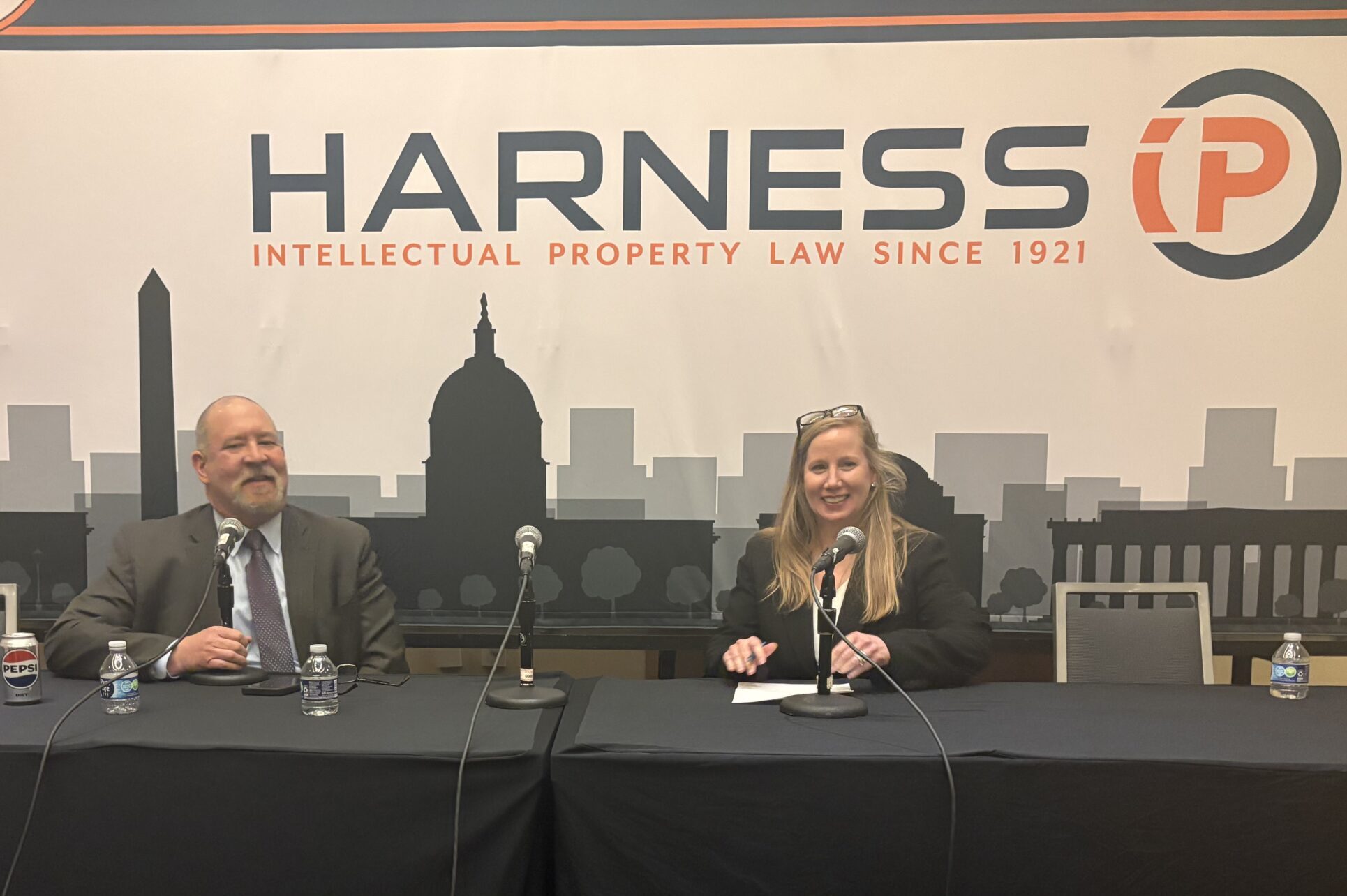 In the final session of IPWatchdog LIVE 2026 on Tuesday, March 24, U.S. Patent and Trademark Office (USPTO) Deputy Director Coke Morgan Stewart had a conversation with IPWatchdog Founder and CEO Gene Quinn in which she confirmed the Office is paying attention to the recent surge in ex parte reexamination filings and also said she is “optimistic” that the pending Notice of Proposed Rulemaking (NPRM) will be finalized.
Stewart told Quinn that the number of ex parte reexamination requests filed at the Office is currently over 1,000, up from just over 700 for all of FY 2025. The patent community has been watching this trend, which seems to be a response to USPTO Director John Squires’ crackdown on inter partes review (IPR) institutions.
Quinn argued in a recent article that the Central Reexamination Unit (CRU) is not “vigorously enforcing Section 325(d), which gives the Office authority to deny a request for reexamination or IPR if ‘the same or substantially the same prior art or arguments previously were presented to the Office.’” This authority was also confirmed by the Federal Circuit in In re Vivint, Inc., 14 F.4th 1342, 1354 (Fed. Cir. 2021).
While Stewart argued that EPRs are a better option for patent owners than IPRs, as they are a more iterative, examinational proceeding, as opposed to adversarial, she said the Office is looking at areas like the substantial new question of patentability and reasonable likelihood that the requester will prevail standards, as “there’s not a lot of law” in those areas, and the Office is looking for any signs of potential abuses.
“I don’t hear from patent owners on a daily basis that EPRs are unfair or subject to abuse,” said Stewart, but “attention is shifting there right now.”
Stewart also told Quinn she is optimistic, both in general about the IP system, and specifically about the chances of the NPRM on IPR practice becoming final.
“I will be optimistic about the IP system today,” Stewart said, recalling that when she spoke at last year’s LIVE, the vibe was decidedly more negative. “People were so down with the backlog out of control, and now we’ve done so many good things,” she said.
The Office has received 11,000 comments (not all unique) on the NPRM, and Stewart said she is “optimistic the rule will come out and it will land in a good place,” although she could not provide an estimated timeline.
Many in the IP community are expecting that Squires may have to defend the NPRM in the scheduled House Oversight Hearing of the USPTO tomorrow, which Stewart said she expects to be “tough.”
Quinn also asked Stewart about the evolution of the Office’s takeover of the IPR discretionary denial process, which she spearheaded as then-Acting Director. She explained that the Office felt they needed to more overtly articulate what factors they wanted to consider in order to create a more balanced and predictable system. She defended the “much-maligned” settled expectations factor, noting that it can be asserted by both petitioners and patent owners, but Stewart said that the Office doesn’t often see petitioners using it.
She pointed to the decision in Home Depot v. H2 Intellect as evidence that the Office is simply “trying to take account of what’s happening in the real world.” There, the Acting Director declined to deny institution on an IPR brought by Home Depot, despite the patent having been in force for 12 years. While the age of the patent as well as the trial timing both favored discretionary denial, Stewart was persuaded by Home Depot’s argument that its own settled expectations should prevail in the case because the “Patent Owner only previously targeted smartphones, tablets, and watches, whereas Petitioner, Home Depot, is the proprietor of a chain of hardware stores and did not have reason to anticipate assertion of the patent against it. Id. Petitioner’s arguments are persuasive.”
“We’re looking for a predictable IP system on the whole,” Stewart said.
Stewart also dismissed concerns that the Patent Trial and Appeal Board’s (PTAB’s) 180-ish judges won’t have enough work to do with IPR institution rates dropping. “There’s plenty of work for them to do,” she said. “I don’t think we’re going to run out of work, [or] we can just do the work faster.” Pendency for ex parte appeals is on track to be at eight months, for instance, she added.
The Office currently has about 9,000 examiners and is trying to hire 1,100 more, particularly in specializations such as emerging technologies, AI and fuel cells. About 300 examiners were lost to the Trump Administration’s 2025 “Fork in the Road” incentives, Stewart noted.
If 1,100 examiners are hired, that would bring the total number to over 10,000, which would be a record for the Office.
The Office is also considering new AI operational tools to manage its volume of work and Stewart told attendees to stay tuned to information about tools that will impact patent prosecution.
Overall, Stewart said her administration’s focus has been on being faithful to the Trump “America First” position, and that bringing the PTAB back closer to its original vision has been part of that. “The PTAB heard 300-400 cases a year at first, then that ballooned to 1,500 a year,” Stewart said.
“We view the PTAB as more of a scalpel than a sledgehammer. People complain a lot about [settled expectations] but that’s the vision of the AIA. The window should narrow.”
Stewart also encouraged stakeholders to reach out, particularly with positive input. “It’s tough to do an oversight hearing, and it would be helpful if people who like what’s going on could give their feedback,” she said.
Rep. Kiley Spotlights Congressional Inventions Caucus
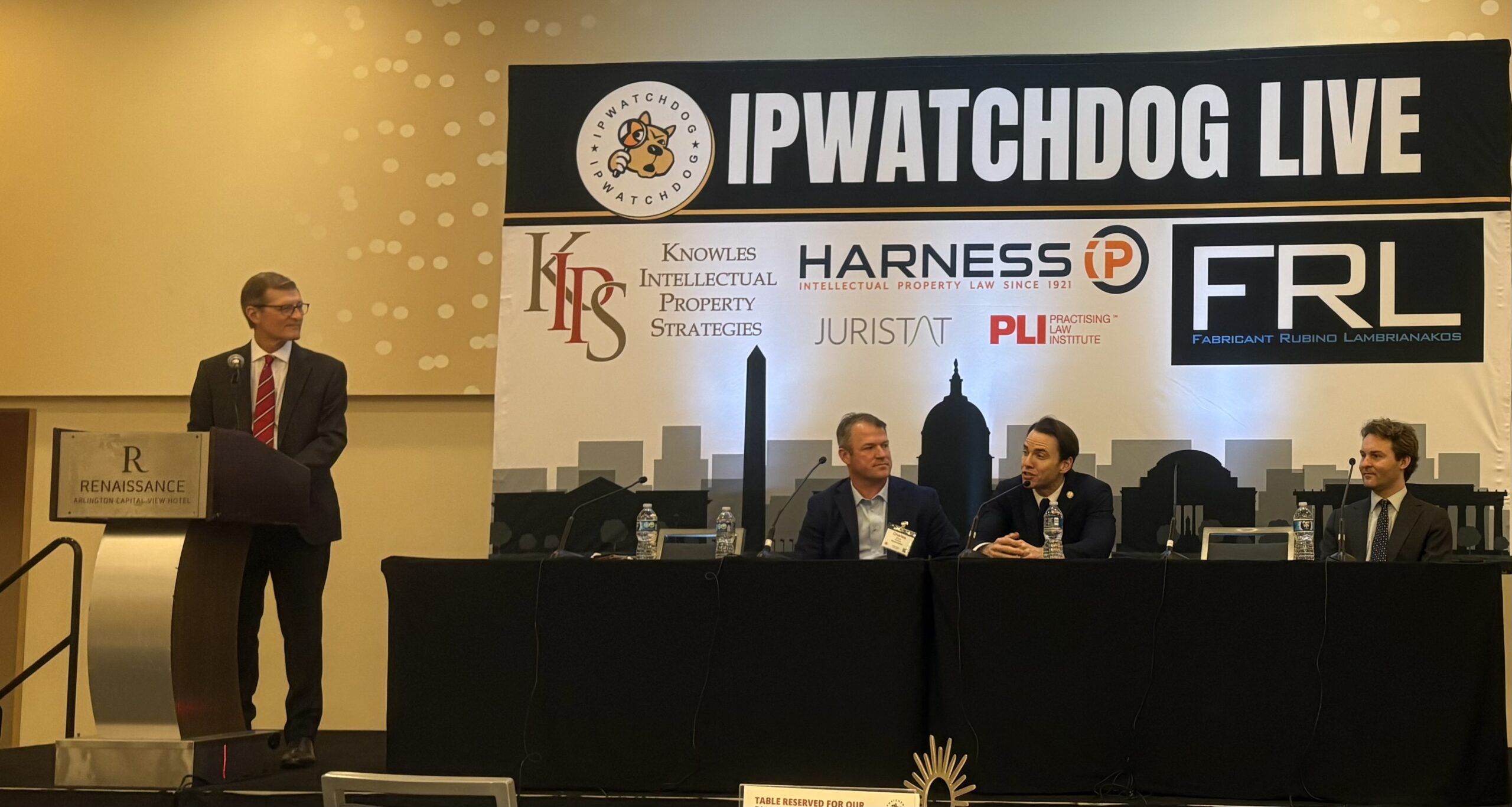
From Left: Jim Edwards, Charles Sauer, Rep. Kevin Kiley and Taylor Betts
In the first session of the day, Congressman Kevin Kiley (I-CA) took part in a discussion led by James Edwards of the Congressional Inventions Project, which is separate from but supportive of the bicameral Congressional Inventions Caucus, aimed at educating lawmakers and staff about the challenges faced by inventors and innovators today.
Kiley is a member of the House Judiciary Committee and sits on the IP Subcommittee, which will conduct an oversight hearing of the U.S. Patent and Trademark Office (USPTO) tomorrow, March 25. Kiley also worked on IP matters at Irell & Manella before his election to the California State Assembly and entry into politics.
Joining Kiley were Charles Sauer, Board Member of the Congressional Inventions Project and Taylor Betts, Executive Director of the Congressional Inventions Caucus under Senator Steve Daines (R-MT).
Kiley told Edwards that the Project works to fill the knowledge gap on IP in Congress by regularly holding events to showcase inventors and their stories and by providing hands on experiences with invention. He and Sauer urged IP practitioners to get involved by becoming members of the Caucus. “The core principles we’re trying to build the Caucus around are simple – invention should be protected, IP rights ought to be clear and enforceable, and all of this is closely connected to character of our country,” Kiley said, adding that that approach has resulted in buy-in from a range of members without partisanship. Edwards noted that the Caucus has more than 20 members that span the gamut of politics from left to right.
“We’re at a time where IP issues are as salient and important as ever, and for those of you who understand what they’re all about, being involved in the policy process is important,” Kiley said, encouraging those in attendance to be in touch with him and with the Caucus.
IPWatchdog Masters Hall of Fame: 2026 Award Recipients
During lunch on day three, Gene and Renee Quinn presented the 2026 IPWatchdog Masters Hall of Fame Awards to Joseph Allen, Hon. David Kappos and Hon. Andrei Iancu.
Inductees to the IPWatchdog Masters™ Hall of Fame are honored as a tribute to their long histories of service to strengthening and protecting U.S. IP rights. The IPWatchdog Hall of Fame focuses on real IP professionals and not those who have generalized fame. The recipients are people who not only contribute to the field, but who also help set the debate—real thought leaders and industry icons who take the time to participate.
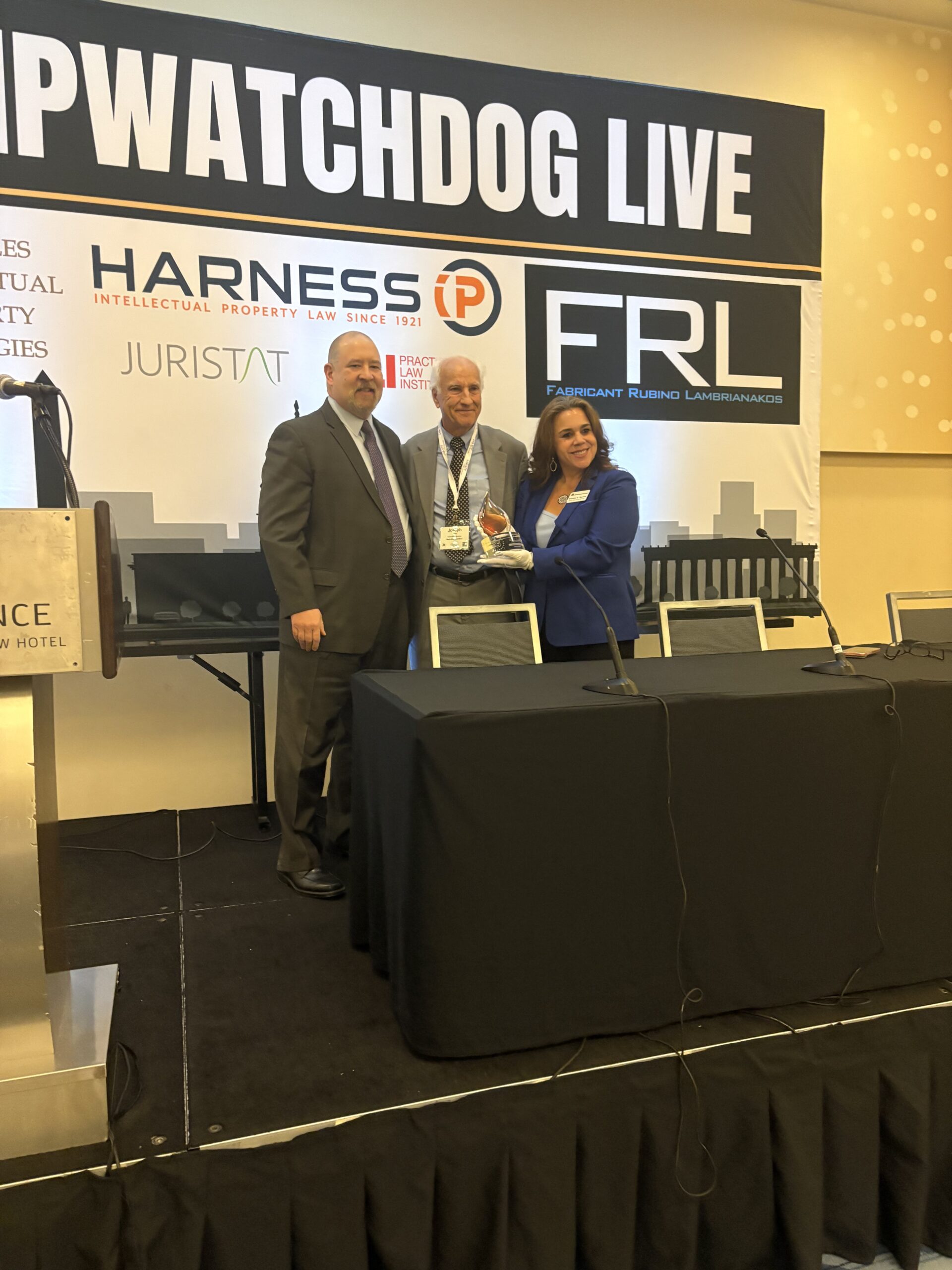
Gene Quinn, Joe Allen and Renee Quinn.
Allen served on the U.S. Senate Judiciary Committee for Senator Birch Bayh (D-IN) and helped to get the Bayh-Dole Act signed into law. After leaving the Senate staff, he became Executive Director of the Intellectual Property Owners, Inc. (IPO) and then the Director of the Office of Technology Commercialization at the Department of Commerce, where he oversaw Executive branch implementation of the Bayh-Dole and Federal Technology Transfer Acts and related presidential policy directives. Today, he is Executive Director of the Bayh-Dole Coalition, a non-profit organization composed of universities, companies, venture capitalists, entrepreneurs, and others who are committed to protecting the Bayh-Dole Act.
Allen recounted the road to Bayh-Dole, which grew out of a recognition that key technologies were not getting to market due to a lack of commercialization. Bayh-Dole changed that by fostering R&D partnerships between universities and industry, with The Economist Technology Quarterly calling the law “possibly the most inspired piece of legislation to be enacted in America over the past half century.”
Upon accepting his award, Allen told attendees they are “the stewards of American innovation,” and urged them to help educate the public about the benefits of systems like Bayh-Dole and warn of what might happen if pro-IP voices allow “the other side to dominate the conversation” again.
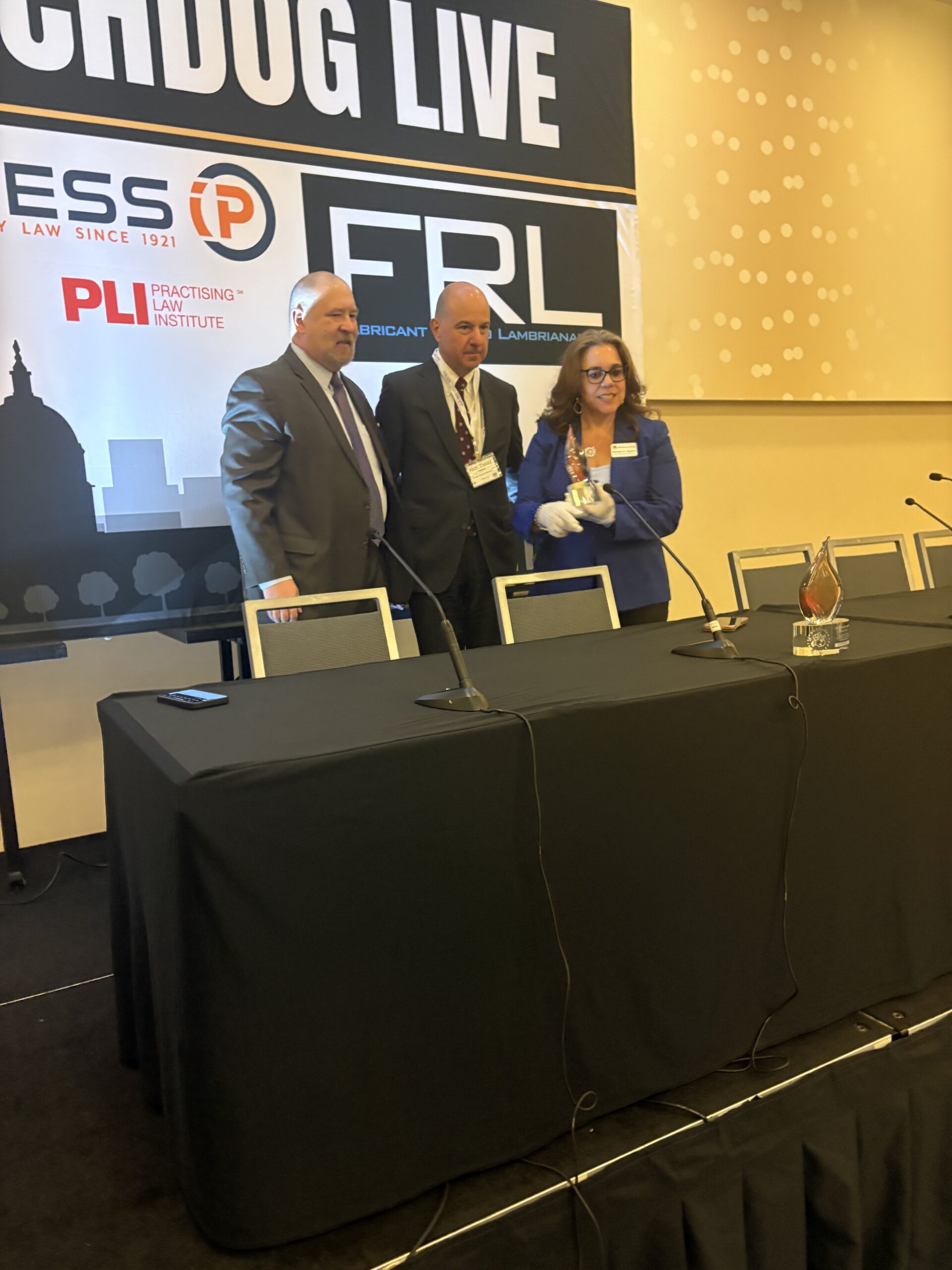
Gene Quinn, David Kappos and Renee Quinn.
Kappos served as Under Secretary of Commerce and Director of the U.S. Patent and Trademark Office (USPTO), and as IBM’s chief intellectual property lawyer before that. Today, he serves as co-Chair of Cravath’s Intellectual Property Practice and also as co-Chairman of the Board for the Council for Innovation Promotion (C4IP).
Kappos praised IPWatchdog and Gene Quinn being “properly and incisively critical – but not biting – of the Office” since the early 2000s and echoed Allen’s call for practitioners to be vocal. “We all need to keep going and keep making our points in favor of a strong IP system,” he said.
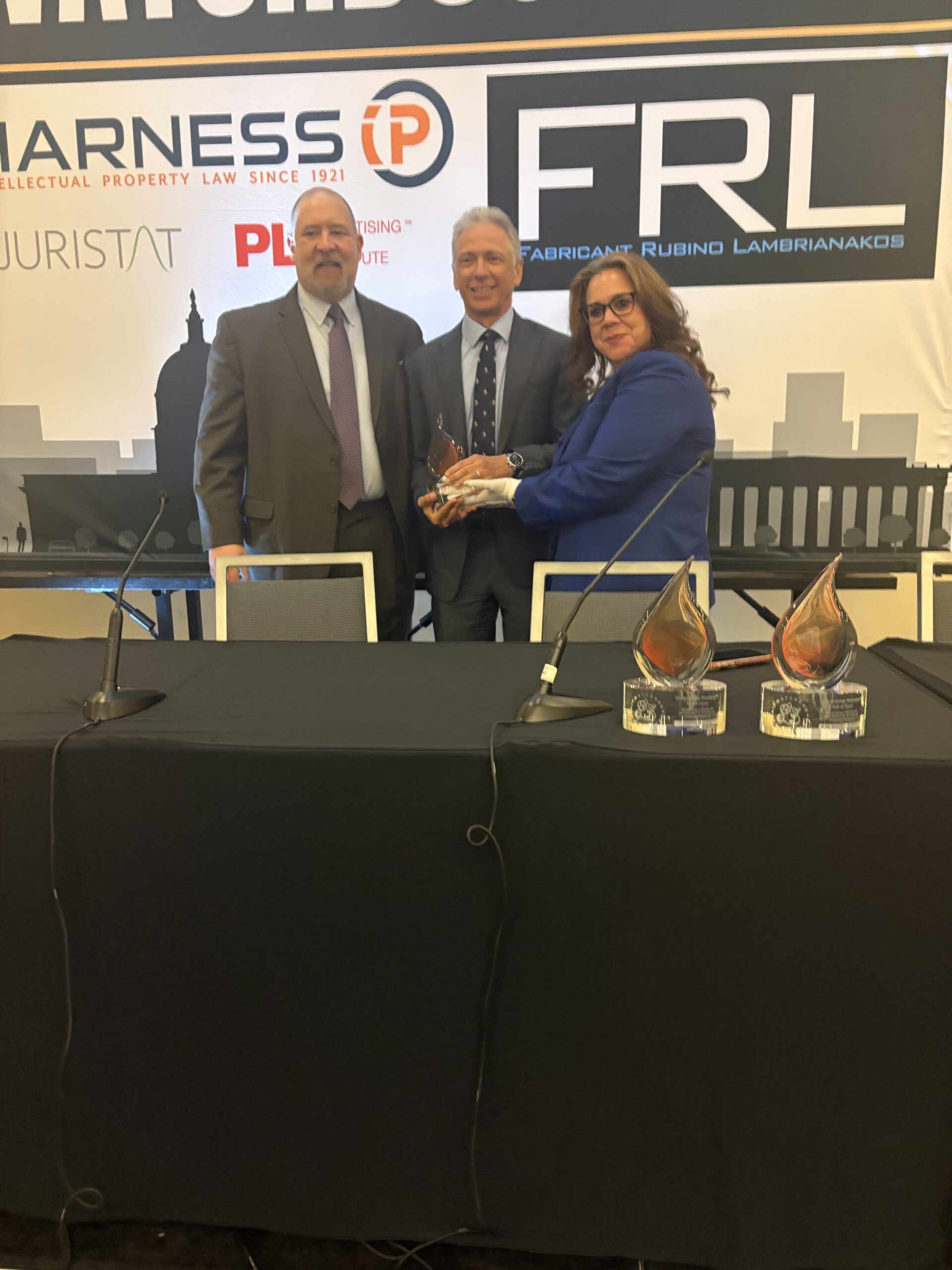
Gene Quinn, Andrei Iancu and Renee Quinn.
Iancu served as USPTO Director from 2017 to 2021 and represents clients in litigation and trials before the district courts, the U.S. International Trade Commission, the USPTO, the Federal Circuit, and the U.S. Supreme Court. He is currently a partner in Sullivan & Cromwell’s Intellectual Property & Technology practice group, and is co-Chairman of the Board for C4IP along with Kappos.
Iancu quipped that he and Kappos “usually agree on everything related to IP” but disagreed that Quinn’s criticisms of the Office have not been “biting.” Pointing to a 2019 article authored by Quinn, title “The Honeymoon is Over – Time for Iancu to Take Action on PTAB Harassment of Patent Owners,” Iancu noted that Quinn at the time said he deserved a “D for Doing Nothing,” but praised him for staying true to the IPWatchdog name and keeping tabs on the damage bad IP policy can do to the country. Iancu added that there will always be more consumers of creativity than creators and emphasized the importance of not allowing creators’ voices to be drowned out by those consumers.
Quinn congratulated and thanked all of the recipients and implored his colleagues to just continue showing up. “None of us have supernatural powers of persuasion, but if you show up and you’re willing to have your mind changed when things come to light, and listen to the other side, that matters,” Quinn said.
![[Advertisement]](https://ipwatchdog.com/wp-content/uploads/2026/02/LexisNexis-Mar-31-2026-sidebar-700x500-1.jpg)





![[Advertisement]](https://ipwatchdog.com/wp-content/uploads/2021/12/WEBINAR-336-x-280-px.png)
![[Advertisement]](https://ipwatchdog.com/wp-content/uploads/2021/12/Ad-4-The-Invent-Patent-System™.png)


Join the Discussion
No comments yet. Add my comment.
Add Comment