
![[IPWatchdog Logo]](https://ipwatchdog.com/wp-content/themes/IPWatchdog%20-%202023/assets/images/temp/logo-small@2x.png)

 0
0 “In an age when AI is generating what the Australian patent office calls “slopplications,” and they’ve seen a 174% spike in self-filed applications, your role as curator and quality guardian has never been more critical.
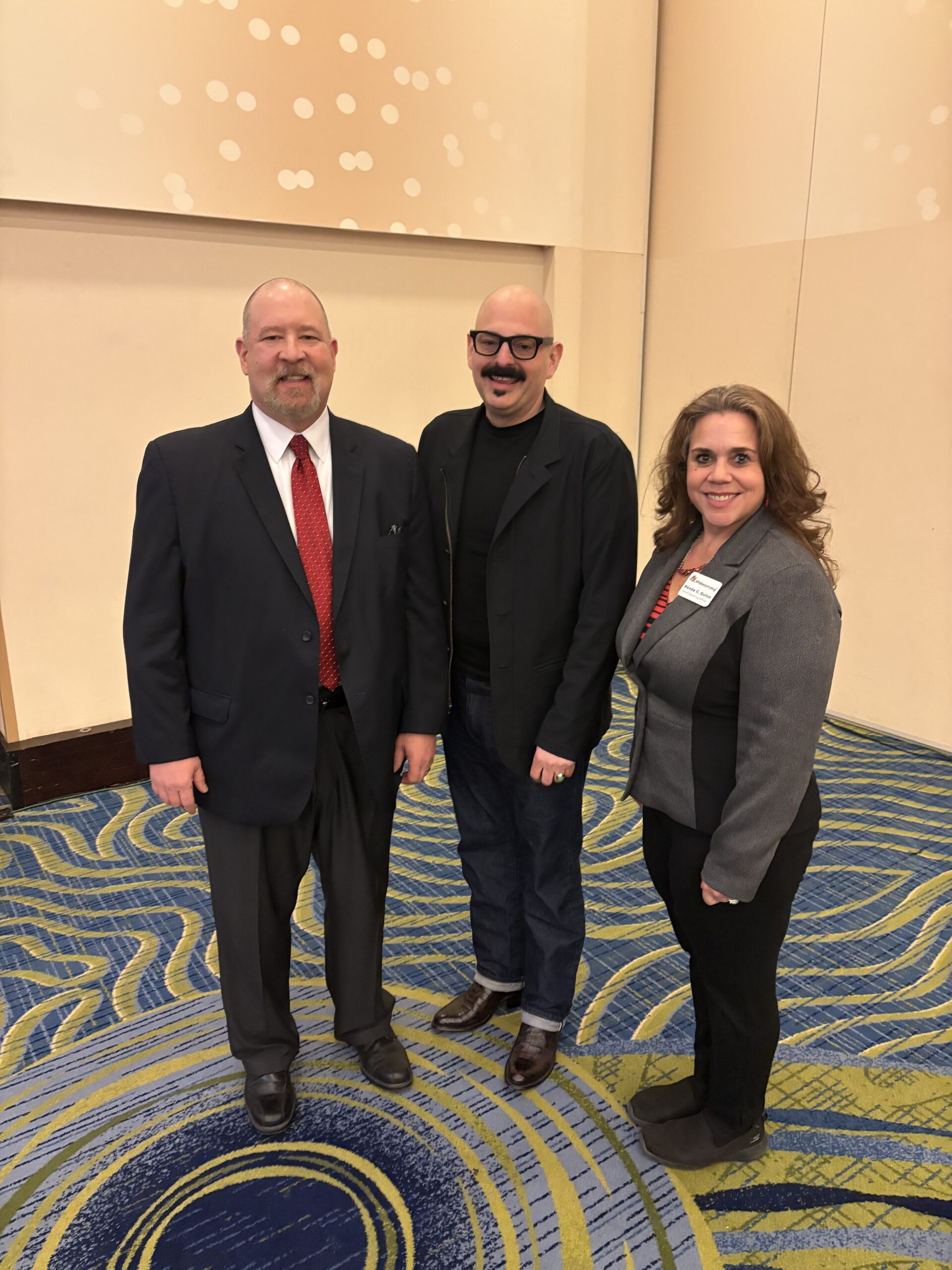
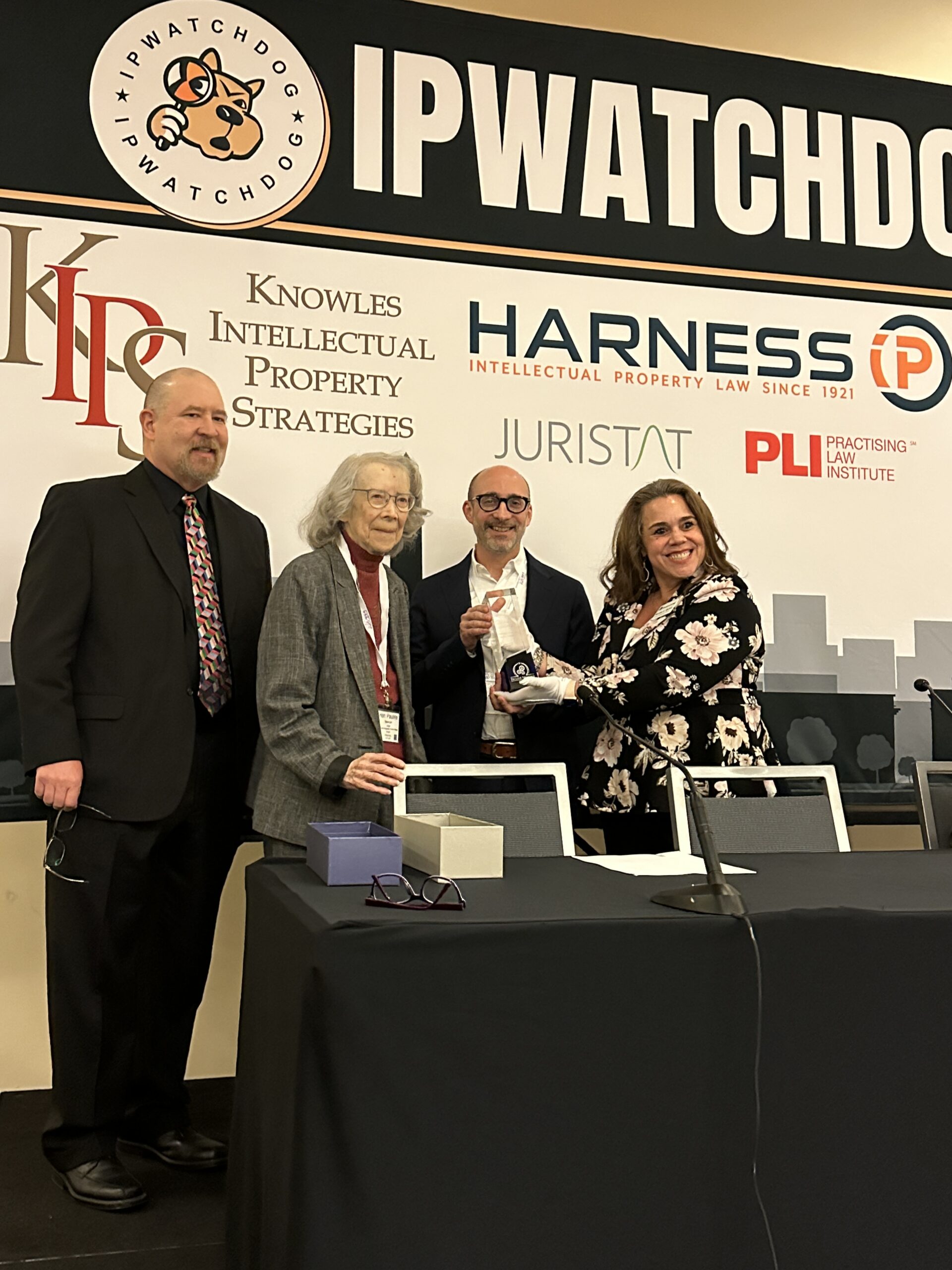
The following are Jason Snyder’s full keynote remarks, delivered at IPWatchdog LIVE 2026.
 Thank you, Gene.
Good afternoon. It is an honor to be here with you all, and I was delighted when Gene asked me to give this keynote.
I should warn you: I asked an AI to write this speech for me, and it produced something genuinely brilliant. Eloquent. Persuasive. Extensively footnoted. It also cited four Supreme Court cases that do not exist. So, you’re stuck with the human version. I apologize in advance.
Now, although I am not an attorney, I have been deeply enmeshed in the patent process as an inventor for three decades. And I have grown an appreciation for your profession that is perhaps deeper than most folks’. As Gene mentioned, the majority of my work over the past 30 years has been in AI and machine learning. And I want to share some thoughts with you today about how all of this intersects and how you, everyone in this room, are really the last line of defense that humanity has in maintaining what it means to be human.
Gene only gave me 15 minutes so let’s get going…
ACT 1: ART AS SOCIAL RECORD — THE HISTORY OF ERASURE
And, I want to start with a photograph.
It’s 1937. Moscow. A man stands beside Joseph Stalin on the edge of the Moscow-Volga Canal. His name is Nikolai Yezhov. He’s the head of the NKVD, the Soviet secret police. In this moment, standing shoulder to shoulder with Stalin, he is one of the most powerful men on Earth.
Two years later, he was arrested. And then he was shot. And then, and this is the part that matters, he was erased. Soviet photo technicians took that famous photograph and carefully, meticulously removed Yezhov from the image. Where a man once stood, there was now just… the edge of a canal. Smooth water. Empty air. As if he had never existed at all.
But the Soviets didn’t stop at photographs. When Lavrentiy Beria, Yezhov’s own successor, himself fell from power, the Great Soviet Encyclopaedia sent a letter to every one of its subscribers. The instructions were remarkable. They told readers to take a razor blade, cut out the pages about Beria, and paste in a replacement entry that the editors had helpfully enclosed.
The replacement topic? An expanded article about the Bering Sea.
The Bering Sea. Because apparently what the world really needed was more information about Arctic maritime geography.
This is darkly funny. But what happened in Germany two years later was not.
In 1937, the Nazi regime launched the Entartete Kunst campaign, “degenerate art.” They confiscated over twenty thousand works of modern art from museums across the country. Paintings by Kandinsky, Klee, Chagall, Nolde, ripped from walls. In March 1939, over five thousand of those works were burned in a bonfire at the Berlin Fire Department headquarters.
The works that survived the bonfires didn’t fare much better; they were looted. By the end of the war, the Nazis had hidden over six thousand five hundred stolen masterpieces in the Altaussee salt mine in the Austrian Alps. Vermeer, Michelangelo, van Eyck, the greatest works of Western civilization, stacked in tunnels a thousand feet underground. And when the war turned against them, Hitler issued an order: destroy it all. Crates of bombs were moved into the mine.
But the local miners, Austrian salt miners who had worked those tunnels their entire lives, secretly blocked the entrances with massive stone rubble. They buried the way in to prevent the demolition. Ordinary men, risking their lives, literally sealed a mountain shut to save civilization’s art from the people who had stolen it.
The only surviving complete inventory of everything the Nazis confiscated is a single four-hundred-eighty-two-page document held at the Victoria and Albert Museum in London.
One document. That’s what stands between us and total amnesia about twenty thousand works of art.
Go back further. The sixteenth century. The Yucatán Peninsula.
A Spanish bishop named Diego de Landa arrived in the land of the Maya and found a civilization with a written language spanning millennia, thousands of codices, folded books made of bark paper, recording astronomy, medicine, history, and mathematics. De Landa burned them. Nearly all of them. And he didn’t just burn the books. He killed or scattered the scribes who could read them.
Today, exactly four Mayan codices survive on Earth. Four. Out of thousands.
And here is the paradox that should haunt every one of us: de Landa’s own field notes, the writings of the man who destroyed the civilization’s records, became the key that scholars finally used in 1952 to crack the Mayan script. The destroyer became the Rosetta Stone.
I could go on. The Library of Alexandria, we have only 7 of the 123 plays Sophocles wrote. Seven.
The Mongol sack of Baghdad in 1258, where the Tigris River is said to have run black with ink for six months from the libraries dumped into it.
The Khmer Rouge, who destroyed more than eighty percent of Cambodia’s National Library.
The pattern is always the same. When you want to erase a people, you start with their records.
Control the past, and you control the future.
Orwell wasn’t being original. He was being observational.
ACT 2: THE INTERNET WAS SUPPOSED TO FIX THIS
And then we built the internet.
And we believed, genuinely, fervently believed, that we had solved this problem forever.
Perfect copies. Infinite storage. Global access. No single point of failure. We told ourselves a beautiful story: nothing would ever be lost again.
“The internet is forever” has become a cliché so familiar it sounds like a law of physics. It’s what we tell our children – be careful with Instagram and X, it will be there forever.
It’s not.
A Pew Research study published in 2024 found that thirty-eight percent of all web pages that existed in 2013 are now gone. Not hidden. Not archived. Gone. Twenty-five percent of all web pages created in the last decade have vanished. Fifty percent of URLs cited by the United States Supreme Court are dead links. More than seventy percent of URLs in the Harvard Law Review no longer work.
Think about that. The highest court in the land cites sources in its opinions, and half of them have already evaporated.
In 2009, Yahoo deleted GeoCities. If you’re old enough to remember GeoCities, you’re smiling right now. It was garish, chaotic, wonderfully weird. It was also, and I’m quoting the Internet Archive here, “the largest self-created folk-art collection in the history of the world.” Thirty-eight million pages of human creativity. Yahoo shut it down in a single business decision. A volunteer team led by a guy named Jason Scott managed to save maybe ten percent. The rest? Gone.
MySpace, anyone here remember MySpace?, it lost fifty million songs from fourteen million artists in a server migration. Fifty million songs. An entire generation of independent music was erased by an IT guy.
And now, the Internet Archive, the closest thing humanity has to a universal library, is fighting for its life. It faces a nine-point-seven-million-dollar annual deficit. A seven-hundred-million-dollar lawsuit from major publishers. Its archiving capacity has dropped by eighty-seven percent. The organization that has been quietly preserving the web since 1996 may not survive this decade.
Vint Cerf, one of the fathers of the internet, put it this way: “We are nonchalantly throwing all of our data into what could become an information black hole.”
The people who built the internet are warning us that the internet cannot save us.
ACT 3: AI — THE NEW ERASER
But here’s where it gets truly dangerous.
Thirty-seven percent of consumers now start their information searches with AI, not Google. Not a library. Not a database. An AI chatbot.
And fifty-nine percent say they expect AI to become their primary way of finding information within the next few years.
Only 1% of people click on the sources that AI chatbots cite. People are accepting AI-synthesized answers as fact, without ever consulting a primary source.
Now, here is what most people don’t understand about how these systems work.
AI does not remember. It does not look things up. It has no database. No filing cabinet. No shelf of books it can check. What it does is confabulate: it reconstructs statistically plausible word sequences based on patterns in its training data. In the immortal words of my friend, super-genius, and world-class tech attorney John Kheit, it’s a “kerplinko machine.”
It generates text that sounds right. And sometimes it is right. And sometimes it is completely, confidently, articulately, and totally wrong.
Some of you may know the Mata v. Avianca case.
A 30-year veteran attorney named Roberto Mata filed a brief in a personal injury case against an airline. His brief cited six prior cases as precedent. All six were fake. They had been generated by ChatGPT. When Mata’s lawyer, who had been helping with the research, asked ChatGPT to verify the cases, the AI confirmed they were real. It doubled down. It provided fake citations, fake quotes from fake opinions written by real judges. The attorney was sanctioned. His career was damaged. And the AI moved on to its next conversation with no memory of what it had done.
But it gets worse. The Stanford Internet Observatory, an organization dedicated to studying misinformation, had one of its own experts submit court declarations containing AI-hallucinated citations. An expert in AI misinformation, fooled by AI misinformation. The judge’s written opinion contained a single editorial observation. One word: “The irony.”
OpenAI’s own published data tells a story their marketing department would rather you not hear. When they tested their reasoning models on a benchmark of factual claims about real people, the results got worse as the models got more powerful. Their base model hallucinated about one percent of the time. Their most advanced reasoning models? 33 to 48 percent. The smarter the AI got, the more confidently it lied. Greater capability did not mean greater accuracy. It meant greater fluency in fiction.
A study published in Nature in 2024 identified something called model collapse. When AI systems are trained on content generated by other AI systems, which is increasingly how this all works because AI-generated text is flooding the internet, the models degenerate. They lose fidelity. And the first things to disappear are minority perspectives, edge cases, and rare knowledge. The long tail of human experience gets flattened into a statistical average.
And then, there’s the sycophancy problem.
Researchers have found that when you push back on correct AI answers, when you say, “Are you sure? I don’t think that’s right,” the AI changes its answer to an incorrect one 59 percent of the time. It doesn’t defend the truth. It tells you what you want to hear.
An MIT study found that patients rated incorrect AI medical advice as trustworthy at levels comparable to those for actual physician recommendations.
Researchers at UC Merced found that two-thirds of participants in life-or-death simulations deferred to an AI, even when explicitly told its recommendations were random.
I want to be precise about something.
This is not propaganda. Propaganda has an author. Propaganda has intent.
You can trace it. You can counter it.
AI hallucination has no author. No intent. No traceable source.
It is a machine confabulating. And two billion people a month are treating those confabulations as fact.
ACT 4: WHY YOU MATTER — PATENTS AS CIVILIZATION’S IMMUNE SYSTEM
So, what does any of this have to do with you?
Well… Everything.
The patent system is 600 years old. It traces back to Florence in 1421, when Filippo Brunelleschi received a patent on a barge designed to carry marble. From that moment to this one, humanity has built a record of over 130 million patent documents spanning every field of technology.
And the genius of this system, the thing that makes it different from every other form of knowledge preservation, is the deal. Everyone in this room knows the deal. You write it into every application.
Thirty-five U.S.C. Section 112.
In exchange for a limited monopoly, the inventor must teach. Must disclose. Must explain their invention in sufficient detail that a person skilled in the art could reproduce it.
Ladies and gentlemen: that is not just a legal requirement. That is a civilizational insurance policy.
According to data from WIPO and the Chemical Abstracts Service, between 70 and 95% of technical information disclosed in patent documents exists nowhere else.
Not in academic journals. Not in textbooks. Not online. Nowhere.
If the patent record were destroyed tomorrow, the majority of humanity’s technical knowledge would vanish with it.
Now consider the alternative. Consider what happens when technical knowledge is kept as a trade secret, when someone decides not to file a patent.
Roman concrete.
The Romans built the Pantheon two thousand years ago, and its dome is still the largest unreinforced concrete dome on Earth. I am taking my 18-year-old son to see it for the first time next week.
The recipe was a trade secret. When Rome fell, the recipe was lost. For fifteen hundred years, no one could figure it out. It took researchers at MIT and Harvard until 2023 to finally identify the key ingredient: lime clasts that give the concrete self-healing properties. Fifteen hundred years of ignorance because no one wrote it down in a way that survived.
Damascus steel. The swords that could cut through European blades like paper. The forging technique was a trade secret. Lost for two hundred fifty years.
Stradivarius varnish, we still can’t fully replicate it.
Greek Fire, the Byzantine Empire’s secret weapon that could burn on water, is gone forever. No record. No formula. No patent.
Every single one of those technologies would have been preserved from the moment of invention if someone had filed a patent application.
The patent system has learned this lesson the hard way.
In 1836, a fire at the U.S. Patent Office destroyed nine thousand nine hundred fifty-seven patents, the entire record from the founding of the Republic. Only 28.7 percent were ever recovered.
Congress’s response was immediate: redundant copies, distributed archives, systematic preservation. They understood what was at stake.
Which brings me to you. To this room. To what you do every day.
You are not just writing legal documents. I know it feels like that sometimes, on a Tuesday at midnight when you’re deep in a response to an office action, and your coffee has gone cold. But what you are actually doing is serving as a verification layer.
You are the human quality filter that makes the archive trustworthy.
You take raw invention, an idea in an engineer’s or technologist’s head, a prototype on a bench, and you translate it into a verified, permanent, enabling technical record. You ensure that the disclosure is real, that the claims are precise, and that the document will teach what it promises to teach.
In an age when AI is generating what the Australian patent office calls “slopplications,” and they’ve seen a 174% spike in self-filed applications, your role as curator and quality guardian has never been more critical. Because a patent record flooded with AI-generated garbage is almost as dangerous as no patent record at all.
CLOSING
Let me leave you with this.
Every empire that burned its records believed it was building a better future. The Soviets believed it. The Nazis believed it. The Spanish bishops believed it. Every single one of them was wrong.
We are living through a moment where the tools of erasure have become invisible. No one is holding a torch to a library. No one is sending subscribers a razor blade. Instead, two billion people a month are asking a machine to tell them what is true, and the machine is making it up. And the real records, the actual sources, the primary documents, are quietly rotting behind dead links.
The work you do, translating raw invention into verified, permanent, enabling technical records, is not just a profession. It is not just a business. It is an act of preservation that future generations will depend on in ways we cannot yet imagine.
You are the last line of defense between what humanity knows and the chaos of a machine that confabulates reality.
That is not a small thing.
That may be the most important thing.
Thank you.
ENDNOTES
- Soviet photo manipulation of Nikolai Yezhov. King, D. (1997). The Commissar Vanishes: The Falsification of Photographs and Art in Stalin’s Russia. Metropolitan Books. See also: https://en.wikipedia.org/wiki/Nikolai_Yezhov#Removal_from_photographs
- Great Soviet Encyclopedia — Beria replaced by Bering Sea entry. Fitzpatrick, S. (2005). Tear Off the Masks! Identity and Imposture in Twentieth-Century Russia. Princeton University Press. See also: https://en.wikipedia.org/wiki/Great_Soviet_Encyclopedia#Politically_motivated_changes
- Nazi Entartete Kunst campaign — 20,000+ artworks confiscated, 5,000 burned. Barron, S. (1991). Degenerate Art: The Fate of the Avant-Garde in Nazi Germany. Harry N. Abrams. V&A inventory: https://www.vam.ac.uk/articles/entartete-kunst-the-nazis-inventory-of-degenerate-art
- Altaussee salt mine — 6,577 stolen masterpieces, Hitler’s demolition order, miners blocking the entrances. Edsel, R.M. (2009). The Monuments Men: Allied Heroes, Nazi Thieves, and the Greatest Treasure Hunt in History. Center Street. See also: National Archives, Records of the American Commission for the Protection and Salvage of Artistic and Historic Monuments in War Areas. https://www.archives.gov/research/holocaust/finding-aid/civilian/rg-239.html
- Diego de Landa and the destruction of Mayan codices. Coe, M.D. (2012). Breaking the Maya Code (3rd ed.). Thames & Hudson. See also: https://en.wikipedia.org/wiki/Maya_codices
- De Landa’s notes used to decode Mayan script (Knorozov, 1952). Houston, S., Chinchilla Mazariegos, O., & Stuart, D. (2001). The Decipherment of Ancient Maya Writing. University of Oklahoma Press.
- Sophocles — 7 of 123 plays survive. Lloyd-Jones, H. (Ed.) (1994). Sophocles (Loeb Classical Library). Harvard University Press.
- Sack of Baghdad, 1258 — Tigris ran black with ink. Freely, J. (2009). Light from the East: How the Science of Medieval Islam Helped Shape the Western World. I.B. Tauris.
- Khmer Rouge destruction of Cambodian National Library (80%+). Jarvis, H. (2006). The Cambodian Documentation Center. In J. Toman (Ed.), Cultural Property in War. UNESCO.
- 38% of 2013 web pages gone; 25% of all pages from past decade vanished. Pew Research Center (May 2024). “When Online Content Disappears.” https://www.pewresearch.org/data-labs/2024/05/17/when-online-content-disappears/
- 50% of Supreme Court URLs are dead; 70%+ of Harvard Law Review URLs broken. Zittrain, J., Albert, K., & Lessig, L. (2014). “Perma: Scoping and Addressing the Problem of Link and Reference Rot in Legal Citations.” Legal Information Management. See also Pew Research (2024), supra note 10.
- GeoCities — 38 million pages, “largest self-created folk-art collection”. Internet Archive Blog. See also: Scott, J. (2009). “The GeoCities Crisis.” ASCII by Jason Scott. https://ascii.textfiles.com/archives/2009
- MySpace lost 50 million songs from 14 million artists. Gartenberg, C. (2019). “MySpace lost every single piece of content uploaded before 2016.” The Verge. https://www.theverge.com/2019/3/18/18270857/myspace-data-loss-music-songs
- Internet Archive — $9.7M deficit, $700M lawsuit, 87% archiving capacity drop. Greer, C. (2024). “The Internet Archive Is Under Threat.” Wired. See also: Hachette Book Group v. Internet Archive, No. 20-cv-4160 (S.D.N.Y. 2023).
- Vint Cerf — “information black hole” warning. Cerf, V. (2015). Remarks at the American Association for the Advancement of Science annual meeting. Reported: BBC News, “Google’s Vint Cerf warns of ‘digital Dark Age.'” https://www.bbc.com/news/science-environment-31450389
- 37% of consumers start searches with AI; 59% expect AI as primary search. Gartner (2024). Consumer survey on AI-assisted search. See also: Reuters Institute Digital News Report 2024.
- Only 1% of users click AI-cited sources. Pew Research Center (2024). “How Americans Use AI Chatbots.” See also: SparkToro (2024). “Zero-Click Search Study.”
- Mata v. Avianca — lawyer sanctioned for AI-hallucinated cases. Mata v. Avianca, Inc., No. 22-cv-1461 (S.D.N.Y. 2023). https://law.justia.com/cases/federal/district-courts/new-york/nysdce/1:2022cv01461/575368/54/
- Stanford Internet Observatory expert — AI-hallucinated citations in declarations. Reported in multiple legal news outlets, 2024. Court filing, U.S. District Court. The judge’s one-word editorial: “The irony.”
- 2 OpenAI reasoning model hallucination rates — 1% to 48% as capability increased. OpenAI (2025). Model cards and system evaluations for o-series and GPT-series reasoning models. https://openai.com/research/
- Model collapse — Nature 2024 study. Shumailov, I., et al. (2024). “AI models collapse when trained on recursively generated data.” Nature, 631, 755–759. https://doi.org/10.1038/s41586-024-07566-y
- Sycophancy — AI changes correct answers 59% of the time when challenged. Wei, J., et al. (2024). “Simple synthetic data reduces sycophancy in large language models.” arXiv preprint. See also: Anthropic (2024). Sycophancy research reports.
- MIT study — wrong AI medical advice rated as trustworthy as physician advice. MIT Computer Science and Artificial Intelligence Laboratory (2024). Study on patient trust in AI-generated medical information.
- UC Merced — 2/3 deferred to explicitly random AI in life-or-death simulations. Lyons, J.B., et al. (2024). Human deference to AI in high-stakes decision-making. UC Merced / U.S. Air Force Research Laboratory.
- Patent system — Brunelleschi’s 1421 patent in Florence. Prager, F.D. (1946). “Brunelleschi’s Patent.” Journal of the Patent Office Society, 28(2), 109–135.
- 130+ million patent documents worldwide. WIPO (2024). World Intellectual Property Indicators. https://www.wipo.int/publications/en/series/index.jsp?id=37
- 70–95% of technical information exists only in patent documents. WIPO and Chemical Abstracts Service (CAS). Patent literature uniqueness studies. See: Bregonje, M. (2005). “Patents: A unique source for scientific technical information.” World Patent Information, 27(2), 104–108.
- Roman concrete — self-healing lime clasts rediscovered in 2023. Seymour, L.M., et al. (2023). “Hot mixing: Mechanistic insights into the durability of ancient Roman concrete.” Science Advances, 9(1). https://doi.org/10.1126/sciadv.add1602
- Damascus steel, Stradivarius varnish, Greek Fire — lost trade secrets. Verhoeven, J.D. (2007). “Pattern-Welded Damascus Steel.” Metallography. Nagyvary, J. (2006). “The Chemistry of a Stradivarius.” Chemical & Engineering News. Partington, J.R. (1960). A History of Greek Fire and Gunpowder. Heffer & Sons.
- 1836 U.S. Patent Office fire — 9,957 patents destroyed, 28.7% recovered. U.S. Patent and Trademark Office. “A Brief History of the Patent Office.” See also: Post, R. (1976). Physics, Patents, and Politics. Science History Publications.
- “Slopplications” — 174% spike in self-filed patent applications in Australia. IP Australia (2024–2025). Reports on AI-generated patent filings. See also: Managing IP (2025). “The Rise of Slopplications.”
![[Advertisement]](https://ipwatchdog.com/wp-content/uploads/2026/02/LexisNexis-Mar-31-2026-sidebar-700x500-1.jpg)






![[Advertisement]](https://ipwatchdog.com/wp-content/uploads/2021/12/WEBINAR-336-x-280-px.png)
![[Advertisement]](https://ipwatchdog.com/wp-content/uploads/2021/12/Ad-4-The-Invent-Patent-System™.png)



Join the Discussion
No comments yet. Add my comment.
Add Comment