
![[IPWatchdog Logo]](https://ipwatchdog.com/wp-content/themes/IPWatchdog%20-%202023/assets/images/temp/logo-small@2x.png)

 0
0 “I think a statute is the answer. I think right now, PERA is the only thing that we have. It is a negotiated statute.” – Honorable Kathleen O’Malley
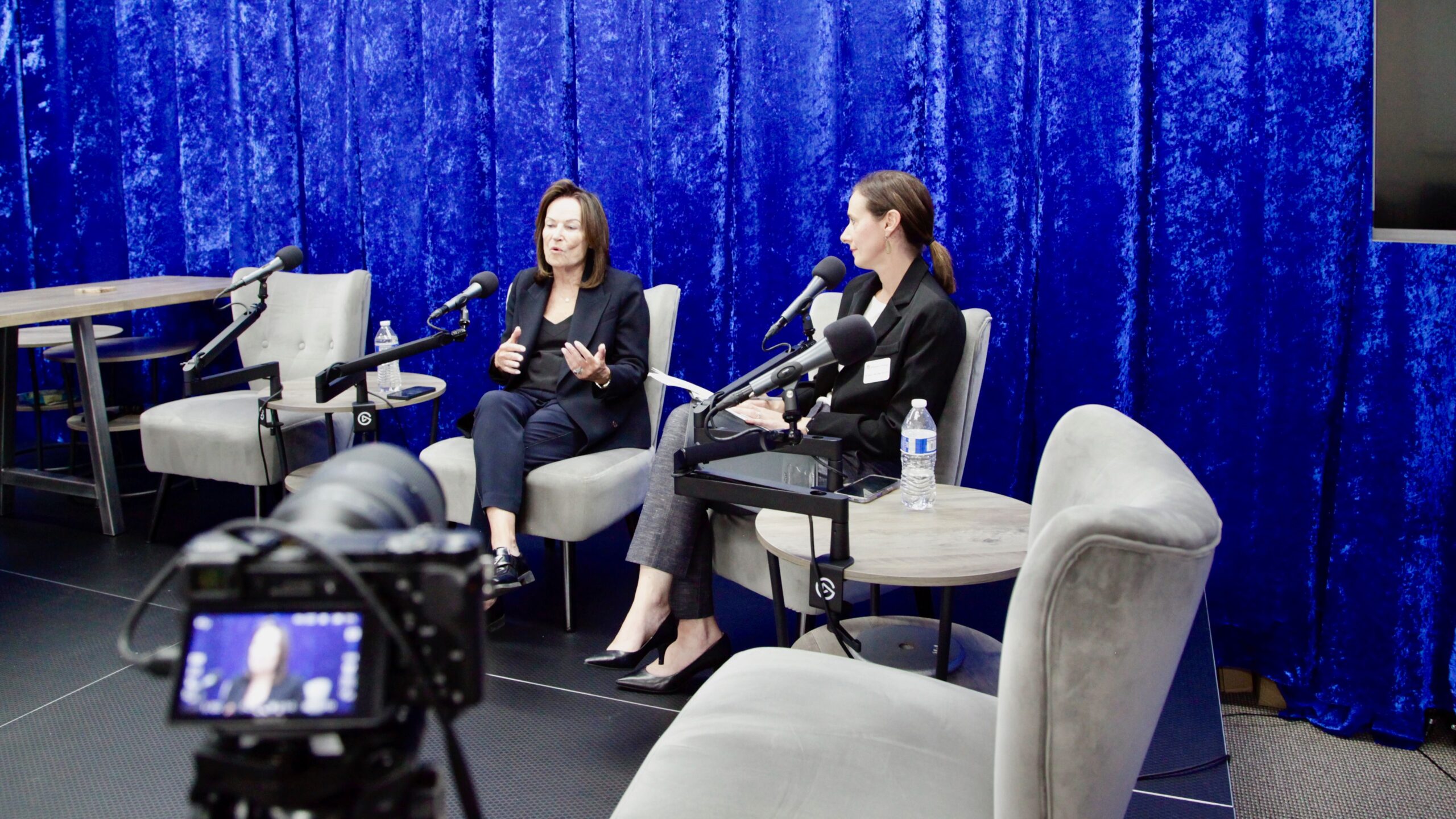 In the final keynote address of IPWatchdog’s three-day 2025 Women’s IP Forum, the Honorable Kathleen O’Malley, former Circuit Judge for the U.S. Court of Appeals for the Federal Circuit, offered insights into her distinguished career, the evolving patent law, and critical advice for emerging intellectual property attorneys.
Judge O’Malley, who served on the Federal Circuit from 2010 to 2022 after 16 years in the U.S. District Court for the Northern District of Ohio, was the first former district court judge to be appointed to the Federal Circuit. Her unique perspective as both a trial and appellate judge has continued to shape her views on the judiciary, patent law challenges, and the future of IP.
Lifelong Ambition of Law
Judge O’Malley’s pathway to law and the judiciary began remarkably early. At 13 years old, she acquired a book from her brother to read on the beach called “Gideon’s Trumpet,” detailing the landmark Supreme Court case Gideon v. Wainwright. Upon reading the book, she declared to her family her ambition to become a federal judge, but was met with laughter. Ultimately, she was undeterred. Despite her parents being scientists, a field she initially sought to avoid, her career ultimately led her to the highly technical realm of patent law.
She focused on learning the steps of becoming a strategic trial lawyer. Judge O’Malley recounted leaving a large firm, Jones Day, for a smaller one, Porter Wright, and Morris & Arthur, to gain more hands-on trial experience. These pivotal opportunities allowed her to try numerous cases and build strong relationships within both federal and state judiciaries.
A significant turning point was when she worked for elected Attorney General Lee Fisher. Following their victory in an election contest, she served as his Chief Counsel, overseeing 300 lawyers and personally handling prominent cases, which ultimately paved her way to the district court in Cleveland.
Navigating the Federal Circuit
Judge O’Malley said she worked hard to convince her colleagues at the Federal Circuit that her district court background could benefit the court. That didn’t take long. She recalled a conversation with former colleague, Judge Bill Bryson, who said that after trying cases himself, he expressed a newfound appreciation for the difficulty of a trial judge’s role. O’Malley’s said her perspective as the first district court judge on the Federal Circuit allowed her to advocate fiercely for deference to district judges, influencing the court’s approach to reviewing trial records.
Rule 36 Decisions
Judge O’Malley clarified that she generally supports the Federal Circuit’s use of Rule 36 decisions. While she was initially skeptical, she said that these cases receive the same rigorous attention as fully briefed and argued merits cases. She emphasized that law clerks dedicate full effort to every case, regardless of its eventual disposition, and that Rule 36 cases still have the right to argument and that there is no institutional problem in the Federal Circuit’s application of Rule 36.
Damaging Impact of the America Invents Act
Judge O’Malley expressed dissatisfaction with the America Invents Act (AIA), believing it harmed the development of patent law. She maintained that district courts were fully capable of handling patent cases and that mere procedural adjustments to expedite litigation would have been sufficient to address concerns regarding litigation volume and speed. She particularly disagreed with Supreme Court decisions that gave significant deference to the Patent Trial and Appeal Board (PTAB), especially concerning its own enabling statute.
Legislative Reform: Patent Eligibility Restoration Act
Regarding the lack of clarity in patent eligibility law, Judge O’Malley asserted that legislative action, specifically the Patent Eligibility Restoration Act (PERA), or something like it, is the only viable solution. She highlighted the Federal Circuit’s concerted but ultimately unsuccessful efforts to prompt Supreme Court intervention on this issue. Despite a unanimous call from Federal Circuit judges for the Supreme Court to address eligibility, the Court has repeatedly declined. She views PERA as a bipartisan negotiated statute, representing the only currently-available chance for achieving some clarity. “I think a statute is the answer,” she said. “I think right now, PERA is the only thing that we have.”
March-In Rights and the Bayh-Dole Act
Judge O’Malley praised the Bayh-Dole Act, describing it as a “brilliant idea” that successfully fostered public-private partnerships and prompted innovation in medical devices. She strongly criticized the current administration’s attempts to reinterpret the Act’s “march-in rights” provision as a mechanism for drug price control. She argued that this provision was originally intended to ensure the utilization of licensed patents, not to regulate pricing. She warned that such an interpretation would deter investment and innovation across the spectrum of industries, especially the pharmaceutical industry.
She has actively opposed this interpretation through amicus briefs and letters, aligning with voices such as Adam Mossoff. She also cited the recent announcement by the Secretary of Commerce to exercise march-in rights on Harvard’s patents as a potentially politically motivated direction with damaging implications for innovation across various sectors.
USPTO Leadership and the Federal Circuit’s Role
In commenting on the changes implemented by the U.S. Patent and Trademark Office (USPTO) Director Coke Morgan Stewart, Judge O’Malley acknowledged that all USPTO administrators face criticism. She viewed Director Stewart’s actions as a positive step toward “level setting” the balance between administrative agencies and the courts. She suggested that a reduction in inter partes reviews (IPRs) could lead to more patent cases being litigated in district courts, a development she considers beneficial because she has continuously believed that patent disputes are best resolved in the judicial system.
Advice for the Next Generation of IP Attorneys
Judge O’Malley offered pragmatic advice to incoming attorneys entering the IP field to be open-minded and adaptable. She cautioned that the traditional path of big firm litigation might become less accessible or appealing in light of the advent of AI. She encouraged new lawyers to consider alternative paths, including in-house or government roles. She feared that AI might diminish the “legwork” traditionally performed by junior lawyers and limit opportunities for them to learn from experienced litigators. She concluded by underscoring the importance of protecting the independent judiciary, referencing her involvement with the Article III Coalition, an organization dedicated to defending the judiciary against external pressures.
![[Advertisement]](https://ipwatchdog.com/wp-content/uploads/2026/06/Womens-IP-Forum-2026-sidebar-super-early-bird-ends-July-24-700x500-1.jpg)
![[Advertisement]](https://ipwatchdog.com/wp-content/uploads/2026/07/Juristat-Varsity-Ad-2026-IPW-ad-Solo_2.png)
![[Advertisement]](https://ipwatchdog.com/wp-content/uploads/2026/07/DeepIP-Jul-28-2026-sidebar-700x500-1.jpg)
![[Advertisement]](https://ipwatchdog.com/wp-content/uploads/2026/07/Ankar-AI-Jul-30-2026-sidebar-700x500-1.jpg)





![[Advertisement]](https://ipwatchdog.com/wp-content/uploads/2021/12/WEBINAR-336-x-280-px.png)
![[Advertisement]](https://ipwatchdog.com/wp-content/uploads/2021/12/Ad-4-The-Invent-Patent-System™.png)




Join the Discussion
No comments yet.