
![[IPWatchdog Logo]](https://ipwatchdog.com/wp-content/themes/IPWatchdog%20-%202023/assets/images/temp/logo-small@2x.png)

 3
3 “Until the panel decision, this Court had never suggested that Alice step one requires a patent to claim both (1) a new application of an established process and (2) an improvement to the technology used in that process.” – Recentive Analytics
 On Wednesday, predictive analytics firm Recentive filed a combined petition for panel rehearing and rehearing en banc with the U.S. Court of Appeals for the Federal Circuit challenging that court’s invalidation of Recentive’s machine learning patent claims this April. As Recentive argues, the Federal Circuit’s decision to eliminate all patent protection for novel machine learning applications using established models conflicts with the U.S. Supreme Court’s patent-eligibility standard under 35 U.S.C. § 101 and chills U.S. innovation an incredibly important area of emerging technology.
In its April ruling, a Federal Circuit panel composed of Circuit Judges Timothy Dyk and Sharon Prost, along with U.S. District Judge Mitchell Goldberg of the Eastern District of Pennsylvania sitting by designation, determined that Recentive’s patent claims to generating network maps for optimizing the scheduling of live events did not meet patent eligibility under the Supreme Court’s Alice/Mayo framework. At Step 1 of Alice/Mayo, the Federal Circuit found Recentive’s patent claims directed to the abstract idea of producing network maps and event schedules using known mathematical techniques, and at Step 2, Recentive’s claimed inventive concept of using machine learning to optimize schedules based on real-time data amounted to nothing more than the claimed abstract idea itself.
Recentive: Section 101 Patent-Eligibility is a Threshold Test, Not a Prior Art Search
In Recentive’s rehearing petition, the patent owner argues that the Federal Circuit’s decision wipes out the line between Section 101 patent-eligibility and other patentability inquiries for novelty (35 U.S.C. § 102) and obviousness (35 U.S.C. § 103). By requiring the use of novel machine learning technologies to uphold the validity of Recentive’s patent claims under Section 101, the Federal Circuit collapsed subject matter eligibility with prior art questions reserved exclusively for novelty and obviousness analyses under Supreme Court precedent, Recentive contends.
The patents-at-issue do not merely claim optimized network maps resulting from the analysis of real-time data, according to Recentive’s rehearing petition. Instead, the method claimed by Recentive teaches how to build and deploy those maps by iteratively training a machine learning model using specified parameters to find useful patterns relevant to network maps and event schedules. While specific machine learning models like neural networks are claimed, the patents claim the training of those models based on several event parameters and features, like location and cost, along with user-defined inputs to develop network maps that could not have been generated by the prior art.
Several Supreme Court and Federal Circuit decisions cited in Recentive’s rehearing petition confirm that the Section 101 patentability standards under Alice/Mayo is a threshold test and not a prior art search, a premise recently reaffirmed by the CAFC in Broadband iTV v. Amazon.com (2024). Recentive finds it critical that the Federal Circuit panel did not hold that the established methods of machine learning themselves were patent-ineligible abstract ideas or long-standing fundamental human practices. “A non-abstract process does not become abstract simply because someone described or used the same process before,” Recentive argues.
Proper Focus on Improvements to Machine Learning Should Confer Patentability
While Section 101 inquiries can sometimes overlap with Section 102 novelty issues at Step 2 of Alice/Mayo, the Federal Circuit’s panel decision injects a prior art test into Step 1 of the Section 101 framework. “Until the panel decision, this Court had never suggested that Alice step one requires a patent to claim both (1) a new application of an established process and (2) an improvement to the technology used in that process,” Recentive’s brief reads.
Recentive also faults the Federal Circuit’s broad reading of its 2018 ruling in SAP America v. InvestPic, which stands for the modest proposition that an abstract idea remains abstract even when limited to particular content. In SAP America, the Federal Circuit only discussed the novelty of claimed databases at Step 2 of Alice/Mayo, which is when any issues with the conventionality of machine learning should have been considered for Recentive’s patent claims, the patent owner argues.
Under the applicable Section 101 inquiry from McRO v. Bandai Namco Games America (2016), Recentive argues that the Federal Circuit should inquire whether Recentive’s claims focus on a specific means or method that improves the claimed technology or are instead directed to a result or effect that itself is the abstract idea. Recentive adds that its patent claims do not simply claim the desired result but concrete steps to build machine learning models deployed to generate optimized network maps and event schedules. Further, the Federal Circuit’s improperly imported 35 U.S.C. § 112 enablement issues into the Section 101 inquiry by finding that the claims did not properly delineate steps through which the machine learning invention achieves an improvement.
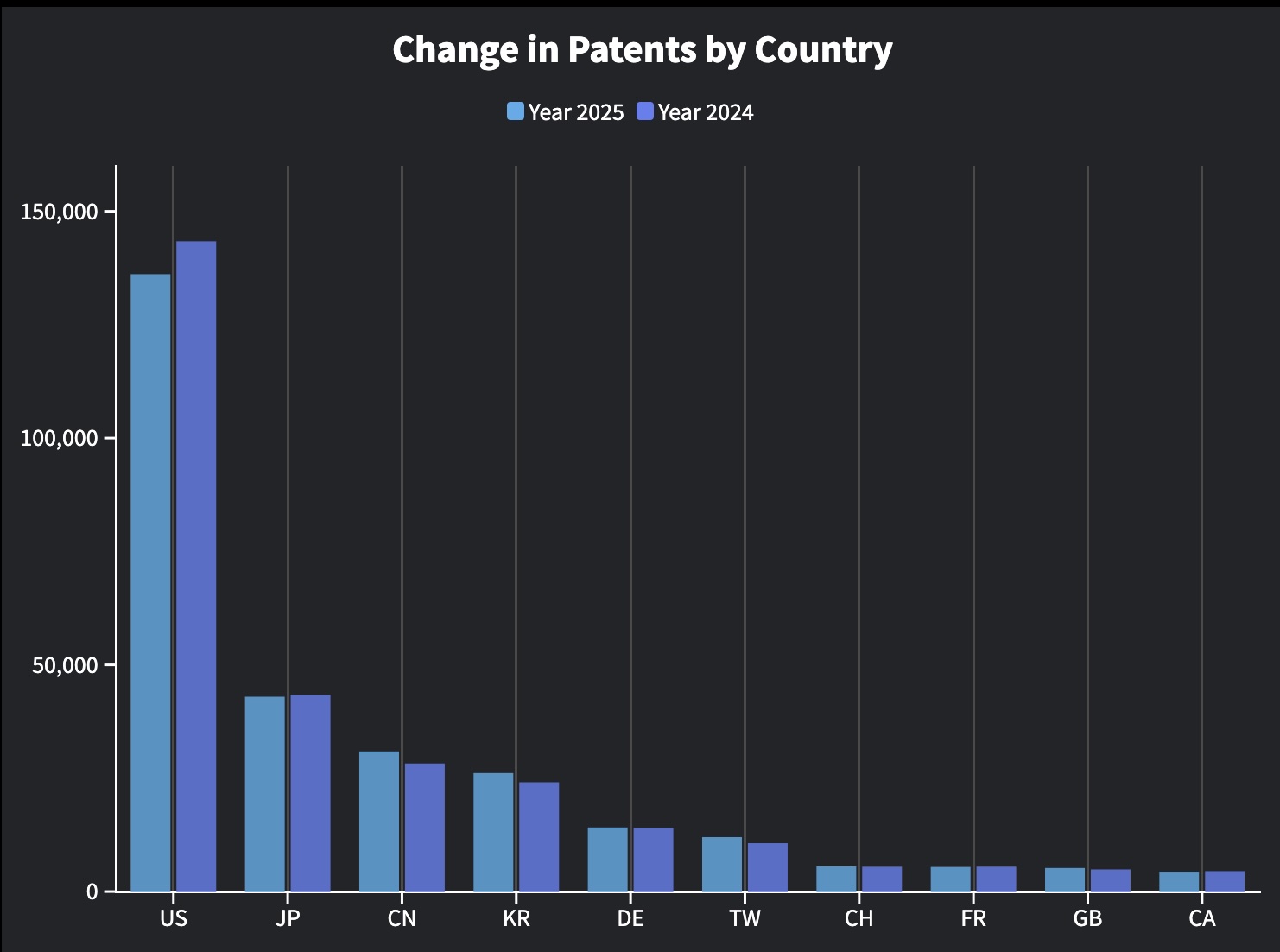
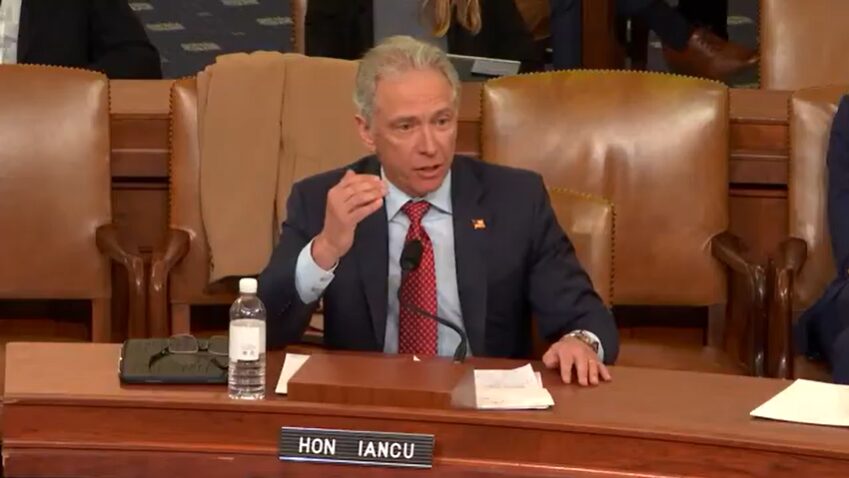
Citing data showing that more than 60% of the 340,000 AI-related patent applications filed since 2023 are related to machine learning, Recentive contends that the Federal Circuit’s standard on the patent eligibility of machine learning inventions will stifle innovation by eliminating protections necessary to secure venture capital. This concern and the resulting flow of venture capital to China, Europe and foreign rivals who provide patent protections for machine learning technologies have been noted by Former USPTO Director Andrei Iancu as well as several Senators sponsoring legislation to reform Section 101 patent eligibility law.
Image Source: Deposit Photos
Author: timurlaykov
Image ID: 109449130
![[Advertisement]](https://ipwatchdog.com/wp-content/uploads/2026/01/IP-Author-Jan-22-2026-sidebar-700x500-1.jpg)
![[Advertisement]](https://ipwatchdog.com/wp-content/uploads/2025/12/ClearstoneIP-Jan-27-2026-sidebar-700x500-1.jpg)
![[Advertisement]](https://ipwatchdog.com/wp-content/uploads/2025/11/PTAB-Masters-2026-sidebar-regular-price-700x500-1.jpg)
![[Advertisement]](https://ipwatchdog.com/wp-content/uploads/2025/12/LIVE-2026-sidebar-early-bird-new-700x500-1.jpg)





![[Advertisement]](https://ipwatchdog.com/wp-content/uploads/2021/12/WEBINAR-336-x-280-px.png)
![[Advertisement]](https://ipwatchdog.com/wp-content/uploads/2021/12/Ad-4-The-Invent-Patent-System™.png)



Join the Discussion
3 comments so far.
Anon
June 23, 2025 06:23 pmTo my other comment at: https://ipwatchdog.com/2025/06/12/cafc-says-mobile-check-deposit-systems-dont-improve-underlying-technology-generic-computers/id=189617/
I would add that the claims — as a whole may (and often do) only have individual elements that in and of themselves might be considered ‘conventional,’ but such has never been the critical point under the law as written by Congress.
Congress has already once rebuffed a Supreme Court that wanted to dabble with ‘Gist,” – See the Patent Act of 1952.
In that Act: 35 U.S. Code § 100(b) – my emphasis added:
(b)The term “process” means process, art or method, and includes a new use of a KNOWN process, machine, manufacture, composition of matter, or material.
Anon
June 22, 2025 04:40 pmHuge problem with the assertion of, “collapsed subject matter eligibility with prior art questions reserved exclusively for novelty and obviousness analyses under Supreme Court precedent, Recentive contends.”
Supreme Court precedent is self-conflicting and they themselves have ‘collapsed’ the analysis.
As the Supreme Court continues to NOT clean up its own mess, I just do not see the CAFC having the appetite to step in and point out the mess from above.
Pro Say
June 22, 2025 04:14 pmThe anti-patent, anti-America Notorious C.A.F.C. strikes again.