
![[IPWatchdog Logo]](https://ipwatchdog.com/wp-content/themes/IPWatchdog%20-%202023/assets/images/temp/logo-small@2x.png)

 0
0 “The Federal Circuit’s opinion preserves the PTAB’s invalidation of the core claims of Avago’s video streaming patent but reopens the door for Netflix to challenge four remaining dependent claims.”
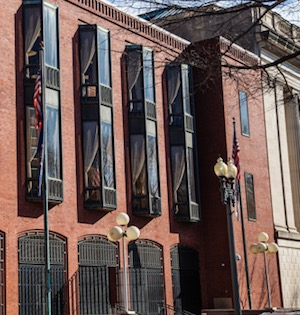
U.S. Court of Appeals for the Federal Circuit
On Wednesday, June 18, the U.S. Court of Appeals for the Federal Circuit (CAFC) issued an opinion affirming in part and vacating in part the Patent Trial and Appeal Board’s (PTAB) decision regarding Avago Technologies’ U.S. Patent No. 8,646,014. The patent, titled “Multistream Video Communication With Staggered Access Points,” addresses methods for reducing latency in video streaming systems. Specifically, it enables a video receiver to select from multiple streams the one expected to minimize latency, defined as the delay from a user’s request for content to its playback.
Netflix, Inc. had petitioned for an inter partes review (IPR), asserting that the claims in Avago’s patent were unpatentable based primarily on two references: Baldwin, which describes staggered video streams to reduce startup delays, and Cooper, detailing “staggercasting” methods.
Background
The ’014 patent aims to reduce video latency by transmitting multiple video streams of the same content and enabling the receiver to select the stream expected to offer the quickest playback. Netflix challenged claims 1, 3–12, and 14–20.
The PTAB concluded that Baldwin alone rendered obvious claims 1, 3–5, 7, 9–10, 12, 14–16, and 18–20. The Board, however, held that neither Cooper alone nor the combination of Cooper and Baldwin rendered dependent claims 6, 8, 11, and 17 unpatentable.
Federal Circuit Decision
Affirmed: Majority of Claims Found Unpatentable
On appeal, Avago argued that the PTAB erred by interpreting Baldwin as disclosing key claim limitations—particularly the receiver’s capability to select the lowest-latency stream. Avago contended that Baldwin only disclosed servers selecting streams, not receivers. The Federal Circuit disagreed, finding substantial evidence supported the PTAB’s interpretation that Baldwin explicitly described the receiver’s selection of streams.
Avago also urged that claim 1 requires the step of receiving video streams to precede the identification step. However, the court saw no reversible error in the PTAB’s decision to avoid strict construction, noting Baldwin supported Avago’s proposed sequence. The court concluded that Avago had not demonstrated that the Board’s findings lacked substantial evidence.
Accordingly, the Federal Circuit affirmed the invalidation of claim 1 and the dependent claims that rose and fell with it.
Vacated and Remanded: Dependent Claims Not Adequately Analyzed
In Netflix’s cross-appeal, the court agreed that the PTAB erred by failing to adequately address Netflix’s motivation-to-combine arguments concerning Cooper and Baldwin with respect to dependent claims 6, 8, 11, and 17. Netflix had argued that combining Baldwin’s method for reducing latency with Cooper’s staggercasting teachings would have been an obvious design choice to a skilled artisan, specifically addressing the “identifying” limitation absent from Cooper alone.
Although the PTAB found that Cooper did not teach identifying the lowest-latency stream, it dismissed Netflix’s combination argument without substantive analysis. The Federal Circuit found this explanation insufficient, pointing out that Netflix clearly relied on the combination to cure a specific deficiency in Cooper. The court vacated the PTAB’s decision on those four dependent claims and remanded for further consideration.
Another Chance for Netflix
The Federal Circuit’s decision preserves the PTAB’s invalidation of the core claims of Avago’s video streaming patent but reopens the door for Netflix to challenge four remaining dependent claims. The opinion noted that the PTAB must address articulated motivation-to-combine theories when they are clearly directed at curing deficiencies in the prior art references.
![[Advertisement]](https://ipwatchdog.com/wp-content/uploads/2026/06/Womens-IP-Forum-2026-sidebar-super-early-bird-ends-July-15-700x500-1.jpg)
![[Advertisement]](https://ipwatchdog.com/wp-content/uploads/2026/07/Juristat-Varsity-Ad-2026-IPW-ad-Solo_1.png)






![[Advertisement]](https://ipwatchdog.com/wp-content/uploads/2021/12/WEBINAR-336-x-280-px.png)
![[Advertisement]](https://ipwatchdog.com/wp-content/uploads/2021/12/Ad-4-The-Invent-Patent-System™.png)






Join the Discussion
No comments yet.