
![[IPWatchdog Logo]](https://ipwatchdog.com/wp-content/themes/IPWatchdog%20-%202023/assets/images/temp/logo-small@2x.png)

 2
2 “On the record, the AI executed the traditional elements of authorship, while Dr. Thaler’s contribution was to build an AI system generally capable of generating creative works, and then to have, effectively, ‘pushed a button’ that resulted in the output of a particular creative work.” – Thaler petition
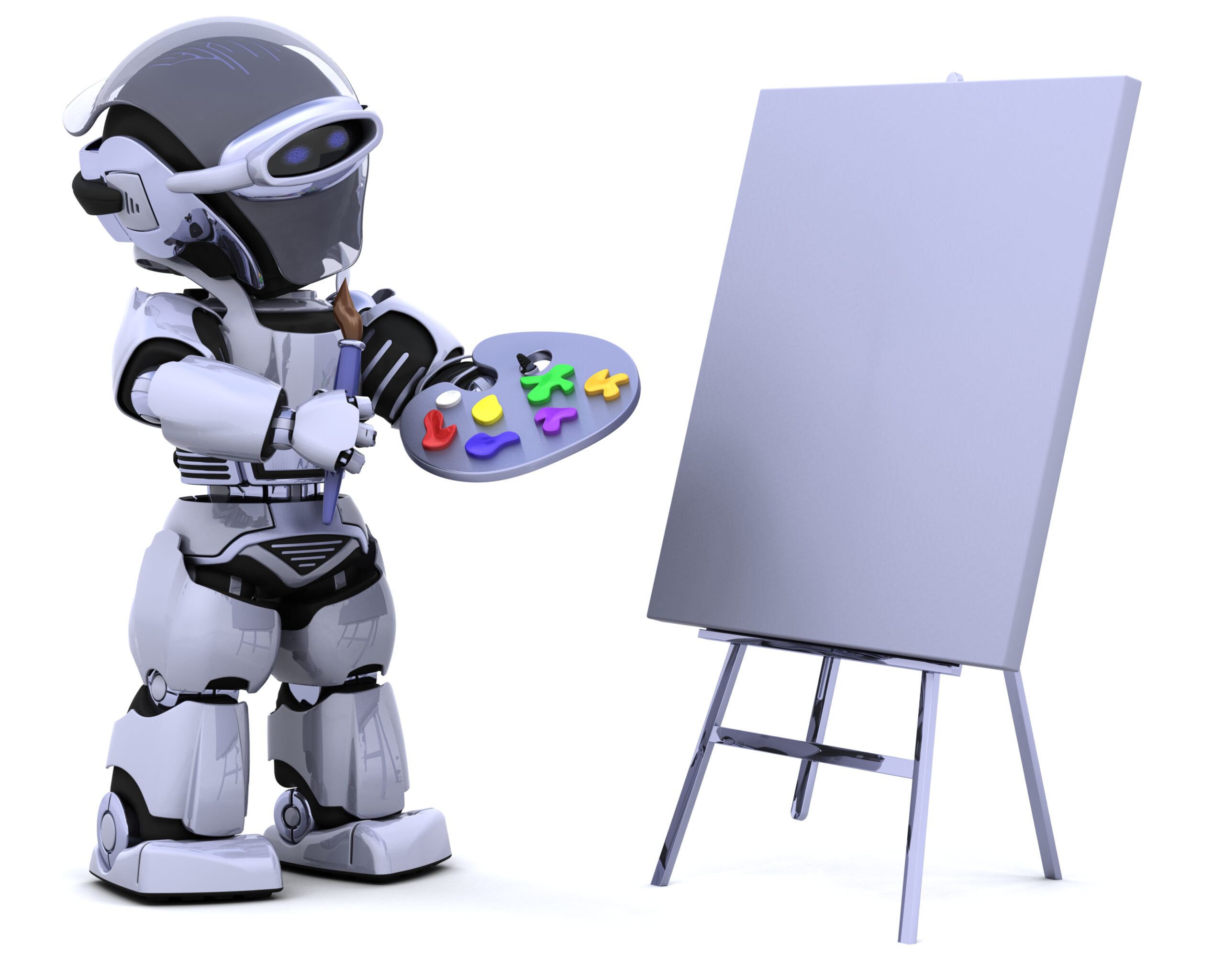 Dr. Stephen Thaler, who has been fighting to have his AI machines recognized as both inventors and creators on several fronts for the last few years, has petitioned for rehearing of his case in Thaler v. Perlmutter by the full U.S. Court of Appeals for the D.C. Circuit, which in March affirmed the denial of a copyright application filed by one of Thaler’s generative AI systems.
Although the D.C. appellate court did not categorically reject registrability of all AI-generated works, the opinion agreed with the U.S. Copyright Office that the Copyright Act of 1976 requires all eligible work to be authored in the first instance by a human being.
Thaler’s petition filed Friday, May 2, asks the full court to “correct errors that will have far-reaching and harmful consequences.” The pettion argues the panel’s decision is “already casting a shadow over the AI and creative industries” and claims the copyright statute has no language requiring a human author.
The work at issue is titled “A Recent Entrance to Paradise” generated by Thaler’s Creativity Machine. The Copyright Office Review Board on February 14, 2022 affirmed the Office’s decision denying registration of the two-dimensional artwork generated by Creativity Machine. Thaler’s recent petition outlines the crux of the problem:
“On the record, the AI executed the traditional elements of authorship, while Dr. Thaler’s contribution was to build an AI system generally capable of generating creative works, and then to have, effectively, ‘pushed a button’ that resulted in the output of a particular creative work. Given the Copyright Office will not register a work in which the traditional elements of authorship were executed by an AI system, this case presents the ideal facts to determine whether the Copyright Office’s test is permitted under the Act.”
Thaler is arguing that the appellate court contradicted Supreme Court precedent and failed to follow the statutory enforcement scheme. AI machines are comparable to corporations, which have been recognized as authors under the statute for more than 100 years, the petition says, adding: “Just because some provisions of the Act relate specifically to human authors does not mean that only works authored by humans are protected.”
There are also provisions in the statute specifically addressed to situations involving non-human authors, says the petition, such as the duration of copyright protection for works for hire, which distinguish the term from a human lifespan.
While the Copyright Office has pointed to its own guidance to justify the decision not to register works to non-human authors, Thaler’s petition asserts that the Supreme Court has rejected such guidance as binding and thus it should not be considered.
Thaler also argues that the D.C. Circuit panel’s statement concluding that the Office’s approach “still incentivizes humans like Dr. Thaler to create and to pursue exclusive rights to works that they make with the assistance of artificial intelligence” is confusing:
“The panel does not explain the distinction between an AI-generated and an AI-assisted work, or why any such distinction is material. The vagueness of the decision and the inapplicability to guide creatives moving forward, also militates in favor of reconsideration and en banc review.”
Finally, the petition rejects the appellate panel’s finding that Thaler argued for the first time on appeal that he instructed and directed the AI machine and therefore found waiver. Thaler claims that he made such arguments repeatedly before the Copyright Office and in his opening brief on appeal to the district court he told the court he was “the AI’s user and programmer” and also explained:
“The word ‘autonomous’ does not mean that an AI system is somehow magical or intergalactic. It merely denotes that, as is now a fairly routine capability of generative AI systems, a machine can engage in an activity that would otherwise require cognition—whether that is driving a vehicle, drafting an appellate brief (not this one), or generating a visual work.”
Randy McCarthy of Hall Estill called the case “profoundly significant” because it is the first circuit court opinion addressing the issue of autonomous AI generated works. He continued:
“However, both sides have compelling arguments… Interestingly, both sides are relying on the same Supreme Court cases, but are drawing opposite conclusions as to what these cases imply… “Regardless whether the DC Circuit decides to grant this motion and rehear this case, the decision will ultimately be up to the Supreme Court to decide.”
Image Source: Deposit Photos
Author: kjpargeter
Image ID: 37377697
![[Advertisement]](https://ipwatchdog.com/wp-content/uploads/2026/02/LexisNexis-Mar-31-2026-sidebar-700x500-1.jpg)




![[Advertisement]](https://ipwatchdog.com/wp-content/uploads/2021/12/WEBINAR-336-x-280-px.png)
![[Advertisement]](https://ipwatchdog.com/wp-content/uploads/2021/12/Ad-4-The-Invent-Patent-System™.png)

Join the Discussion
2 comments so far.
Pat Eriksson
May 28, 2025 11:43 amWhat happens if we discover that the universe is just a big simulation?
Anon
May 8, 2025 10:48 amPerhaps a compare/contrast between patents and copyright would be helpful. See Stanford v. Roche 563 US 776.
Keep in mind that while corporations may be treated as originating authors in some respects per the legislatively written law, there remains — at first instance — the necessity of human as author (or inventor).
As I have noted, this is not something that Congress has the power to change, short of a Constitutional Amendment, as the crux of the matter is the core allocation of authority in the Constitution, and that allocation being grounded in a Lockeian view of inchoate rights and the process to turn those inchoate rights into the respective bundles of legal rights for each of patents and copyrights.