
![[IPWatchdog Logo]](https://ipwatchdog.com/wp-content/themes/IPWatchdog%20-%202023/assets/images/temp/logo-small@2x.png)

 0
0 “The use of generative AI presents complex questions that have left content creators, AI developers, and the legal system racing to keep up with the technology’s stunning capabilities.”
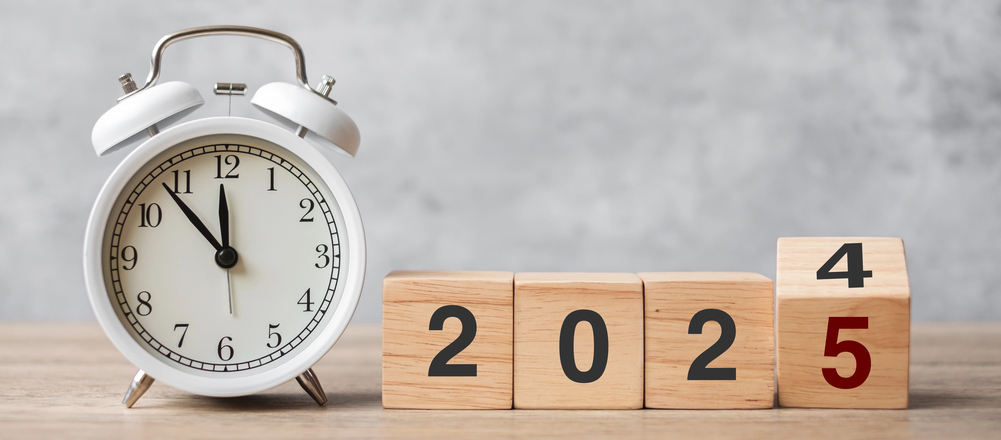 Copyright law provided an arena for some of the most interesting legal battles in 2024. We review some highlights from 2024 below, as well as some cases to watch in 2025.
Notable Decisions in 2024
Fair Use and Social Media Posts
In the wake of Andy Warhol Found. for The Visual Arts, Inc. v. Goldsmith, et al., 598 U.S. 503 (2023), courts continue to analyze fair use in the context of social media posts. Below are examples of one case in which a court determined that posting a copyrighted photograph on social media constituted fair use and another in which the court found that it did not.
In January 2024, a jury found that celebrity tattoo artist Katherine Von Drachenberg (a/k/a Kat Von D) did not infringe a copyrighted portrait of Miles Davis taken by Jeffrey B. Sedlik when she referenced it for a tattoo. The jury concluded that the tattoo was not substantially similar to the photograph of Davis and that Von D’s social media posts which depicted the tattoo and reference photograph constituted fair use. Sedlik challenged the jury’s decision regarding the social media posts in a post-verdict motion for judgment as a matter of law. He argued that Von D’s posts did not satisfy the first fair use factor because they did not target or comment upon the photograph. Sedlik also claimed that the posts increased traffic to her accounts and, if such a practice became widespread, his market for licensing the photograph and its derivatives would suffer harm under the fourth factor. The court denied Sedlik’s motion, finding that Von D’s posts were noncommercial and had the distinct purpose of showing her creative process. Further, the court noted that Sedlik never presented evidence of a market for licensing his works on social media posts, and determined that the jury could have reasonably concluded that the first and fourth factors supported a finding of fair use. Sedlik v. Von Drachenberg, No. CV21-1102 DSF (MRWX), 2024 WL 4327404 (C.D. Cal. May 3, 2024). Sedlik has appealed to the Ninth Circuit.
In 2007, Laney Griner’s photo of her baby went viral and became one of the first internet memes, known as “Success Kid.” Griner sued Steve King for copyright infringement when he used a version of the meme on social media to support his campaign for Congress, placing Success Kid in front of the United States Capitol, captioned “FUND OUR MEMES!!!” King argued that he was not liable for infringement for creating and disseminating the meme because it “happens millions (if not billions) of times each day.” Griner v. King, 104 F. 4th 1, 10 (8th Cir. 2024). The Eighth Circuit disagreed, finding that King’s purpose—soliciting campaign donations—was purely commercial. Moreover, it found his use was not sufficiently transformative, reasoning that “‘[t]he fact that everyone else is doing it’ is not a particularly compelling justification, especially considering the vast majority of these uses are non-commercial.” Id.
Section 1201(a)
In 2016, plaintiffs Matthew Green, a computer science professor, and Andrew “bunnie” Huang, a tech inventor, brought a case challenging the validity of the Digital Millenium Copyright Act’s prohibitions against circumvention and trafficking of technological protections on copyrighted works in Section 1201(a). Eight years later, in Green v. US DOJ., on appeal from the lower court’s dismissal of their claims after various procedural steps, the District of Columbia Circuit rejected their facial challenges to Section 1201(a) as unconstitutional under the First Amendment. 111 F. 4th 81 (D.C. Cir. 2024).
The plaintiffs first argued that Section 1201(a) was overbroad because it contradicted the fair use doctrine, which they contend is necessarily protected by the First Amendment. Specifically, an individual engaging in circumvention or trafficking in digital lock picks in order to make fair use of a copyrighted work could nonetheless violate this statute. The plaintiffs also alleged that the triennial rulemaking process, which serves as the DMCA’s method of accommodating fair use and tasks the Librarian of Congress with reviewing and granting requests for regulatory exemptions to the anticircumvention provisions, was insufficient and constitutes a prior restraint on speech.
Green, who conducts research on security flaws in electronics, claimed that his circumvention in conducting such research was protected by the First Amendment, and that its prevention by the DMCA was unconstitutional. Huang, who wants to sell a device that would allow manipulation and editing of video streams protected by anti-circumvention technology, claimed that he is unconstitutionally deterred from using or distributing his device. Both sought exemptions through the triennial rulemaking scheme but were unsatisfied with their outcomes.
The D.C. Circuit rejected the plaintiffs’ challenge to Section 1201(a). Regarding the plaintiffs’ overbreadth challenge, the court determined that “section 1201(a) expressly regulates conduct—the circumvention of technological locks, and trafficking in means of circumvention—rather than speech.” Even in the few applications where section 1201(a) regulates speech, the provision survives intermediate scrutiny. Regarding the triennial rulemaking process, rejected the plaintiffs’ argument that giving the Library of Congress power to grant exemptions to anticircumvention activities bars fair users from circumventing technological preventions unless and until they obtain approval, thus constituting an improper restraint on speech likely to chill speech and to invite content or viewpoint discrimination. The court found that the act of circumventing technological protections has no meaningful connection to speech and pointed out that preemptive allowances of fair uses may in fact be less chilling than retroactive grants of the fair use defense. Thus, the D.C. Circuit upheld Section 1201(a).
Vicarious Liability
In Rearden LLC, et al. v. The Walt Disney Co., et al., a California district court issued a decision on the limits of indirect infringement liability. No. 17-CV-04006-JST, 2024 WL 3956318 (N.D. Cal. Aug. 26, 2024). Rearden alleged that Disney vicariously infringed its copyrighted software, which Disney had licensed from a third party, Digital Domain 3.0 (“DD3”), that itself had claimed it owned the software. To prevail, Rearden had to prove: (1) Disney directly benefitted financially from DD3’s infringement; (2) Disney had the right and practical ability to supervise or control the infringing activity of DD3; and (3) Disney failed to exercise that right and ability. Specifically, Rearden argued that Disney could have and should have conducted due diligence to ensure that the software it used was not infringing, but failed to do so. The jury agreed.
The court, however, overturned the jury verdict of vicarious liability, explaining, “[t]o uncover direct infringement such as DD3’s use of [Rearden’s copyrighted software] would require a movie studio to identify each piece of proprietary software and/or hardware its vendors use, even when those vendors number in the hundreds, and then identify and follow up on any possible claim to ownership in any intellectual property that might be used in that software/hardware.” Thus, the court found that Rearden had failed to show how Disney could practically conduct such due diligence.
Cases to Watch in 2025
AI and Fair Use
The advent of sophisticated generative artificial intelligence has triggered a wave of copyright disputes. The use of generative AI presents complex questions that have left content creators, AI developers, and the legal system racing to keep up with the technology’s stunning capabilities. Among the cases brought against AI developers, a central issue revolves around the use of copyrighted material to “train” AI products. For example, in Getty Images (US), Inc. v. Stability AI, Inc., et al., Getty alleges that Stability AI copied millions of copyrighted photographs from its database before feeding them into the Stable Diffusion AI model. No. 1:23-cv-00135-UNA (D. Del.). Getty also asserts that Stability AI’s training procedure results in subsequent unauthorized reproductions of its images. Similarly, in Concord Music Grp., Inc. v. Anthropic PBC, several major music publishers filed a copyright infringement lawsuit based on Anthropic’s unauthorized reproduction of copyrighted lyrics used to train Claude, its AI model. No. 3:24-cv-03811 (N.D. Cal.).
AI developers argue that their use of copyrighted material to train AI models is protected by the fair use doctrine. Under the first factor, developers assert that the training process itself is transformative of the original works’ purposes and that the new works generated by AI add sufficiently transformative expression or meaning. Developers also argue that the fourth factor weighs in their favor because using a copyrighted work to train an AI model does not supplant its market. However, content creators have pushed back. In The NY Times Co. v. Microsoft Corp., the newspaper publisher alleged that the defendants’ AI models generated and summarized articles from The Times, and should be viewed as substitutes. No. 1:23-CV-11195 (S.D.N.Y.). Likewise, in Getty Images, Getty emphasizes that Stable Diffusion’s image-generating capabilities will undermine the market for Getty’s photography licensing services by producing images that are similar to, and derivative of, Getty’s copyrighted content.
With artificial intelligence here to stay, several important decisions in 2025 will affect how this revolutionary technology impacts the world of intellectual property.
AI and Human Authorship
In Thaler v. Perlmutter, the issue was whether the plaintiff could get a copyright in a painting created by an AI system that he had programmed. 687 F. Supp. 3d 140 (D.D.C. 2023). On his registration application, Thaler listed the name of his AI system as the author and himself as the copyright owner. The Copyright Office rejected his application because it did not meet the human authorship requirement for copyright protection, and the D.C. District Court upheld the decision. Thaler appealed the rejection to the D.C. Circuit, where a decision is pending.
Although not central to the case itself, Thaler raises questions about whether works created with AI should receive copyright protection, and if so, to what extent. Proponents of extending such protection argue that AI tools function like the camera in Burrow-Giles Lithographic v. Sarony, 111 U.S. 53 (1884), and that a human author must still select, arrange, and create the desired expression. Critics argue that the rationales of copyright protection, like incentivizing the production of creative works, do not apply to AI machines. The Copyright Office, which is scheduled to release additional reports on the copyrightability of AI-created works in the coming weeks or months, should provide more guidance.
Copyright and an Influencer’s Aesthetic
Both Sydney Nicole Gifford and Alyssa Sheil have accrued hundreds of thousands of followers promoting Amazon products on social media. In Gifford v. Sheil, Gifford has accused Sheil of copying her aesthetic, which she defines as the “same monochrome cream, gray and neutral-beige products featured on plaintiffs’ platforms with the same modern, minimal and sophisticated styling and backdrop.” No. 1:24-cv-00423-RP (W.D. Tex.). Sheil moved to dismiss some of the claims—but not the direct copyright infringement claim. For example, Sheil argued that Gifford’s claim for vicarious copyright infringement should be dismissed on the grounds that the complaint did not allege any infringing actions committed by a third party. The court denied the motion, finding Gifford had sufficiently pled Sheil’s right and ability to control infringement by her viewers and followers by exercising control over their ability to access, download, interact with and/or view the allegedly infringing content on her platforms. The case is now in discovery. It is axiomatic that copyright law protects expressions but not ideas; thus, it will be interesting to see on which side of the line the influencer’s “aesthetic” will fall.
Fair Use and Documentaries
In Whyte Monkee Prods. LLC v. Netflix, Inc., the plaintiff sued Netflix for including its videoclip in the “Tiger King” docuseries, which chronicles the life of “Joe Exotic.” No. 22-6199 (10th Cir.). The clip at issue on appeal is from the funeral of Joe Exotic’s husband. The district court had originally granted summary judgment for Netflix, finding fair use. However, the Tenth Circuit reversed and remanded for more fact finding into the market harm caused by Netflix’s use. It also stated that Netflix’s use was not transformative enough to qualify as fair use because it did not add new criticism or commentary to the funeral clip, citing Warhol.
Though the Tenth Circuit’s decision did not explicitly require new criticism or commentary to satisfy the first fair use factor, the ruling was interpreted as implying such. This sparked backlash from industry and legal scholars, who filed numerous amicus briefs warning that the ruling would stifle creative expression. In response, the Tenth Circuit vacated its prior opinion and held a rehearing, where Netflix argued that, unlike in Warhol, Netflix’s use of the funeral clip in Tiger King did not serve as a substitute for the original video. With the decision pending, many await the Tenth Circuit’s application of Warhol to documentary filmmaking.


![[Advertisement]](https://ipwatchdog.com/wp-content/uploads/2026/01/IP-Author-Jan-22-2026-sidebar-700x500-1.jpg)
![[Advertisement]](https://ipwatchdog.com/wp-content/uploads/2025/12/ClearstoneIP-Jan-27-2026-sidebar-700x500-1.jpg)
![[Advertisement]](https://ipwatchdog.com/wp-content/uploads/2025/11/PTAB-Masters-2026-sidebar-regular-price-700x500-1.jpg)
![[Advertisement]](https://ipwatchdog.com/wp-content/uploads/2025/12/LIVE-2026-sidebar-early-bird-new-700x500-1.jpg)




![[Advertisement]](https://ipwatchdog.com/wp-content/uploads/2021/12/WEBINAR-336-x-280-px.png)
![[Advertisement]](https://ipwatchdog.com/wp-content/uploads/2021/12/Ad-4-The-Invent-Patent-System™.png)


Join the Discussion
No comments yet.