
![[IPWatchdog Logo]](https://ipwatchdog.com/wp-content/themes/IPWatchdog%20-%202023/assets/images/temp/logo-small@2x.png)

 0
0 “Despite the limitations imposed by the Bolar Exemption on protecting patent holders, Brazilian litigants have been exploring alternative strategies to ensure market exclusivity for innovators.”
 Within just over two months (between April 8 and June 13), data gathered by our firm revealed that 37 new Paragraph IV infringement lawsuits (citing 21 U.S.C. §355(j)(2)(A)(vii)(IV)) were filed against Abbreviated New Drug Applications (ANDAs). These numbers underscore that litigation remains a viable option even during the early stages of regulatory approval in the United States and other countries with “patent linkage” systems.
As we know, the outcomes of these cases directly impact market dynamics within the pharmaceutical industry. Consequently, both innovators and generic manufacturers should carefully weigh the implications of such litigation.
The Hatch-Waxman Example
In the United States, patent linkage serves as a mechanism for aligning regulatory affairs with patent issues. Some statistics suggest that the Hatch-Waxman Act and subsequent ANDA filings have significantly increased the availability of generic drugs in the US market.
In essence, ANDA filings offer a streamlined approach to expedite generic drug approvals while also providing opportunities for patent holders.
Specifically, innovators can initiate infringement lawsuits in response to Paragraph IV certifications in ANDAs, potentially benefiting from a longer period (up to 30 months) for Food and Drug Administration (FDA) certification.
On the flip side, ANDA filings also offer advantages to generic manufacturers beyond the simplified application process. This is particularly true when their patent challenge succeeds, and their submission is the first ANDA filed against a specific patent. In such cases, the generic manufacturer gains 180 days of market exclusivity.
The Hatch-Waxman Act in the United States thus strikes a balance between the interests of patent owners and generic drug manufacturers. It allows patent holders to defend their interests through strategic litigation while providing a pathway for generic drug manufacturers to expedite market approvals.
Brazil: A Different Story
In contrast, the Brazilian landscape is markedly different, reflecting a regulatory approach that heavily favors rapid generic drug availability. Unlike the United States, Brazil lacks a patent linkage system. Consequently, there is no provision similar to Hatch-Waxman, as regulatory filings for generics and biosimilars can be sought and granted without considering active Brazilian patents. While this system aims to expedite generic market entry, it places a significant burden on innovators.
It bears noting that Brazilian legislation, specifically the Industrial Property Statute (Lei de Propriedade Industrial (LPI)) under Article 43, Section VII, establishes a broad form of the Bolar Exemption. This provision allows generic manufacturers to complete all necessary steps for sanitary registration and production of a medication before patent expiration without infringing on the patent. As a result, once manufacturers receive approval from ANVISA (the Brazilian health regulation agency, similar to the FDA), generic drug manufacturers can more easily enter the market after a patent expires.
Strategies for Innovators in Brazil
Despite the limitations imposed by the Bolar Exemption on protecting patent holders, Brazilian litigants have been exploring alternative strategies to ensure market exclusivity for innovators. One such approach is filing Patent Term Adjustment (PTA) lawsuits. These adjustments aim to compensate for administrative delays during the patent examination process, potentially extending (or even restoring) the patent term beyond its typical expiration date.
Moreover, Brazil is making progress in this direction, with a new PTA bill that establishes clearer parameters for its use.
Additionally, there is ongoing legislative consideration to expand Test Data Exclusivity (TDE) to include pharmaceutical products for human use. TDE systems aim to protect the confidentiality and exclusive use of clinical trial data submitted to regulatory agencies, temporarily preventing third parties from using this information to register similar products.
The Brazilian TDE system primarily stems from Article 39.3 of the TRIPS Agreement and was formally enshrined in Public Law 10,603/2002. However, TDE is currently available only for veterinary pharmaceutical products, fertilizers, agrochemicals, and other similar substances.
Recently, the Federal Senate has held hearings (some sessions available here and here in Portuguese, with auto-translated captions) to discuss expanding Brazil’s TDE regime to encompass pharmaceuticals for human use. These senate hearings provided a platform for multiple stakeholders interested in the issue, including the Brazilian Intellectual Property Association.
Stakeholders Must Speak Up
In conclusion, the interplay between patent law and generic drug regulation, notably illustrated by the Hatch-Waxman Act in the United States and the Industrial Property Statute in Brazil, highlights the need to adequately reward innovators’ monumental efforts in advancing pharmaceutical R&D. While the U.S. approach strikes a balance by providing broad protection for innovators while allowing expedited approval for generics through ANDAs, Brazil takes a divergent path, limiting the scope of rights provided to innovators and facilitating market access for competitors.
In this context, while still far from adopting a “patent linkage” system, Brazil’s recent forays into exploring an expansion of its TDE system, as well as the introduction of PTA lawsuits and PTA legislative bills, sends a message to innovators worldwide: Brazil is open to expanding innovators’ rights. Will this shift come to fruition? Possibly. To that end, now is a particularly opportune time for stakeholders to make their concerns and voices heard.
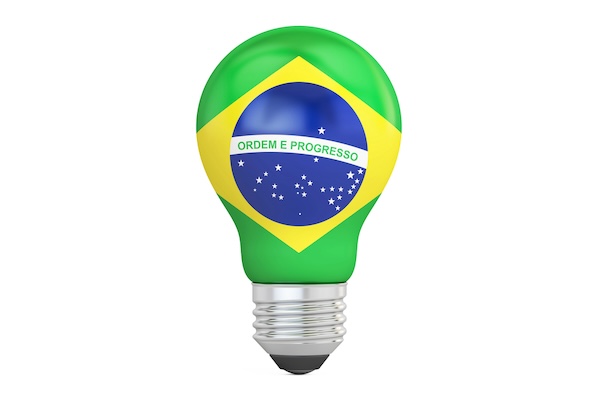
Image Source: Deposit Photos
Author: alexlmx
Image ID: 152227212


![[Advertisement]](https://ipwatchdog.com/wp-content/uploads/2026/06/Patent-Bots-Jun-25-2026-sidebar-700x500-1.jpg)
![[Advertisement]](https://ipwatchdog.com/wp-content/uploads/2026/06/IP-Copilot-Jun-30-2026-sidebar-700x500-1.jpg)





![[Advertisement]](https://ipwatchdog.com/wp-content/uploads/2021/12/WEBINAR-336-x-280-px.png)
![[Advertisement]](https://ipwatchdog.com/wp-content/uploads/2021/12/Ad-4-The-Invent-Patent-System™.png)






Join the Discussion
No comments yet.