
![[IPWatchdog Logo]](https://ipwatchdog.com/wp-content/themes/IPWatchdog%20-%202023/assets/images/temp/logo-small@2x.png)

 0
0 “Trademark owners often have to defend against bad faith Lanham Act claims, and the Fourth Circuit’s opinion—if allowed to stand—could allow judgments against trademark owners who do not have an opportunity to defend themselves.” – INTA’s brief
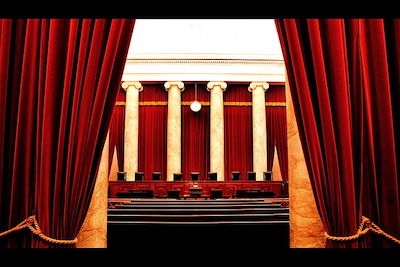 Several amici weighed in late last week on a trademark petition to the U.S. Supreme Court that asks whether “an award of a ‘defendant’s profits’ under the Lanham Act…can include an order for the defendant to disgorge the distinct profits of legally separate non-party corporate affiliates.”
The Supreme Court granted the petition in Dewberry Group, Inc. v. Dewberry Engineers Inc. in June, after the U.S. Court of Appeals for the Fourth Circuit endorsed a disgorgement remedy that reached into profits earned by affiliates of the petitioner who were not included as defendants in the case, without any regard to principles of corporate veil piercing.
Following a 2007 settlement agreement allowing Dewberry Group to use the “Dewberry” mark in limited circumstances, a 2017 rebrand by Dewberry Group led to a trademark infringement suit from Dewberry Engineers (“Engineers”) resulting in a $43 million profits disgorgement award against Dewberry Group for profits by its affiliates, which weren’t named parties in the case. Despite acknowledging that Dewberry Group itself earned no profits from the alleged infringement, the Fourth Circuit affirmed the award over a dissent from Circuit Judge A. Marvin Quattlebaum, who noted that 15 U.S.C. § 1117(a) only speaks of the infringer’s profits, despite the statute’s reference to “principles of equity.”
By ordering the disgorgement of profits from non-party affiliates without proper respect for corporate separateness, Dewberry Group argued in its petition that the Fourth Circuit has created a circuit split that conflicts both with Supreme Court precedent and the plain text of the Lanham Act. The Lanham Act authorizes awards of only the defendant’s profits under Section 1117(a), and Dewberry Group argues that the Fourth Circuit’s ruling will lead to forum shopping among parties seeking more expansive awards than are available in other circuits.
Amici Arguments
Last week, the American Intellectual Property Law Association (AIPLA), the International Trademark Association (INTA), the United States government and the Washington Legal Foundation (WLF) filed briefs that all agreed the Fourth Circuit’s decision should be reversed, albeit under varying rationales.
The WLF weighed in supporting the petitioner, Dewberry Group, and argued that the Fourth Circuit’s ruling “veers far from acceptable legal principles” and further charged that the Fourth Circuit has recently been ignoring the plain language of statutes generally. “Its decisions have been so unmoored from statutory text that earlier this year the Solicitor
General urged the Court to take the extraordinary step of summarily reversing solely because of the degree of error,” noted the amicus brief. The WLF brief urged the Court to reverse and hold that district courts cannot order disgorgement of non-party corporate affiliates’ profits because the Fourth Circuit’s approach would harm the economy.
INTA, AIPLA and the U.S. government all filed briefs in support of neither party, although they all found fault with the Fourth Circuit’s decision.
INTA’s brief, authored by Megan Bannigan of Debevoise & Plimpton, said the Association’s members have a particular interest in the outcome of the case because “trademark owners often have to defend against bad faith Lanham Act claims, and the Fourth Circuit’s opinion—if allowed to stand—could allow judgments against trademark owners who do not have an opportunity to defend themselves.” The brief added that disgorgement is limited to the profits of the defendant under the Lanham Act, and “for a plaintiff to recover profits from other entities, those entities must be named as defendants or the plaintiff must pierce the defendant’s corporate veil.” Additionally, INTA’s brief noted that trademark owners have other means for recovering damages under the Lanham Act, such as permanent injunctions, attorneys’ fees awards for “bad faith corporate structuring”, naming the affiliates as co-defendants, and, again, piercing the corporate veil. INTA urged the Court to vacate the Fourth Circuit decision and to “clarify that the remedy of disgorgement is subject to longstanding guardrails such as piercing the corporate veil or bringing and proving additional claims against the third parties.”
AIPLA made similar arguments in its brief, but called for the High Court to reverse and remand the case in order to allow the trademark owner to try its hand again under other legal principles, such as piercing the corporate veil, “evolving principles of contributory infringement, “or compulsory joinder of the related entities. The brief noted that the Ninth Circuit took this approach in U-Haul Int’l, Inc. v. Jartran, Inc., 793 F.2d 1034, 1039, 230 U.S.P.Q. 343 (9th Cir. 1986), where it applied Federal Rule of Civil Procedure 19 to remand and allow for joinder of the affiliated non-party entities in a case asking “whether a party could seek recovery of damages incurred by separate but affiliated entities.”
Finally, the U.S. government took a different view, agreeing that the district court and Fourth Circuit “erred in treating petitioner and its affiliates ‘as a single corporate entity’ for purposes of calculating petitioner’s profits,” but arguing that Dewberry Group “is wrong to the extent that it suggests that its own tax and accounting practices should control the
court’s quantification of petitioner’s ‘profits’ from the infringement.” The U.S, brief said Dewberry Group engaged in “creative financial maneuvers” to disguise its true profits. The brief went on to explain:
“In at least two circumstances, a court could conclude that certain funds represent the infringer’s profits even if they are not so characterized on the infringer’s books. First, in certain instances, indirect payments can be treated as the ‘defendant’s profits.’ A court may consider, for example, whether the infringer provided infringing products or services for less than fair market value, and then received additional revenues for the same services through a separate transaction. Second, in an appropriate case, a court may treat income that the infringer’s activities have produced as the infringer’s profits, even if the infringer has agreed or directed that the funds will be paid to a different recipient.”
While the government agreed with the petitioner and the other amici that there are additional options, such as contributory infringement or corporate veil piercing, for trademark owners to recover “ill-gotten gains resulting from an infringer’s conduct,” these are not the “only” rationales courts can apply in this circumstance, said the brief. Ultimately, said the government, the lower courts did not apply the correct factual analysis to determine how much of the profits are attributable to the petitioner and the decision should thus be vacated and remanded for further proceedings.
![[Advertisement]](https://ipwatchdog.com/wp-content/uploads/2026/05/Ankar-AI-May-26-2026-sidebar-700x500-1.jpg)
![[Advertisement]](https://ipwatchdog.com/wp-content/uploads/2026/05/Protege-in-PatentSight-spotlight-350x250-Ad-B.png)
![[Advertisement]](https://ipwatchdog.com/wp-content/uploads/2026/05/Patent-Masters-2026-sidebar-700x500-1.jpg)




![[Advertisement]](https://ipwatchdog.com/wp-content/uploads/2021/12/WEBINAR-336-x-280-px.png)
![[Advertisement]](https://ipwatchdog.com/wp-content/uploads/2021/12/Ad-4-The-Invent-Patent-System™.png)





Join the Discussion
No comments yet.