
![[IPWatchdog Logo]](https://ipwatchdog.com/wp-content/themes/IPWatchdog%20-%202023/assets/images/temp/logo-small@2x.png)
 0
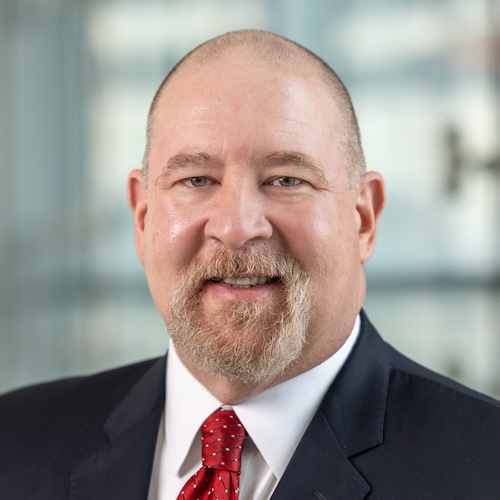
0 This week, our conversation is with my friend John Rogitz, who is the managing patent attorney at Rogitz & Associates. John is a second generation patent attorney with more than 15 years worth of experience. He and his firm work primarily in the software space, representing some of the largest video game companies in the world, which allows him to work not only on video games, but also on virtual and augmented reality technologies as well. And John also represents both well-established, large entities and start-up companies, with much of the rest of his work relating to Artificial Intelligence and Machine Learning. And in addition to his role managing the firm’s day-to-day operations, John also finds time to serve on the Executive Committee of the IP Section of the California Lawyers Association, teach as an adjunct professor at Trinity Law School, and occasionally write for us at IPWatchdog.com.
 Being one of the more thoughtful patent practitioners I know, and someone who has auditioned numerous available AI tools for practitioners, I invited John to join my last intro to patent practice class to discuss prosecution strategy with my students this summer. While he was in town for that purpose we recorded this podcast. Not surprisingly, our conversation heavily focused on all-things software, both from the perspective of a technologist and the perspective of a patent professional searching, drafting and ultimately working with patent examiners to get allowances. So, we spent time discussing both the 2019 patent eligibility guidance, as well as several of the more recent guidelines from the Patent Office, including the Office’s AI guidance.
After acknowledging that the 2019 Patent Eligibility Guidance (PEG) was helpful and has made it easier to obtain patents, Rogitz explained that the PEG “just sort of kicks the can down the road for litigation,” because the Federal Circuit has refused to accept the USPTO position.
“I have another problem with the PEG, in the abstract,” Rogitz told me. “It goes to the infirmity of the overall patent system. It shouldn’t be up to federal agencies to distill and interpret case law the way [the USPTO] has, and then layer on another step… And I know why the Patent Office did it. I appreciate that they did it. But I think that’s not the way our system is meant to function. And in the end it did a lot of good, but is’ just not the way an American form of government is supposed to conduct themselves.”
We also spent a good deal of time discussing obviousness, KSR, and how at least sometimes, perhaps even often depending on the wording of the rejection from the examiner, you really only need to argue a lack of teaching, suggestion and motivation to persuade examiners that the claims you seek are nonobvious and allowable.
“Evidence is still a requirement for motivation to combine,” Rogitz said. “On some level the TSM test is still the controlling test because… if you need evidence for a suggestion or motivation… that’s the TSM test still.”
And there is something to this, at least based on my review this summer of hundreds of file histories where KSR seems to rarely come up. In fact, a lot of times examiners will simply conclude with very little more than a naked conclusion that it would have been obvious for someone of skill in the art to take the primary reference and modify it with some component from a secondary reference and achieve the claimed invention. But aside from teaching, suggestion, or motivation, the rest of the KSR factors rely on an expectation of success, which really requires more than handwaving from the examiner, which may be why arguing TSM alone does often suffice.
“The problem is that examiners are completely unreceptive to that argument [that evidence is required] if they don’t want to be,” Rogitz lamented. “I still think on a certain level with the Federal Circuit reiterating that evidence is required, in a way they’re trying to reinstitute the TSM test, just surreptitiously.”
To hear this entire conversation, listen wherever you get your podcasts (links here). Or visit IPWatchdog Unleashed on Buzzsprout.
![[Advertisement]](https://ipwatchdog.com/wp-content/uploads/2026/04/IPWatchdog-May-7-2026-sidebar-700x500-1.jpg)
![[Advertisement]](https://ipwatchdog.com/wp-content/uploads/2026/04/Virtual-AI-2026-May-18-19-2026-sidebar-700x500-1.jpg)
![[Advertisement]](https://ipwatchdog.com/wp-content/uploads/2026/04/ClearstoneIP-May-14-2026-sidebar-700x500-1.jpg)




![[Advertisement]](https://ipwatchdog.com/wp-content/uploads/2021/12/WEBINAR-336-x-280-px.png)
![[Advertisement]](https://ipwatchdog.com/wp-content/uploads/2021/12/Ad-4-The-Invent-Patent-System™.png)



Join the Discussion
No comments yet.