

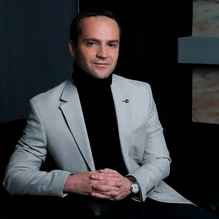
Konstantin Voropaev
Associate
Elbert, Nazaretsky, Rakov, and Co
Konstantin Voropaev is an associate at the Israeli firm Elbert, Nazaretsky, Rakov, and Co. He is a lawyer and compliance officer, boasting extensive experience across a multitude of industries such as information technology, pharmaceuticals, and cybersecurity. In addition to his profound expertise in these sectors, Konstantin adeptly handles intellectual property law, competition law, contract law, and compliance

Recent Articles by Konstantin Voropaev
Rare Disease Treatment Patents after Amgen: Can Claims Cover Untested Genetic Mutations?
On October 14, 2026, the Food and Drug Administration (FDA) announced the Rare Disease Framework Initiative. The goal of this effort is quite essential for patients with rare (orphan) diseases – to develop an approach for assessing medicines for orphan diseases with a focus on the evidence that can be gathered for this assessment. The FDA proposes to include disease characteristics, patient needs, patient population size, and characteristics of orphan medications. The initiative does not itself establish new approval standards. Although the initiative relates to regulatory evidence matters, it also raises a separate legal question about the evidence needed to support patent claim scope.
Ethical Dimensions of Patents: The Impact of the WIPO Treaty on Genetic Resources
The morality of patents remains a pressing issue, particularly concerning genetic resources and traditional knowledge. Ethical concerns persist due to the historical exploitation of these resources without proper recognition or compensation to indigenous communities. Article 1 of the World Intellectual Property Organization (WIPO) Treaty on Patents, Genetic Resources, and Traditional Knowledge outlines its objectives, emphasizing transparency, fairness, and the protection of rights for indigenous communities. Despite progress, differing legislative and judicial approaches across jurisdictions often fail to uniformly protect these communities’ rights.
European Union and Russian Approaches to Registering Cannabis Trademarks
Recent case law demonstrates that judicial bodies in the European Union and Russia have taken the stance that cannabis signs and slogans are not acceptable as trademarks as they are contrary to public interest. While the EU Courts are likely to evolve more rapidly on this issue in the near future, for now the position in both the EU and Russia is clear. The interests of the business community must be protected by governments in all countries, and business initiatives should be welcomed. But when weighing the physical and mental health of society on the one hand and business interests on the other, the priority must be the former.
Russian Court Rules Keyword Ads Generated by a Web Service Do Not Violate Trademark Rights
Businesses often resort to placing keywords in the html code of a web page, meta tags, or in contextual advertising templates for promoting their products on the internet. And in many cases, rivals successfully recover compensation from competitors who use someone else’s trademark to promote their products. But the use of other people’s trademarks is not always intentional. Recently, a Russian entity proved that there was no infringement of intellectual property rights when a trademark that was similar to another mark had been included in an advertisement by a web service. In this landmark case, the courts of all instances, including the Supreme Court, reaffirmed that key words that are automatically generated in search systems cannot infringe as defined by Russian intellectual property law. The Arbitration Court of the Stavropol region found no violations because the search results were not dependent on the actions of the defendant, were technical, and were not aimed at signifying the goods on the internet.