
![[IPWatchdog Logo]](https://ipwatchdog.com/wp-content/themes/IPWatchdog%20-%202023/assets/images/temp/logo-small@2x.png)
Posts in Guest Contributors
To Boost American Innovation, Allow Under 18 Inventors to File Patents for Free
There are lots of familiar recommendations to make U.S. businesses more competitive globally. All are valid, but none are particularly creative or original. One solution that hasn’t been pursued is not only simple, a variation of it has been implemented by America’s largest and most aggressive economic competitor: remove the filing fees for inventors and intellectual property (IP)creators under 18.
Run, Don’t Walk: Dupe Culture, Trade Dress, and the Growing Fight Over Brand Identity
“Run, don’t walk!” has become a familiar call across TikTok and Instagram, signaling that a new budget-friendly “dupe” has landed on store shelves. What was once quiet bargain-hunting has turned into a celebrated online trend, where creators openly compare low-cost look-alikes to premium products. But, as dupe culture surges, brand owners are increasingly turning to trademark and trade dress law to protect what they argue is far more than just a logo, but their brand identity.
The Intangible Investor: Are ‘Patent Hoarders’ a Detriment to Humanity?
Sharing information about an invention is not an option. With patents, disclosure is a requirement which benefits the inventor, other inventors and society. When and how an invention is shared makes a huge difference. Disclosing information and sharing the right to practice it are not the same. The Patent Bay, a new patent platform from a Swedish company that believes some patent owners are hoarders, is looking to change how patents are shared and used.
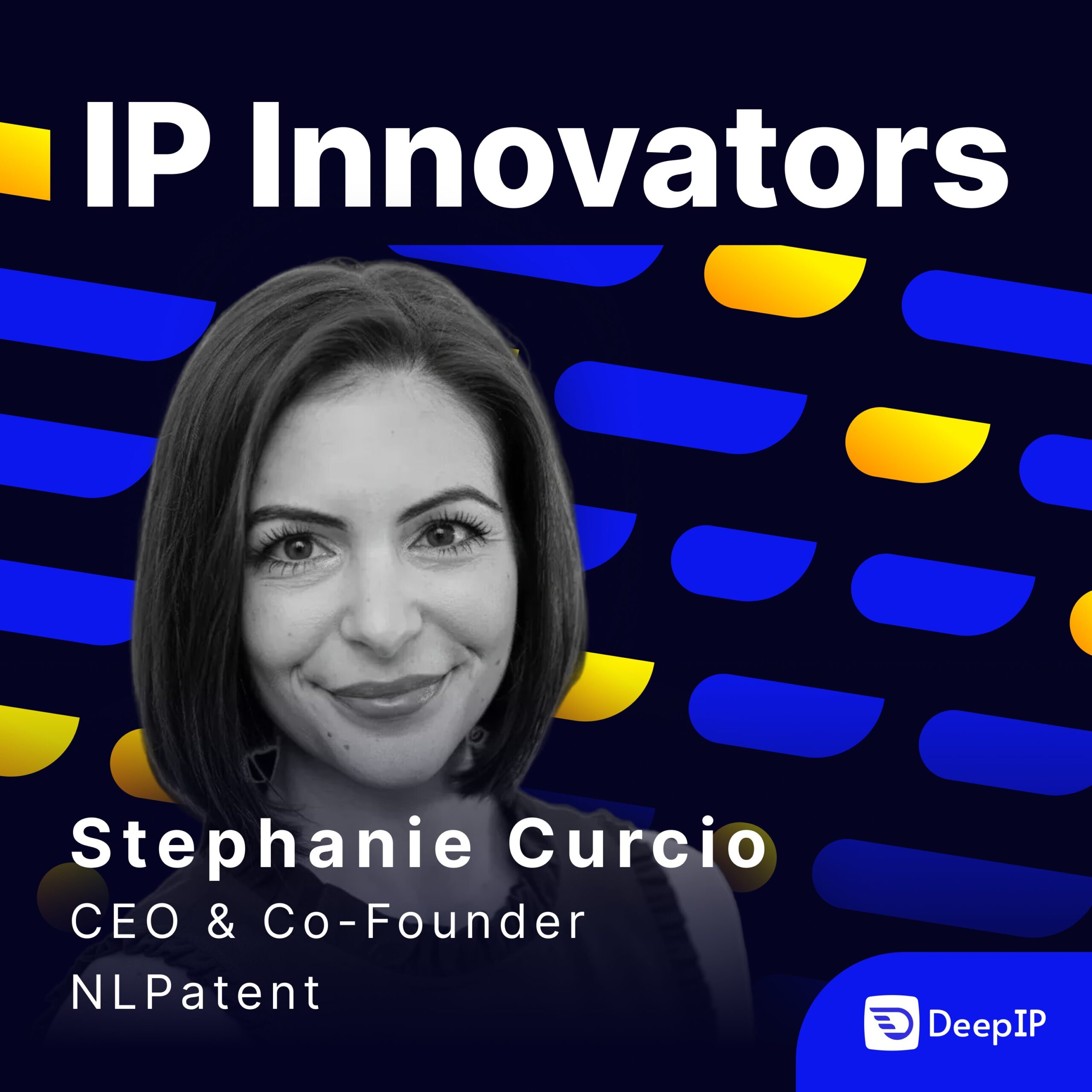
Counting ROI or Chasing Hype: Stephanie Curcio on the True Test of AI in Patents
In the most recent episode of IP Innovators, host Steve Brachmann sits down with Stephanie Curcio, CEO and co-founder of NLPatent, to unpack how AI is reshaping prosecution, search, and the overall workflow across patent professions. Curcio, who began her career in traditional patent drafting and prosecution, explains how early concept-based AI search tools convinced her the profession was on the verge of a seismic shift.
Why Petrella and SCA Hygiene Protect Against Equitable Defenses of Prosecution Laches
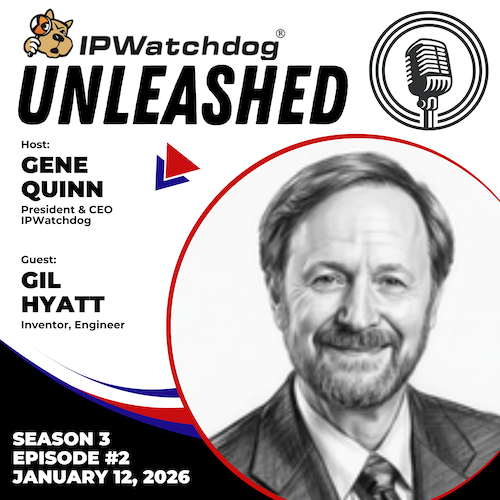
The Supreme Court rejected equitable defenses of laches in infringement suits, reasoning that by enacting a statute of limitation, Congress left no statutory “gap” for equitable judgments on timeliness. See Petrella v. Metro-Goldwyn-Mayer (2014), and SCA Hygiene Prods. v. First Quality Baby Prods (2017). These precedential holdings should have also governed U.S. Court of Appeals for the Federal Circuit (CAFC) decisions on prosecution laches in Hyatt v. Hirshfeld (2021) and in Hyatt v. Stewart (2025), particularly after the multiple briefings in the Hyatt case on the binding effect of such holdings. Yet, nowhere in these decisions can one find any reasons why the principles in SCA Hygiene and Petrella should be inapplicable for precluding prosecution laches.
The Question of AI and Copyright Infringement is Actually an Easy One
Much of the focus on generative artificial intelligence (GenAI) has been on training data ingestion—the moment when AI “steals” from creators. But legally, that’s not where the real fight should be. Decades of legal precedent—from search engines to image?scanning to streaming media—already give us a roadmap. No new formulation of copyright law by Congress, as suggested by some academics, is necessary. By considering these seven unique aspects of GenAI systems, copyright analysis is actually easy.
Secretary Lutnick’s Royalty Grab: Bad for America—and the Administration
Commerce Secretary Howard Lutnick is urging the White House to turn a proposal he floated into an Executive Order that would weaken the economy and cost the government tens of billions of dollars in foregone tax revenue. It’s bad policy, and even worse politically. The Trump Administration would be wise to reject it. Secretary Lutnick is convinced that the government is being short-changed when academic institutions make patentable inventions under federal grants, which are primarily licensed to entrepreneurial small companies that take great risk and expense to turn them into real-world products. The Secretary wants the government to seize 50% of the royalties that universities receive when resulting products are sold—sales that bolster our economy while promoting public well-being.
Looking Forward to 2026: IP Predictions and Prospects for the Year Ahead
On day one of 2026, we asked IP stakeholders to give their predictions for the year ahead on the IP front. From copyright and fair use to patent reform and USPTO operations, here is what they had to say about what to expect in the New Year.
What Do We Want? IP Stakeholders Weigh in on Wildest Dreams for 2026
While being realistic and practical in IP law is usually prudent, it’s a helpful exercise to now and then articulate one’s fantasies for a perfect world in order to gauge what topics come up most often. This year, as in years past, clarity on patent eligibility law remains high, while protections for an improvement of AI tools takes second. Some of the wishes below have little chance of coming true in 2026, but others may be granted—here is what our participants would like to see happen for IP in the new year.
SEPs and War in the Courts: How Anti-Suit Injunctions and Interim Licenses Influenced Global Litigation in 2025
Global litigation over standard essential patents (SEPs) is facing new strategies by implementers, mainly related to venue selection. There is an increasing risk of foreign decisions aimed at interfering with decisions on infringement of patents granted and issued in foreign jurisdictions – in clear tension with the territoriality principle. There is also a trend of abuse of process in the selection of venues within specific countries aimed at creating obstacles and delaying remedies and effective protection for national IP rights.
The IP Legislation That Shaped 2025 and Prospects for the New Year
As 2025 draws to a close, the intellectual property ecosystem faces a wave of transformative changes driven by artificial intelligence (AI) and evolving legislative priorities. From sweeping federal proposals aimed at harmonizing AI governance and overriding state laws, to new copyright and media integrity measures designed to address deepfakes and transparency, and finally to renewed momentum behind patent eligibility and Patent Trial and Appeal Board (PTAB) reform, these developments signal a pivotal moment for innovators, rights holders, and policymakers alike. This article explores three critical fronts shaping the future of IP: federal AI legislation and executive preemption, copyright accountability and media integrity, and the year-end outlook for patent reform—each redefining the balance between innovation, protection, and compliance.
ITC 2025 Year in Review: A Momentous Shift, but the Impact Remains Pending
For Section 337 investigations before the U.S. International Trade Commission (ITC), 2025 was a year of contrasts. As one example, the Federal Circuit’s long-awaited decision in Lashify, Inc. v. ITC reduced the burden for satisfying Section 337’s domestic industry requirement, under which ITC complainants must show adequate U.S. investments in practicing or exploiting the asserted intellectual property rights. But this lower threshold did not immediately result in increased Section 337 complaint filings. For much of 2025, uncertainty concerning U.S. trade policy and federal government operations likely depressed ITC complaint filings.
CAFC Affirms PTAB Invalidation of MIT’s Fuel Management Patents in Dispute with Ford
On December 23, the U.S. Court of Appeals for the Federal Circuit (CAFC) issued a precedential decision in Ethanol Boosting Systems, LLC v. Ford Motor Company, affirming the Patent Trial and Appeal Board’s (PTAB) invalidation of three patents owned by the Massachusetts Institute of Technology (MIT) and licensed to Ethanol Boosting Systems (EBS). The opinion was authored by Judge Chen and joined by Judges Clevenger and Hughes.
Whiskey, Soup, Parody and Politics: Lessons from Two Key District Court Trademark Decisions of 2025
This year started with a district court decision defining the parameters of parody and trademark infringement and ended with a case that could have taken the overlap of parody and political free speech to a new level, had it not settled. That can of soup has not yet been opened. While brand owners expect that their trademarks and trade dress are federally protected properties under the Lanham Act, political figures, satirists and manufacturers of parody products expect their activities to be protected under the First Amendment and other carved out, fair use exclusions. Sometimes, these respective worlds collide. In 2025, this became abundantly clear.
Three Trademark Cases That Mattered in 2025 and What to Watch for Next Year
What do affiliated corporate entities, non-fungible token (NFTs) and cinnamon-flavored whiskey have in common? They each were the subject of significant trademark rulings in 2025. Below, we review three cases with big implications for trademark law and what’s on the horizon for 2026.
Varsity Sponsors
![[Advertisement]](https://ipwatchdog.com/wp-content/uploads/2026/01/IP-Author-Jan-22-2026-sidebar-day-of-webinar-700x500-1.jpg)
![[Advertisement]](https://ipwatchdog.com/wp-content/uploads/2025/12/ClearstoneIP-Jan-27-2026-sidebar-700x500-1.jpg)
![[Advertisement]](https://ipwatchdog.com/wp-content/uploads/2025/11/PTAB-Masters-2026-sidebar-regular-price-700x500-1.jpg)
![[Advertisement]](https://ipwatchdog.com/wp-content/uploads/2025/12/LIVE-2026-sidebar-early-bird-new-700x500-1.jpg)

Latest IPW Posts
EcoFactor Fails to Overcome Rejection of Reexamined Smart Thermostat Claims at CAFC
January 21, 2026 @ 01:15 pmEUIPO-OECD Joint Study Details Close Link Between Global Counterfeit Trade and Abusive Labor Practices
January 21, 2026 @ 01:15 pmFederal Circuit Reverses PTAB on Issue Preclusion, Finds Smart Mobile Patent Claims Unpatentable
January 21, 2026 @ 10:15 amSplit CAFC Says Disputed Aspects of Testimony by Doctor’s Experts are for Jury to Parse
January 20, 2026 @ 05:03 pmWhy PTAB Reform Alone Won’t Save the U.S. Patent System | IPWatchdog Unleashed
January 20, 2026 @ 09:58 am
Latest Podcasts

IPWatchdog Events
Webinar: An Integrated AI Approach to Streamlining Patent Prosecution and Reducing Timelines
January 22 @ 12:00 pm - 1:00 pm ESTWebinar: The FTO Paradox – Conducting Thorough Patent Diligence While Protecting Privilege and Avoiding Willfulness
January 27 @ 12:00 pm - 1:00 pm EST
Industry Events
From IPWatchdog
![[Advertisement]](https://ipwatchdog.com/wp-content/uploads/2021/12/WEBINAR-336-x-280-px.png)
![[Advertisement]](https://ipwatchdog.com/wp-content/uploads/2021/12/Ad-4-The-Invent-Patent-System™.png)