


 0
0 Bites (noun): more meaty news to sink your teeth into.
Barks (noun): peripheral noise worth your attention.
Want to have your doggie(s) featured in one of our future Barks & Bites Columns? Send your dogs photo(s) along with their name, breed (if you know it) and their age to dogwall@ipwatchdog.com. All photos will be added to the IPWatchdog Dog Wall at IPWatchdog Studios and will be added to the queue of images we select from each week.
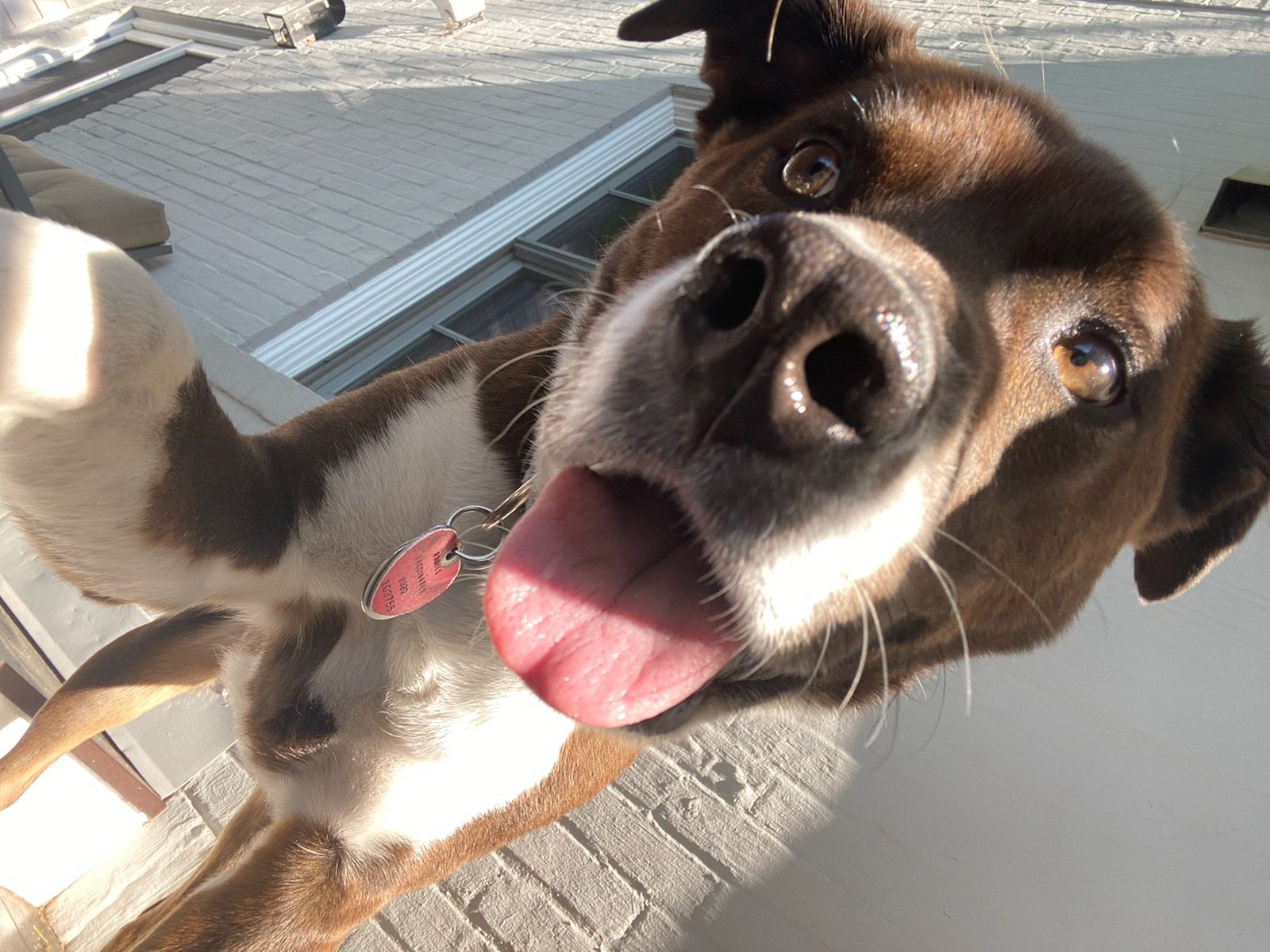
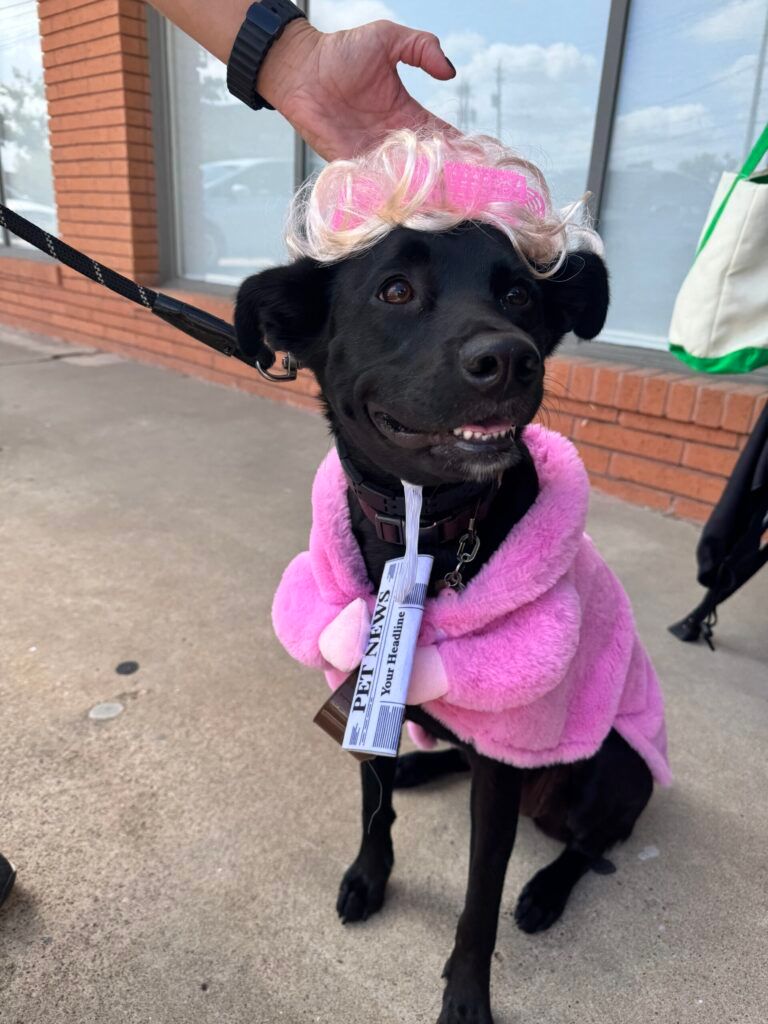
John Kolakowski‘s Mixed Breed Pup, Quincy.
This week on Other Barks & Bites: the Sixth Circuit issued a ruling in favor of office furniture company MillerKnoll in a trademark case over the intellectual property rights to the Bubble Lamp; U.S. District Judge Jane Boyle issued a Section 101 ruling knocking out offline commerce transaction patent claims owned by Wolverine Barcode; the Federal Circuit found that the Patent Trial and Appeal Board did not violate the CAFC’s mandate on remand after the Board issued new findings on claim limitations disclosed by prior art; the European Union Intellectual Property Office announced that the agency received a record number of applications for EU trademarks during the first half of 2026; the World Intellectual Property Organization issues a study showing that global investment in intangible assets has surpassed $1 trillion USD for the first time; and SK Hynix enters a highly anticipated initial public offering of stock on the Nasdaq exchange in a move seen as a bellwether for the sustainability of the AI revolution.
Bites
CAFC Says PTAB Did Not Violate Prior Mandate on Remand in Intellectual Pixels Appeal – On Friday, July 10, the U.S. Court of Appeals for the Federal Circuit issued a precedential ruling in Intellectual Pixels Ltd. v. Sony Interactive Entertainment LLC affirming a final written decision by the Patent Trial and Appeal Board (PTAB) invalidating Intellectual Pixels’ patent claims to methods for generating digital images following an earlier Federal Circuit remand following an earlier decision finding the challenged claims not unpatentable. The Federal Circuit held that the PTAB did not violate the Federal Circuit’s mandate from the remand, ruling that the PTAB’s findings that asserted prior art did not teach the generation of video images for video games like Doom were vacated in the first Federal Circuit appeal and that the Board’s new conclusion that compressing limitations were taught by the prior art did not violate the Federal Circuit’s mandate because those claim limitations were not properly part of the first appeal to the CAFC.
WIPO Coordination Committee Approves Peter as Deputy Director General of Patents and Technology – On Thursday, July 9, WIPO’s Coordination Committee formally approved the appointment of Laura Peter, formerly the Deputy Director of the U.S. Patent and Trademark Office (USPTO) from 2018 to 2021, to serve as the Deputy Director General of the Patents and Technology Sector where Peter will be responsible for administering the Patent Cooperation Treaty and WIPO’s patent law programs. Council for Innovation Promotion (C4IP) Co-Chair Andrei Iancu, formerly USPTO Director, released a statement saying in part, “Laura’s experience at the USPTO, in the private sector, and in university technology transfer has given her a unique perspective on how strong IP systems can help turn ideas into real-world products,” adding that she is exceptionally well-qualified to lead this sector.
CAFC Says Post-Verdict Elaboration on Construction Was Permissible Clarification – On Thursday, July 9, the Federal Circuit issued a precedential ruling in Wyeth LLC v. Astrazeneca Pharmaceuticals LP affirming the District of Delaware’s grant of judgment as a matter of law (JMOL) that Wyeth’s patent claims to methods of treating cancer were invalid under 35 U.S.C. § 112 for lack of enablement. The Federal Circuit agreed with the district court that the patent required undue experimentation so that a skilled artisan could practice the claims, finding that claims directed to administering a “unit dosage” did not disclose how to determine non-toxic or non-fatal dosages, and that the district court’s post-verdict JMOL ruling was a permissible clarification of what was inherent in the construction of “unit dosage” rather than an improper change to that term’s construction.
WIPO Study Shows Intangible Investments Topping $1 Trillion for First Time – On Wednesday, July 8, the World Intellectual Property Organization (WIPO) published the findings of a study conducted jointly with Italy’s Luiss Business School showing that global investment into intangible assets have passed the $1 trillion USD mark for the first time ever, with such investments in the United States accounting for nearly half of the global total. The WIPO study also notes that intangible investment is growing three times faster than the rate of investment into tangible assets, and that intangible investments now account for nearly 13% of the gross domestic product across the 29 economies covered by the study.
Sixth Circuit Affirms Judgment for MillerKnoll in Bubble Lamp IP Case – On Tuesday, July 7, the U.S. Court of Appeals for the Sixth Circuit issued a ruling in Nelson v. MillerKnoll Inc. affirming the Western District of Michigan’s summary judgment ruling dismissing trademark infringement and other claims filed by heirs to the estate of George Nelson, creator of the Bubble Lamp, against the successor company to the Herman Miller design firm where Nelson created the design while serving as Design Director. The Sixth Circuit ruled that the plaintiffs authorized MillerKnoll to use the Bubble Lamp IP via a 2006 royalty agreement and a 2015 addendum both executed by Nelson’s family members and further ratified MillerKnoll’s ownership of the IP by accepting millions in royalty payments.
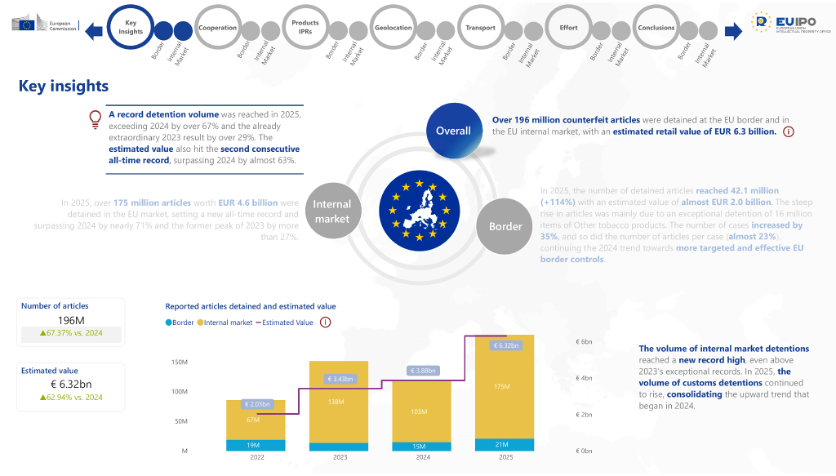
Record Number of EU Trademarks Filed During First Half of 2026 – On Tuesday, July 7, the European Union Intellectual Property Office (EUIPO) announced that the agency had received a record number of IP filings during the first six months of 2026 as the total number of applications for either trademarks or designs rose to 166,214, an increase of 4.7% from the same period last year. While design filings remained fairly stable, the EUIPO highlighted that trademark applications increased by 8.4 percent over the same period last year to 104,263 applications received during the first half of 2026, which surpasses the EUIPO’s previous six-month trademark application filing record set in 2021.
Amicus Briefs Oppose Sandoz’s Antitrust Appeal Against Amgen’s Enbrel at Fourth Circuit – On Monday and Tuesday, July 6 and 7, amicus briefs were filed at the U.S. Court of Appeals for the Fourth Circuit urging the appellate court to reject Sandoz’s appeal of its antitrust case alleging that Amgen unlawfully extended its exclusive rights to the inflammatory disease treatment Enbrel. Former Federal Circuit Chief Judge Paul Michel, Washington Legal Foundation and trade organizations Pharmaceutical Research and Manufacturers of America (PhRMA) and Biotechnology Innovation Organization (BIO) each told the Fourth Circuit that Sandoz’s appeal argued for an overly broad application of the U.S. Supreme Court’s 1944 ruling in Mercoid Corp. v. Mid-Continent Investment to argue that its antitrust claim was not a compulsory counterclaim that should have been brought in an earlier patent infringement case between the parties and that Mercoid should be limited because of its unusual fact pattern.
Barks
Wolverine Barcode Offline Transactions Patent Claims Invalidated Under Alice – On Thursday, July 9, U.S. District Judge Jane Boyle of the Northern District of Texas issued an opinion and order dismissing with prejudice patent infringement claims filed by Wolverine Barcode for failure to state a claim after ruling that Wolverine Barcode’s patent claims to methods of conducting offline commerce transactions were directed to an abstract idea invalid under 35 U.S.C. § 101 under the two-step framework laid out by Alice v. CLS Bank.
News Publishers Ask Court to Sanction OpenAI for Lying About Copyright Records – On Thursday, July 9, The New York Times and other news publishers who have filed copyright infringement litigation against generative AI firm OpenAI in the Southern District of New York filed a motion for sanctions alleging that OpenAI has falsely maintained its inability to search for copyrighted content in its systems and that the company has covered up private chat logs acknowledging infringement under the guise of protecting user privacy.
Ninth Circuit Affirms Ruling Dismissing Cybersquatting Claims Over Airbnb SEO Domain Transfer – On Wednesday, July 8, the U.S. Court of Appeals for the Ninth Circuit issued an unpublished opinion affirming the District of Arizona’s dismissal of Anticybersquatting Consumer Protection Act (ACPA) claims against short-term rental company Airbnb, the appellate court finding that the district court properly dismissed the complaint for failure to state a claim under the ACPA because the plaintiff didn’t establish unlawful use of his airbnbseo.com domain following its transfer under the Uniform Domain-Name Dispute-Resolution Policy (UDRP).
RCF Hails Chinese Trademark Ruling as Important Step in Global Brand Enforcement – On Tuesday, July 7, audio equipment brand RCF announced that it had received favorable rulings from Chinese courts on trademark infringement allegations filed against Ningbo S&A Electronics preventing that firm from using upper- and lower-case forms of “RCF” in conjunction with online promotions and ordering that company to compensate RCF for economic damages and legal expenses.
Judge Garnett Says Behringer Polyphonic Tuner Patent Claims are Invalid Abstract Ideas – On Tuesday, July 7, U.S. District Judge Sherilyn Peace Garnett of the Central District of California granted a motion to dismiss filed by Roland Corp., the parent company of audio equipment manufacturer Boss, invalidating patent claims owned by Empower Tribe, the parent company of rival firm Behringer, after ruling that Empower Tribe’s patent claims to polyphonic tuning modes in guitars were invalid under 35 U.S.C. § 101 for being directed to an abstract idea.
This Week on Wall Street
SK Hynix IPO Seen as Major Indicator of Sustainability of AI Revolution – On Friday, July 10, South Korean chipmaker SK Hynix began its initial public offering (IPO) of stock listed on Nasdaq two days after a U.S. regulatory filing reported a share sale of about $26.5 billion, increasing the IPO price for SK Hynix above its initial offer in a sale seen as a strong indicator of whether recent poor earnings for semiconductor companies mean that the AI revolution is slowing.
Quarterly Earnings – The following firms identified among the IPO’s Top 300 Patent Recipients for 2025 are announcing quarterly earnings next week (2025 rank in parentheses):
- Monday: None
- Tuesday: JPMorgan Chase & Co. (t-163rd); Bank of America Corp. (59th); Wells Fargo & Co. (107th); Ericsson (21st)
- Wednesday: ASML Holding N.V. (167th); Johnson & Johnson (24th);
- Thursday: Taiwan Semiconductor Manufacturing Company, Ltd. (2nd); Abbott Laboratories (131st)
- Friday: None
![[Advertisement]](https://ipwatchdog.com/wp-content/uploads/2026/10/ClaimHit-Oct-28-2026-sidebar-700x500-1.jpg)
![[Advertisement]](https://ipwatchdog.com/wp-content/uploads/2026/10/Patsnap-Oct-29-2026-sidebar-700x500-1.jpg)
![[Advertisement]](https://ipwatchdog.com/wp-content/uploads/2026/09/Life-Sciences-2026-sidebar-last-chance-early-bird-ends-TODAY-700x500-1.jpg)
![[Advertisement]](https://ipwatchdog.com/wp-content/uploads/2024/09/Patent-Prosecution-Training-sidebar-700x500-2025-03-27.jpg)




![[Advertisement]](https://ipwatchdog.com/wp-content/uploads/2021/12/WEBINAR-336-x-280-px.png)
![[Advertisement]](https://ipwatchdog.com/wp-content/uploads/2021/12/Ad-4-The-Invent-Patent-System™.png)





Join the Discussion
No comments yet.