
![[IPWatchdog Logo]](https://ipwatchdog.com/wp-content/themes/IPWatchdog%20-%202023/assets/images/temp/logo-small@2x.png)

 0
0 “Game Plan argued [in its petition] that the ruling conflicted with Section 1115(b) of the Lanham Act, which provides that a mark that has become incontestable constitutes conclusive evidence of the registrant’s exclusive right to use it in commerce.”
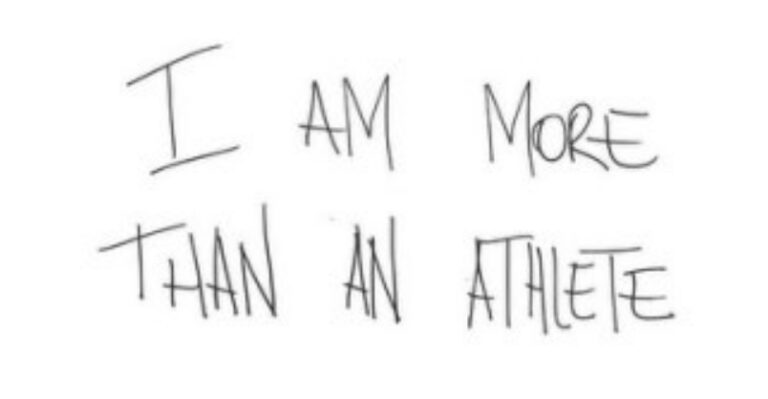 The Supreme Court of the United States denied certiorari today in Game Plan, Inc. v. Uninterrupted IP, LLC, leaving in place a precedential decision of the U.S. Court of Appeals for the Federal Circuit (CAFC) that affirmed the Trademark Trial and Appeal Board’s (TTAB’s) cancellation of Game Plan’s trademark registration and dismissal of its opposition to six intent-to-use applications filed by Uninterrupted IP, LLC (UNIP).
The underlying dispute involved marks incorporating the phrase “MORE THAN AN ATHLETE.” Game Plan, Inc. applied to register a stylized mark, “I AM MORE THAN AN ATHLETE. GP. GAME PLAN,” in December 2016 and received a federal registration on June 5, 2018, covering charitable fundraising services through the sale of t-shirts. UNIP, a media company associated with professional basketball player LeBron James, filed six intent-to-use applications for marks incorporating “I AM MORE THAN AN ATHLETE” and “MORE THAN AN ATHLETE” in March 2018. Game Plan initiated an opposition proceeding before the TTAB in November 2018.
UNIP answered and filed a counterclaim to cancel Game Plan’s registration in April 2019, asserting priority based on common law rights it acquired through an asset purchase agreement executed on February 22, 2019, with DeAndra Alex and her company, More Than An Athlete, Inc. Alex had sold t-shirts and wristbands bearing the “MORE THAN AN ATHLETE” mark at basketball tournaments and other events since at least May 2013. The assignment conveyed the mark and “all of the goodwill of the business related to the mark,” and UNIP retained Alex as a consultant.
Game Plan submitted no evidence during the TTAB trial period and instead attempted to rely on materials previously submitted with its summary judgment motion. The Board declined to consider those materials. On UNIP’s counterclaim, the Board found that Alex had established common law rights in the mark predating Game Plan’s December 2016 filing date. It also concluded that the 2019 assignment to UNIP was valid and supported by continuing goodwill, rejecting Game Plan’s argument that it was an assignment in gross. The Board canceled Game Plan’s registration and permitted UNIP’s six applications to proceed.
The CAFC affirmed the Board’s decision, including its conclusion that the assignment did not violate Section 1060(a)(1) of the Lanham Act, which restricts the assignment of intent-to-use trademark applications before an amendment to allege use is filed. The court reasoned “that is a misapplication of the law here because UNIP did not assign its pending intent-to-use applications. Rather, it received an assignment of preexisting common law rights to an already-used mark.”
The CAFC also rejected Game Plan’s argument that the acquisition constituted an impermissible amendment in substance to UNIP’s pending applications under 37 C.F.R. Section 2.133(a), which bars substantive amendments to applications subject to an opposition without consent and Board approval. The court found that Section 2.133(a) governs amendments to pending applications rather than independent transfers of common law rights, and concluded that “UNIP’s common law rights would still establish priority over Game Plan’s registration independent of any constraints imposed by Section 2.133(a).”
The CAFC also found no error in the Board’s evidentiary rulings. The court held that documents previously filed in connection with summary judgment motions were properly excluded because they were not reintroduced during the designated testimony period. It also found that Game Plan had been clearly advised of the procedural requirements for submitting evidence at trial.
SCOTUS Petition
Game Plan’s petition for certiorari raised two questions: whether the CAFC erred in holding that common law trademark rights are superior to and can displace a federally registered trademark, and whether the acquisition of common law rights after the commencement of an inter partes proceeding can defeat a federally registered trademark in a cancellation proceeding.
On the first question, Game Plan argued that the ruling conflicted with Section 1115(b) of the Lanham Act, which provides that a mark that has become incontestable constitutes conclusive evidence of the registrant’s exclusive right to use it in commerce. Game Plan also relied on Section 1057(c), which grants a trademark applicant nationwide priority as of its filing date against all parties except those who used the mark before that date. In addition, Game Plan cited Seventh Circuit precedent holding that federal registration freezes a prior user’s territorial rights as of the date the registration issues to the federal registrant. Under that precedent, common law rights acquired after the registration date cannot defeat the registered mark outside the geographic area where the prior user had already established use.
On the second question, Game Plan argued that UNIP’s mid-proceeding acquisition of common law rights was functionally equivalent to an amendment in substance under Section 2.133(a). According to Game Plan, the acquisition transformed UNIP from an intent-to-use applicant with no priority claim into a counterclaimant asserting rights that predated Game Plan’s registration. Game Plan further contended that the CAFC reached that conclusion as a matter of first impression without citing precedent authorizing such a result, and that the ruling permitted applicants to alter their legal position after an opposition had been filed in a manner the regulation was designed to prevent.
![[Advertisement]](https://ipwatchdog.com/wp-content/uploads/2026/06/Womens-IP-Forum-2026-sidebar-super-early-bird-ends-July-15-700x500-1.jpg)
![[Advertisement]](https://ipwatchdog.com/wp-content/uploads/2026/07/Juristat-Varsity-Ad-2026-IPW-ad-Solo_1.png)






![[Advertisement]](https://ipwatchdog.com/wp-content/uploads/2021/12/WEBINAR-336-x-280-px.png)
![[Advertisement]](https://ipwatchdog.com/wp-content/uploads/2021/12/Ad-4-The-Invent-Patent-System™.png)






Join the Discussion
No comments yet. Add my comment.
Add Comment