
![[IPWatchdog Logo]](https://ipwatchdog.com/wp-content/themes/IPWatchdog%20-%202023/assets/images/temp/logo-small@2x.png)

 2
2 “While there’s no question that the U.S. is in an AI race with China, the U.S. should not be in a race to the bottom.” – Senator Thom Tillis
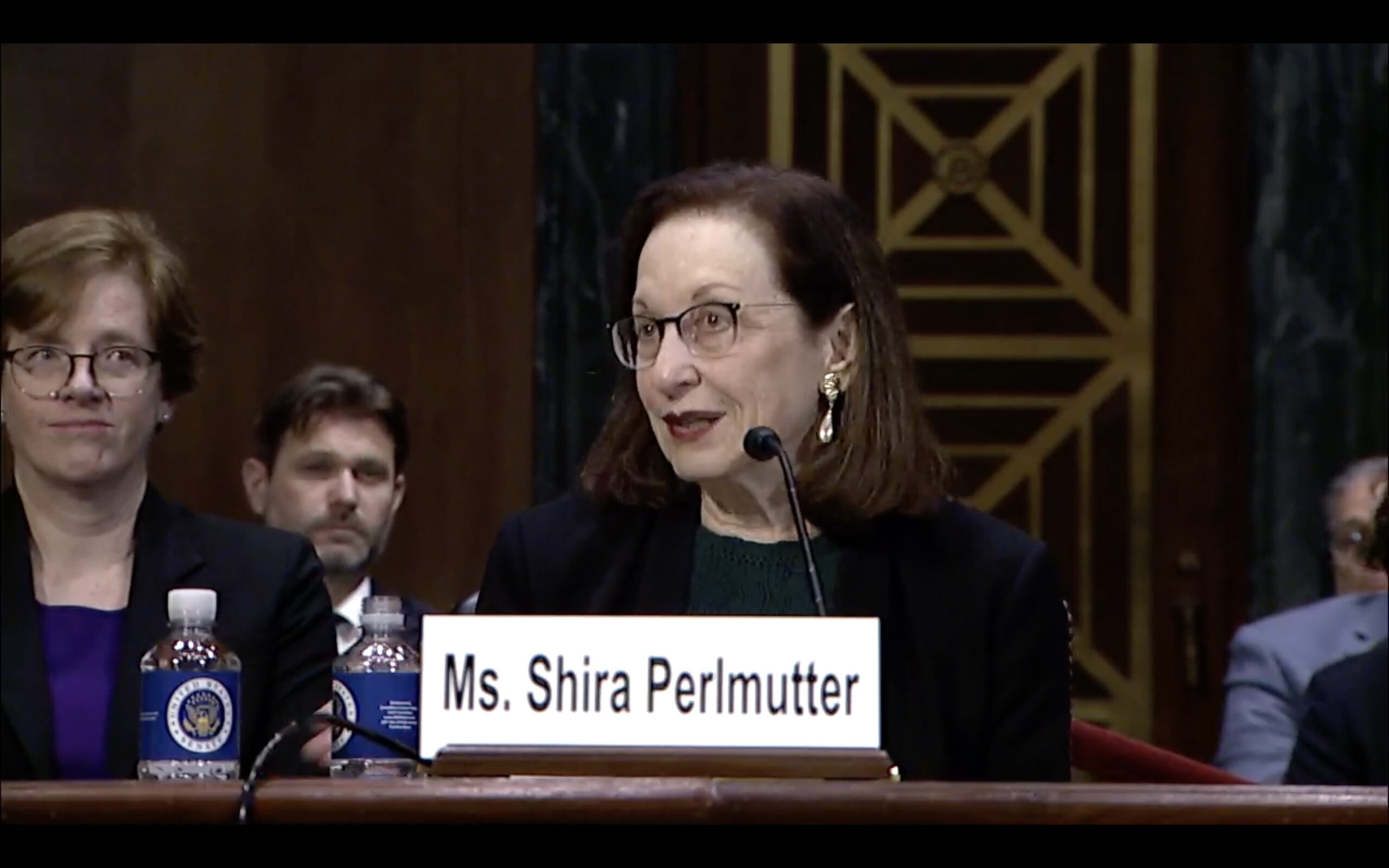 During a Senate Judiciary Subcommittee on Intellectual Property hearing on the Oversight of the U.S. Copyright Office on Tuesday, the intersection of copyright law, artificial intelligence, and executive branch interference were the key focuses. Register of Copyrights Shira Perlmutter provided critical updates on the Copyright Office’s modernization efforts. However, the hearing was punctuated by sharp rebukes from Democratic senators regarding former President Donald Trump’s recent attempts to assert executive control over the legislative branch agency.
The hearing occurred amid ongoing litigation concerning the status and governance of the U.S. Copyright Office. Months prior, the Trump administration asked the U.S. Supreme Court to stay an interlocutory injunction issued by the U.S. Court of Appeals for the D.C. Circuit that allowed Perlmutter to return to her post. Trump argued that the D.C. Circuit’s injunction represents improper judicial interference with the President’s power to remove executive officers. Perlmutter has forcefully opposed this, arguing the Copyright Office is housed within the Library of Congress, a legislative branch agency, and accusing the administration of making an “inexcusable mess” of Congress’s governance plans.
In December 2025, the Supreme Court issued an order deferring a decision in Trump v. Perlmutter pending decisions in Trump v. Slaughter, which addresses the Administration’s authority to remove Federal Trade Commission (FTC) Commissioner Rebecca Slaughter, with oral arguments held on December 8, and Trump v. Cook, which concerns a member of the Federal Reserve Board of Governors’ lawsuit against Trump for her removal, with oral arguments held on January 21, 2026.
Simultaneously, a fast-tracked bill, the Legislative Branch Agencies Clarification Act (H.R. 6028), seeks to formally separate the Copyright Office from the Library of Congress, a progression that consumer rights groups have warned would be a “grave mistake” if rushed.
The House Administration Committee is expected to hold a markup of the bill on Thursday. Brandon Butler, executive director of Re:Create, a coalition of groups “dedicated to balanced copyright and a free and open internet,” said in a statement issued today in opposition to the markup that “like the restructuring of a multi-billion dollar corporation, the stakes in potentially pulling apart these massive, interdependent agencies are immense, except that here, the currency is not just capital, but the preservation of our nation’s culture, innovation, and history.”
Defending the Legislative Branch
The tension surrounding the Trump v. Perlmutter case surfaced during questioning. Senator Mazie Hirono (D-HI) directly addressed the controversy, noting that while Perlmutter could not discuss pending litigation, she wanted to understand the historical value of the Copyright Office remaining within the legislative branch. Hirono referenced the fact that “President Trump tried to illegally fire you.”
Perlmutter responded carefully, highlighting the immense value of the Copyright Office acting as non-partisan expert advising Congress. She noted the Library of Congress serves as a natural home for the office given their overlapping missions, cautioning that moving the office to the executive branch would inevitably result in additional costs and disruption.
Senator Alex Padilla (D-CA), speaking as the ranking member of the Rules Committee, defended the agency’s independence. He reminded the subcommittee that Trump had not only attempted to fire Perlmutter but had also fired Librarian of Congress Carla Hayden, attempting to install his own Deputy Attorney General, Todd Blanche, in her place. Padilla characterized this as a failed “power grab” and a “clear assault” on the legislative branch. He emphasized that as Congress considers legislation to change appointment structures, it must ensure the Copyright Office remains protected from political interference.
Artificial Intelligence Challenge
Screenshot
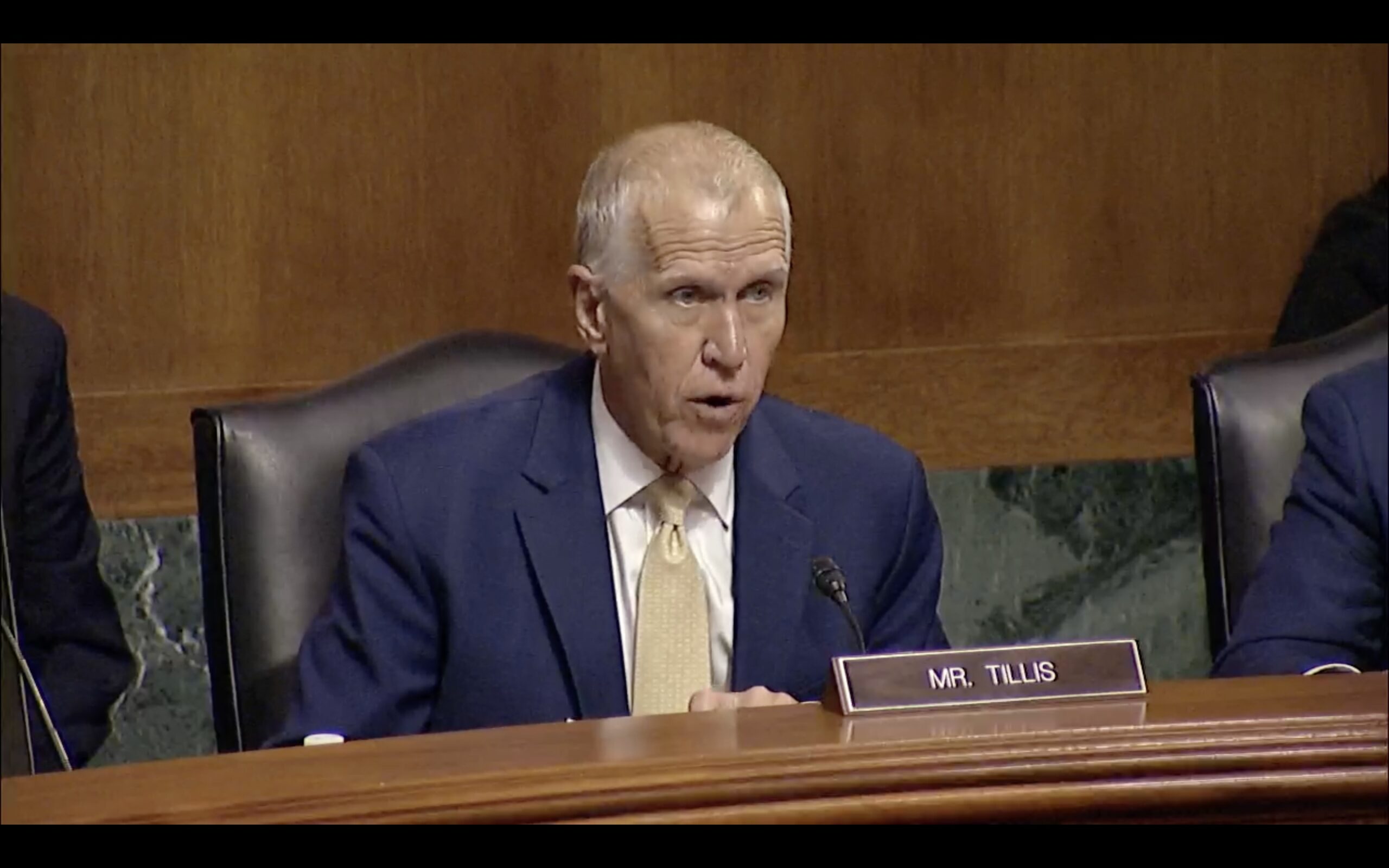
Chairman Thom Tillis (R-NC) emphasized the delicate balance required in the artificial intelligence environment, as “there would not be anything to ingest for the training of AI models if it had not been for copyright law, which has encouraged the creation of content…and while there’s no question that the U.S. is in an AI race with China, the U.S. should not be in a race to the bottom.”
Ranking Member Adam Schiff (D-CA) echoed these concerns, highlighting the significant anxiety generative AI has caused among creators. Schiff pointed out that AI models are frequently trained on vast troves of copyrighted data without the consent or compensation of original authors. He stressed that creators are rightly concerned about their life’s work being used to build systems that will eventually serve as market substitutes. Schiff pointed to his introduction of the CLEAR Act, which aims to ensure creators have adequate transparency regarding when their works are used to train generative AI models.
Perlmutter detailed the Copyright Office’s extensive work on AI, noting their 2023 initiative received over 10,000 public comments. She outlined the office’s multi-part report, which concluded there is an urgent need for federal protection against unauthorized digital replicas. Regarding copyrightability, she clarified that human contribution remains a requirement, though the office has registered over 7,000 claims containing AI-generated material where human authorship was deemed sufficient.
The discussion inevitably turned to fair use, as Senator Marsha Blackburn (R-TN) mentioned the Supreme Court’s decision in Andy Warhol Foundation v. Goldsmith, asking how it impacts AI training. Perlmutter responded that the Warhol decision is highly relevant, as it focuses heavily on whether a use is truly transformative and the impact on the market for the original work. When Senator Hirono asked if Congress should hold off on legislating AI fair use to let the courts develop case law, Perlmutter agreed, suggesting a statutory rule would likely be either too broad or too narrow at this stage.
![[Advertisement]](https://ipwatchdog.com/wp-content/uploads/2026/10/IP-Copilot-Oct-13-2026-sidebar-700x500-1.jpg)
![[Advertisement]](https://ipwatchdog.com/wp-content/uploads/2026/10/Junior-Oct-15-2026-sidebar-700x500-1.jpg)
![[Advertisement]](https://ipwatchdog.com/wp-content/uploads/2026/10/BlackBox-IP-Oct-20-2026-sidebar-700x500-1.jpg)
![[Advertisement]](https://ipwatchdog.com/wp-content/uploads/2026/09/WE-BUY-PATENTS-SIM-IP-Ad-1-revised-on-Sep-28-2026-700x500-1.jpg)
![[Advertisement]](https://ipwatchdog.com/wp-content/uploads/2026/09/Life-Sciences-2026-sidebar-early-bird-date-corrected-700x500-1.jpg)
![[Advertisement]](https://ipwatchdog.com/wp-content/uploads/2024/09/Patent-Prosecution-Training-sidebar-700x500-2025-03-27.jpg)




![[Advertisement]](https://ipwatchdog.com/wp-content/uploads/2021/12/WEBINAR-336-x-280-px.png)
![[Advertisement]](https://ipwatchdog.com/wp-content/uploads/2021/12/Ad-4-The-Invent-Patent-System™.png)




Join the Discussion
2 comments so far.
Anon
May 15, 2026 09:09 amIn a daily update from IPO:
House Administration Committee Unanimously Approves Bill Making Register of Copyrights a Presidential Appointee
Yesterday the House Committee on House Administration approved H.R. 6028, the Legislative Branch Agencies Clarification Act, by a vote of 11-0. The bill would make the Register of Copyrights a presidential appointee subject to Senate confirmation but leaves the Copyright Office in the legislative branch. During a transition period the USCO could continue using Library of Congress support services and must consult the Librarian before taking actions affecting copyright deposits.
Rep. MORGAN GRIFFITH (R-VA), the bill’s sponsor, noted that the Copyright Office performs executive-type functions and that its leadership structure should reflect those responsibilities. Ranking Member Rep. JOE MORELLE (D-NY) agreed but stressed the importance of preserving an institutional relationship with the Library. He also flagged pending USCO reports on artificial intelligence as a reason to ensure the office remains well-supported. A video of the markup is available on the committee website.
***
Careful readers will note that legislation to change the existing situation is being offered.
Can anyone tell me why legislation is needed? (Quite aside from the title – as we all know titles can be very misleading. Hint: the power to nominate traditionally, that is, unless otherwise explicitly noted, comes with the power to relieve.
And yes, the draft last publication from the relieved Register is – and remains – a draft, which means it cannot be referenced by the Courts or Congress for any effect.
Anon
May 13, 2026 04:52 pmMost Congressmen are not attorneys and sadly, it showed throughout this rather slanted presentation.
I was not impressed.