
![[IPWatchdog Logo]](https://ipwatchdog.com/wp-content/themes/IPWatchdog%20-%202023/assets/images/temp/logo-small@2x.png)

 2
2 “Will it do us any good to beat China if [AI companies] succeed in displacing millions of American workers, gobbling up all of Americans’ data [and] completely destroying our IP system?” – Senator Josh Hawley, Senate Judiciary Committee
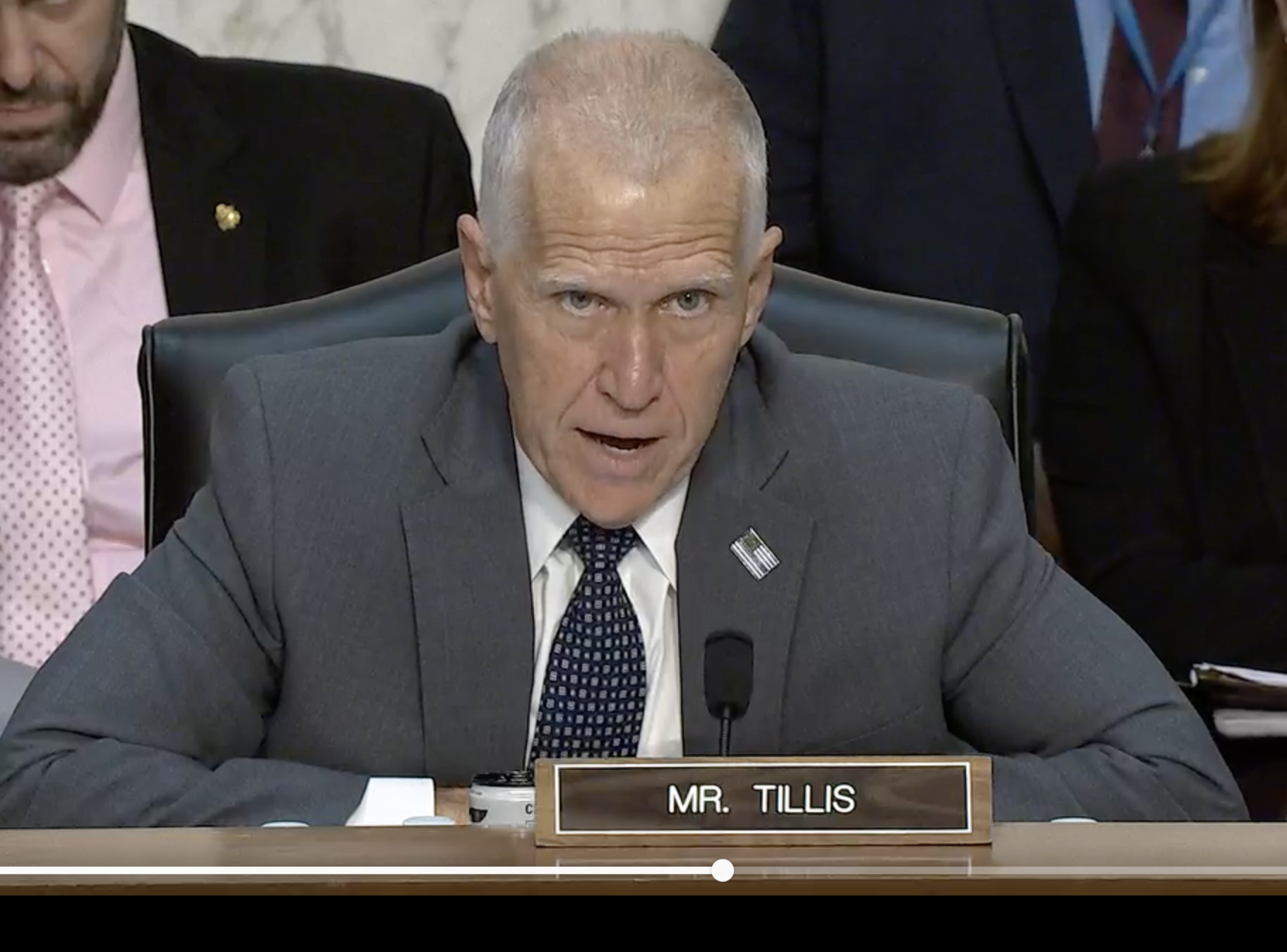 China was not the only actor being scrutinized today during a full Senate Judiciary Committee hearing, titled “Stealth Stealing: China’s Ongoing Theft of U.S. Innovation.”
Senator Thom Tillis (R-NC) stood in for Senator Chuck Grassley (R-IA) as Chair and opened the hearing with a warning that, in addition to its blatant IP theft—which is estimated to cost the United States between $400 billion and $600 billion per year—China is more recently evolving from “imitator to innovator.”
“The United States must overcome its historic and ideological views that China is unable to innovate,” Tillis said.
While the bulk of the hearing focused on the Chinese government’s well-documented strategies and incentives for Chinese citizens and companies to steal IP from U.S. competitors, Senator Josh Hawley (R-MO) and one of the witnesses questioned whether, in the case of Chinese theft of AI technology, it is worth the U.S. government’s time to strategize ways of helping companies that may themselves ultimately be working against the American people.
In response to a question from Senator Dick Durbin (D-IL) about whether the government should be more involved in the development of AI technologies, Helen Toner, Interim Executive Director at the Center for Security and Emerging Technology at Georgetown University, said “it’s truly unprecedented the mismatch between how strategically important this technology is and how little involvement government has in developing it.”
Toner said when she was asked during another Senate Judiciary hearing last year what it is that government least understands about the insider conversations AI companies are having, she told the members it’s “how deadly serious [the companies] are about building machines that can outperform humans at everything and how deadly serious they are that they don’t know if they’ll be able to control the machines they create.”
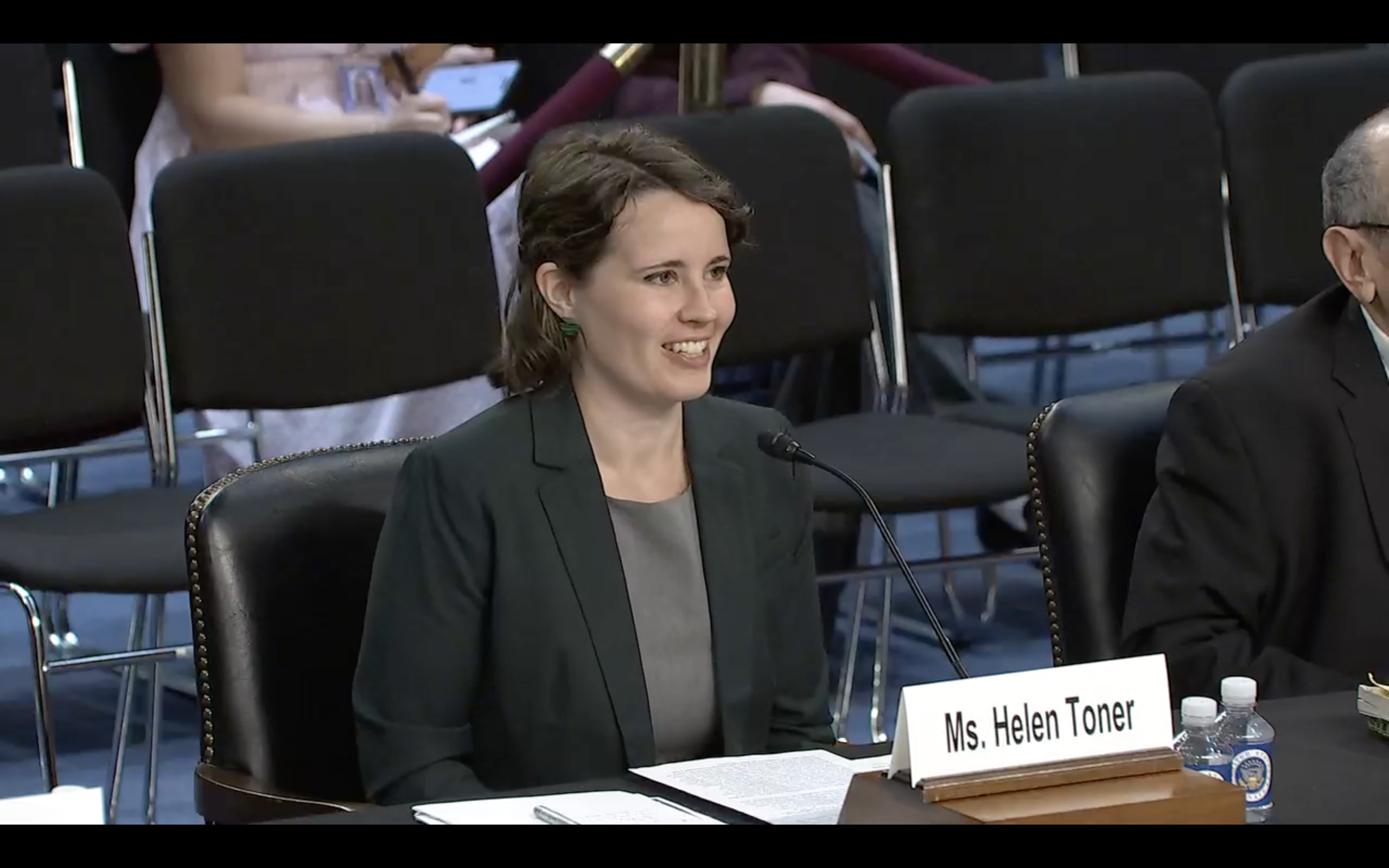 Later in the hearing, when Senator Hawley followed up on Durbin’s question and asked Toner to reiterate her statement, Toner said it’s important that the U.S. government take AI companies seriously when they say they are working as hard as they can to displace human workers. While she said she is skeptical of some of the timelines touted by the companies, it’s very possible their goals could become reality within 10 years, Toner added, and yet the government is not taking that threat seriously.
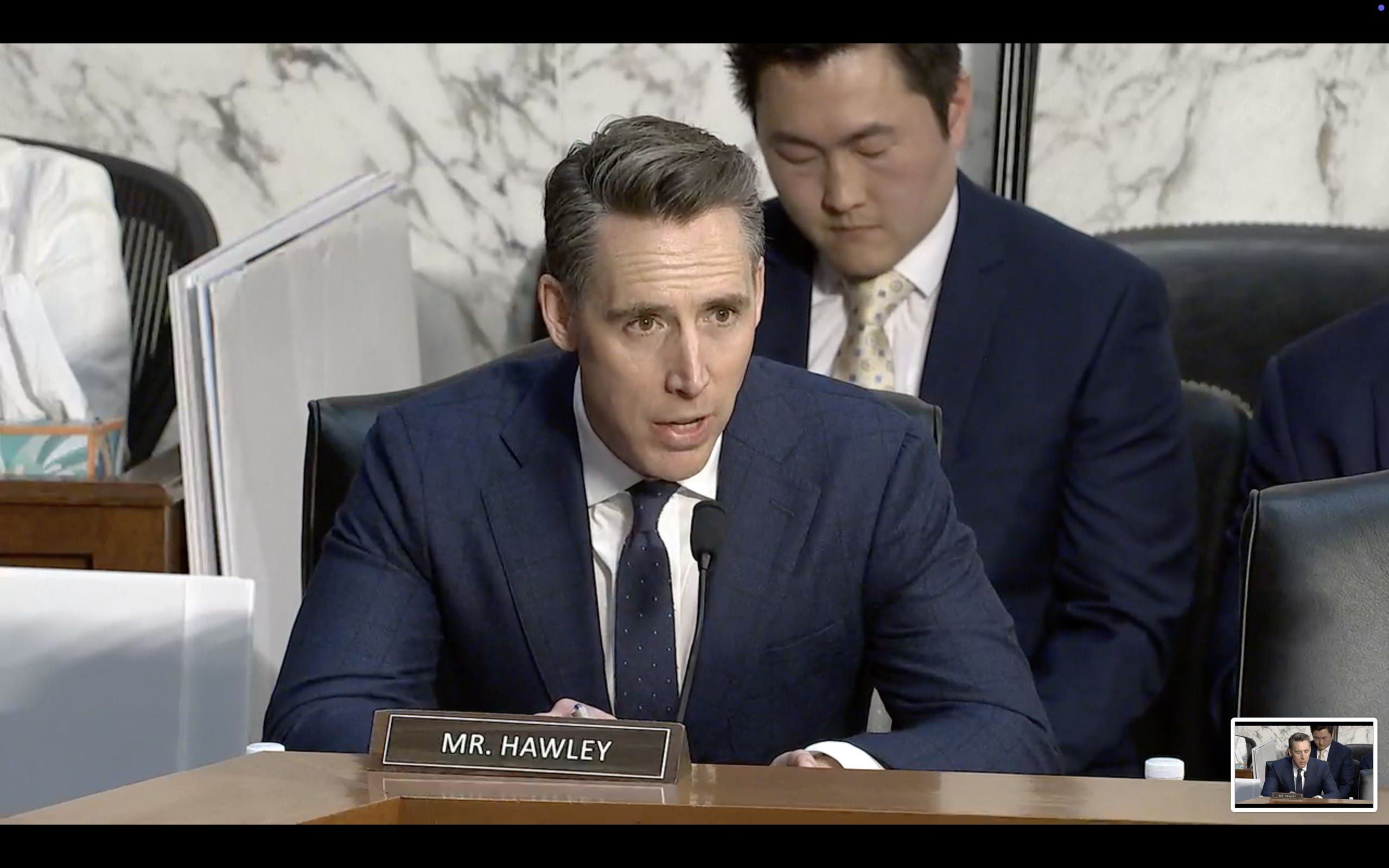 Hawley noted that AI companies often argue that they must be allowed to innovate freely at the expense of IP rights in order to beat China in the AI race, but it seems that these companies’ goals might be “every bit as nefarious” as their foreign counterparts. “We’d never allow a foreign corporation to pursue such goals,” Hawley said. “Will it do us any good to beat China if [the AI companies] succeed in displacing millions of American workers, gobbling up all of Americans’ data, completely destroying our IP system, etc.?”
While Toner said she believes it is important to stay ahead of China, the current lack of government involvement and control over how AI is developed means ‘the winner of any AI race between the U.S. and China is AI.”
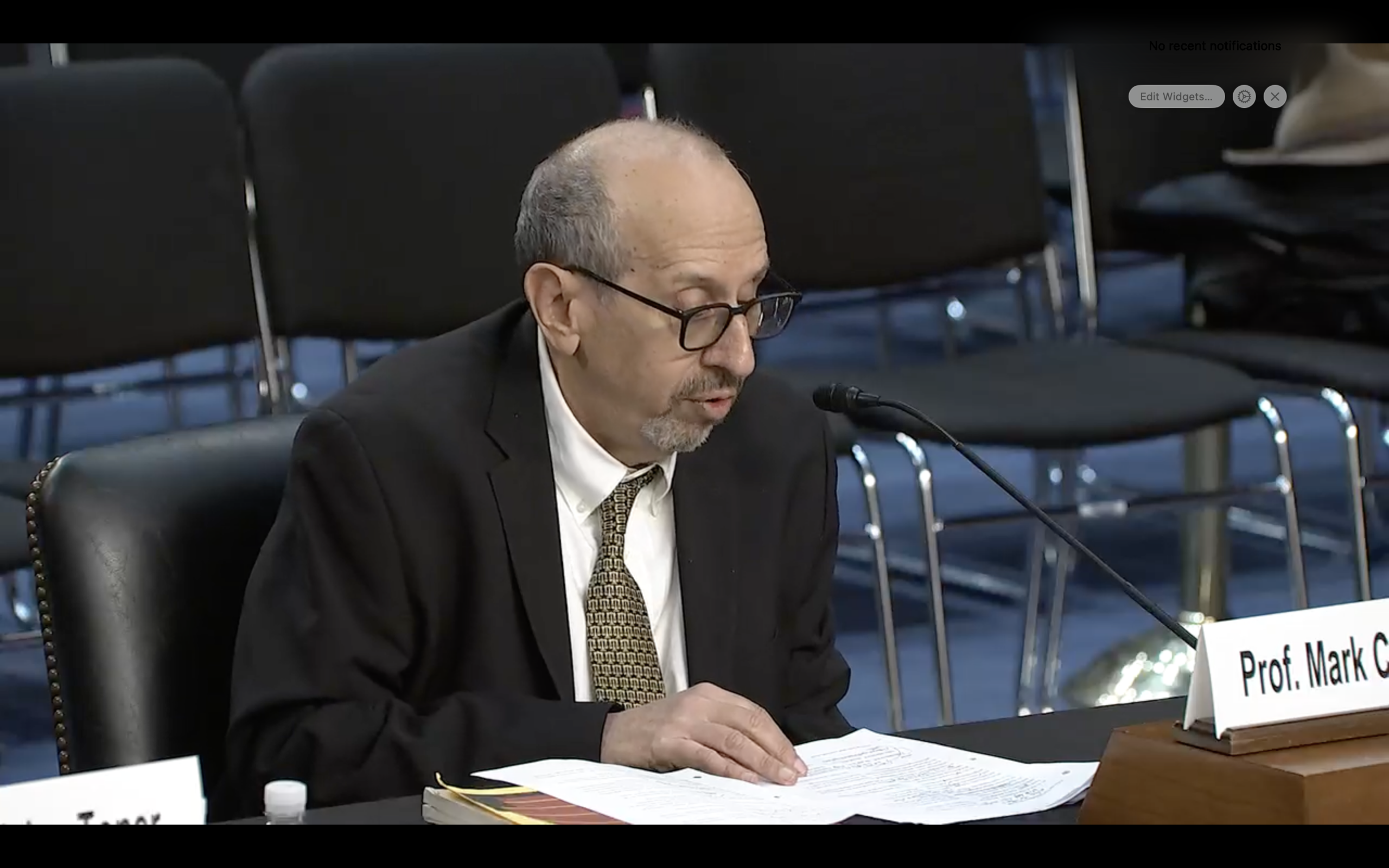 Mark Cohen, Senior Technology Fellow, Asia Society of Northern California and Asia Society Policy Institute, and Senior Fellow, University of Akron Law School, Intellectual Property Institute, echoed Tillis’ opening remarks that China is becoming an innovator in its own right in key areas, including pharmaceutical innovation.
While the United States has in recent years “diminished the role of some of our market operators through diminishing the role of the government in funding the R&D,” China is a rising competitor with “a robust clinical trial environment and tremendous talent in the area,” Cohen said.
Add to that the fact that the United States has a number of judicially-created doctrines, for example, limiting the scope of patent eligible subject matter and injunctive relief, while China has amended its patent examination guidelines about 18 times and its patent law about five times since 200, he added.
Thus, while China’s patent office “leans in heavily” on where the emerging technology is, the United States has had “a very static system that’s slow to react.” If you’re an inventor in those tech areas, your patent will be granted in China and possibly the EU, but not the United States, which ultimately drives innovation overseas.
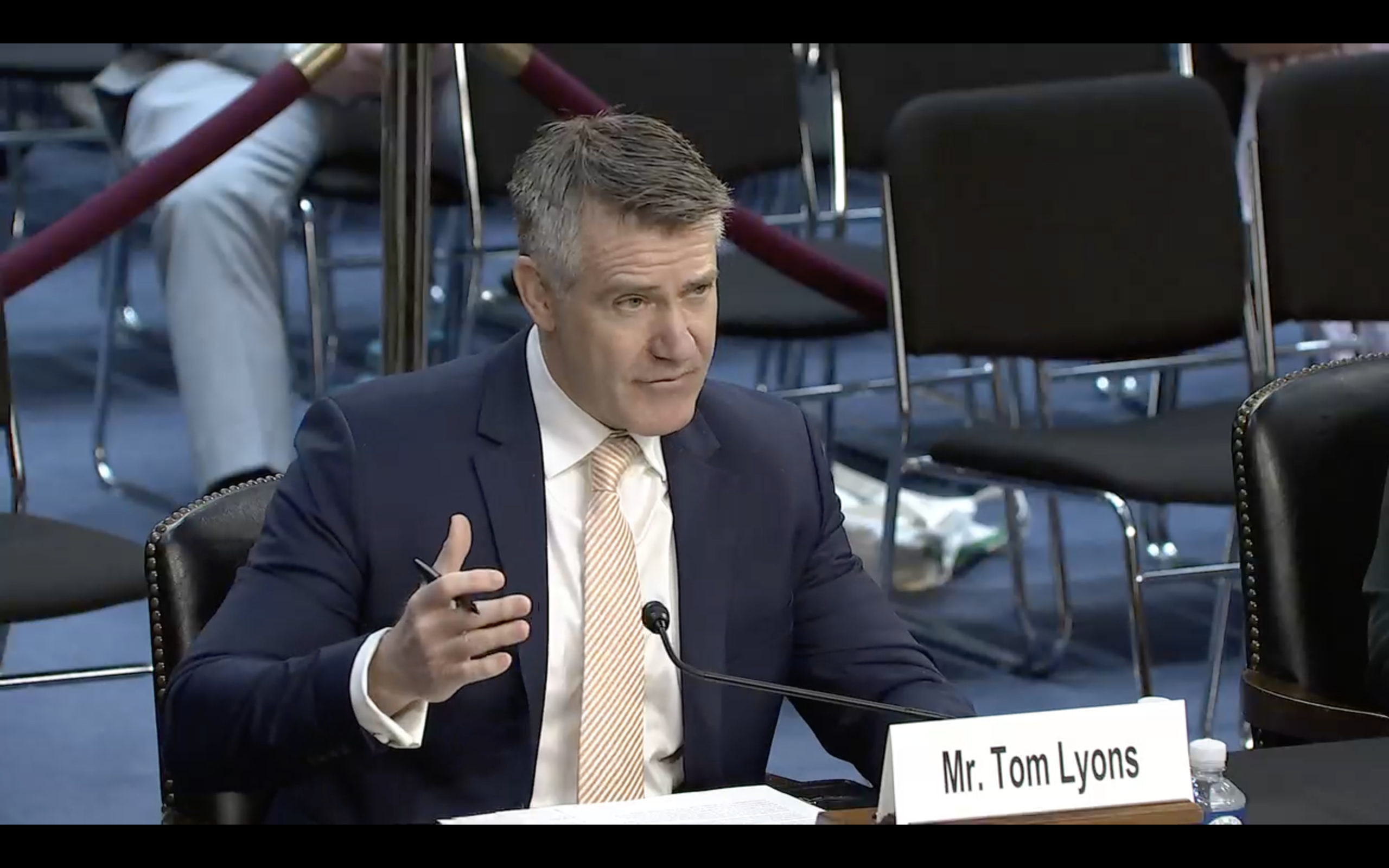 The final witness, Tom Lyons, Co-Founder of the 2430 Group, which helps U.S. companies to defend their innovations against theft, said he left government to found 2430 Group due to the lack of response on China. “In the U.S., we’re not addressing the infrastructure that supports the theft,” Lyons said. He offered solutions including increasing deterrence mechanisms and penalties under the Economic Espionage Act, which now “serve as a small tax relative to the benefit received.” He also suggested a Qui Tam enforcement model so plaintiffs share in the financial recovery, as well as a whistleblower bounty program modeled off the Dodd-Frank Wall Street Reform and Consumer Protection Act (2010) and strong foreign influence background checks for federal contractors.
With respect to AI “distillation,” which is the AI-related IP threat receiving “the most airtime” recently, according to Toner, in which a more advanced AI model is used to improve a less advanced one, Toner said the best immediate tool to curb the practice would be to clarify current antitrust guidance.
“This is a complicated technical problem for the companies, and they’re pretty wary of antitrust enforcement if they talk about what they’re doing,” Toner said.
 Distillation is difficult to detect or address because it is a legitimate use in certain cases, such as for academics. AI providers simply forbid uses for the purpose of creating competitor models via their Terms of Service.
Google reported in February of this year that it experienced a surge of distillation attacks on its chatbot, Gemini, for example.
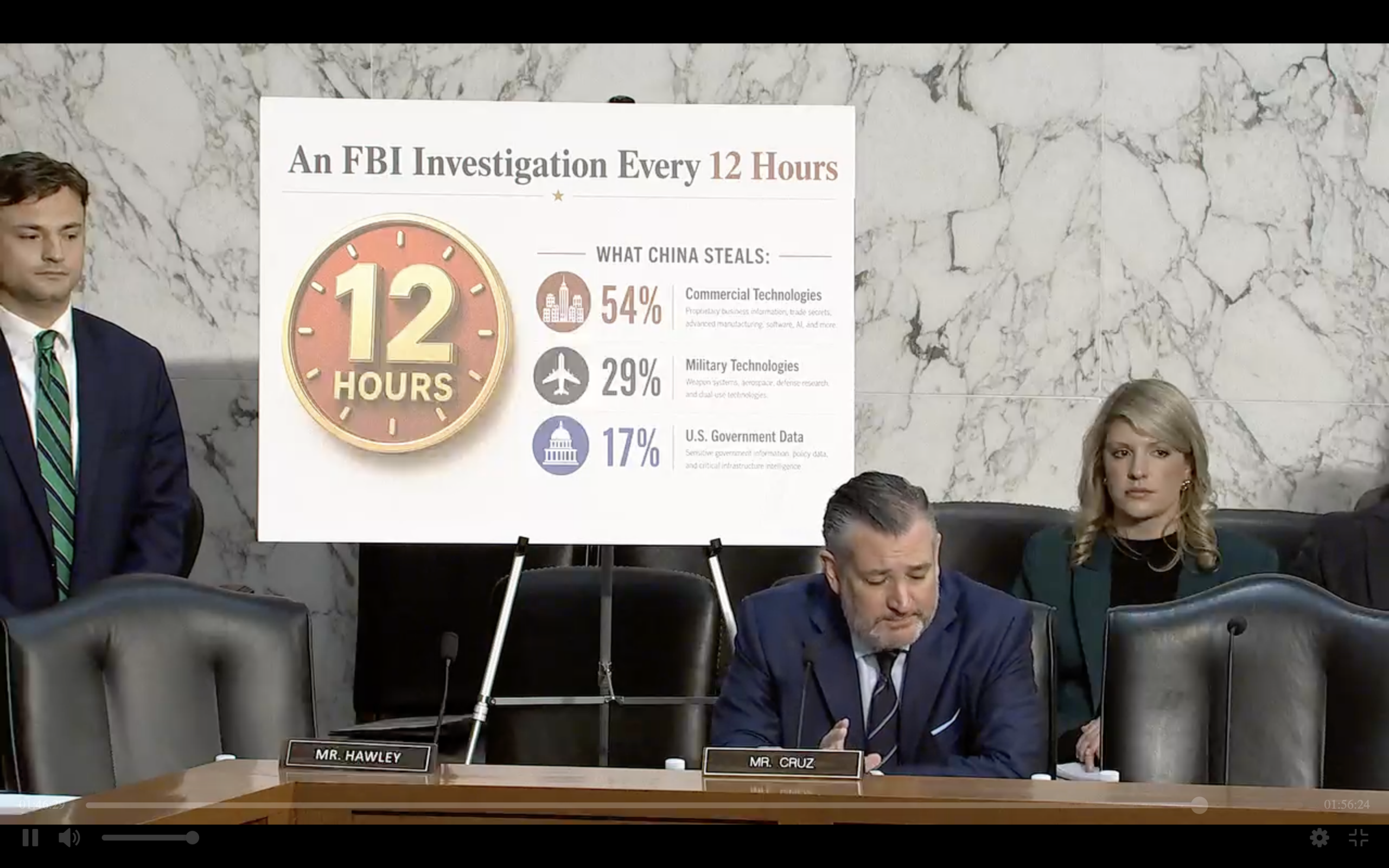
Senator Ted Cruz (R-TX) rounded out the hearing with some visual aids illustrating Chinese IP theft and warned the Committee that “this is a pattern that is far-reaching, and the consequences for our economy are massive and the consequences for our national security if anything are greater.”
![[Advertisement]](https://ipwatchdog.com/wp-content/uploads/2026/10/IP-Copilot-Oct-13-2026-sidebar-700x500-1.jpg)
![[Advertisement]](https://ipwatchdog.com/wp-content/uploads/2026/10/Junior-Oct-15-2026-sidebar-700x500-1.jpg)
![[Advertisement]](https://ipwatchdog.com/wp-content/uploads/2026/10/BlackBox-IP-Oct-20-2026-sidebar-700x500-1.jpg)
![[Advertisement]](https://ipwatchdog.com/wp-content/uploads/2026/09/WE-BUY-PATENTS-SIM-IP-Ad-1-revised-on-Sep-28-2026-700x500-1.jpg)
![[Advertisement]](https://ipwatchdog.com/wp-content/uploads/2026/09/Life-Sciences-2026-sidebar-early-bird-date-corrected-700x500-1.jpg)
![[Advertisement]](https://ipwatchdog.com/wp-content/uploads/2024/09/Patent-Prosecution-Training-sidebar-700x500-2025-03-27.jpg)






![[Advertisement]](https://ipwatchdog.com/wp-content/uploads/2021/12/WEBINAR-336-x-280-px.png)
![[Advertisement]](https://ipwatchdog.com/wp-content/uploads/2021/12/Ad-4-The-Invent-Patent-System™.png)







Join the Discussion
2 comments so far.
Pro Say
April 22, 2026 07:13 pm“We have met the enemy, and it is us.”
Given that another (less appreciated yet at least as bad) way that China obtains American innovation is due to our very own Supreme Court and CAFC unconstitutionally limiting the innovative advances available to be protected by American patents.
Every time a District Court and the CAFC invalidates a patent is yet another innovation now available for China to utilize with impunity.
Furthermore, the PREVAIL and PERA acts (despite claims to the contrary) would actually make it even easier for China (who is secretly cheering for their passage) to grab our innovations.
The only two acts which will actually put a hard stop to China (who is horrified to see passed) ?
RALIA and BIA:
https://usinventor.org/
Anon
April 22, 2026 05:19 pmGenerally speaking, I like Hawley.
But he is seriously misguided if he wants no disruption when it comes to innovation.
I am reminded of Queen Elizabeth I.
As noted by Google Gemini (I had heard this awhile back and could not locate the source):
“Queen Elizabeth I blocked the introduction of the stocking frame, a revolutionary knitting machine developed by Reverend William Lee in 1589. She refused to grant a patent for the invention, fearing that it would destroy the livelihoods of traditional hand-knitters and cause mass unemployment.”
This act likely retarded innovation far more pervasively than merely textiles, given as the computing arts themselves are heavily indebted to actual innovations such as the loom.
Wanting to ‘protect today’ is very often a dangerous and misguided stunting of the very purpose why we want strong innovation protection.
Innovation is meant to be disruptive.