
![[IPWatchdog Logo]](https://ipwatchdog.com/wp-content/themes/IPWatchdog%20-%202023/assets/images/temp/logo-small@2x.png)

 0
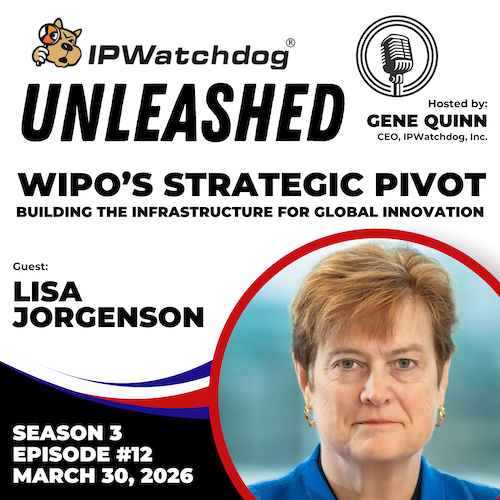
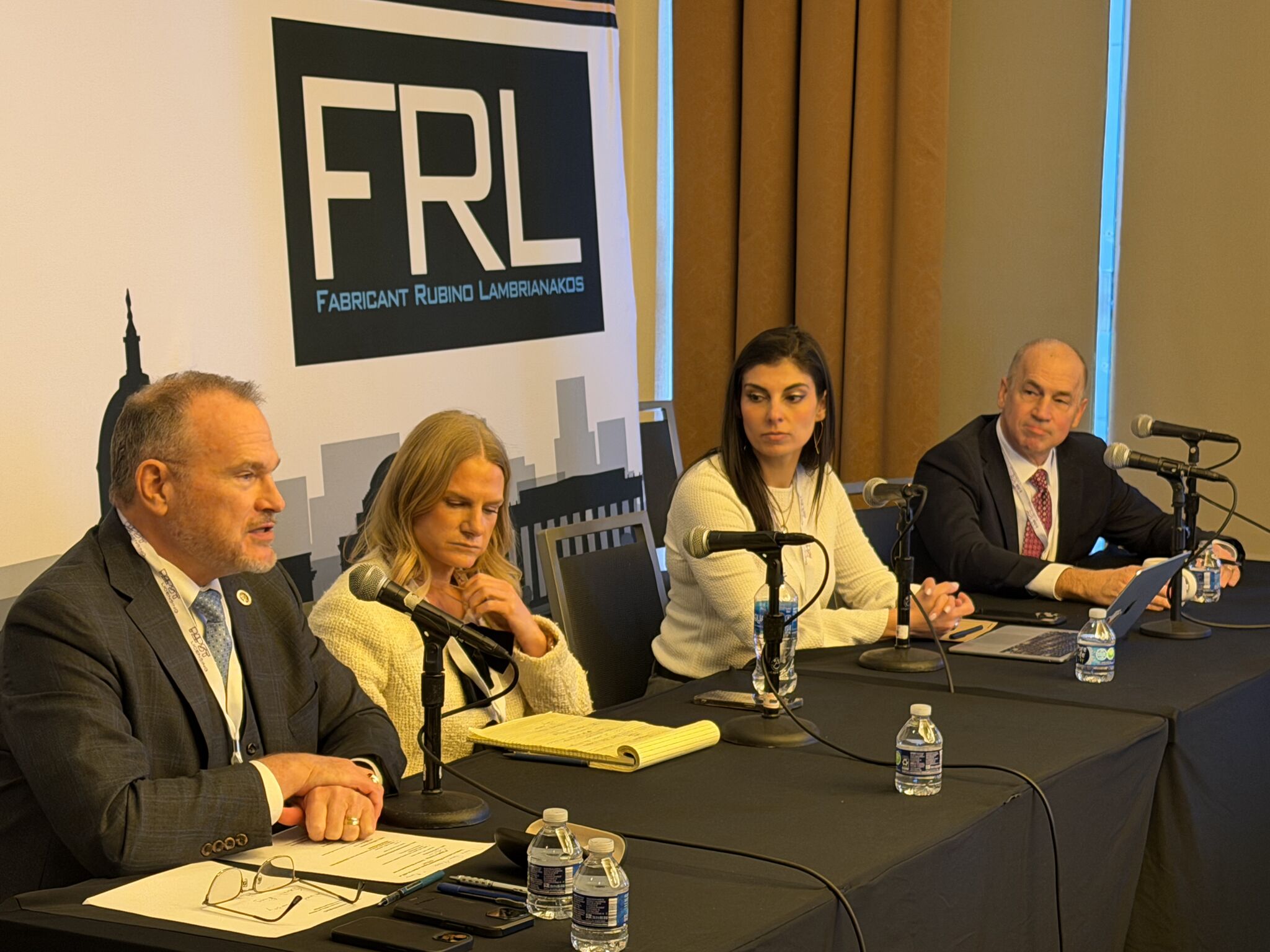
0 This week on IPWatchdog Unleashed, I spoke with Lisa Jorgenson, who is Deputy Director at the World Intellectual Property Organization (WIPO). Jorgenson had just attended IPWatchdog LIVE 2026 and spoke on our final panel along with former U.S. Patent and Trademark Office (USPTO) Director David Kappos, former USPTO Director Andrei Iancu, and former International Trade Commission (ITC) Commissioner Scott Kieff. She joined me immediately following the conference at IPWatchdog Studios for a wide-ranging discussion that pulled back the curtain on an institution many in the IP community think they understand—but often do not really appreciate.
What emerged from the discussion is a picture of WIPO not as a distant UN bureaucracy focused primarily on treaties and policy, but as a dynamic, fee-driven organization that for several years now has been quietly undergoing an operational and cultural transformation. At a time when innovation systems are being reshaped by artificial intelligence, geopolitical realignment, and shifting economic priorities, WIPO is positioning itself as both an enabler and a stabilizer in an increasingly complex global IP ecosystem, and continues to bring people and countries together for meaningful dialogue on some of the most important issues facing the global IP community.
Jorgenson’s own path to WIPO reflects the kind of cross-functional experience that the role now demands. After more than two decades in-house at STMicroelectronics leading global IP operations, followed by her tenure as Executive Director of the American Intellectual Property Law Association (AIPLA), she arrived at WIPO with a unique blend of corporate, policy, and international experience. That combination has proven essential in her role as Deputy Director of WIPO, charged functionally with running operations internally in what she describes as being akin to the role of a Chief Operating Officer (COO). Her job at WIPO requires navigating not only legal frameworks, but also economic realities, institutional priorities, and the often-competing interests of nearly 200 member states.
Yet one of the most striking themes of the discussion was how fundamentally different WIPO is from other UN agencies. Unlike organizations that rely heavily on member state contributions, WIPO is largely self-funded through the services it provides—most notably the Patent Cooperation Treaty (PCT) system. This distinction is not merely financial; it shapes the organization’s entire operating philosophy. As Jorgenson explained, WIPO must think and act in ways that are explicitly customer centric. Its users—ranging from individual inventors to multinational corporations—are not passive stakeholders, but the primary source of its revenue and relevance. This reality has driven a deliberate shift at WIPO to center its mission around service and bringing constituencies together.
Rather than acting as a top-down policy body, WIPO increasingly sees itself as a service provider that enables countries to build IP systems aligned with their own economic goals. In practice, that means pushing no prescriptive models but instead listening to what member states want and helping them achieve those goals, what Jorgenson described as a tailored, “menu-based” approach. When WIPO engages with developing countries, it does not dictate legal frameworks or institutional structures. Instead, it works with governments to understand their specific objectives—whether that involves fostering local innovation, attracting foreign investment, or building enforcement capacity—and then assembles a customized package of support.
This approach extends beyond policy into capacity building. WIPO regularly brings in experts from major patent offices such as the USPTO, European Patent Office (EPO), and Japan Patent Office (JPO) to train examiners and practitioners in developing countries. But even here, the emphasis is on optionality rather than uniformity. Countries are not told to emulate a particular system; they are given exposure to multiple models and the flexibility to choose what best fits their needs. The result is less a one-size-fits-all export of IP doctrine and more a platform for institutional development that facilitates the needs and on-the-ground reality.
At the same time, under Director General Daren Tang, WIPO has placed a strong emphasis on modernizing its internal operations, with Jorgenson playing a central role in that effort. One of the most significant shifts has been toward embedding artificial intelligence into core workflows. In translation alone—a critical function for a multilingual organization—the impact has been dramatic. AI-assisted processes have reduced costs from tens of thousands of Swiss francs to a fraction of that amount, while simultaneously improving quality.
But the operational changes go beyond cost savings. WIPO is actively rethinking how it interacts with its users. Historically, much of the organization’s work was structured around processing individual applications. That model is now evolving into a more proactive, applicant-focused system. By assigning personnel to work directly with frequent users—such as large corporations and law firms—WIPO aims to identify recurring issues, reduce errors, and streamline processes in ways that benefit both the organization and its customers. The introduction of account managers for major users reflects a broader recognition that service quality and accessibility are critical differentiators.
This shift toward a more engaged, service-oriented model also aligns with WIPO’s efforts to expand the use of its systems, particularly the Patent Cooperation Treaty (PCT). While the PCT has long been a cornerstone of international patent filing, Jorgenson acknowledged that significant opportunities remain to increase adoption, especially among companies that underutilize its strategic advantages. Misunderstandings about cost, complexity, or timing continue to limit its use in some cases. Addressing those misconceptions—and more actively promoting the system—has become a priority.
The strategic value of the PCT was a recurring theme in the conversation. I emphasized that the system’s 30-month window to claim priority provides companies with a critical buffer to assess commercial viability, adapt to market changes, and make more informed decisions about where to pursue protection. In an environment where supply chains are shifting and geopolitical considerations are increasingly influencing business strategy, that flexibility can be decisive. As Jorgenson noted, companies are beginning to think more strategically about where they manufacture, where they sell, and how their IP portfolios align with those decisions. The PCT, in this context, is not just a filing mechanism—it is a tool for managing uncertainty.
Looking ahead, we both agreed that the pace of change in technology and global markets will require WIPO to become even more forward-looking. Artificial intelligence is at the center of that transformation, not only as an operational tool but as a driver of new legal and policy questions. Issues such as data ownership, privacy, and the intersection of AI with existing IP frameworks are already beginning to reshape the landscape. WIPO is responding by investing in internal expertise, including technologists and economists who can anticipate trends and inform future initiatives.
Beyond AI, the organization is also expanding its engagement in areas such as standard essential patents (SEPs), alternative dispute resolution, and global IP infrastructure. One particularly notable initiative involves aggregating data from standards development organizations and patent pools into WIPO’s PATENTSCOPE database, creating a more transparent and accessible resource for understanding the relationship between patents and technical standards. At the same time, WIPO is facilitating dialogue around complex issues such as FRAND licensing, with the goal of establishing a more coherent framework for discussions that are often fragmented and contentious.
Another forward-looking effort is the development of a global assignment system that would streamline the transfer of patent rights across jurisdictions. For companies engaged in mergers, acquisitions, or large-scale portfolio management, the ability to execute a single, globally recognized assignment could significantly reduce administrative burdens and costs. While still in development, the initiative reflects a broader ambition to simplify and modernize the infrastructure underlying the global IP system.
Underlying all these efforts is a recognition that WIPO’s role is evolving. It is no longer sufficient to just administer treaties or provide technical assistance in isolation. The organization must operate as an integrated platform that connects stakeholders, anticipates emerging challenges, and delivers practical solutions in real time when called upon by member states. That requires not only technical expertise, but also a willingness to rethink longstanding assumptions about how international institutions function.
For Jorgenson, the appeal of working at WIPO lies precisely in that complexity. The organization sits at the intersection of technology, law, economics, and global development, bringing together perspectives from across industries and regions. In a field often characterized by incremental change, WIPO is now operating in an environment where transformation is the norm.
As our conversation made clear, the stakes are high. The decisions being made today—about how to integrate AI, how to support emerging economies, and how to manage increasingly complex IP ecosystems—will shape the innovation landscape for years to come. If WIPO succeeds in its current trajectory, it will not only continue to remain relevant; it will become indispensable.
More IPWatchdog Unleashed
You can listen to the entire podcast episode by downloading it wherever you normally access podcasts or by visiting IPWatchdog Unleashed on Buzzsprout. You can also listen to IPWatchdog Unleashed conversations on the IPWatchdog YouTube channel. For more IPWatchdog Unleashed, see below for our growing archive of previous episodes.
![[Advertisement]](https://ipwatchdog.com/wp-content/uploads/2026/03/LexisNexis-Mar-31-2026-sidebar-day-of-webinar-700x500-1.jpg)
![[Advertisement]](https://ipwatchdog.com/wp-content/uploads/2026/03/NLPatent-Apr-2-2026-sidebar-700x500-1.jpg)
![[Advertisement]](https://ipwatchdog.com/wp-content/uploads/2026/02/Junior-Apr-7-2026-sidebar-700x500-1.jpg)




![[Advertisement]](https://ipwatchdog.com/wp-content/uploads/2021/12/WEBINAR-336-x-280-px.png)
![[Advertisement]](https://ipwatchdog.com/wp-content/uploads/2021/12/Ad-4-The-Invent-Patent-System™.png)




Join the Discussion
No comments yet. Add my comment.
Add Comment