
![[IPWatchdog Logo]](https://ipwatchdog.com/wp-content/themes/IPWatchdog%20-%202023/assets/images/temp/logo-small@2x.png)
 0
0 “The answer isn’t serial filings, we think the answer should be gang tackling.” – USPTO Director John Squires
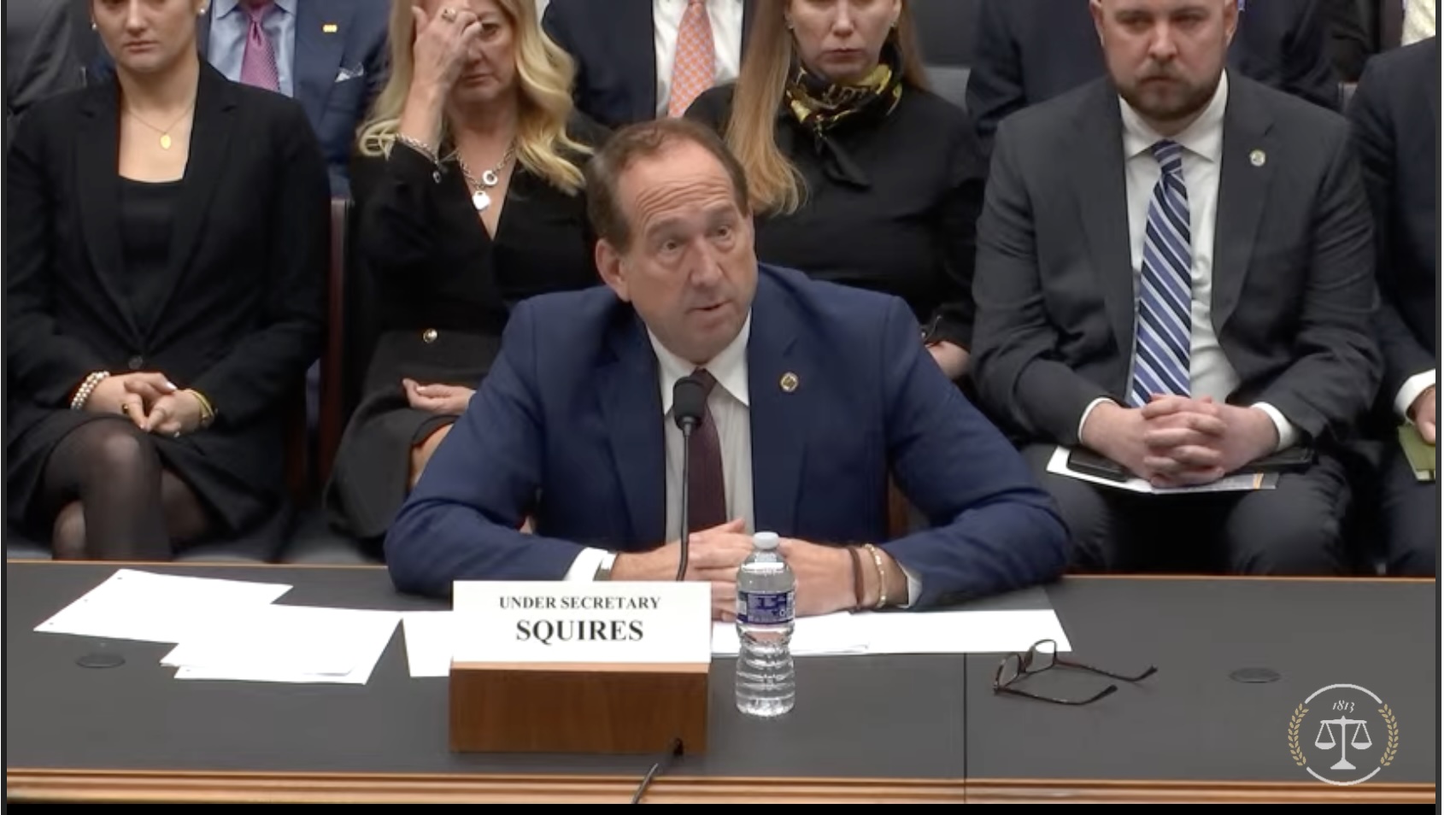
Today, the U.S. House of Representatives Judiciary Committee’s Subcommittee on Courts, Intellectual Property, Artificial Intelligence, and the Internet conducted its first oversight hearing of the U.S. Patent and Trademark Office (USPTO) during the second Trump Administration. The harshest lines of questioning for USPTO Director John Squires during the hearing were reserved for the agency’s notice of proposed rulemaking (NPRM) to reform rules of practice at the Patent Trial and Appeal Board (PTAB) as well as President Trump’s political influence at the agency. During the hearing, Squires also confirmed that the agency’s Patent Public Advisory Committee (PPAC) would soon be revived, following an offer to join PPAC extended last night to an undisclosed independent inventor.
Chairman Issa: AIA Unclear, But Congress Intended First Challenges to be Favorably Considered
The oversight hearing began with a lengthy opening statement by House IP Subcommittee Chair Darrell Issa (R-CA), who spoke for more than 20 minutes on several issues, 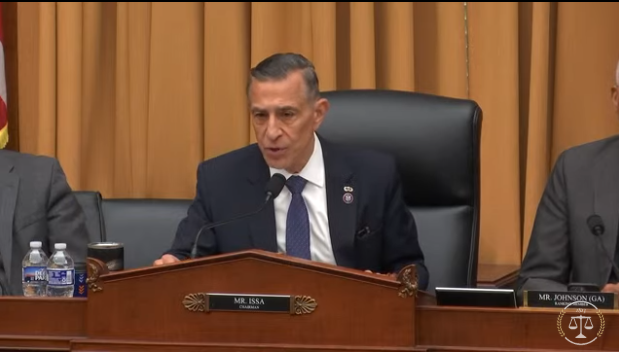 including the need to maintain high patent quality in the face of artificial intelligence’s (AI) impacts on innovation, like the development of complex patents with more than 1,000 total claims. As to Director Squires’ PTAB reforms, Issa acknowledged that the text of the America Invents Act (AIA) was unclear as to this point, but that it was Congress’ understanding in passing the AIA that the first validity challenge would be favorably considered in contrast to later challenges on the same patent instead of implementing a “one and done” policy. Issa noted most of his questioning would focus on the seeming lack of fair process stemming from the de-institution of inter partes review (IPR) proceedings, adding his interest in legislative fixes to prevent the USPTO Director from such exercises of discretion.
Rep. Hank Johnson (D-GA), Ranking Member of the House IP Subcommittee, noted that while he had held similar oversight hearings with six total USPTO Directors during his time on the subcommittee, today marked the first time he doubted that the agency was acting independently of the President. Several moves by the Trump Administration had the effect of collapsing morale among the USPTO’s examiner workforce, according to Johnson, including President Trump’s executive order last August establishing that federal statutory protections for collective bargaining rights did not apply to the agency’s patent staff. Johnson also took issue with the USPTO’s opaque reversal last June swapping the location of the agency’s Southeast Regional Office from Atlanta to USPTO headquarters in Alexandria. During questioning, Director Squires noted that the decision happened before his confirmation, but that the USPTO’s current regional office footmap meets statutory requirements.
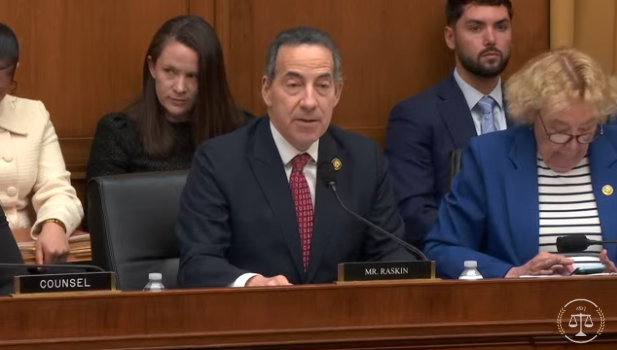 The full House Judiciary Committee’s Ranking Member, Jamie Raskin (D-MD), also hammered Director Squires on President Trump’s influence, raising questions throughout the hearing about the USPTO’s role in filing two trademark applications for “Board of Peace” on behalf of President Trump. Squires responded that he acted pursuant to his authority under both 35 U.S.C. § 2 and 35 U.S.C. § 3 in advising the President on national IP policy issues and acting as a custodian for trademark rights to prevent fraud, which here involved cybersquatters registering an arguably infringing domain name minutes after President Trump announced the Board of Peace. Squires also noted that the applications were intent-to-use filings that would expire if no bona fide intent to use the mark arose. In his opening remarks, Rep. Raskin said the USPTO’s act in filing those trademark applications “the first step in giving Trump and his subordinates a monopoly in our country on use of the word ‘peace,’” further raising charges under the Emoluments Clause due to Board of Peace investments from foreign governments and private entities.
Rep. Ben Cline (R-VA), Co-Chair of the Congressional Trademark Caucus, noted a significant backlog in processing trademark applications was creating issues for IP owners, especially for those working to meet 6-month foreign filing deadlines under the Paris Convention. Director Squires lauded AI tools recently adopted by the USPTO in addressing that backlog, including an international search classification tool reducing months of work into seconds. Following Cline’s questions on Director Squires’ PTAB reforms, Chairman Issa followed up with a clarifying question on whether Squires’ discretionary considerations could favor foreign entities, prompting a quick flap with Rep. Thomas Massie (R-KY) over Issa’s repeated follow-up questioning throughout the hearing.
Squires: Agency Prefers ‘Gang-Tackling’ in IPRs Over Serial Challenges
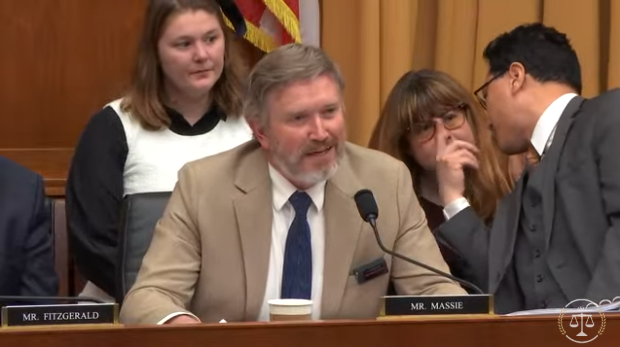 In response to questioning from Rep. Massie, Squires took occasion to correct perceptions about his IPR policy, saying it’s intended to restore fairness and balance to the IPR process, which has seen instances where there have been as many as seven serial filings, and that petitioners should view IPR challenges as “one, join and done” rather than “one and done,” due to the “liberal joinder provisions that are carried through into the rule.”
“The answer isn’t serial filings, we think the answer should be gang tackling,” Squires said, adding that several avenues for validity challenges existed, including post-grant review (PGR), preferred by the agency because it takes place early in the patent’s life. Massie added that the AIA has created uncertainty, hurting inventors where it was supposed to expedite validity adjudications. “Any law can be weaponized, and we saw that the [AIA] has been weaponized,” Massie said.
Rep. Zoe Lofgren’s (D-CA) concerns over Squires’ PTAB reforms involved not just the centralization of decision-making authority over IPR proceedings but the lack of explanation for decisions to not institute or de-institute stemming from what Lofgren called “barebones summary denials.” Squires responded that PTAB judges work from a record of more than 600 written decisions, and that controversial reforms like settled expectations have cut both ways in favor of patent owners and challengers. However, Lofgren commented that the 64% of IPRs discretionarily denied under Director Squires was due to the adoption of discretionary considerations and a centralized Director review process acting as barriers that Congress never envisioned.
Rep. Russell Fry (R-SC) questioned when the agency will reform the public advisory committees for both the patent and trademark sides of the USPTO’s operations. Director Squires opined that at least PPAC should be announced shortly once the statutorily-required independent inventor offered the position confirmed their acceptance.
In other important developments, Director Squires echoed recent public comments made by Secretary of Commerce Howard Lutnick indicating that proposals for a value-based patent tax had been rescinded, adding that “the USPTO is not in the business of providing market valuations.” Further, noting its recent briefing filed jointly with the U.S. Department of Justice’s Antitrust Division on the need for injunctive relief against infringers, Director Squires acknowledged that the USPTO would support policies ensuring that patents are “born strong and remain strong.”
![[Advertisement]](https://ipwatchdog.com/wp-content/uploads/2026/02/LexisNexis-Mar-31-2026-sidebar-700x500-1.jpg)





![[Advertisement]](https://ipwatchdog.com/wp-content/uploads/2021/12/WEBINAR-336-x-280-px.png)
![[Advertisement]](https://ipwatchdog.com/wp-content/uploads/2021/12/Ad-4-The-Invent-Patent-System™.png)


Join the Discussion
No comments yet. Add my comment.
Add Comment