
![[IPWatchdog Logo]](https://ipwatchdog.com/wp-content/themes/IPWatchdog%20-%202023/assets/images/temp/logo-small@2x.png)

 0
0 “The PTAB found that the plain and ordinary meaning of the Charging Control Limitation ‘excludes ‘the user manually starting and stopping the charging….’ The CAFC agreed.”
 Charge Fusion Technologies, LLC has managed to defend its patent at the U.S. Court of Appeals for the Federal Circuit (CAFC), with a split panel on Thursday affirming the Patent Trial and Appeal Board’s (PTAB’s) decision that Tesla failed to prove Charge Fusion’s electric vehicle (EV) charger claims unpatentable. The opinion was authored by Judge Chen, who was joined by Judge Reyna, while Judge Dyk filed a dissenting opinion.
Charge Fusion owns U.S. Patent No. 10,998,753, titled “Systems and Methods for Charging Electric Vehicles.” Tesla challenged the patent claims via inter partes review (IPR) in 2022, and the Board instituted, but the PTAB ultimately held that Tesla had failed to show by a preponderance of the evidence that the claims were unpatentable.
On appeal to the CAFC, Tesla argued that the PTAB had “misconstrued” two of the claim limitations—the Charging Schedule Limitation and the Charging Control Limitation—and therefore erred in finding that the relevant prior art reference, “Kato,” does not teach both limitations.
Kato is U.S. Patent Application Publication No. 2008/0243331 and “is directed to a system that determines charging locations for an electric vehicle along a planned route.” Tesla argued that “Kato discloses the Charging Control Limitation because the battery charge level increases in accordance with Kato’s generated charging schedule when a user follows the schedule by manually plugging in their vehicle at each charging location.” But the PTAB found that the plain and ordinary meaning of the Charging Control Limitation “excludes ‘the user manually starting and stopping the charging.’” Instead, the claim’s limitation requires this system to operate automatically. The CAFC agreed, and affirmed on that ground alone.
In addition to the claim language, the CAFC majority said the specification clearly stated that the process was to be conducted electronically. For example, the specification “discloses embodiments where the charging system itself ‘intelligently’ charges vehicles by conducting the charging process in accordance with a charging schedule,” wrote the court. The specification also indicates that the charging system interacts with a wireless charging location. “Such intelligent charging management goes beyond mere manual plug-in and instead requires the system to execute instructions that control the charging process, consistent with the claim language,” said the majority.
Juddge Dyk, dissenting, said that Kato discloses the Charging Control limitation under the correct construction and that “the plain language of the Charging Control limitation does not require intelligent charging,” and therefore dissented from the majority.
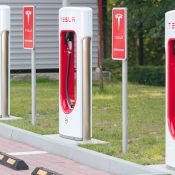
Image source: Deposit Photos
Image ID:103763568
Copyright:bigfatnapoleon
![[Advertisement]](https://ipwatchdog.com/wp-content/uploads/2026/02/Juristat-Feb-26-2025-sidebar-700x500-1.jpg)
![[Advertisement]](https://ipwatchdog.com/wp-content/uploads/2026/02/Integral-Molecular-Mar-5-2026-sidebar-700x500-1.jpg)
![[Advertisement]](https://ipwatchdog.com/wp-content/uploads/2026/02/LIVE-2026-sidebar-regular-price-new-700x500-1.jpg)




![[Advertisement]](https://ipwatchdog.com/wp-content/uploads/2021/12/WEBINAR-336-x-280-px.png)
![[Advertisement]](https://ipwatchdog.com/wp-content/uploads/2021/12/Ad-4-The-Invent-Patent-System™.png)





Join the Discussion
No comments yet. Add my comment.
Add Comment