
![[IPWatchdog Logo]](https://ipwatchdog.com/wp-content/themes/IPWatchdog%20-%202023/assets/images/temp/logo-small@2x.png)

 0
0 “The CAFC reasoned that while Section 638 guides the government’s award of contracts among different private entities, Section 1498 governs who a patentee must sue for patent infringement and in which court.”
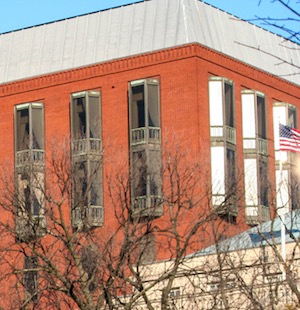 The U.S. Court of Appeals for the Federal Circuit (CAFC) on Wednesday affirmed a district court’s grant of summary judgment in favor of AeroVironment, Inc. in a patent infringement suit brought by inventors Paul and David Arlton. The decision held that AeroVironment’s affirmative defense under 28 U.S.C. § 1498 covered all of its alleged infringing activities related to the Ingenuity Mars helicopter. AeroVironment cross-appealed the district court’s denial of its motion for attorneys’ fees.
The Arltons are the inventors and co-owners of U.S. Patent No. 8,042,763, titled “Rotary Wing Vehicle,” which pertains to a rotary wing vehicle with an “elongated tubular backbone” and “a counter-rotating coaxial rotor system.” The Arltons licensed the patent to their company, Lite Machines Corporation, which produced Unmanned Aerial Vehicles (UAVs) allegedly embodying the patent. Beginning in 2005, the Navy, Air Force, and Special Operations Command awarded contracts to Lite Machines under the Small Business Innovation Research (SBIR) and Small Business Technology Transfer (STTR) programs. Lite Machines received multiple Phase I and Phase II contracts to develop the technology. However, in 2016, the Air Force informed the Arltons that Lite Machines would not be awarded any further follow-on work, including any Phase III contract, and the Arltons subsequently closed Lite Machines.
In 2013, AeroVironment became a subcontractor to the Jet Propulsion Laboratory (JPL), a federally funded research center managed by the California Institute of Technology under a contract with the National Aeronautics and Space Administration (NASA). The subcontract required AeroVironment to build a UAV helicopter for JPL to provide to NASA for use on Mars. Together, AeroVironment and JPL developed a small, autonomous helicopter named Ingenuity, which later served on missions to explore the Martian surface.
In August 2020, the Arltons filed a lawsuit against AeroVironment in the U.S. District Court for the Central District of California, alleging that AeroVironment’s making, using, offering for sale, and sales of Ingenuity within the United States infringed the ‘763 patent. AeroVironment moved for summary judgment on immunity from liability under Section 1498, arguing that it had developed Ingenuity for the government under its subcontracts with JPL and that the government had expressly authorized and consented to any activity that infringed the patent.
The Arltons contended that the government could not validly authorize or consent to AeroVironment’s infringement because the government was obligated under 15 U.S.C. § 638 to award Phase III contracts to Lite Machines, the SBIR recipient that had developed the underlying technology. Section 638 provides that, to the greatest extent practicable, Phase III awards should be issued to the SBIR and STTR award recipients who developed the technology.
The CAFC was not persuaded by this argument and explained that even if the government had violated its obligations under Section 638, the proper remedy would have been for Lite Machines to bring a bid protest action in the U.S. Court of Federal Claims, not for the Arltons to file a patent infringement suit in district court. The court reasoned that while Section 638 guides the government’s award of contracts among different private entities, Section 1498 governs who a patentee must sue for patent infringement and in which court. Therefore, “§ 638 does not limit the government’s discretion to assume liability under § 1498.”
The Arltons also argued that AeroVironment’s work on a terrestrial version of Ingenuity, called Terry, was not performed for the government and thus was outside Section 1498 immunity. The Arltons pointed to evidence that AeroVironment used Terry for marketing purposes, including an appearance on the television program 60 Minutes and demonstrations to potential investors such as SpaceX.
The court found that Terry was manufactured with the government’s authorization and consent. In support of this was a declaration from AeroVironment Technical Lead Matthew Keennon, who explained that the company created Terry at JPL’s request for the government, and that JPL later contracted with AeroVironment to use it. Even if AeroVironment did not originally manufacture Terry for the government, JPL’s subsequent use of Terry to conduct acoustic testing and the government’s express consent established that Terry’s manufacture and uses were within the scope of Section 1498 immunity.
Regarding AeroVironment’s marketing activities, the court found no evidence that AeroVironment received any commercial profit from the demonstrations. The court noted that when a defendant “received no commercial profit” and used infringing devices “solely for purposes of display” when demonstrating work performed on behalf of the government, it had not engaged in commercial conduct that would vitiate a Section 1498 defense. The court also observed that “the record is devoid of any evidence that AeroVironment offered Terry for sale to anyone.”
The CAFC also affirmed the district court’s denial of the Arltons’ motion to amend their complaint to add trade secret claims. The court found that the Arltons had not been diligent in pursuing their proposed amendment, noting that they had admitted suspecting Ingenuity incorporated their trade secrets at the time they filed their original complaint, but did not pursue the claim until close to the scheduling order’s deadline.
Ultimately, the court affirmed the district court’s denial of AeroVironment’s motion for attorneys’ fees under 35 U.S.C. § 285. AeroVironment had argued that the case was exceptional because the applicability of Section 1498 was readily apparent. The district court disagreed, finding that the case was not “cut and dried” and that the Arltons did not make frivolous arguments. The CAFC agreed, noting that the district court had to undertake “a careful analysis of [a] nuanced area of law” before ruling on the Arltons’ Section 638 theory. Each party was ordered to bear its own costs.
![[Advertisement]](https://ipwatchdog.com/wp-content/uploads/2026/02/Solve-Intelligence-Feb-5-2026-sidebar-700x500-1.jpg)
![[Advertisement]](https://ipwatchdog.com/wp-content/uploads/2026/02/Junior-AI-Feb-10-2026-sidebar-CLE-700x500-1.jpg)
![[Advertisement]](https://ipwatchdog.com/wp-content/uploads/2026/02/Anaqua-Feb-12-2026-sidebar-700x500-1.jpg)
![[Advertisement]](https://ipwatchdog.com/wp-content/uploads/2025/12/LIVE-2026-sidebar-regular-price-700x500-1.jpg)




![[Advertisement]](https://ipwatchdog.com/wp-content/uploads/2021/12/WEBINAR-336-x-280-px.png)
![[Advertisement]](https://ipwatchdog.com/wp-content/uploads/2021/12/Ad-4-The-Invent-Patent-System™.png)





Join the Discussion
No comments yet. Add my comment.
Add Comment