
![[IPWatchdog Logo]](https://ipwatchdog.com/wp-content/themes/IPWatchdog%20-%202023/assets/images/temp/logo-small@2x.png)

 1
1 “[V]alidity challenges over expired patents are ‘quintessentially private disputes’ creating outcomes in which the public has no interest, Gesture contended.”
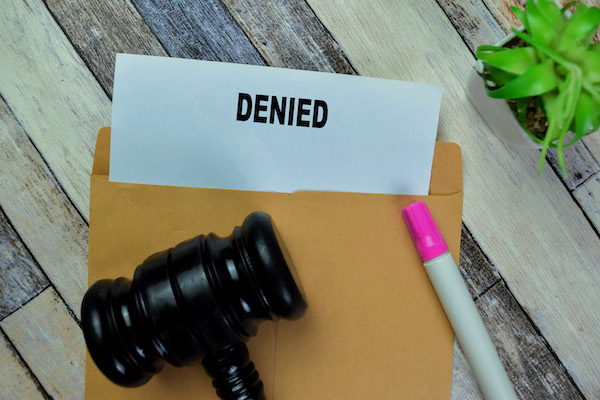 Today, the U.S. Supreme Court denied a pair of petitions for writs of certiorari filed by motion sensing camera developer Gesture Technology that challenged rulings by the U.S. Court of Appeals for the Federal Circuit upholding agency invalidations of patent claims, including several past their date of expiration. In denying cert, the Supreme Court leaves in place precedential decisions from the Federal Circuit expanding the public rights doctrine from Oil States to expired patents even though the patent owner has lost the right to exclude infringers, fundamental to Oil States’ reasoning on the public’s “interest in seeing that patent monopolies are kept within their legitimate scope.”
‘Extraordinary Arrogation of Administrative Power’ Forecloses Infringement Damages
Gesture Technology’s main petition challenged the Federal Circuit’s ruling this January in Gesture I, which confirmed the jurisdiction of the Patent Trial and Appeal Board (PTAB) as to inter partes review (IPR) proceedings challenging expired patents. Gesture had appealed the PTAB’s jurisdiction to institute IPR proceedings petitioned by Apple in June 2021, more than a year after the claims to the challenged patent expired in May 2020. In its ruling, the CAFC nixed Gesture Technology’s argument that expired patents don’t meet Oil States’ public rights exception to Article III guarantees of jury trials for private property, holding that agency reviews of patent validity inherently involves the adjudication of a public right granted by the U.S. Patent and Trademark Office.
This “extraordinary arrogation of administrative power over patents,” according to Gesture’s petition, contradicts several centuries of patent practice ensuring full judicial process over patent claims. Even when expired, patent claims represent valuable property allowing the patent owner to sue for legal remedies like damages for infringement during the life of the patent though equitable relief is unavailable. According to Gesture, the end of the patent owner’s exclusive monopoly “ends the need for an administrative process to protect the public interest.”
Supreme Court cases have noted, though not expressly defined, a category of cases involving public rights granted by the federal government that are so closely integrated with their regulatory scheme that agency adjudication without an Article III jury trial is appropriate. However, patent cases have historically been adjudicated in courts of law, with claims adjudicated in courts of equity only when patentees seek injunctive relief, a practice tracing back to roots in English chancery rulings as noted by the Supreme Court in cases like Root v. Lake Shore & Michigan Southern Railway Co. (1882).
Expiration of Right to Exclude Should Extinguish the Public Franchise
Patents, which confer a bundle of rights, also confer a public franchise in the form of a right to exclude others from practicing the patented invention. In Supreme Court cases upholding the validity of IPR proceedings, including Cuozzo Speed Technologies v. Lee (2016) and Thryv v. Click-to-Call Technologies (2020), the Court recognized that the purpose of IPRs is to maintain the legitimate scope of a patentee’s exclusivity rights, according to Gesture. Then in Oil States Energy Services v. Greene’s Energy Group (2018), the re-adjudication of patent validity in IPRs was upheld as constitutional as the matter involved public rights “between the government and others.”
Oil States’ relied upon the nature of patent rights as exclusive monopolies in its reasoning, and Gesture’s petition highlights that the Supreme Court’s ruling did not address other rights against alleged infringers, including the right to monetary damages. By contrast to patents in force, validity challenges over expired patents are “quintessentially private disputes” creating outcomes in which the public has no interest, Gesture contended. In these situations, an IPR proceeding “simply absorbs and displaces the patent holder’s right to seek infringement damages in court” without any reason to believe that lawsuits brought over expired patents would diminish competition.
Gesture Technology filed a similar petition on the same constitutionality issues to appeal another precedential Federal Circuit ruling from this March. That decision upheld a mixed IPR ruling by the PTAB invalidating some challenged claims, with the Federal Circuit dismissing Gesture’s argument that Apple should be estopped from petitioning for IPRs on patent claims already challenged by Unified Patents without determining whether Unified was a real party in interest with its subscriber Apple. Gesture had asked the Supreme Court to hold this second cert petition pending its ruling on Gesture I.
Image Source: Deposit Photos
Author: olanstock
Image ID: 652924916
![[Advertisement]](https://ipwatchdog.com/wp-content/uploads/2026/04/DeepIP-Apr-16-2026-sidebar-new-700x500-1.jpg)
![[Advertisement]](https://ipwatchdog.com/wp-content/uploads/2026/04/Virtual-AI-2026-May-18-19-2026-sidebar-700x500-1.jpg)
![[Advertisement]](https://ipwatchdog.com/wp-content/uploads/2026/04/Cypris-April-26-2026-sidebar-left-700x500-1.jpg)





![[Advertisement]](https://ipwatchdog.com/wp-content/uploads/2021/12/WEBINAR-336-x-280-px.png)
![[Advertisement]](https://ipwatchdog.com/wp-content/uploads/2021/12/Ad-4-The-Invent-Patent-System™.png)





Join the Discussion
One comment so far.
Pro Say
November 17, 2025 06:23 pm. . . SCOTUS joining the CAFC in giving Gesture . . . the gesture.
The tag team destruction of American innovation by our very own courts continues.
Unabated.