
![[IPWatchdog Logo]](https://ipwatchdog.com/wp-content/themes/IPWatchdog%20-%202023/assets/images/temp/logo-small@2x.png)

 2
2 “As AI technology improves and more products enter the market, Americans will continue to…enforce their rights in court. The results of those cases, along with decisions in currently pending matters, will inform the market as to the licenses it needs.”
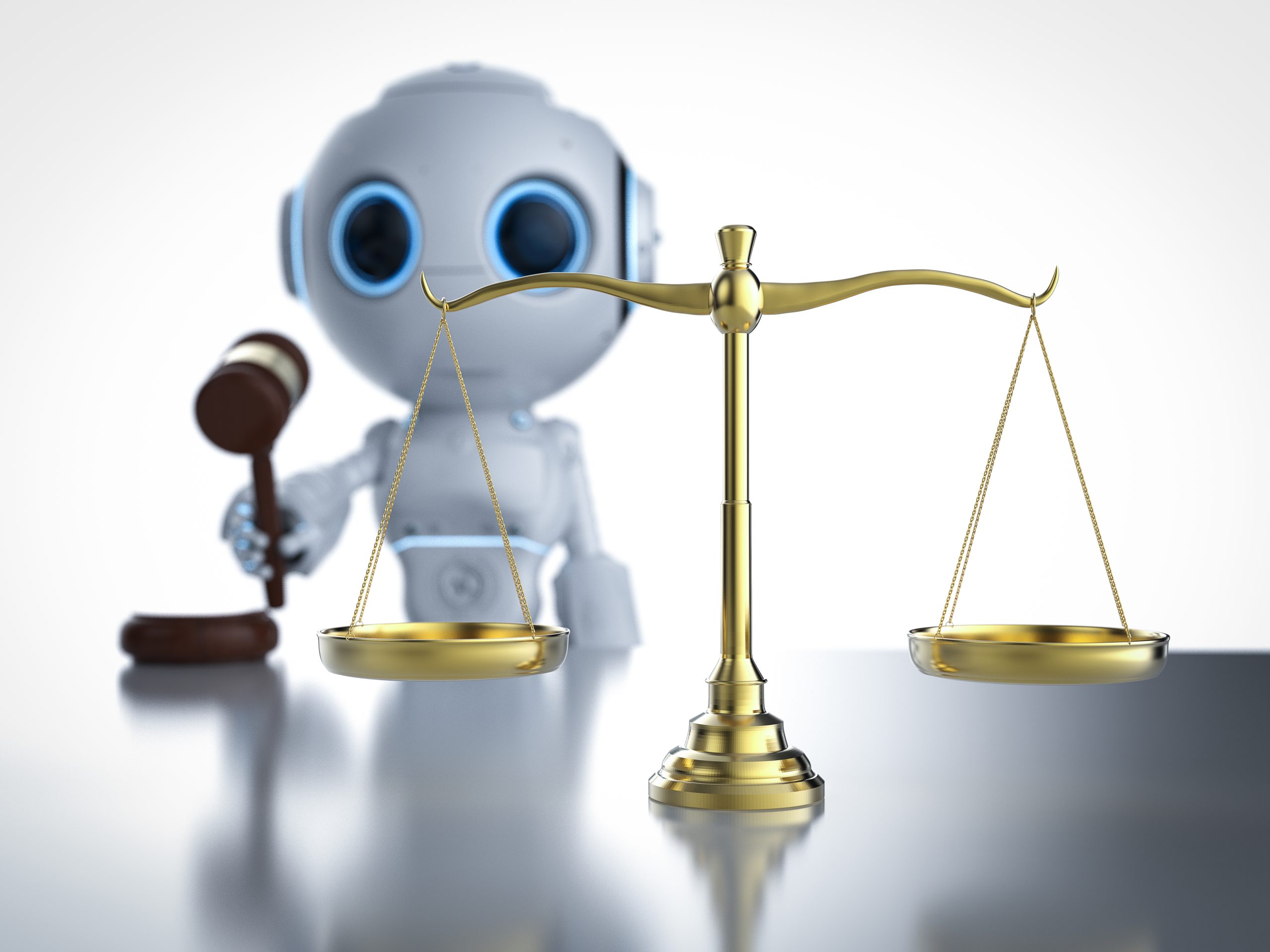 Public discourse over the last few months illustrates the important role IP protections play in our society. Much of this has centered on the impact of new technologies, especially those powered by AI.
As new technologies enter the market, the government reacts. Before shaping reactionary IP regulation and legislation, however, lawmakers must understand both the technology and the rights it implicates. Then they must grapple with the great dilemma of IP law: how to promote innovation while still protecting earlier works. Fortunately, this process isn’t unique to AI. American IP law has adapted to numerous innovations over the years and can do so again now.
Learning from the Past: Copyrights on Computer Programs
Copyright law protects expressions of ideas from unauthorized copying. This made the application of copyright law to the first software programs unclear, since software serves as a functional expression of underlying ideas and often requires copies to function. In 1974, Congress responded to this lack of clarity by establishing the Commission on New Technological Uses of Copyrighted Works (CONTU). CONTU ultimately decided that computer programs were protectible forms of expression that users could permissibly copy in certain circumstances. Congress officially extended copyright protection to computer programs with the Computer Software Copyright Act of 1980. 17 U.S.C. § 101.
Learning from the Past: Web Host Liability
Once the internet became publicly available in the 1990s, people began placing their thoughts, ideas, and creative works on the web for others to see… and copy. Suddenly, copyrights became much easier to infringe. This became a major problem for anyone hosting a website—if they allowed people to post unmoderated content on their site and any of it infringed a copyright, the host would be liable. This created a no-win scenario for many web hosts: verifying the originality of each post would be impossible, but a single infringement suit could put them out of business.
Congress couldn’t react by removing all web-host liability though; if they did, anonymous users could infringe with impunity. So, they found a middle ground. To protect copyright holders while promoting innovation (i.e., websites with user-generated content), Congress passed the Digital Millenium Copyright Act (DMCA) in 1998. The DMCA provides a safe harbor for service providers hosting user-generated content subject to its “notice-and-takedown” requirements. 17 U.S.C. § 1201. Essentially, this meant that websites would only be liable for hosting infringing content they knew about.
Where We Are Now: Artificial Intelligence
Philosophically, the current debate over AI comes down to one fundamental question, as posed by Shira Perlmutter, former Register of Copyrights: “How do we respect and reward human creators without impeding technological progress?” (Report on Copyright and Artificial Intelligence, Part 1, Foreword). Practically, that breaks down into two novel issues of copyrightability: whether computer-generated content is copyrightable and whether using copyrighted material to train AI models constitutes infringement. The Copyright Office analyzed these issues in its recent reports of Copyright and Artificial Intelligence, Part 2: Copyrightability (January 2025) and Part 3: Generative AI Training (May 2025, Pre-Publication Version).
Copyrightability: Under our current copyright system, copyright ownership “vests initially in the author or authors of the work,” 17 U.S.C. § 201(a), and that author must be a “person.” Cmty. for Creative Non-Violence v. Reid, 490 U.S. 730, 737 (1989). The Copyright Office reiterated this position in Part 2 of its recent report, explaining that “[c]opyright does not extend to purely AI-generated material, or material where there is insufficient human control over the expressive elements.” But “where AI is used as a tool, and where a human has been able to determine the expressive elements they contain,” AI output can still be copyrightable.
In its report, the Copyright Office repeatedly emphasized what a fact-specific determination this is and, as such, provided multiple examples, including the AI-assisted work by artist Kris Kashtanova shown below. The report explained that Kashtanova received a limited copyright in their work, “with a scope analogous to that in a derivative work.” Whereas derivative work protection is limited to the material added by a later author, protection here was limited to the “perceptible human expression” in the final work, including the outline of the mask and the arrangement of facial features and foliage. But “any non-human expression,” including the shadows and the 3D flowers, nose, and lips, did not receive a copyright.

Training Models: AI models don’t emerge fully formed; like humans, they first have to learn. In doing so, they make numerous copies of training materials and often use those copies—or portions thereof—in their output. As the National Music Publishers Association (NMPA) stated in its comment to the Copyright Office, an AI “model becomes an abstract agglomeration of its training material capable of generating (i.e., communicating) verbatim copies of works within the training set, many of which are copyrighted.” This is the crux of one of AI’s most controversial issues: how developers can continue to innovate around AI while still respecting the rights of their training materials’ copyright holders.
Although the Copyright Office spent dozens of pages analyzing prima facie infringement and potential licensing regimes, the more interesting—and controversial—portion of its Part 3 report relates to fair use. “Fair use” is an affirmative defense to copyright infringement relied upon by many AI developers. 17 U.S.C. § 107. For example, Meta, owner of Meta AI and Facebook, stated in its comment to the Copyright Office that AI training does not harm rightsholder interests because “the purpose and effect of training is not to extract or reproduce the protectable expression in training data, but rather to identify language patterns across a broad body of content.”
Since fair use can only be determined upon balance of multiple fact-intensive statutory factors, the Copyright Office ultimately concluded that fair use must be decided on a case-by-case basis. As such, fair use “will depend on what works were used, from what source, for what purpose, and with what controls on the outputs—all of which can affect the market.” The Office warned, however, that “making commercial use of vast troves of copyrighted works to produce expressive content that competes with them in existing markets…goes beyond established fair use boundaries.” In such cases, the developer would need a license for each copyrighted work used to train its model.
Looking to the Future
As AI technology improves and more products enter the market, Americans will continue to do what they’ve always done: enforce their rights in court. The results of those cases, along with decisions in currently pending matters, will inform the market as to the licenses it needs. Perhaps the Copyright Office is right, and the current regime will be sufficient for AI. Or maybe Congress will step in to redistribute legal risks and rights, as it did with the DMCA. Either way, the federal government will have to decide how it wants to balance the rights of copyright holders and the AI developers whose models rely on them. Intentional or not, the incentives our IP system creates will inform both markets going forward.
Image Source: Deposit Photos
Image ID:236313962
Copyright:phonlamai
![[Advertisement]](https://ipwatchdog.com/wp-content/uploads/2026/09/Patently-Sep-22-2026-sidebar-700x500-1.jpg)
![[Advertisement]](https://ipwatchdog.com/wp-content/uploads/2026/06/Womens-IP-Forum-2026-sidebar-regular-price-700x500-rev1.jpg)
![[Advertisement]](https://ipwatchdog.com/wp-content/uploads/2026/08/OneTransform_700x500_v1-REVISED.jpg)
![[Advertisement]](https://ipwatchdog.com/wp-content/uploads/2024/09/Patent-Prosecution-Training-sidebar-700x500-2025-03-27.jpg)




![[Advertisement]](https://ipwatchdog.com/wp-content/uploads/2021/12/WEBINAR-336-x-280-px.png)
![[Advertisement]](https://ipwatchdog.com/wp-content/uploads/2021/12/Ad-4-The-Invent-Patent-System™.png)

Join the Discussion
2 comments so far.
Leah
May 28, 2025 09:43 pmExcellent and insightful article!
Anon
May 26, 2025 08:07 amI would phrase the fundamental philosphical question differently.
I would not ask, “How do we respect and reward human creators without impeding technological progress?”
I would ask, “What are the limits of rights that the US Government may grant in the area of expression?”
“Respect” is an emotive-laden trigger word and really does not belong in the discussion.
“Reward” is less so, and also is not a principle driver, but rather an accompanying aspect to the underlying rights.