
![[IPWatchdog Logo]](https://ipwatchdog.com/wp-content/themes/IPWatchdog%20-%202023/assets/images/temp/logo-small@2x.png)

 0
0 “The CAFC clarified that the proper standard asks ‘whether the inventors had a definite and permanent idea of the operative inventions’ such that a person of ordinary skill could reduce it to practice without extensive experimentation.”
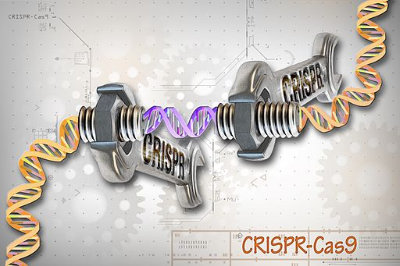
“CRISPR/Cas9 Editing of the Genome” by National Human Genome Research Institute (NHGRI). Licensed under CC BY 2.0.
In a precedential opinion issued on Monday, the U.S. Court of Appeals for the Federal Circuit (CAFC) vacated and remanded a Patent Trial and Appeal Board (PTAB) decision that awarded priority to the Broad Institute in the high-profile CRISPR-Cas9 patent dispute. The court held that the PTAB applied the wrong standard by requiring the Regents of the University of California, the University of Vienna and Emmanuelle Charpentier (“the Regents”) to show their invention was known to work.
The CAFC reaffirmed that conception doesn’t require certainty of success and remanded for reevaluation under the correct framework.
CAFC Rejects PTAB’s ‘Knowledge It Will Work’ Test for Conception
The Federal Circuit faulted the PTAB for conflating conception with reduction to practice. The Board concluded that the Regents failed to conceive of the invention before the Broad’s reduction to practice on October 5, 2012, because their scientists lacked confidence that the CRISPR-Cas9 system would function in eukaryotic cells.
But the court emphasized that knowledge of success isn’t required for conception. Instead, the proper standard asks “whether the inventors had a definite and permanent idea of the operative inventions” such that a person of ordinary skill could reduce it to practice without extensive experimentation.
In reaching its decision, the court cited established precedent and rejected the PTAB’s focus on the Regents’ experimental failures and internal statements of uncertainty. These, the court said, did not negate conception unless they led to substantive changes in the invention’s design.
PTAB Failed to Evaluate Whether Routine Methods Could Achieve Reduction
The Federal Circuit also faulted the PTAB for failing to consider whether ordinary techniques known in the field could have been used to implement the Regents’ design. The opinion emphasized that conception can be established even when the inventor has not yet demonstrated the invention’s operability, so long as routine experimentation would suffice to achieve it.
Instead of assessing whether a skilled artisan could practice the invention using routine techniques, the PTAB focused only on the Regents’ initial failures. This misapplied the standard and improperly elevated the reduction to practice into the conception inquiry.
Written Description Finding Affirmed
While the court reversed the PTAB on conception, it upheld the finding that the Regents’ 2012 provisional applications lacked adequate written description. The applications did not adequately show possession of an operable CRISPR-Cas9 system in eukaryotic cells, even though they described the core components of the technology.
As a result, the Regents cannot rely on those early filings to establish a constructive reduction to practice.
What the Regents Must Prove on Remand
With no early constructive reduction to practice date available, the Regents now face a narrower path to establish priority. On remand, they must either demonstrate (1) that they conceived of the invention before Broad’s October 2012 reduction to practice and were diligent in reducing it themselves, or (2) that Broad derived the invention from them.
The PTAB must reconsider the evidence of conception, including emails, lab notebooks, and experimental plans from early 2012, and determine whether these demonstrate a definite and permanent idea that could have been implemented using routine scientific methods.
Broad’s Cross-Appeal on Guide RNA Construction Dismissed
The Federal Circuit also dismissed as moot Broad’s conditional cross-appeal, which challenged the PTAB’s construction of the term “guide RNA” as being limited to single-molecule formats. Because the court vacated the Board’s priority decision, the guide RNA construction no longer affected the outcome of the interference proceeding.
![[Advertisement]](https://ipwatchdog.com/wp-content/uploads/2026/05/Patent-Masters-2026-sidebar-700x500-rev1.jpg)
![[Advertisement]](https://ipwatchdog.com/wp-content/uploads/2026/05/Protege-in-PatentSight-product-350x250-Ad-A.png)
![[Advertisement]](https://ipwatchdog.com/wp-content/uploads/2026/05/LexisNexis-Jun-11-2026-sidebar-700x500-1.jpg)





![[Advertisement]](https://ipwatchdog.com/wp-content/uploads/2021/12/WEBINAR-336-x-280-px.png)
![[Advertisement]](https://ipwatchdog.com/wp-content/uploads/2021/12/Ad-4-The-Invent-Patent-System™.png)






Join the Discussion
No comments yet.