
![[IPWatchdog Logo]](https://ipwatchdog.com/wp-content/themes/IPWatchdog%20-%202023/assets/images/temp/logo-small@2x.png)

 0
0 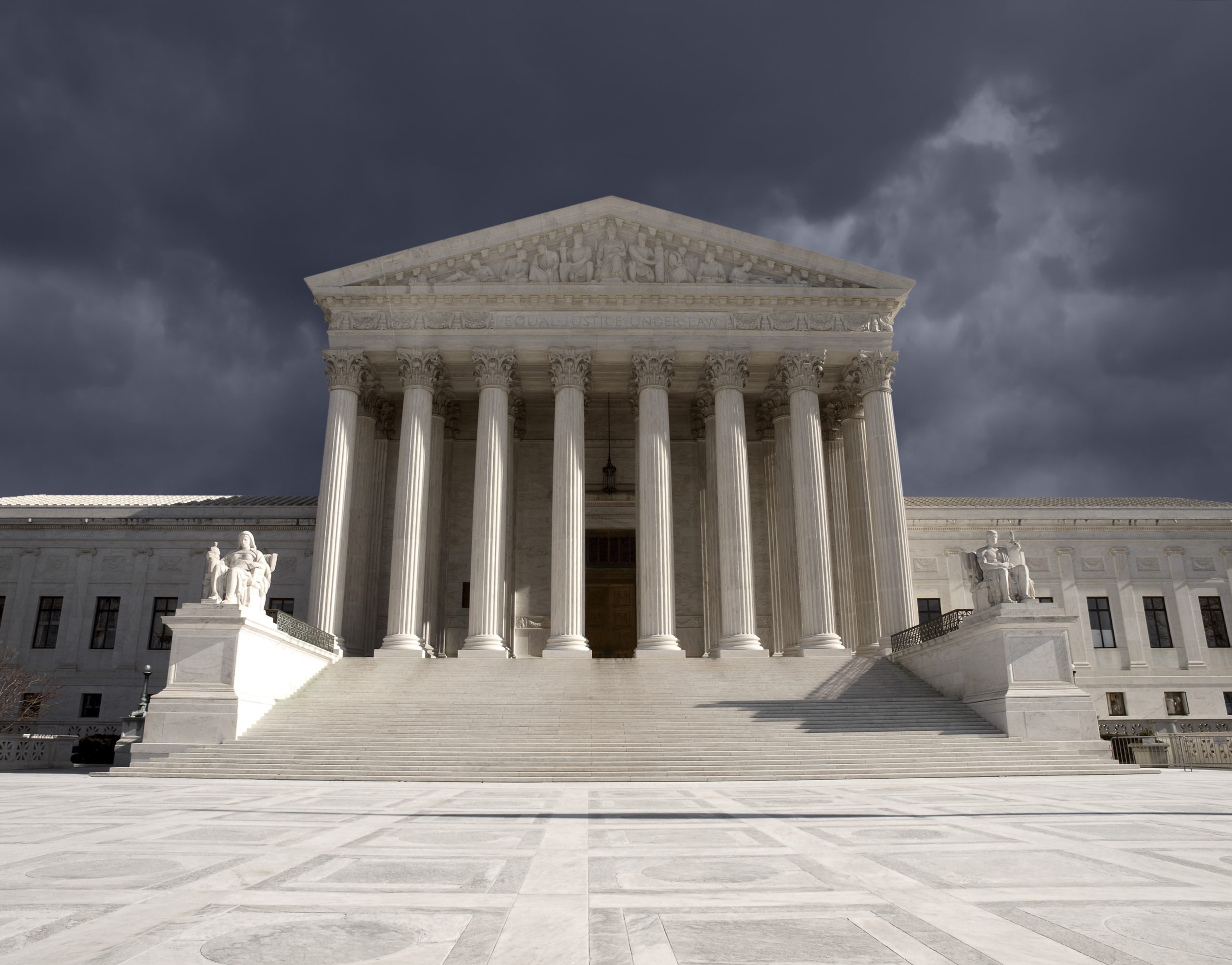 Patent owner NexSteps filed a petition for writ of certiorari with the U.S. Supreme Court that was docketed this week challenging lower rulings overturning a jury verdict over a lack of evidentiary basis for the jury’s infringement finding under the doctrine of equivalents (DOE). NexSteps, a developer of technologies that improve consumer interactions with electronic devices, challenges these rulings as creating rigid requirements to proving DOE infringement claims that undermines the flexible, case-specific inquiry called for by Supreme Court precedent on the doctrine.
Although a District of Delaware jury found that NexSteps U.S. Patent No. 8280009, Consumer Electronic Registration, Control and Support Concierge Device and Method, was infringed by Comcast Communications, the district court set the verdict aside on the grounds that NexSteps’ infringement expert failed to provide “particularized testimony and linking argument” necessary to support the jury’s DOE finding. A divided Federal Circuit panel affirmed the ruling, with the majority finding that NexSteps’ expert testimony did not satisfy the function-way-result test under the DOE. However, Circuit Judge Jimmie Reyna dissented, charging the majority with ignoring the substantial evidence standard of review and imposing unnecessary requirements for proving infringement under the DOE.
NexSteps: ‘What Else Could the Expert Have Said’ to Identify Button Presses as ‘Single Action’?
As NexSteps’ cert petition identifies, the crux of the DOE issue in this case boils down to whether NexSteps’ expert testimony at trial established that Comcast’s accused product, a smartphone app that streamlines customer support requests for household devices, met the asserted claims of the ‘009 patent. Specifically, NexSteps contends that its expert testimony, derided as “word salad” in lower court rulings, established that user interactions with the app provided support “responsive to a single action performed by a user” even though users press a sequence of buttons to access the infringing service in Comcast’s app. NexSteps’ expert likened this sequence was equivalent to the claimed “single action” in much the same way that the action of throwing a baseball requires the constituent steps of picking up, orienting and throwing the ball.
The formulaic “particularized testimony and linking argument” required by the Federal Circuit’s DOE standard effectively imposes an expert testimony requirement to prove infringement in those cases, NexSteps contends. Citing to the Supreme Court’s major DOE ruling in Graver Tank & Manufacturing v. Linde Air Products (1950), NexSteps notes that the Court has said that evidence can be submitted in “any form,” which can include expert testimony but doesn’t require it. NexSteps also points to cases like Union Paper-Bag Machine Co. v. Murphy (1877), where the Court supplied its own common sense to find equivalency, overcoming deficiencies in expert testimony in a case involving paper bag cutting machines.
“What else could the expert have said to make it any clearer ‘what element’ was equivalent?… [T]he expert [told] the jury what button presses were equivalent: He ‘identified the distinct “series of button presses”’ at issue. He just did not do so in the formulaic fashion required by the majority as a matter of law.” – NexSteps
Although the Federal Circuit majority disagreed with Judge Reyna that it was adding requirements to proving infringement under the DOE, NexSteps argues that the majority’s reasoning under AquaTex Industries v. Techniche Solutions (2007) effectively requires expert testimony to provide the “particularized testimony and linking argument” required by the Federal Circuit. Further problematic is the Federal Circuit’s requirement that such testimony and argument be presented in every DOE infringement case, usurping the jury’s role as factfinder in a way that only limits findings of equivalence, not nonequivalence.
Testimony and Argument Requirements Add Fourth Prong to ‘Function-Way-Result’ Test
Challenging the evidentiary standard used to disregard NexSteps’ expert testimony, the patent owner’s cert petition noted that while the Federal Circuit majority agreed that the expert’s testimony bore on equivalence, that testimony was still rejected for not being presented in the form required by the Federal Circuit. Further, in requiring such testimony and argument, NexSteps argued that the lower ruling also adds a fourth prong to the “function-way-result” test: explaining why the alleged equivalent achieves substantially the same function in substantially the same way to achieve the same result as the claimed invention.
Urging the Supreme Court to grant cert, NexSteps noted that its own case was the culmination of a series of Federal Circuit decisions unduly restricting the DOE. This includes Lear Siegler v. Sealy Mattress Co. of Michigan (1989), which created the “particularized testimony and linking argument” requirement, and other cases creating evidentiary standards that only apply to patent infringement cases that reach jury trials. NexSteps noted that the Court has rejected inflexible interpretation of rules in other areas of patent law, such as obviousness in KSR International v. Teleflex (2006) and attorney’s fees in Octane Fitness v. ICON Health & Fitness (2014).
The Supreme Court should also review this case to prevent the Federal Circuit from further invading the jury’s function, NexSteps argued. Instead of analyzing whether the jury’s finding was supported by substantial evidence, the Federal Circuit’s testimony and argument requirement removed the factual inquiry of equivalence from the jury and subjected it to a rigid legal standard. Erasing jury verdicts in that way will multiply the number of appeals and reduce confidence in trial court decisions, NexSteps contended. It concluded:
“Indeed, this Court has admonished the Federal Circuit to ‘have in mind that [its] function is not to decide factual issues de novo.’ It should grant review here to reinforce that instruction.” – NexSteps
![[Advertisement]](https://ipwatchdog.com/wp-content/uploads/2026/03/NLPatent-Apr-2-2026-sidebar-700x500-1.jpg)
![[Advertisement]](https://ipwatchdog.com/wp-content/uploads/2026/02/Junior-Apr-7-2026-sidebar-700x500-1.jpg)




![[Advertisement]](https://ipwatchdog.com/wp-content/uploads/2021/12/WEBINAR-336-x-280-px.png)
![[Advertisement]](https://ipwatchdog.com/wp-content/uploads/2021/12/Ad-4-The-Invent-Patent-System™.png)



Join the Discussion
No comments yet.