
![[IPWatchdog Logo]](https://ipwatchdog.com/wp-content/themes/IPWatchdog%20-%202023/assets/images/temp/logo-small@2x.png)

 1
1 Bite (noun): more meaty news to sink your teeth into.
Bark (noun): peripheral noise worth your attention.
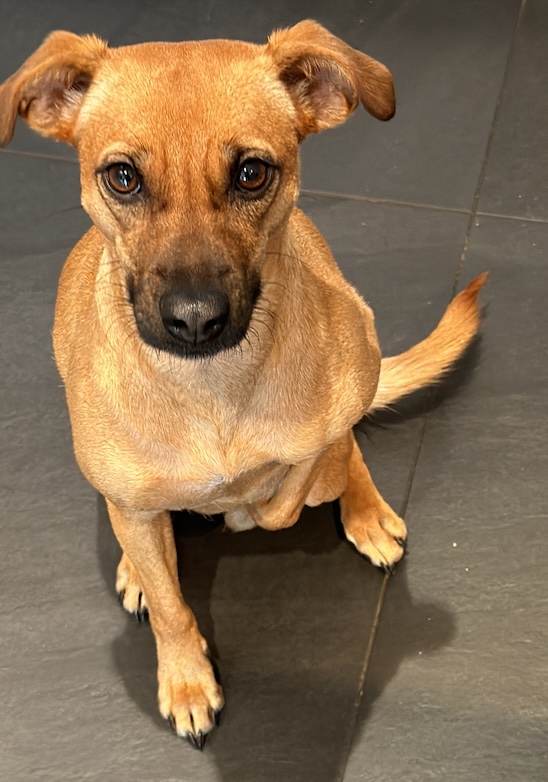
Tobias Wuttke of Bardehle Pagenberg’s mixed breed pup, Fiji. You can also find Fiji on IPWatchdog’s Dog Wall of Fame at the IPWatchdog.
This week in Other Barks and Bites: the U.S. Court of Appeals for the Federal Circuit (CAFC) affirms a Patent Trial and Appeal Board (PTAB) ruling that clears 20 top tech companies of patent infringement in a case related to website-building technology; WIPO adopts a historic treaty that includes IP protections for Indigenous People; the EU Intellectual Property Office (EUIPO) celebrates Dieter Rams with Lifetime Achievement Award.
Bites
USPTO Extends Comment Deadline for AI-Assisted Invention Guidance
On Thursday, May 30, U.S. Patent and Trademark Office (USPTO) Director Kathi Vidal told Bloomberg that the Office will consider comments submitted after the May 13 deadline to comment on IP protections for AI-assisted inventions. Vidal made the comment at a workshop on promoting competition in the AI industry co-hosted by The U.S. Department of Justice’s Antitrust Division and Stanford University. She said that some stakeholders missed the previous deadline thus leading to the extension.
CAFC Affirms PTAB Decision Clearing Top Tech Companies of Patent Infringement
On Wednesday, May 29, the U.S. Court of Appeals for the Federal Circuit (CAFC) affirmed a Patent and Trial Board (PTAB) decision that invalidated a patent from Express Mobile, a company which claimed 20 top tech companies had infringed on the patent. Express Mobile claimed that companies from Google to Meta had infringed on its website-building technology. However, the CAFC agreed with the PTAB’s claim constructions in the case that ended in the invalidity of Express Mobile’s patent.
Senator Urges USCO to Expand DMCA Exemption for Generative AI Research
On Tuesday, May 28, FedScoop first reported on a letter Senator Mark Warner (D-VA) sent last week asking the U.S. Copyright Office (USCO) further add to a “good faith security research exemption” under the DMCA to cover security and safety flaws in generative AI. Senator Warner is Co-Chair of the Senate Cybersecurity Caucus. On the current exemption, Warner wrote, “We must continue to promote this important work and understand that, although AI is software at its core, the non-deterministic nature of AI systems means that security vulnerabilities are no longer the only type of flaw that can be introduced and enable misuse.
Second Circuit Affirms District Court Judgment that NOWCAST Marks Were Not Infringed
The U.S. Court of Appeals for the Second Circuit on May 28 affirmed the decision of a New York district court that Now-Casting Economics, Ltd. (NCE) did not infringe Economic Alchemy LLC’s (EA) trademarks “NOWCAST” and “NOW-CAST”. Economic “nowcasting” is the practice of attempting to predict current economic conditions. EA sent NCE a cease-and-desist letter in 2016 alleging NCE infringed the marks, based on EA’s 2013 registrations for the two marks. However, according to the Second Circuit’s Summary Order, “NCE began marketing its nowcasting services in the United States, using its present name, as early as February 2011.” NCE therefore filed suit against EA in 2018, seeking declaratory judgment that it was not infringing the marks. In response, EA filed a counterclaim for trademark infringement and also filed a third-party complaint against 12 Federal Reserve Banks, including the NY Fed. The district court dismissed the third-party complaint in 2019; the U.S. Patent and Trademark Office (USPTO) cancelled EA’s trademark registrations in January 2020; and the district court granted summary judgment in favor of NCE in September 2022. EA challenged both the dismissal of the complaint against the banks and the grant of summary judgment on appeal. The Second Circuit first said that EA had the burden to prove infringement as the mark holder and was thus required to produce evidence that the marks were entitled to protection. While EA argued that the marks’ previous registrations met that burden, the Second Circuit disagreed. “EA’s argument is that the PTO’s prior registration of the Marks created a presumption that the Marks are currently protectable,” wrote the court. “EA is incorrect.” The presumption a registration confers that the marks are protectable “evaporates as soon as evidence of [the registration’s] invalidity is presented,” said the appellate court, quoting Door Sys., Inc. v. Pro-Line Door Sys., Inc., 83 F.3d 169, 172 (7th Cir. 1996)). And since EA conceded that its marks had been cancelled by the USPTO, the presumption of protectability no longer applied. The court further explained that, even if the presumption did still apply, that presumption is rebuttable and NCE produced “unctroverted” evidence that it was the first user of the marks in commerce.
WIPO Member States Adopt Historic Treaty to Help Indigenous Peoples Protect IP
On Friday, May 24, member states of the World Intellectual Property Office (WIPO) approved a new treaty on intellectual property (IP), genetic resources and associated traditional knowledge after decades of negotiations. The treaty is historic in part because it is the first WIPO treaty that includes measures for Indigenous Peoples and local communities. When it becomes binding, the treaty will establish an international law that requires a new disclosure for patent applicants whose inventions are based on genetic resources and/or associated traditional knowledge. “Through this, we are showing that the IP system can continue to incentivize innovation while evolving in a more inclusive way, responding to the needs of all countries and their communities,” WIPO Director General Darren Tang said.
Barks
PTAB Invalidates Inventor’s Patent After Challenge from Apple
On Thursday, May 30, the PTAB invalidated an inventor’s patent covering a phone technology after tech giant Apple challenged the patent. The inventor’s patent covered a technology that allowed a phone to display information just by the user looking at the phone. The PTAB affirmed a patent examiner’s ruling that claims in the patent were both obvious and indefinite.
EUIPO Hands Industrial Designer Dieter Rams the Lifetime Achievement Award
On Thursday, May 30, the European Union Intellectual Property Office (EUIPO) announced German industrial designer Dieter Rams as the winner of its 2024 Lifetime Achievement Award. According to the EUIPO, Rams has “designed more than 200 iconic devices and shaped the look and functionality of consumer products for decades.” The German designer will be honored at DesignEuropa 2024 held in Riga, Latvia on September 25th.
Enanta Asks District Court to Rule Pfizer Infringed on Antiviral Patent
On Tuesday, May 28, Enanta Pharmaceuticals filed a motion for partial summary judgment asking a Massachusetts district court to rule Pfizer’s COVID-19 treatment Paxlovid infringes on its patent for an antiviral agent. The patent dispute is part of a two-year long legal battle, in which Pfizer has asked the courts to invalidate Enanta’s patent.
United States and Japan Lead the Way in Protein Alternative Patents
On Monday, May 27, research company Patent Result and Nikkei Asia released the results of an investigation into the alternative protein patent industry and found that the U.S. companies filed the most patent applications in this burgeoning industry. Japan was a distant second, followed by Switzerland and then China. “Plant-based meat made with soy gained in popularity due to trends toward greater environmental and health consciousness,” Shigeru Ashida, a senior manager in Fuji Oil’s plant-based food division, told Nikkei Asia.
This Week on Wall Street
Biden Administration Declares Support for Expansion of Nuclear Energy Industry
On Wednesday, May 29, the Biden Administration announced support for increasing nuclear energy production in the United States. As part of the announcement, the White House held a summit on nuclear deployment to highlight current industry progress and innovation. In addition, President Biden announced the creation of a working group including industry leaders and experts to discuss opportunities and risks.
OpenAI Announces New Safety Committee After Employee Departures
On Tuesday, May 28, OpenAI announced a new Safety and Security Committee headed by CEO Sam Altman and three company directors. The committee will make recommendations to the board on issues of critical safety and security and is being formed in anticipation of its latest ChatGPT model. Several prominent employees have left the company in recent weeks after making noise that the company was not doing enough to protect the safety of users by releasing new products too fast.
Quarterly Earnings – The following firms identified among the IPO’s Top 300 Patent Recipients for 2023 are announcing quarterly earnings next week (2023 rank in parentheses):
- Monday: None
- Tuesday: Hewlett Packard Enterprise (89)
- Wednesday: None
- Thursday: None
- Friday: None
![[Advertisement]](https://ipwatchdog.com/wp-content/uploads/2026/02/Junior-Apr-7-2026-sidebar-700x500-1.jpg)
![[Advertisement]](https://ipwatchdog.com/wp-content/uploads/2026/04/IP-Author-Apr-14-2026-sidebar-700x500-1.jpg)





![[Advertisement]](https://ipwatchdog.com/wp-content/uploads/2021/12/WEBINAR-336-x-280-px.png)
![[Advertisement]](https://ipwatchdog.com/wp-content/uploads/2021/12/Ad-4-The-Invent-Patent-System™.png)





Join the Discussion
One comment so far.
Pro Say
May 31, 2024 05:21 pm“WIPO Member States Adopt Historic Treaty to Help Indigenous Peoples Protect IP”
Illusory. Pablum for the masses.
“PTAB Invalidates Inventor’s Patent After Challenge from Apple”
. . . and the innovation death march continues unabated.
“OpenAI Announces New Safety Committee” *
* Warning: Because this announcement was AI generated, we cannot and do not confirm its authenticity. Rely on it at your own risk.