
![[IPWatchdog Logo]](https://ipwatchdog.com/wp-content/themes/IPWatchdog%20-%202023/assets/images/temp/logo-small@2x.png)
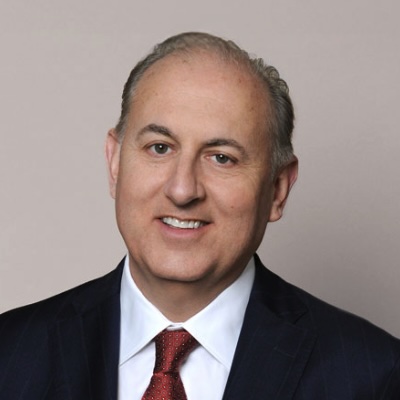
Robert Kramer
Partner
Kramer Alberti

Rob Kramer is a Partner with Kramer Alberti. He is nationally known as among the very best and most experienced patent litigators in the country. He has been named by IP Law360 a “Legal Lion” for his lead counsel patent infringement jury trial victories. Rob practiced for 30 years as a leading patent litigation partner at large global law firms. In 2019, he was the national chair of the patent litigation practice at a top-tier global law firm when he moved with his team to practice at Kramer Alberti, a 21-attorney powerhouse patent litigation boutique firm.
Rob has been consistently recognized and highly ranked nationally for his lead counsel representation of inventors, universities and technology companies enforcing their patents against infringers. He was named to the elite IAM Strategy 300 Global Leaders 2025, and to IAM 300’s prestigious national list of the top 300 IP strategists in 2024. In 2025, Lawdragon named Rob to The 2025 Lawdragon 500 Leading Litigators in America. In 2025, and consistently for more than fifteen years, he was peer selected as a “Northern California Super Lawyer” in IP Litigation, reserved for the top 5% of attorneys nationally. In 2024 and 2025, he was also named to IAM 1000’s distinguished list of top patent litigators, which described Rob as “enjoy[ing] a national reputation for his trial expertise, with wisdom distilled from three decades of experience.” In 2024 and 2025, Patexia’s Report of Best Patent Litigators also named Rob as among the top 30 patent litigators in the country.
Consecutively, in 2023 and 2024, Rob was selected by California’s premier legal publication, The California Daily Journal, to its prestigious list of Top Plaintiff’s Attorneys of The Year. “Robert Kramer has spent more than three decades fighting for innovators’ rights in intellectual property law, driven by a deep fascination with technology and a commitment to protecting inventors. As a leading IP litigator, Kramer has built a career defending universities and innovative companies against some of the world’s largest technology corporations,” reported The Journal (Nov. 20, 2024). Likewise, Rob has been called a “fabulous trial lawyer” who “won a complete victory for defendant in a six patent case” by The Legal 500 US, which described Rob and his team as being “consistently excellent” and creating “a comprehensive strategy based on patent knowledge, the industry landscape and opposing counsel.”
Rob is a frequent invited speaker at conferences and events focused on advanced patent litigation strategy and IP litigation funding and finance. Recently, he was a speaker at the University of Washington, Early Entrepreneur in Residence Program, “IP – The End State: Why it Matters,” in February 2025. He was also an invited speaker at the IP Dealmakers Annual IP and Litigation Funding Conference in November 2024, speaking about global litigation strategy and U.S. venues for effective patent enforcement. He will speak at the 2025 IP Dealmakers annual conference in Austin, Texas focusing on advanced strategies for litigation funding of patent infringement cases.
Recently, Mr. Kramer was lead counsel for plaintiff winning a $172.6 million jury verdict of willful infringement against Micro Focus Corp., a Hewlett-Packard spin-off company that acquired HP’s software business for $8 billion. This resounding victory was the largest jury verdict in the history of the Sherman Division of the U.S. District Court for the Eastern District of Texas. Rob was likewise lead trial counsel winning two major jury trials in the widely followed Finisar litigation, one of the largest patent infringement cases in the country between competitor optical networking companies. The jury returned a verdict in favor of Mr. Kramer’s client in two trials, and within two hours of his closing argument in the second of these heavily fought jury trials.
Rob, as lead counsel, and the Kramer Alberti team were included on the National Law Journal’s List of “100 Largest Verdicts in the U.S,” and honored to be named on Texas Lawyer Magazine’s “Top 10 Patent Infringement Verdicts of the Year” (winning the 3rd largest verdict). Rob has represented clients in patent disputes involving a wide range of products and industries, including wireless technologies, networking, mobile and cellular telecommunications, smart grid utility networking systems, data compression and transmission, microprocessors, power over ethernet (PoE), IEEE 802.3, programmable logic arrays (PLAs), semiconductor manufacturing and packaging equipment, light-emitting diodes (LEDs), optics and optical networks, wavelength selective switches (WSS and ROADMs), databases, software, graphics, electronic gaming, industrial equipment, chemicals and adhesives, biometric authentication, and Internet patents. In addition, Rob has worked with standard essential patents (SEP) and FRAND licensing. Rob represents universities, including U Michigan, and is a member of AUTM.
Rob was a partner and national chair of the Dentons law firm’s Patent Litigation Practice from 2012-2019 before he and his team joined Kramer Alberti (then Feinberg Day), as was widely reported in The American Lawyer, IP Law 360, and other publications. He is a frequent author and lecturer on patent and intellectual property law topics and was an adjunct professor of law at Temple University and a guest lecturer at Waseda University in Tokyo teaching patent law. Rob serves as the co-chair of the American Bar Association Intellectual Property Litigation Committee’s Section 112 Subcommittee. Additionally, Rob served on the Board of Governors of the Association of Business Trial Lawyers, and he also serves on IP Law360’s California Editorial Board.
Rob started his career in New York. He was a judicial extern for U.S. District Judge Kevin Duffy, U.S. District Court for the Southern District of New York, and upon graduating from law school was a Judicial Law Clerk for Judge Richard Simons, Associate Judge of the New York Court of Appeals. He was trained as a litigation associate at a major New York law firm for five years before relocating to San Francisco/Silicon Valley to continue practicing as an intellectual property litigator where he was a full equity partner at Morrison & Foerster LLP.
He has extensive experience both representing and litigating against Asian companies in patent litigation and adversarial patent cross-licensing disputes. Rob lived in Tokyo for three years and was a registered Gaikokuho-Jimu-Bengoshi and a member of the Daini Tokyo Bar Association while a patent litigation partner in Morrison & Foerster’s Tokyo office.

Recent Articles by Robert Kramer
Exmark: Reasonable Royalty Damages, Apportionment and Expert Opinions
While Exmark invites a more flexible approach to apportionment, allowing, at least in some cases, a focus on the royalty rate to value the patented invention, the rate analysis itself must be properly supported. Indeed, Exmark serves as a cautionary reminder that any expert opinions on reasonable royalty damages must be closely tied to the facts of the case. Damages opinions that are purely speculative and unsupported by the facts of the case are likely to be found inadmissible. As a result, apportionment approaches will continue to be case-specific, variously focusing on the royalty base, the royalty rate, or a hybrid-model involving both elements.
In Travel Sentry v. Tropp, CAFC recognizes broad scope of attribution under doctrine of divided infringement
The central issue before the Federal Circuit was whether there was a genuine issue of material fact that TSA’s performance of those steps could be attributed to Travel Sentry, such that Travel Sentry could be held singularly responsible for directly infringing Tropp’s method claims. Slip Op. at 13. The district court had answered this question in the negative… The Federal Circuit rejected the district court’s interpretation of divided infringement as too narrow and, accordingly, vacated its summary judgment of non-infringement.
Supreme Court Eliminates Key Defense in Many Patent Infringement Suits
In a strong reversal of the Federal Circuit, the US Supreme Court held in SCA Hygiene Products Aktiebolag v First Quality Baby Products, LLC, No. 15-927 (March 21, 2017), that delay by a patentee will not give rise to a laches defense during the statutory six-year damages period under 35 U.S.C. § 286. Justice Samuel Alito authored the 7–1 majority opinion, extending the court’s decision in Petrella v. Metro-Goldwyn-Mayer, Inc. (2014), which held that laches is inapplicable for copyright infringement, a provision similar to Section 286 of the Patent Act… The Supreme Court noted that its determination regarding laches does not preclude a defense based on equitable estoppel…
Litigating Willful Patent Infringement in a Post-Halo World
After Halo, courts appear to be breathing new life into claims for willful patent infringement and enhanced damages claims. In fact, since Halo’s new standard took effect a few months ago, juries found willful infringement in three out of four cases where they returned a verdict of infringement. However, as discussed below, there are steps a defendant can take to protect itself against a finding of willful infringement.