
![[IPWatchdog Logo]](https://ipwatchdog.com/wp-content/themes/IPWatchdog%20-%202023/assets/images/temp/logo-small@2x.png)
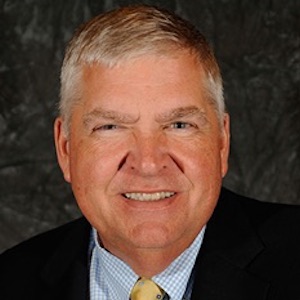
Philip S. Johnson
Chair, Steering Committee
Coalition for 21st Century Patent Reform
Phil Johnson is the principal of Johnson-IP Strategy and Policy Consulting, which he founded after his retirement in February 2017 as Senior Vice President – Intellectual Property Policy & Strategy of Johnson & Johnson – Law Department. At Johnson-IP, Phil has been active in strategic IP consulting and has served as a testimonial expert in various IP- related litigation and arbitration matters. He is currently Chair of the Steering Committee of the Coalition for 21st Century Patent Reform, and an Emeritus Board Member of the Monell Chemical Senses Center. Prior to April of 2014, he was Senior Vice President and Chief Intellectual Property Counsel of Johnson & Johnson where he managed a worldwide group of about 270 IP professionals, of whom over 100 were patent and trademark attorneys.
Before joining Johnson & Johnson in 2000, Phil was a senior partner and co-chair of IP litigation at Woodcock Washburn in Philadelphia. During his 27 years in private practice, Phil counseled independent inventors, startups, universities and businesses of all sizes in all aspects of intellectual property law. His diverse practice pertained to advances in a wide variety of technologies, including pharmaceuticals, diagnostics, medical devices, consumer products, semi-conductor fabrication, automated manufacturing, materials and waste management. During his time in private practice, Phil served as trial counsel in countless IP disputes, including cases resolved by arbitration, bench trials, jury trials and appeals to the Federal Circuit Court of Appeals, many of which resulted in reported decisions.
During his tenure at Johnson & Johnson, Phil served terms on the Medical Device & Diagnostics and Pharmaceutical Group Operating Committees responsible for managing J&J’s many businesses in these fields, while also serving on the senior management team responsible for J&J’s legal organization, which then comprised over 450 attorneys located in 70+ locations in 35+ countries.
Phil previously served as the Chair of the Board of American Intellectual Property Law Education Foundation (now the Foundation for the Advancement of Diversity in IP Law), as President of the Intellectual Property Owners Association, as President of INTERPAT, as President of the Association of Corporate Patent Counsel, as President of the Intellectual Property Owners Education Foundation, as Chair of PhRMA’s IP Focus Group and as Board Member of the American Intellectual Property Law Association.
Phil has testified frequently before the House and Senate Judiciary Committees about patent law reform, abusive patent litigation practices and, most recently, “The Patent Eligibility Restoration Act – Restoring Clarity, Certainty, and Predictability to the U.S. Patent System.” Phil served as a member of Chief Judge Michel’s Advisory Council on Patent Reform and was recognized in the Congressional Record as a member of the Minority Whip Jon Kyle’s “Kitchen Cabinet” for the America Invents Act (“AIA”). Thereafter, Phil served as IPO’s representative on the ABA-AIPLA-IPO committee of six experts (“COSE”) formed at the Director’s request to propose regulations to the USPTO for implementing the PGR-IPR post-grant proceedings created by the AIA.
Phil co-authored “Compensatory Damages Issues In Patent Infringement Cases, A Pocket Guide for Federal District Court Judges,” and its 2017 edition, “Compensatory Damages Issues in Patent Infringement Cases,” both published by the Federal Judicial Center, and has served that Center as a faculty member on its IP-related judicial education programming. Phil served as Co-Chapter Editor of the Sedona Conference WG10 biopharmaceutical patent litigation project and was featured in Landslide’s March/April 2013 issue. Phil also authored “The America Invents Act on Its Fifth Anniversary: A Promise Thus Far Only Partially Fulfilled,” (9/15/2016), and “A Look Back at the Legislative Origin of IPRs” (9/19/2017), both published in IP Watchdog.
Phil’s awards include the Woodcock Prize for Legal Excellence (1997); the New Jersey Intellectual Property Law Association’s Jefferson Medal (2013); the Philadelphia Intellectual Property Association’s Distinguished Intellectual Property Practitioner award (May, 2017), induction into the international IP Hall of Fame by the IP Hall of Fame Academy (June, 2017), the Intellectual Property Owners Association “Carl B. Horton President’s Distinguished Service Award” (September, 2017), an honorary “Doctor of Laws” degree conferred by the University of New Hampshire Franklin Pierce Law School “in recognition of his pathbreaking leadership in revolutionizing the practice of intellectual property law in the healthcare and consumer product sectors” (May 2021), induction into the IP Watchdog Masters™ “Hall of Fame” “recognizing a lifetime of contributions to the field of intellectual property” (October 2022) and the Judge Pauline Newman Award, to be awarded on October 1, 2024. Phil received his Bachelor of Science degree, cum laude with distinction in biology from Bucknell University, and his J.D. degree from Harvard Law School.

Recent Articles by Philip S. Johnson
A Look Back at the Legislative Origin of IPRs
Those now familiar with IPR proceedings will already have recognized how little resemblance current IPR proceedings have to what most supporters of the AIA envisioned upon its passage. In current practice, the role of the Director as an independent IPR gatekeeper never materialized because the USPTO’s implementing rules bypass the Director altogether, assigning the institution function to the PTAB, which in turn routinely assigns both the institution and final decisions to the same three judge panel. As a result, most of the safeguards against patent owner harassment were lost…. By failing to adopt the implementing rules needed to carry out the intent of the AIA, and by adopting other rules and procedures that are plainly skewed towards petitioners, the PTAB has intentionally tilted its IPR proceedings against patent owners. While this has been good for the PTAB, which has quadrupled in size, it was neither Congress’s intent nor that of most of AIA’s supporters to create an unfair IPR patent “killing field.”
The America Invents Act on Its Fifth Anniversary: A Promise Thus Far Only Partially Fulfilled
Unfortunately, Mr. President, after five years I cannot report back that the AIA has yet ”improve[d] patent quality and help[ed] give entrepreneurs the protection and the confidence they need to attract investment, to grow their businesses, and to hire more workers.” The current implementation of PTO post issuance proceedings is undermining confidence in our patent system, chilling innovation at its roots, and, in eyes of some, giving the AIA a bad name.
