
![[IPWatchdog Logo]](https://ipwatchdog.com/wp-content/themes/IPWatchdog%20-%202023/assets/images/temp/logo-small@2x.png)
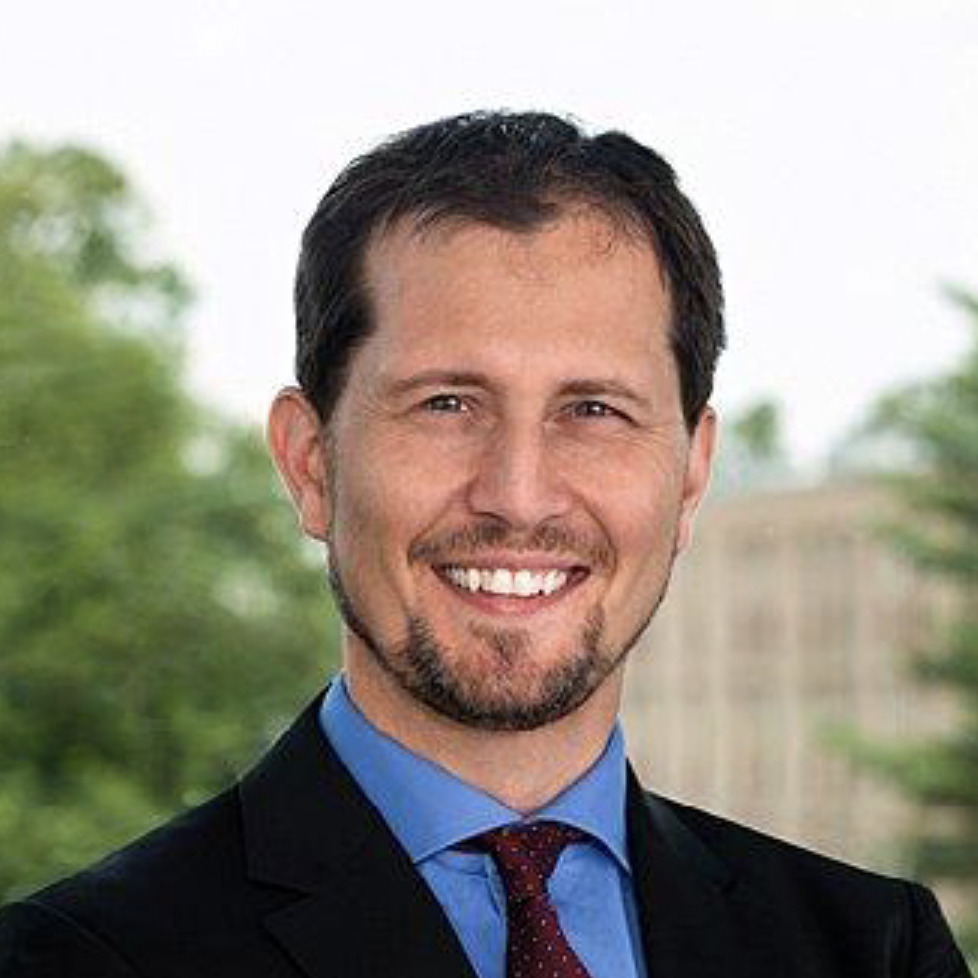
Brad Close
Executive Vice President of Licensing and Transactions
Transpacific IP Group Limited

As the Executive Vice President of Licensing and Transactions at Transpacific IP Group Limited, Brad Close adds to the strength of the transactions team with his years of experience on patent prosecution and transactions. He is primarily responsible for transacting large patent deals and identifying monetization opportunities. As a patent attorney he had prosecuted hundreds of patent applications prior to moving on to licensing and transactional work. He has also worked on patent sales for companies of various sizes and stages, ranging from young start-ups to multinational companies and conglomerates.
Brad resides in the United States of America and actively engages with clients in the other parts of the world, including Asia and Europe. Fortune 50 companies are amongst Brad’s extensive network of clients.
Within the broad range of technology specialities that Transpacific IP has built up, Brad’s work primarily focuses on high-tech and consumer electronics. He is responsible for identifying opportunities in the intellectual property space, helping clients understand their strategic technology position in the global arena, and moving deals from conception to closing. In addition, Brad performs various types of IP acquisition and valuation.
A known speaker, Brad has spoken on topics such as patent brokering, deal making pitfalls and patent monetization. He has a Bachelor of Science in Biochemistry from Queen’s University in Kingston, a Juris Doctorate, and a Masters of Intellectual Property from Franklin Pierce in New Hampshire, U.S.A. He is admitted to the bar in Virginia, Massachusetts, the District of Columbia and the USPTO.

Recent Articles by Brad Close
Examining Eligibility Case Law Since the Supreme Court’s ‘Original Sin’: Failure to Define ‘Abstract Ideas’ in Alice
Subject matter eligibility has been the most confounding and unpredictable issue in patent law since the Alice decision issued in 2014, especially for inventions involving the computer arts. Of course, computers are now ubiquitous and are involved in the implementation of not just electronics, but also mechanical devices, drug administration, and so on. The Alice decision touches many different types of inventions.
Hear from the Experts: How Patent Litigation Funding is Used to Hedge Risk
IPWatchdog has previously reported on aspects of litigation financing, including a recent article on inventor groups being wary of asymmetrical demands for transparency in revealing funding sources. Last month, IPWatchdog invited a group of experts to LIVE to discuss their experiences with litigation financing, how it works for them, and how it is used to hedge risk.
Winning Strategies at the PTAB, Part II: Common Pitfalls That Patent Owners Should Avoid
Part I of this article discussed how the Patent Trial and Appeal Board (PTAB) is a very different tribunal from district courts. It is a venue where fact and issues of law are decided by technical specialists, who are also highly trained in patent law, instead of lay judges and juries. It also discussed the formidable challenge presented to patent owners by the PTAB, where inter partes review (IPR) institution rates are about 67% and final written decisions find all challenged claims unpatentable up to 70% of the time. Part II will discuss strategies that give patent owners a better chance at successfully navigating the IPR process.
Winning Strategies at the PTAB, Part I: Bring Your Game
Litigating the validity of claims in an inter partes review (IPR) at the Patent Trial and Appeal Board (PTAB) is vastly different from litigating validity in district court. PTAB judges are scientists and engineers, and they are also patent attorneys. They have significant technical training, and most have advanced technical degrees. You can assume they know substantive patent law cold. PTAB judges represent a very different audience from a lay judge or a jury in district court.
Facebook v. Windy City Settles It: The CAFC Does Not Care About the PTAB’s Opinions
The Supreme Court in SAS (SAS Institute Inc. v. Iancu) was quite clear that the Patent Trial and Appeal Board (PTAB or Board) has to follow the statute when conducting Inter Partes Review (IPR). So, when Facebook sought to enter patent claims into their IPR against Windy City Innovations past the one-year deadline dictated by 35 USC § 315(b), the PTAB had conveniently written themselves an opinion that allowed Facebook to join Facebook to circumvent the deadline. The Board’s Precedential Opinion Panel (POP) used the language in USC § 315(c) and had written that the statutory use of the words “any person” allowed them to join a party to itself. See Proppant Express Invs., LLC v. Oren Techs., LLC, No. IPR2018-00914, Paper 21, at 4–6 (P.T.A.B. Nov. 8, 2018). After the CAFC’s Facebook v. Windy City decision, it’s clear that any PTAB Precedential Opinion Panel statutory interpretation is irrelevant. Practitioners should not accept any conclusions made by the Board about a statute, and petitioners should be more assured that a reasoned argument will prevail.
