![[IPWatchdog Logo]](https://ipwatchdog.com/wp-content/themes/IPWatchdog%20-%202023/assets/images/temp/logo-small@2x.png)
Posts in IP News
Strong Design Patents: The Power of Color
Ironically, color design patents are still published in black and white. The front page of a design patent will inform you, however, that the USPTO has a color image on file. By downloading the originally filed images on the USPTO’s Public PAIR data base, you can see what the color design patent actually covers. The originally filed color images can then be downloaded from the “supplemental content” tab of the PAIR record for each patent. The use of color design patents is growing fast, particularly for computer generated images. Similarities in color schemes can outweigh differences in shapes if an accused image is more similar in color pallet to a patented design than it is to other available designs. It’s a little more effort to file color images, but the increased strength of coverage can be well worth it.
In Loving Memory of Richard Compasso, 1931 – 2013
At precisely 10:00 pm on Tuesday, July 30, 2013, Renee’s father and my father-in-law, Richard Compasso passed. I write this article to honor Pop, as I took to calling him in recent years. I would like everyone to know about the good many that I knew and how he will be missed.
Apple Seeks Patent on Suggested Search Rankings Based on Social Network Contacts
Many of the recently published documents from the U.S. Patent & Trademark Office, including both patent applications and issued patents, relate to software system improvements that Apple has developed. One patent application for a voice assistant that can analyze contextual data is specifically for mobile device applications. Two other applications are for more general computer systems: one which protects a system of suggesting search result rankings for online shopping based on a person’s social network contacts; another would protect a cleaner user interface for browser windows with multiple open web pages. Apple is also interested in improving the hardware systems involved in their devices. One patent issued by the USPTO protects a removable hard drive for small form factor desktop computers that helps reduce the overall weight of the entire computer. A final patent application we feature today describes a system of accurately calibrating a mobile device’s magnetometer in response to interference from other electromagnetic fields.
Financially Responsible Inventing: Prototype Basics
Getting professional patent illustrations or engineering drawings is certainly helpful, but there is simply no substitute for having a working prototype. Unfortunately, prototypes cost real money. Even though costs have dropped over the past few years thanks to new technologies, the prototype stage is where inventors start to really burn through cash at an alarming rate. For example, if you build an expensive prototype and then need to make a change because it didn’t work so well that means building another expensive prototype. That being the case wise inventors push off an expensive prototype as far into the future as reasonably possible. Instead consider starting with a 3D model, which is much less expensive than a prototype. 3D modeling starts to bring the invention into focus and really can allow you and prospective licensees and partners to envision the invention in a meaningful way.
Patent Troll Epilogue – A Fractured Fairy Tale Part 5
How we deal with the problems uncovered herein is something for deliberate consideration, not the activity of an automaton. For example, this paper demonstrates that patents asserted by inventors and inventor based companies generally do not fare as well as patents of other entities. However, in the United States none of us would want to stop all such entities from trying to market and license their ideas. Most of us would agree that the independent inventor has been the heart of innovation in the United States for a very long time. We have too many memories of the stories of the Wright Brothers, Chester Carlton of Xerox fame, of Eli Whitney and the cotton gin, of Edison, and of Farnsworth — the farmer boy who invented the television.
Senate Confirms Raymond Chen to Federal Circuit
While in the Solicitor’s Office at the USPTO Chen’s notable Federal Circuit arguments included In re Bilski, In re Nuijten, and In re Comiskey. While I disagreed with the Federal Circuit decision in each of those cases I still believe Chen to be an excellent choice for the Federal Circuit. While some may look at the cases where Chen defended the Board, that was his job and I would caution reading to much into the briefs filed looking for a window into the judicial philosophy of Chen. Indeed, I have every reason to expect that he will align himself with the pro-patent wing of the Court.
A Factured Fairytale Part 4: More Patent Troll Myths
As can be seen from Fig. 12, 25% of the cases brought against the retailer were actually brought by Producer companies. The other 75% of cases could indeed be classified as NPE suits. However, of these suits, 30% were by independent inventor or independent inventor related companies, and the other 45% of cases were brought by other NPEs. Interestingly of the “other NPEs”, we found all of the patents asserted against this retailer were patents originally obtained from Producers. Of these patents, one-third came from big corporate America and the remaining two-thirds from smaller Producing companies. That means nearly 65% of this retailers troubles, which it directly attributes to “trolls” asserting bad patents, are actually related to patents that derived from Producing companies. Of its cases that was resolved, pacer suggests none were tried and each was mutually dismissed within 4 months to 13 months.
Patent News and Notes
1. Reed Tech takes over USPTO Contract from Google. 2. Pharma Patent Settlements Saved $25.5 Billion for US Health System. 3. Coffee Analysis Smart Phone App for that Perfect Brew. 4.FDA Approves Brain Wave Test to Assess ADHD in Children. 5. CAFC Copaxone® Patent Ruling Allows May 2014 Generic Launch. 6. A Permanent Injunction in a Patent Infringement Case! 7. Post-Grant Proceedings Treatise Publishes.
Copyright Policy, Creativity and Innovation in the Digital Economy
WASHINGTON — The U.S. Department of Commerce today released a green paper on Copyright Policy, Creativity, and Innovation in the Digital Economy (Green Paper) to advance discussion on a set of policy issues critical to economic growth. The Green Paper discusses the goals of maintaining an appropriate balance between rights and exceptions as the law continues to be updated; ensuring…
A Factured Fairytale Part 3: More Patent Troll Myths
Myth 4: Patents of NPEs fare much more poorly in reexamination proceedings brought during litigation than those of Producers. Truth: When one includes independent inventors and independent inventors in the mix of NPEs, the patents being asserted by NPEs may be said to fare slightly more poorly in reexamination proceedings than those patents asserted by Producers. However, if one removes these independent inventor entities from the mix of NPEs, the patents held by non-independent inventor based NPEs were seen to do at least as well, if not better, than the average asserted patent of the Producers which was likewise thrown into reexamination during litigation.
Strong Design Patents: The Power of The Broken Line
Design patents can cover one or more of the shape, color, ornamentation or texture of an object. Design patents claiming a shape typically have line drawings showing various views of the shape. Solid lines in the drawings are the claimed features of the shape. Broken lines in the drawings show what the rest of the object might look like. To determine infringement, it’s only necessary to compare the solid lines. The broken lines don’t count. Ironically, this means that the fewer solid lines in a design patent, or conversely, the more broken lines in a design patent, the stronger the patent.
Probing 10 Patent Troll Myths – A Factured Fairytale Part 2
There are many myths that are attached to the fable of the so-called “patent troll.” Acting like the MythBusters, we probed some of them. For example, the success rate of NPEs overall across 267 random cases indicates that the litigation outcome for NPE suits looks very similar to litigation outcome for Producer suits. However, when individual inventor suits and individual inventor company suits were removed from the mix of overall NPEs, we found that non-independent inventor NPEs had an outcome profile that looked significantly better than the Producers, both in very likely favorable and likely unfavorable outcomes in litigation.
CAFC OKs Transfer to Court of Claims on Trade Secret Claim
United States Marine, Inc. (USM) sued the United States government in the United States District Court for the Eastern District of Louisiana under the Federal Tort Claims Act (FTCA), 28 U.S.C. § 1346(b) and 28 USC §2674. USM alleged that the United States misappropriated USM’s trade secrets. Specifically, USM claimed that the United States Navy, which had lawfully obtained USM’s proprietary technical drawings under a contract (to which USM was not a party), owed USM a duty of secrecy that it breached by disclosing those drawings to a rival private firm for use in designing military boats for the government.
A Fractured Fairy Tale: Separating Fact & Fiction on Patent Trolls
Our first move was to understand who was being identified as “Trolls” by the authorities who have been writing articles so long on the topic. We were surprised to find upon extensive searching on the Internet that we could not find a single research paper which provided any exhaustive list of the huge numbers of “Trolls” which were said to be stalking corporate America. Instead we found many papers making their analyses based upon proprietary databases that were not available to the public, and thus the veracity of the designation “Troll” was not subject to any validation. We decided to do some investigative reporting, contacting a number of the authors of the so-called troll stories. We were surprised over and over again to be given the same explanation – the lists of trolls they were referencing in the articles were considered “trade secrets”.
Copyright at the Bedside: Should We Stop the Spread?
Doctors and researchers are quietly acquiescing to the demands of those asserting copyright in medical tests, for fear of becoming entwined in lengthy and expensive legal proceedings that could result in a costly judgment. Such fear could easily become a self-fulfilling prophecy if it prompts the creation of an industry norm for licensing medical tests. Courts and legislators have been known to defer to industry custom, even when they harbor some doubts about the wisdom of the underlying logic. The challenging thread running through all of this is that medical tests of this kind stand at the boundary between patent and copyright, raising the mind-bending question of how to conceptualize a process, which is the purview of patent, when that process consists of nothing more than words, which is normally the purview of copyright.
Varsity Sponsors
![[Advertisement]](https://ipwatchdog.com/wp-content/uploads/2026/02/Junior-AI-Feb-10-2026-sidebar-CLE-700x500-1.jpg)
![[Advertisement]](https://ipwatchdog.com/wp-content/uploads/2026/02/Anaqua-Feb-12-2026-sidebar-700x500-1.jpg)
![[Advertisement]](https://ipwatchdog.com/wp-content/uploads/2025/12/LIVE-2026-sidebar-regular-price-700x500-1.jpg)

Latest IPW Posts
Patent Portfolio Economics: Balancing Quality, Cost and Market Coverage
February 8, 2026 @ 01:00 pmCAFC Agrees Content Sharing Patents are Ineligible in Win for Walmart
February 5, 2026 @ 01:32 pmFederal Circuit Affirms Noninfringement Finding in Ladder Patent Dispute
February 5, 2026 @ 12:15 pmCAFC Affirms Summary Judgment Ruling in Patent Suit Against NASA Mars Helicopter Subcontractor
February 4, 2026 @ 03:15 pm
Latest Podcasts
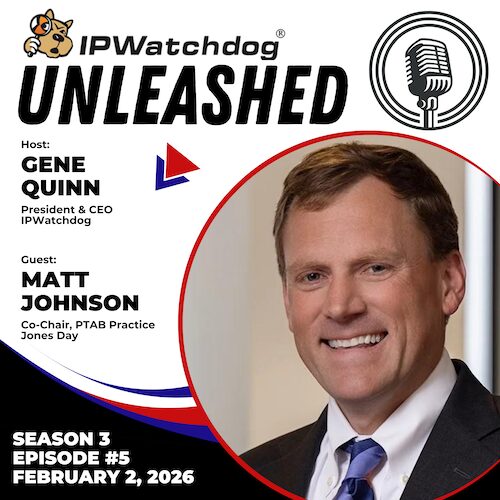

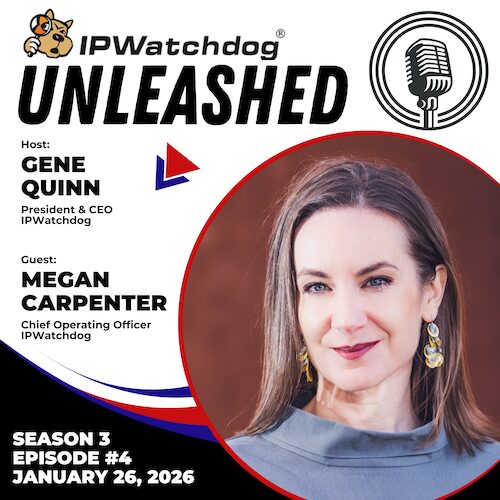
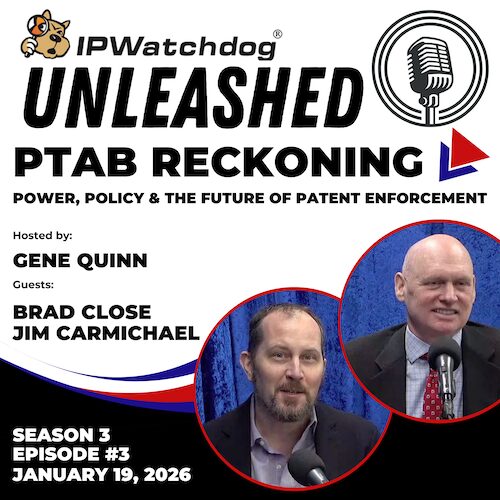
IPWatchdog Events
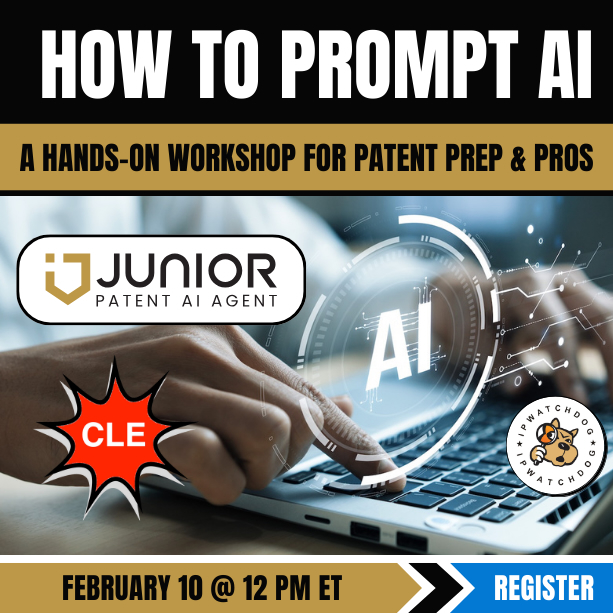
CLE Webinar: How to Prompt AI – A Hands-On Workshop for Patent Prep and Pros
February 10 @ 12:00 pm - 1:00 pm ESTWebinar: IP at Risk – Avoiding Costly Compliance Mistakes in Export Controls
February 12 @ 12:00 pm - 1:00 pm ESTWebinar: Optimizing the Chemistry Drafting Process – Where AI Actually Helps
February 17 @ 12:00 pm - 1:00 pm ESTWebinar: Resurrecting Antibody Genus Protection – Allowed Claims Through CDR-Scanning
March 5 @ 12:00 pm - 1:00 pm ESTIPWatchdog LIVE 2026 at the Renaissance Arlington Capital View
March 22 @ 1:00 pm - March 24 @ 7:00 pm EDT
Industry Events
From IPWatchdog
![[Advertisement]](https://ipwatchdog.com/wp-content/uploads/2021/12/WEBINAR-336-x-280-px.png)
![[Advertisement]](https://ipwatchdog.com/wp-content/uploads/2021/12/Ad-4-The-Invent-Patent-System™.png)