
![[IPWatchdog Logo]](https://ipwatchdog.com/wp-content/themes/IPWatchdog%20-%202023/assets/images/temp/logo-small@2x.png)
Posts in IPWatchdog Articles
‘Patent Prosecutor’ or ‘AI-Agile IP Counselor’?—A High-Stakes Crossroads
In a 2017 IPWatchdog article, I challenged practitioners engaged in patent prosecution: strive to embody the traits of an “IP counselor,” who brings a broader strategic mission and skill set than “just a patent prosecutor.” Likewise, I encouraged clients to retain IP counselors as their counsel of choice. My cautionary advice stemmed from patent prosecution’s vulnerability to complacency and commoditization, such as due to its structured nature and incentives to obtain as many patents as possible. In addition, relative to their peers, many practitioners provide relatively undifferentiated services, limiting their attractiveness to prospective clients and their staying power for existing clients.
Other Barks & Bites for Friday, February 27: UK Trademarks No Longer Within Scope of EU Law Post-Brexit; Second Circuit Reverses Ruling on Concert Rates Under BMI Consent Decree; USPTO Employee Pays $500K to Resolve Conflict of Interest Allegations
This week in Other Barks & Bites: the EU’s highest court holds that UK trademark rights cannot support opposition proceedings within the EU since the conclusion of the transitional period following Brexit; Merck shuffles its corporate structure in advance of major patent expirations for blockbuster drug Keytruda; the Federal Circuit finds genuine issues of material fact in an inequitable conduct and antitrust claim ruling handed out by the Southern District of Texas; and more.
CAFC Vacates Summary Judgment on Inequitable Conduct and Walker Process Claims in Coiled Tubing Patent Dispute
The U.S. Court of Appeals for the Federal Circuit (CAFC) today issued a precedential decision in Global Tubing LLC v. Tenaris Coiled Tubes LLC vacating a district court’s summary judgment rulings on both inequitable conduct and a Walker Process fraud claim. The court determined that genuine disputes of material fact precluded summary judgment on both issues and remanded the case for further proceedings.
DOJ Says Patent Examiner Will Pay $500,000 to Resolve Alleged Ethics Reform Act Violation
The U.S. Department of Justice (DOJ), Office of Public Affairs, on Wednesday, February 25, issued a press release announcing that a U.S. Patent and Trademark Office (USPTO) examiner will pay $500,000 to settle allegations that she worked “personally and substantially” on a number of patent applications “in which she held a direct financial stake.” Daxin Wu is alleged to have examined at least nine applications for companies she held stock in between January 2019 and May 2022. Specifically, the DOJ said that she reviewed applications for companies in which she held more than $300,000 and $140,000 worth of stock, respectively, and that she reviewed applications for companies that were competitors of a firm in which she owned more than $900,000 worth of stock.
Tesla Loses at CAFC in Split Decision Upholding EV Charger Claims
Charge Fusion Technologies, LLC has managed to defend its patent at the U.S. Court of Appeals for the Federal Circuit (CAFC), with a split panel on Thursday affirming the Patent Trial and Appeal Board’s (PTAB’s) decision that Tesla failed to prove Charge Fusion’s electric vehicle (EV) charger claims unpatentable. The opinion was authored by Judge Chen, who was joined by Judge Reyna, while Judge Dyk filed a dissenting opinion.
Federal Circuit Denies Another Mandamus Petition Challenging USPTO’s ‘Settled Expectations’ Doctrine
The U.S. Court of Appeals for the Federal Circuit (CAFC) on Wednesday issued an order in In re Kahoot! AS, denying another petition for writ of mandamus that challenged the U.S. Patent and Trademark Office (USPTO) Director’s refusal to institute an inter partes review (IPR) petition based on “settled expectations” of the patent owner. The per curiam order was issued by Circuit Judges Taranto, Mayer, and Stark.
Tariff Ruling ‘Trumps’ Volkswagen’s Bid to Stop Squires’ IPR Institution Policy
On February 20, 2026, the Supreme Court decided Learning Resources, Inc. v. Trump, 607 U.S. ___ (2026), affirming the Federal Circuit’s en banc decision in V.O.S. Selections, Inc. v. Trump, that the International Emergency Economic Powers Act (IEEPA) does not authorize the President to impose tariffs. And it means the Federal Circuit should rule in favor of Director Squires and against Volkswagen in one of the more constitutionally focused writs of mandamus challenging Squires and his use of discretion to decide institution of inter partes reviews (IPRs). And there is no need for an oral argument.
Is the USPTO Flagging Selected Patent Applications for Extra Scrutiny—Again?
A battle is currently being waged in a federal court in Washington D.C., where two prominent inventors are accusing the United States Patent and Trademark Office (USPTO) of singling out and stalling their pending patent applications, which might otherwise be allowable, for extra scrutiny under ill-defined standards. The inventors allege that the USPTO has resurrected a program that started in 1994, that purportedly justified such added scrutiny, which the USPTO claims to have discontinued in 2015.
CAFC Shoots Down Three More Mandamus Petitions Seeking to Curb USPTO Denial of IPR Institution
The U.S. Court of Appeal for the Federal Circuit (CAFC) on Tuesday issued three orders denying mandamus petitions filed by inter partes review (IPR) petitioners at the Patent Trial and Appeal Board (PTAB). Each of the petitioners was seeking relief from the court to compel the U.S. Patent and Trademark Office (USPTO) to institute their IPR petitions, following decisions that denied institution of the IPRs.
Business Development is Not Magic! How Successful Lawyers Build Thriving Practices – IPWatchdog Unleashed
This week on IPWatchdog Unleashed, I had the pleasure of speaking with Deborah Farone, founder of Farone Advisors, former Chief Marketing Officer of Cravath, Swain & Moore, and author of Breaking Ground: How Successful Women Lawyers Build Thriving Practices. Our conversation focused on how lawyers—particularly in highly technical fields like intellectual property—can build thriving practices through disciplined, strategic business development. The discussion underscores that business development is a skill, not an innate personality trait. Even introverted attorneys can succeed by taking incremental steps, practicing authentic communication, and focusing on listening rather than selling.
Federal Circuit Affirms Section 101 Ineligibility of AI Patent in Win for Amazon
The U.S. Court of Appeals for the Federal Circuit (CAFC) today affirmed a summary judgment ruling from the United States District Court for the Northern District of New York finding the claims of a natural language processing patent asserted against Amazon.com, Inc. invalid for being directed to ineligible subject matter. Rensselaer Polytechnic Institute and CF Dynamic Advances LLC originally brought the lawsuit against Amazon for infringement of United States Patent No. 7,177,798, which discloses a “method for processing a natural language input provided by a user.”
Reduce Post-M&A Risk with Strategic, AI-Powered IP Recordals
In the high-velocity M&A landscape of 2026, the technical closing of a transaction is often mistaken for the finish line. For M&A counsel, however, the signing of a purchase agreement is merely the beginning of a critical risk window. While the contract handles the equitable transfer of rights between parties, the statutory transfer – the formal recordal of title in every global jurisdiction – is where the deal’s value is most vulnerable.
Analysis of March-In Rights Guidance Marks a Sad Day for the GAO
The Government Accountability Office (GAO) just released its assessment of the Biden Administration’s “Draft Interagency Guidance Framework for Considering the Exercise of March-In Rights.” A bipartisan combination of Senators Thom Tillis (R-NC) and Chris Coons (D-DE) along with Congressmen Darrell Issa (R-CA) and Jake Auchincloss (D-MA) asked the GAO to evaluate the guidelines on three bases: what the guidelines did and how they were developed; stakeholder views on the draft; and the potential impact of the guidelines.
CAFC Affirms PTAB Rulings Upholding Netlist Patent
The U.S. Court of Appeals for the Federal Circuit (CAFC) on February 20 affirmed two final written decisions from the Patent Trial and Appeal Board (PTAB) in inter partes review (IPR) proceedings upholding claims of Netlist, Inc.’s patent.
U.S. Chamber Urges CMS to Drop Arbitrary MFN Pricing Models
Earlier today, the U.S. Chamber of Commerce published a blog post following up to a comment submitted by the Chamber late last week to the Centers for Medicare & Medicaid Services (CMS) urging the agency to rescind proposed price controls that would require pharmaceutical companies to offer drugs to Medicare on a “most-favored-nation” basis. The Chamber argues that applying foreign pricing controls on U.S. drug sales would have a deleterious impact on both American innovation and patient access to lifesaving treatments, and that such measures exceed CMS’ authority established by its governing statute.
Varsity Sponsors
![[Advertisement]](https://ipwatchdog.com/wp-content/uploads/2026/03/NLPatent-Apr-2-2026-sidebar-700x500-1.jpg)
![[Advertisement]](https://ipwatchdog.com/wp-content/uploads/2026/02/Junior-Apr-7-2026-sidebar-700x500-1.jpg)

Latest IPW Posts
The USPTO is Trying—But the Most Abusive Practices to Kill Patents Are Still in Play
April 1, 2026 @ 05:58 pmAs ‘Pro Codes Act’ is Reintroduced, Opponents Warn of Threats to Standards Development System
April 1, 2026 @ 02:15 pmUSPTO Solves U.S. Patent Eligibility Problems
April 1, 2026 @ 01:19 pmMainstream Media Attention for Judge Newman Suspension Grows as Saga Continues
April 1, 2026 @ 11:15 amHow to Draft AI Patents That Survive the Next Guidance Cycle, and the One After That
April 1, 2026 @ 07:15 am
Latest Podcasts
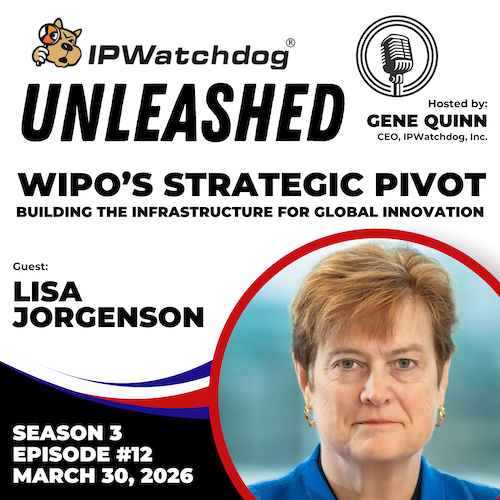

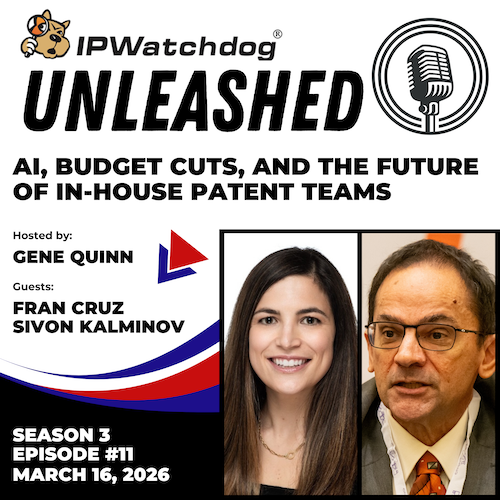

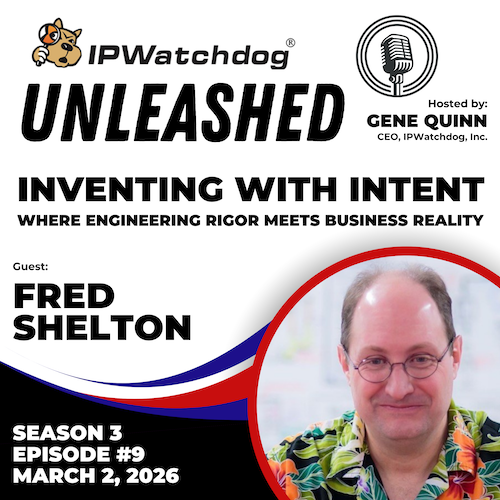
IPWatchdog Events
Webinar: Unlocking New Capabilities – The Real ROI of AI in Patent Practice
April 2 @ 12:00 pm - 1:00 pm EDTCLE Webinar: All in the Prompt – Crafting AI Prompts for Precision Outputs
April 7 @ 12:00 pm - 1:00 pm EDTWebinar: From Patent Tools to AI Agents – The Next Evolution of Patent Practice
April 14 @ 12:00 pm - 1:00 pm EDT
Industry Events
24th Annual Rocky Mountain Intellectual Property & Technology Law Institute
May 28 @ 8:30 am - May 29 @ 4:30 pm MDTFrom IPWatchdog
![[Advertisement]](https://ipwatchdog.com/wp-content/uploads/2021/12/WEBINAR-336-x-280-px.png)
![[Advertisement]](https://ipwatchdog.com/wp-content/uploads/2021/12/Ad-4-The-Invent-Patent-System™.png)