
![[IPWatchdog Logo]](https://ipwatchdog.com/wp-content/themes/IPWatchdog%20-%202023/assets/images/temp/logo-small@2x.png)

 0
0 “Everyone keeps using the technology, but only some actually pay. This leaves the patent owner to chase down the bad actors.” – Matteo Sabattini
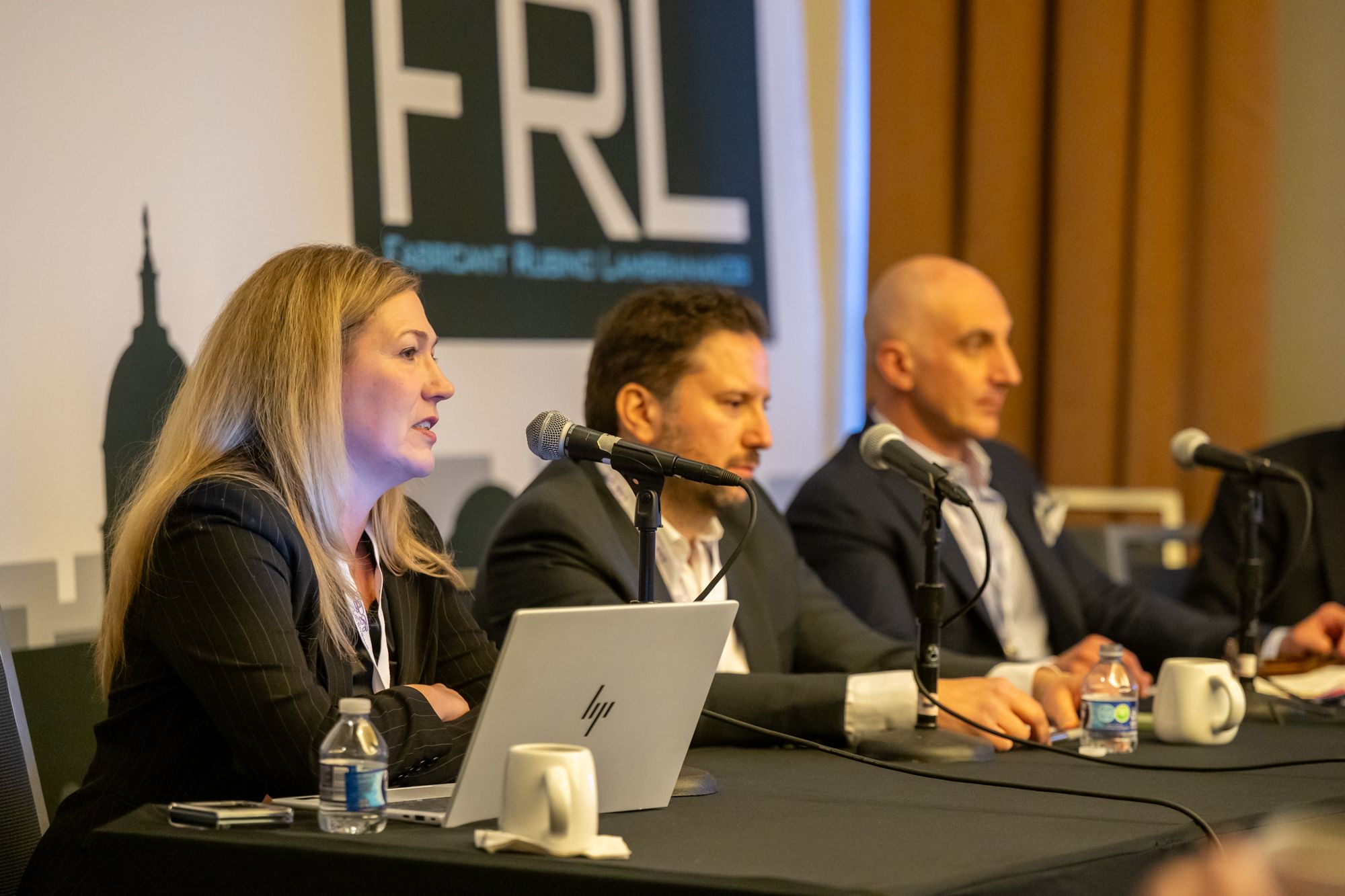
From left: Shawnna Yashar, Ali Allawi, Matteo Sabattini.
Standard essential patents (SEPs) don’t generate controversy because people disagree on whether innovation deserves compensation. The controversy runs deeper: everyone agrees it does, but nobody agrees on how much, when, or through which court.
That tension was the animating force behind the panel Global SEP Litigation, Licensing and Dealmaking, on day two of IPWatchdog LIVE 2026 last month. Moderated by Shawnna Yashar (O’Melveny & Myers LLP), the panel featured Ali Allawi (Warner Bros. Discovery), Matteo Sabattini (Sisvel Group), and David Yurkerwich (Ankura). All four practitioners see the SEP licensing ecosystem from very different vantage points and arrived without a shared script.
What followed wasn’t consensus. It was something more useful: a frank, occasionally contentious accounting of where the global Fair, Reasonable, and Non-Discriminatory (FRAND) licensing system is under strain, and why IP practitioners who advise clients on standards-heavy technology portfolios need to understand the fault lines now.
A Framework Built on Interoperability, Not Consistency
Yashar opened by grounding the room in a structural reality that underlies every SEP dispute. SEPs emerge from three categories of standard-setting organizations: governmental bodies, private entities, and industry consortia. While telecommunications dominates the field, the reach of SEP-laden standards is expanding rapidly into video codecs, automotive, and IoT. Each standard-setting body publishes its own intellectual property rights (IPR) policies. None of them standardize the fees or terms for specific SEP license agreements.
That’s not an oversight. It reflects the deliberate architecture of a system designed to ensure technical interoperability while leaving commercial terms to bilateral negotiation.
Jurisdictional Arbitrage: London Sets Rates, Munich Requires Security
For IP litigators, the jurisdictional landscape for FRAND rate-setting is the front line. The panel spent considerable time here, and the picture is anything but stable.
Since the ruling in Unwired Planet v. Huawei, where the UK Supreme Court confirmed jurisdiction to set worldwide FRAND terms in appropriate cases, UK courts have become an important venue those seeking global FRAND rate determinations. British judges set interim licensing terms and, at the conclusion of SEP litigation, establish rates that often apply to global portfolios.
Germany presents a more complex picture. German courts have historically focused on injunctive relief rather than rate-setting, but Yurkerwich observed that this is shifting: Munich courts are increasingly using economic experts to engage with FRAND rate questions directly. Under the Huawei v. ZTE framework, a party seeking to assert the FRAND defense in Germany must post security proportionate to the claimed FRAND rate to qualify as a willing licensee. The German Federal Court of Justice reinforced this demanding standard as recently as January 2026, with VoiceAge EVS GmbH v. HMD Global Oy requiring not just a declaration of willingness but documented, consistent conduct throughout negotiations. According to Sabattini, “The willing licensee in Germany was never born.”
His point was that German procedural requirements make it structurally nearly impossible for implementers to satisfy the willing licensee test without making an immediate financial commitment that may rival the cost of litigation itself. The observation landed with a panel that recognized the dynamic immediately.
In U.S. courts, the posture is different again. Most American courts don’t sua sponte set FRAND rates, leaving parties without a judicial backstop unless they specifically seek one. In Yurkerwich’s view: there are bungalows and skyscrapers in FRAND rate positions, and the market needs something in the middle.
Two Classes of Patent Owners — and Why the Difference Matters
The panel’s most practically grounded exchange centered on what Allawi called the two-class problem in SEP ownership.
The first class engages early. These SEP holders approach implementers before deployment, provide licensing clarity upfront, and allow companies to build royalty costs into their business models from the start. Patent pools are aggregations of SEPs that allow implementers to access multiple patents through a single license fee, and they represent this model at its most functional. “I’m happy to pay the tax to use the technology. I just need to know what the tax is so I can structure my business model appropriately,” Allawi said.
The second class waits. Patent holdouts allow technology to reach widespread market adoption, then emerge post-deployment demanding SEP royalty rates that reflect the value the standard has acquired in use, rather than the value it represented at the time of adoption. “We’re constantly being asked to provide a skyscraper or face injunction. Patent owners pursuing higher and higher rates are killing the golden goose,” said Allawi.
Sabattini framed the aggregate distortion through the toll road analogy. The FRAND system functions like a toll road without a gate: implementers use the road, some pay, and others don’t. “This creates an anticompetitive situation,” he said, noting that compliant licensees bear costs their non-compliant competitors avoid, inverting the incentive structure the FRAND framework was built to sustain.
Tax on Innovation, or Investment in Future Technology?
There was no clear consensus on a question that sits at the center of every SEP policy argument: are FRAND royalties a burden on innovation, or a precondition for it?
The implementer-side view was put directly on the table: SEP licensing fees function as a recurring tax on technology adoption, with rates set by whoever holds the most litigation leverage. Sabattini’s rebuttal was immediate: “What is a tax or payment today is actually an investment in future technology development.”
Without meaningful returns on standards contributions, the engineers and organizations that build those standards will redirect resources elsewhere, eroding the pipeline that has made 4G, 5G, Wi-Fi, and video codecs globally interoperable.
He acknowledged, however, that the investment framing has limits. “Every child is good-looking in its mother’s eyes,” he said of licensor expectations, adding plainly: “Licensors sometimes have unreasonable expectations as to the value of their IP.” Mediation, he argued, is one of the few mechanisms capable of bringing both sides’ assumptions into contact with market reality.
What Practitioners Need to Watch
The session closed with structural proposals rather than policy prescriptions.
Yurkerwich offered a mechanism with real appeal: require asserting parties to disclose comparable licenses already in the portfolio. Transparent comparables impose market discipline on rate demands before litigation resolves them, compressing both cost and duration. Allawi noted that implementers who refuse arbitration in SEP disputes are increasingly treated as evidence of bad faith, a development that practitioners advising licensee clients can no longer treat as a theoretical risk.
The combination of divergent jurisdictional standards and growing SEP exposure across industries beyond telecom means the stakes of SEP licensing strategy are rising. The toll road isn’t going away. The question is whether your clients are building that cost into the model or waiting to be found on the road without a receipt.
![[Advertisement]](https://ipwatchdog.com/wp-content/uploads/2026/04/DeepIP-Apr-16-2026-sidebar-new-700x500-1.jpg)
![[Advertisement]](https://ipwatchdog.com/wp-content/uploads/2026/04/Virtual-AI-2026-May-18-19-2026-sidebar-700x500-1.jpg)
![[Advertisement]](https://ipwatchdog.com/wp-content/uploads/2026/04/Cypris-April-26-2026-sidebar-left-700x500-1.jpg)



![[Advertisement]](https://ipwatchdog.com/wp-content/uploads/2021/12/WEBINAR-336-x-280-px.png)
![[Advertisement]](https://ipwatchdog.com/wp-content/uploads/2021/12/Ad-4-The-Invent-Patent-System™.png)





Join the Discussion
No comments yet. Add my comment.
Add Comment