
![[IPWatchdog Logo]](https://ipwatchdog.com/wp-content/themes/IPWatchdog%20-%202023/assets/images/temp/logo-small@2x.png)

 0
0 “I’d say there will be a lot of push-back, and I think it’s going to be a very rough year for the leadership of the USPTO.”- Judge Paul Michel
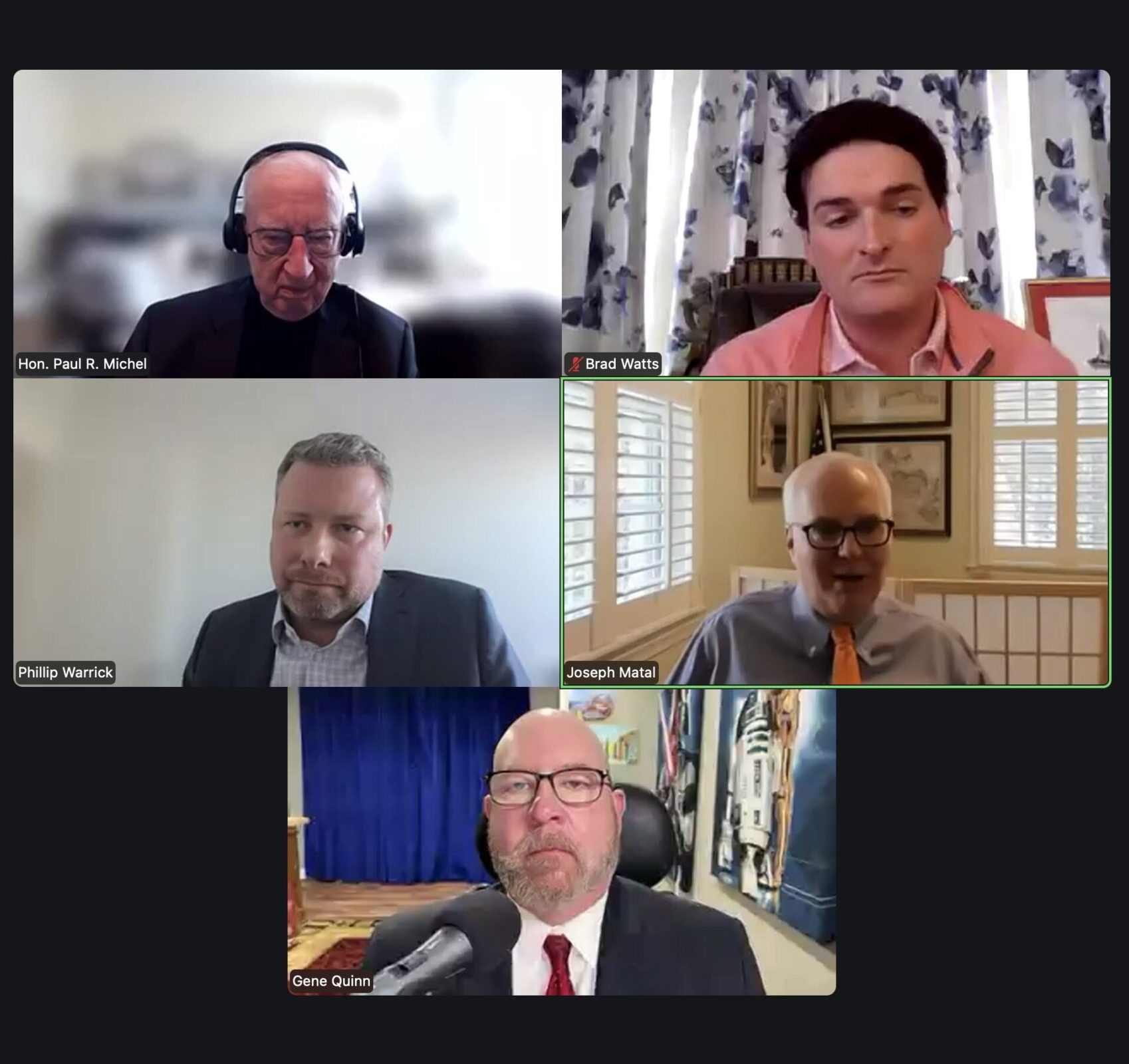 Panelists at IPWatchdog’s Virtual PTAB Masters Program 2026 last week had some cynical views on chances for pending patent reform bills, while on Friday other experts offered insights into developments at the U.S. Court of Appeals for the Federal Circuit (CAFC) with respect to review of Patent Trial and Appeal Board (PTAB) cases.
Speaking on Thursday’s panel, titled “Capitol Hill & PTAB Politics: Innovation Policy, Congressional Oversight and Mid-term Elections,” panelists first addressed the chances of bills such as the Patent Eligibility Restoration Act (PERA) and the Promoting and Respecting Economically Vital American Innovation Leadership (PREVAIL) Act advancing this year.
Retired CAFC Chief Judge Paul Michel said that the current paralysis with respect to patent reform bills is hardly new, with early iterations of bills to address PTAB issues, for instance, having been introduced as long ago as 2014. “There’s a complete split between the people who want stronger patents and people who want weaker patents,” Michel said. “The anti-patent forces are not even going to negotiate. If the dynamics change, I could see a version of PREVAIL passing but it’s very hard to see how the set of dynamics could change.”
Brad Watts, now Vice President, Innovation Policy at the U.S. Chamber of Commerce, and formerly Minority Chief Counsel of the Senate Judiciary Committee Subcommittee on Intellectual Property for Senator Thom Tillis, said that if there is no patent legislation passed in the next six months “we’re not likely to get it within the next five to six years.” This is due to a combination of factors, including key IP champions like Tillis and others leaving or potentially being voted out of office, redistricting, and Congress being preoccupied with other issues in the run-up to and aftermath of the midterm elections. “The natural reality of the political change we’re facing means we won’t get movement for a while after that,” Watts said.
Phil Warrick, Counsel at Irell & Manella and previously associate solicitor for the U.S. Patent and Trademark Office, which also included serving as the U.S. Patent and Trademark Office’s (USPTO’s) IP counsel detailee to U.S. Senator Chris Coons, said that all of this affects his clients on both sides in terms of the lack of predictability in the patent sphere. “It’s very frustrating when there’s so much change,” Warrick said.
While the USPTO has proposed a rules package that would address some issues that overlap with PREVAIL, Office actions like this are less permanent due to constantly shifting leadership. “Some clients like the proposed rules and some don’t, but at least that seems a little more permanent, and legislation would be better,” Warrick noted.
Then there is the prospect of congressional oversight hearings that might challenge some of the proposals in the current rules package. In the past, congress has not reacted favorably to changes they see as the Office overstepping. “I’d say there will be a lot of push-back, and I think it’s going to be a very rough year for the leadership of the USPTO.” Michel said.
Joe Matal of Clear IP, LLC who has served as both Acting Director and Acting Solicitor of the USPTO, said there is a House Judiciary Committee USPTO oversight hearing scheduled for March where the NPRM is likely to come up. “The last time there was a big rules package, they were pissed off,” Matal said. “You’ll start to hear more people ask, ‘why are we doing this’?”
Michel further noted that, even once the NPRM is finalized, whatever changes get implemented can always just be overruled or ignored by the CAFC. “It’s not a healthy regime from whatever angle you want to look at it,” he added.
Federal Circuit Navigates IPR Estoppel
On Friday, in a session titled “CAFC Review of the PTAB: Mandamus, Recent Rulings, Emerging Trends,” panelists delved further into the dynamic between the CAFC and the USPTO, including inter partes review (IPR) estoppel, mandamus petitions challenging discretionary denials, and the ongoing tension in subject matter eligibility jurisprudence.
The panel began with a close examination of the evolving landscape of IPR estoppel under 35 U.S.C. § 315(e). Tim Fink, a partner at O’Melveny & Myers and former Vice Chief Administrative Patent Judge, introduced the topic, noting that after about 12 years of IPR proceedings, the Federal Circuit is still clarifying how the statute should be interpreted. The conversation focused on the Ingenico Inc. v. IOENGINE case, where the court addressed whether a defendant was estopped from raising an on-sale bar defense in district court when the underlying device was also described in printed publications that could have been used in a prior IPR.
Peter Sullivan, a Partner at Foley Hoag and Co-Chair of PTAB Proceedings Practice Group, explained that the Federal Circuit affirmed the district court’s decision to allow the on-sale bar defense, reasoning that it is a different statutory ground than the grounds available in IPRs. Sullivan noted that the court’s language could be read broadly, potentially allowing a party to “have a redo at the district court level” with an on-sale bar defense even if a related anticipation argument failed in an IPR. However, Fink suggested this view might be “overstated,” arguing that the case “deals with a smaller population of cases” and is not “the Chicken Little situation.”
Richard Torczon, a Senior Counsel at Wilson Sonsini Goodrich & Rosati, added a critical observation, stating that much of the confusion stems from the statute’s label. “It’s a statutory bar, it’s not estoppel, so any ideas of equity fly out the window,” he said. “You have to cleave to what the words of the statute say.”
Torczon also discussed the precedential decision in JTEKT v. GKN, which handled estoppel in the reexamination context. He explained that the Board found that a party that requested a reexamination before a final written decision in a related IPR was not “maintaining” the proceeding post-decision, because reexaminations are “fire and forget” proceedings largely controlled by the U.S. Patent and Trademark Office (USPTO) once initiated.
Mandamus Petitions Test the Limits of Director’s Discretion
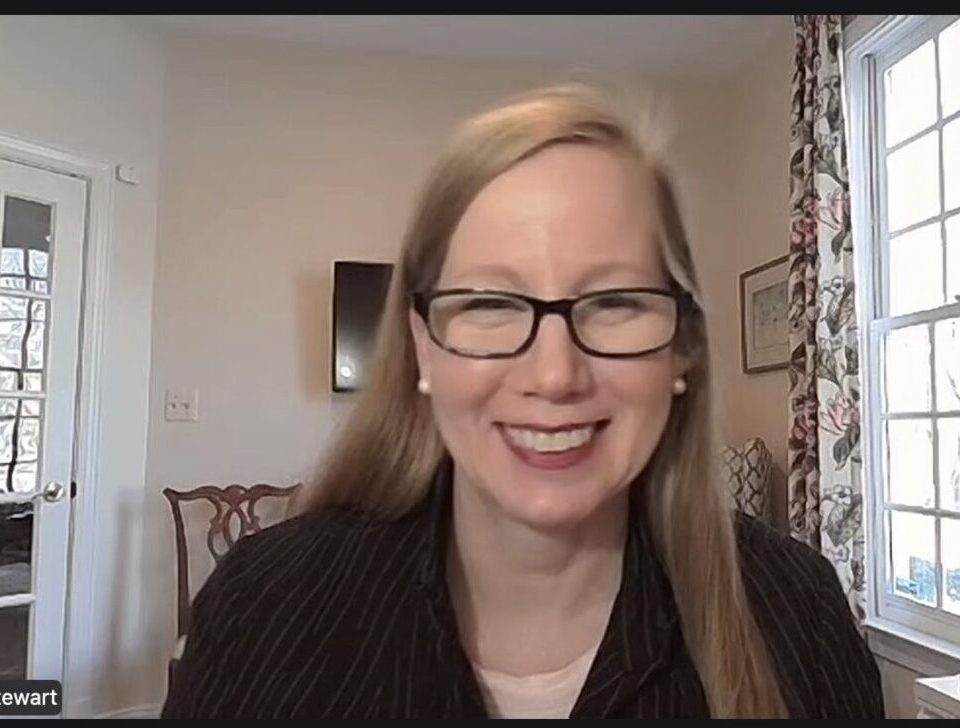
Fink then shifted the conversation to the numerous mandamus petitions filed in the past year challenging the USPTO’s discretionary denial practices. He provided context by recounting the withdrawal of former USPTO Director Kathi Vidal’s memo that provided safe harbors from Fintiv denials, the institution of a new bifurcated process, and the emergence of the “settled expectations” doctrine, which USPTO Deputy Director Coke Morgan Stewart addressed in her keynote on Thursday.
Angela Oliver, a Partner at Haynes Boone, detailed the arguments in the key Motorola Solutions Inc. case, in which the petitioner raised due-process and Administrative Procedure Act (APA) challenges against the retroactive application of new guidance. The Federal Circuit rejected these arguments, finding no constitutionally protected property interest in the institution of an IPR. Fink questioned the fairness of this holding, remarking that a petitioner pays a significant fee and has “potentially millions of dollars of liability on the line.” Torczon countered that the government’s position is supported by Supreme Court precedent, such as Cuozzo Speed Techs and Thryv Inc., which grant the USPTO Director broad and largely unreviewable discretion to institute IPRs.
The panel also explored the non-delegation doctrine argument raised in the In re Volkswagen petition. Oliver posited that if the Director’s discretion is truly unbounded, it represents an unconstitutional delegation of legislative power from Congress. Torczon called it a “jujitsu aspect” that flips the government’s argument on its head but also acknowledged that the doctrine “almost never works in the real world.”
When asked about challenging USPTO guidance through a district court action under the APA, Sullivan said the approach is viable. “We live in a post-Chevron world now where congressional discretion is something that, you know, Article Three court is going to look at more closely,” he explained. Sullivan further explained that “mandamus is a very difficult bar” and that “you have a different standard when you go in under the APA.” He also suggested that “there may be an argument that patent owners as a group would have standing” to bring such challenges.
The Widening Gap on Subject Matter Eligibility
The panel also addressed the persistent tension between the Federal Circuit and the USPTO on subject matter eligibility under Section 101. Torczon contrasted the Federal Circuit’s decision in Recentive Analytics, Inc. v. Fox Corp., which found claims directed to a method of machine learning ineligible at Alice step two, with the USPTO Director’s guidance and decisions that have found similar claims eligible.
Torczon noted that the specification in Recentive Analytics was likely “more worried about enablement when it was written” and admitted that the techniques used were in the prior art, which ultimately “came back to bite them in step two.”
This creates a difficult situation for the PTAB, as Torczon observed that the Board is caught “between a rock and a hard place” with the Director and the Federal Circuit on opposing sides. This conflict was highlighted in the non-precedential decision in Rideshare Displays, Inc. v. Lyft, Inc., where the Federal Circuit, reviewing under a deferential abuse of discretion standard, reversed the Board’s finding of eligibility for amended claims. He concluded that this disconnect is “really problematic” and could lead to district courts effectively reversing the presumption of validity for patents issued under the USPTO’s more permissive guidance.

![[Advertisement]](https://ipwatchdog.com/wp-content/uploads/2026/01/LexisNexis-Feb-3-2026-sidebar-700x500-1.jpg)
![[Advertisement]](https://ipwatchdog.com/wp-content/uploads/2026/02/Solve-Intelligence-Feb-5-2026-sidebar-700x500-1.jpg)




![[Advertisement]](https://ipwatchdog.com/wp-content/uploads/2021/12/WEBINAR-336-x-280-px.png)
![[Advertisement]](https://ipwatchdog.com/wp-content/uploads/2021/12/Ad-4-The-Invent-Patent-System™.png)



Join the Discussion
No comments yet. Add my comment.
Add Comment