
![[IPWatchdog Logo]](https://ipwatchdog.com/wp-content/themes/IPWatchdog%20-%202023/assets/images/temp/logo-small@2x.png)

 0
0 Bites (noun): more meaty news to sink your teeth into.
Barks (noun): peripheral noise worth your attention.
Want to have your doggie(s) featured in one of our future Barks & Bites Columns? Send your dogs photo(s) along with their name, breed (if you know it) and their age to [email protected]. All photos will be added to the IPWatchdog Dog Wall at IPWatchdog Studios and will be added to the queue of images we select from each week.

Sirena Rubinoff’s 9-year old Maltese, Zoey.
This week on Other Barks & Bites: Senators Maria Cantwell (D-WA) and Todd Young (R-IN) lead a bipartisan coalition of lawmakers introducing a bill to reauthorize the National Quantum Initiative; Circuit Judge Kim McLane Wardlaw pens a concurrence to the Ninth Circuit’s ruling affirming the dismissal of copyright claims against tattoo artist Kat Von D calling out fundamental flaws in the circuit’s intrinsic test for substantial similarity; District Judge Stein of the Southern District of New York affirms a magistrate judge’s order directing OpenAI to turn over 20 million de-identified ChatGPT chat logs in a copyright case brought by news publishers; the Ninth Circuit affirms a summary judgment ruling nixing antitrust claims filed against Apple after finding that software changes preventing third-party access to heart rate algorithm data was a lawful refusal to deal; the Eleventh Circuit says that YouTube’s lack of operating copyright functionalities on its site meant that it could not have actual or red flag knowledge of infringement; and General Motors is expected to take a $7.1 billion special charge on its fourth quarter earnings report due to a pullback in electric vehicle production and corporate restructuring in China.
Bites
Ninth Circuit Affirms SJ Absolving Apple from Antitrust Claims Over Heart Rate Data – On Thursday, January 8, the U.S. Court of Appeals for the Ninth Circuit issued a ruling in AliveCor, Inc. v. Apple Inc. affirming the Northern District of California’s summary judgment dismissal of antitrust claims filed by CA-based medical device company AliveCor under Section 2 of the Sherman Act for Apple’s changes to its Watch operating system which prevented third-party app developers to access data from the Watch’s heart rate algorithm. Affirming the ruling on slightly different grounds, the Ninth Circuit held that even if AliveCor was correct that Apple’s refusal to share heart rate data was distinct from its lawful improvements to Workout Mode, AliveCor did not argue any case law that would have established an exception to the general rule that there is no antitrust duty to deal.
Senators Cantwell, Young Co-Sponsor Reauthorization Bill on National Quantum Initiative – On Thursday, January 8, the National Quantum Initiative Reauthorization Act was introduced into the U.S. Senate co-sponsored by a bipartisan collection of lawmakers including Sens. Maria Cantwell (D-WA), Todd Young (R-IN), Dick Durbin (D-IL), Marsha Blackburn (R-TN) and several others. Noting the importance of supporting quantum technology development to secure U.S. national security and global economic competitiveness, the Senators aim to reauthorize the National Quantum Initiative and extend its operation for five years to 2034 while also directing the White House’s Office of Science & Technology Policy to develop an international quantum cooperation strategy with U.S. allies.
CAFC Dismisses Crocs Appeal of USITC’s No Section 337 Violation as Untimely – On Thursday, January 8, the U.S. Court of Appeals for the Federal Circuit issued a precedential ruling in Crocs, Inc. v. International Trade Commission dismissing Crocs’ appeal of the USITC’s finding of no Section 337 violation by Hobby Lobby Stores and several other respondents as being filed untimely under 19 U.S.C. § 1337(c), which allows persons adversely affected by USITC final determinations to appeal those rulings within 60 days, dismissing Crocs’ argument that the time bar started from November 14, 2023, which was the last day of the 60-day Presidential review period following the USITC’s final determination in September of that year. The CAFC also affirmed the USITC’s entry of a limited exclusion order (LEO) against defaulting respondents in the Section 337 action, finding no abuse of discretion by the USITC in large part because Section 337(g)(1) (19 U.S.C. § 1337(g)) directs the entry of LEOs for defaulting respondents.
Eleventh Circuit Issues Section 512(c) Safe Harbor Ruling for YouTube – On Wednesday, January 7, the U.S. Court of Appeals for the Eleventh Circuit issued a ruling in Athos Overseas Ltd. Corp. v. YouTube, Inc. affirming the Southern District of Florida’s decision that video aggregation site YouTube was covered by the safe harbor provision found at 17 U.S.C. § 512(c), relieving it of liability from Athos’ allegations that YouTube had red flag knowledge of infringement of its Mexican and Latin American films on its platform. The Eleventh Circuit found that Athos had largely misrepresented YouTube’s operation of Content ID and other functionalities for issuing takedown requests against infringing uploads, finding that YouTube does not operate those functionalities in a way that would give rise to actual or red flag knowledge.
Concurrence in Ninth Circuit’s Ruling for Kat Von D Calls Out Fundamental Flaws in Substantial Similarity Test – On Friday, January 2, the Ninth Circuit issued a ruling in Sedlik v. Von Drachenburg affirming a jury verdict from the Central District of California finding that six works allegedly infringing on Sedlik’s photo of jazz musician Miles Davis were either not substantially similar or a fair use of Sedlik’s photograph. Concurring in the opinion was Circuit Judge Kim McLane Wardlaw, who urged the Ninth Circuit to drop its own formulation of the intrinsic test for substantial similarity, which has never been blessed by the U.S. Supreme Court and arguably distorts copyright law because the test’s focus on the “total concept and feel” of the allegedly infringing works contradicts the Copyright Act, which prevents copyright protection for ideas or concepts.
Ninth Circuit Rules Top Gun: Maverick Did Not Infringe Copyright in 1983 “Top Guns” Article – On Friday, January 2, the Ninth Circuit issued a ruling in Yonay v. Paramount Pictures Corp. affirming the Central District of California’s summary judgment ruling for Paramount on copyright infringement claims brought by the heirs of Ehud Yonay, who penned the 1983 “Top Guns” article published by California Magazine and licensed by Paramount for the 1986 blockbuster Top Gun, the prequel to Maverick. The Ninth Circuit agreed that Maverick did not share substantial amounts of original expression from Yonay’s 1983 article under either Yonay’s arguments regarding independent elements and selection-and-arrangement, a ruling which also Yonay’s breach of contract argument for failing to credit Yonay in Maverick.
Barks
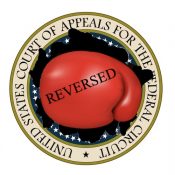
CAFC Affirms ITC Determination of No Infringement – On Friday, January 9, the U.S. Court of Appeals for the Federal Circuit (CAFC) affirmed an International Trade Commission (ITC) final determination finding no infringement of U.S. Patent Nos. 10,567,474 and 10,848,546 and no Section 337 violation. The investigation involved optical line termination (“OLT”) devices and optical network terminal (“ONT”) devices. The CAFC agreed with the ITC’s Office of Unfair Import Investigations (OUII) that Optimum Communication Systems, Inc. and its assignee, Mark Sandstrom, had failed to show any evidence that the Accused Products “utilize the specific versions of the standards on which OCS’s infringement allegations rely.”
EPO Announces Expansion of AI Pilot Program to All Oral Proceedings in Examination, Opposition – On Friday, January 9, the European Patent Office (EPO) announced that, during 2026, the agency would be expanding the use of its AI Pilot Program, which has applied AI to draft minutes for 150 oral proceedings at the EPO since the pilot was started last May, to all oral proceedings in examination and opposition, including those taking place before the Receiving Section and the Legal Division.
Nokia Settles Patent Litigation in All Jurisdictions Against Hisense Following License – On Thursday, January 8, Finnish telecom developer Nokia announced that it had entered into its first-ever multi-year patent license agreement with Chinese multinational Hisense, ending all patent-related litigation in all jurisdictions between the two parties and allowing Hisense to use Nokia’s video technologies in Hisense TVs in exchange for royalty payments to Nokia.
Copyright Office to Host Feb. 4 Webinar on Copyright Essentials for Filmmakers – On Thursday, January 8, the U.S. Copyright Office announced that it would host a webinar at 1 PM Eastern on Wednesday, February 4, to discuss basic copyright considerations for filmmakers, including producers, directors and screenwriters, as part of the agency’s Copyright for All educational series teaching copyright basics to creators in various disciplines.
EUIPO Announces Jury for 2026 DesignEuropa Awards – On Wednesday, January 7, the European Union Intellectual Property Office (EUIPO) announced that it had selected a jury of twelve design experts from eleven EU member states to evaluate candidates for the 2026 DesignEuropa Awards including Karin Žvokelj, Director of SIPO; Cristina Melander, President of The Bureau of European Design Associations; and former DesignEuropa jury chairpersons Päivi Tahkokallio (2021) and Isabelle Vérilhac (2023).
SEC Filing Announces Genentech-Roche License for Structure’s GLP-1 Agonists – On Monday, January 5, American pharmaceutical company Structure Therapeutics filed a Form 8-K with the U.S. Securities & Exchange Commission announcing that it had entered into a licensing agreement with major pharmaceutical companies Genentech and Roche to patents covering a class of oral GLP-1 receptor agonists that is different from aleniglipron including a one-time nonrefundable payment of $100 million as well as a low single-digit royalty rate on net sales.
Judge Stein Affirms Magistrate Judge Order Directing OpenAI to Produce 20M Chat Logs – On Friday, January 2, U.S. District Judge Sidney Stein of the Southern District of New York affirmed a December 5 order from U.S. Magistrate Judge Ona Wang granting a motion to compel discovery filed by several news publisher plaintiffs of about 20 million de-identified chat logs from ChatGPT stored by OpenAI after finding that Magistrate Judge Wang’s balancing of privacy interests was not inadequate.
This Week on Wall Street
EV Pullback, China Restructuring Leads GM to Announce $7.1B in Q4 Special Charges – On Thursday, January 8, news reports indicated that American automaker General Motors would be recording $7.1 billion in special charges when it reports fourth-quarter results in late January owing to $6 billion in costs from pulling back from electric vehicle (EV) production and $1.1 billion in costs due to restructuring efforts in China.
Quarterly Earnings – The following firms identified among the IPO’s Top 300 Patent Recipients for 2024 are announcing quarterly earnings next week (2023 rank in parentheses):
- Monday: None
- Tuesday: JPMorgan Chase & Co. (t-183rd)
- Wednesday: Bank of America Corp. (58th); Wells Fargo & Co. (81st)
- Thursday: Taiwan Semiconductor Manufacturing Co. (3rd)
- Friday: None
![[Advertisement]](https://ipwatchdog.com/wp-content/uploads/2026/03/IP-Copilot-Mar-17-2026-sidebar-700x500-1.jpg)
![[Advertisement]](https://ipwatchdog.com/wp-content/uploads/2026/02/LIVE-2026-sidebar-regular-price-new-700x500-1.jpg)


![[Advertisement]](https://ipwatchdog.com/wp-content/uploads/2021/12/WEBINAR-336-x-280-px.png)
![[Advertisement]](https://ipwatchdog.com/wp-content/uploads/2021/12/Ad-4-The-Invent-Patent-System™.png)




Join the Discussion
No comments yet. Add my comment.
Add Comment