


 0
0 “Only Congress can impose a new duty with such staggering consequences on internet services.” – Cox Opening Brief
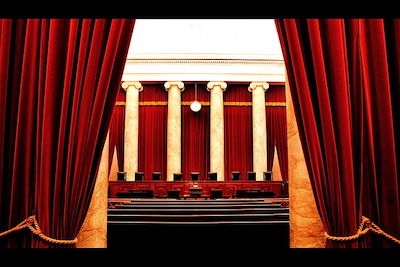 Cox Communications, Inc. filed its opening brief with the U.S. Supreme Court on August 29, arguing that the justices should reverse a U.S. Court of Appeals for the Fourth Circuit decision holding the internet service provider (ISP) liable for contributory copyright infringement based on the actions of its users. According to the brief, the case presents fundamental questions regarding whether an ISP is “materially contributing” to infringement by providing internet infrastructure and what constitutes “willful” conduct under the Copyright Act.
The case follows a Fourth Circuit decision that affirmed a jury’s verdict of contributory infringement against Cox for infringement committed by its subscribers. Cox argued in the brief that the Fourth Circuit’s holding “flouts a century of this Court’s case law” by imposing liability without proof of the requisite culpable conduct.
Contributory Liability Requires Affirmative Conduct
According to Cox, contributory liability is the copyright equivalent of aiding and abetting liability, requiring purposeful, culpable conduct. Merely continuing to provide internet service after receiving notice does not meet that legal threshold, the brief argued. It emphasized that an ISP “does not materially contribute to its users’ copyright infringement just by providing communications infrastructure to the general public.”
Cox relied on cases such as Metro-Goldwyn-Mayer Studios, Inc. v. Grokster, Ltd., and Twitter, Inc. v. Taamneh, noting that both decisions emphasized the need for an affirmative act taken with the intent of facilitating wrongdoing. In Grokster, the Court held that liability requires “clear expression or other affirmative steps” taken to foster infringement, whereas in the case of Twitter, the Court reiterated that inaction is insufficient, as an aider and abettor must have engaged in purposeful and culpable conduct.
Cox also cited Smith & Wesson Brands, Inc. v. Estados Unidos Mexicanos, where the Court reinforced that aiding and abetting requires active participation, not mere knowledge of misuse.
ISP Services as General Use Technology
The brief added that internet service is a general form of internet access that supports numerous lawful activities. Cox “provides a cable to the internet, and sometimes the basic electronic equipment (modem, router, etc.) to transmit between a user and an infinite number of other points,” Cox explained. The brief emphasized that it has no technical ability to control or monitor user behavior and cannot verify the accuracy of automated infringement notices.
Holding ISPs liable on this basis would mean they could be blamed for “literally everything bad that happens on the internet—bullying, harassment, libel, racketeering, unlawful gun sales … everything.” Cox explained that this would effectively deputize ISPs as “internet police” and force them to terminate service to entire households, institutions, or even regional ISPs based on unwarranted accusations.
Challenge to the Fourth Circuit’s Rule
The Fourth Circuit concluded that knowledge of customer infringement combined with continued service was sufficient to establish contributory liability. Cox argued that this conclusion conflicts with Supreme Court precedent in Sony Corp. of America v. Universal City Studios, Inc. and Grokster, which both rejected liability where technology providers distributed products with substantial lawful uses. In Sony, the Court made clear that merely supplying a product capable of non-infringing use could not establish liability.
The brief said that the ruling imposes a judicially created duty to terminate customers accused of infringement, something that the Court has never endorsed. Only Congress can impose a new duty with such staggering consequences on internet services,” the brief added.
Rejection of the Ninth Circuit’s ‘Simple Measures’ Test
Cox also addressed the Ninth Circuit’s “simple measures” test, under which a provider may be liable if it fails to take basic steps to prevent infringement. This test is incompatible with precedent, which makes clear that failure to act cannot establish liability. In Grokster, the Court expressly held that “failure to take affirmative steps to prevent infringement” does not create contributory liability. Even if the test were valid, Cox argued that it would prevail because it implemented a comprehensive anti-infringement program that successfully reduced infringement across its network.
Potential Consequences of Liability Expansion
The brief underscored the sweeping consequences of the Fourth Circuit’s rule, arguing that “grandma will be thrown off the internet because Junior illegally downloaded a few songs on a visit. An entire barracks or corporation will lose internet access because a few residents or visitors infringed. Even regional ISPs…using a single Cox connection…would be cut off.”
A Cox Communications spokesperson warned that the ruling “sets a dangerous precedent that, without Supreme Court intervention, could effectively turn internet providers into internet police and jeopardize access for millions of innocent users who rely on connectivity for nearly every aspect of daily life.”
Cox said that the only way to avoid liability under this approach would be to terminate services upon accusation, cutting off innocent users along with infringers. The company maintained that such a stance counters both common law principles and the Court’s statements in Twitter that “we generally do not think that internet or cell service providers incur culpability merely for providing their services to the public writ large.”
Willfulness and Damages
Cox also challenged the Fourth Circuit’s standard for willfulness. The Fourth Circuit erred by holding that knowledge of customer infringement alone was sufficient to establish willfulness. Cox said that willfulness requires proof that the defendant knew or recklessly disregarded that its own conduct was illegal. The company emphasized that Halo Electronics, Inc. v. Pulse Electronics, Inc. and similar cases make clear that enhanced damages require bad faith or knowing misconduct.
Cox noted that no court had recognized a duty to terminate internet service on this basis and that the United States continues to support its view.
The company ultimately urged the Supreme Court to reverse the Fourth Circuit’s decision, arguing that contributory infringement liability requires affirmative conduct aimed at furthering infringement. Upholding the lower court’s ruling, the brief warned, could compel ISPs nationwide to terminate service for millions based on automated accusations, an outcome only Congress has authority to mandate.
![[Advertisement]](https://ipwatchdog.com/wp-content/uploads/2026/10/IP-Copilot-Oct-13-2026-sidebar-700x500-1.jpg)
![[Advertisement]](https://ipwatchdog.com/wp-content/uploads/2026/10/Junior-Oct-15-2026-sidebar-700x500-1.jpg)
![[Advertisement]](https://ipwatchdog.com/wp-content/uploads/2026/10/BlackBox-IP-Oct-20-2026-sidebar-700x500-1.jpg)
![[Advertisement]](https://ipwatchdog.com/wp-content/uploads/2026/10/Questel-Oct-22-2026-sidebar-700x500-1.jpg)
![[Advertisement]](https://ipwatchdog.com/wp-content/uploads/2026/09/WE-BUY-PATENTS-SIM-IP-Ad-1-revised-on-Sep-28-2026-700x500-1.jpg)
![[Advertisement]](https://ipwatchdog.com/wp-content/uploads/2026/09/Life-Sciences-2026-sidebar-early-bird-date-corrected-700x500-1.jpg)
![[Advertisement]](https://ipwatchdog.com/wp-content/uploads/2024/09/Patent-Prosecution-Training-sidebar-700x500-2025-03-27.jpg)





![[Advertisement]](https://ipwatchdog.com/wp-content/uploads/2021/12/WEBINAR-336-x-280-px.png)
![[Advertisement]](https://ipwatchdog.com/wp-content/uploads/2021/12/Ad-4-The-Invent-Patent-System™.png)






Join the Discussion
No comments yet.