
![[IPWatchdog Logo]](https://ipwatchdog.com/wp-content/themes/IPWatchdog%20-%202023/assets/images/temp/logo-small@2x.png)

 0
0 “The Federal government should not allow AI-related Federal funding to be directed toward states with burdensome AI regulations that waste these funds.” – Trump AI Action plan
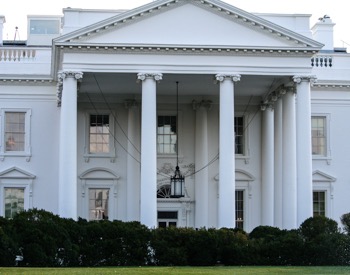 The Trump Administration on Wednesday released a plan for keeping the United States competitive in the race to number one with respect to artificial intelligence (AI) technologies. Titled “Winning the AI Race: America’s AI Action Plan,” the key policies would remove many of the restrictions on AI companies proposed by the Biden Administration’s AI plan, which was scrapped soon after Trump took office.
The plan consists of three main pillars: 1) Accelerate AI Innovation; 2) Build American AI Infrastructure; and 3) Lead in International AI Diplomacy and Security. Overall, the plan seeks to remove obstacles for AI companies by making it easier for them to operate. “To do that, we will continue to reject radical climate dogma and bureaucratic red tape, as the Administration has done since Inauguration Day,” says the plan’s introduction. “Simply put, we need to ‘Build, Baby, Build!’”
One notable provision of the plan would threaten state AI regulations that the federal government deems too burdensome. This approach was originally part of Trump’s “Big Beautiful Bill” that was signed into law on July 4, but it was scrapped at the last minute. The AI modernization provision in the original version of the bill would have banned state and local governments from regulating AI for 10 years if they wanted access to funds aimed at improving AI infrastructure.
The AI Action Plan released today suggests that “[t]he Federal government should not allow AI-related Federal funding to be directed toward states with burdensome AI regulations that waste these funds, but should also not interfere with states’ rights to pass prudent laws that are not unduly restrictive to innovation.”
Critics of the plan are charging that it is “written by Big Tech interests”. A coalition of 90+ tech, economic justice, consumer protection, labor, environmental justice, and civil society organizations launched the People’s AI Action Plan on Tuesday in anticipation of today’s announcement “to provide a direct counter-weight to President Trump’s industry-backed AI executive orders and agenda,” according to the AI Now Institute.
But others applauded the plan, calling it a necessary fix. “This forward-looking plan takes steps to accelerate innovation by fixing a regulatory landscape hobbled by conflicting state-level laws and activist-driven overreach, streamlining permitting for critical AI infrastructure, ensuring reliable and affordable energy for consumers and businesses, and advancing U.S. leadership in AI diplomacy,” wrote the U.S. Chamber of Commerce in a statement. “These proposed actions will position the United States to tackle our most pressing challenges and lead the global AI race by setting the gold standard for the development and deployment of responsible, transformative technologies.”
Also today, the AI Innovation Council was launched, describing itself as “an independent forum dedicated to promoting America First Artificial Intelligence.” The Council was founded by James Burnham, a former senior White House and Department of Justice official, the former General Counsel at the Department of Government Efficiency (DOGE), and a former clerk to Supreme Court Justice Neil Gorsuch.
Though the plan released today does not mention copyright, the Administration’s lenient stance could be seen as conflicting with Republican members of congress who are currently trying to rein in AI companies. Senator Josh Hawley (R-MO) recently held a hearing in which he blasted AI companies for their use of copyrighted works to train large language model (LLM) tools and this week he and Senator Richard Blumenthal (D-CT) introduced the AI Accountability and Personal Data Protection Act, which would chiefly bar artificial intelligence (AI) companies from using copyrighted works to train their generative AI tools without authors’ permission. Tech companies have argued that such laws would be too burdensome and hinder their ability to compete with China and other countries dominating the AI race.
![[Advertisement]](https://ipwatchdog.com/wp-content/uploads/2026/06/Patent-Bots-Jun-25-2026-sidebar-700x500-1.jpg)
![[Advertisement]](https://ipwatchdog.com/wp-content/uploads/2026/06/IP-Copilot-Jun-30-2026-sidebar-700x500-1.jpg)






![[Advertisement]](https://ipwatchdog.com/wp-content/uploads/2021/12/WEBINAR-336-x-280-px.png)
![[Advertisement]](https://ipwatchdog.com/wp-content/uploads/2021/12/Ad-4-The-Invent-Patent-System™.png)



Join the Discussion
No comments yet.