
![[IPWatchdog Logo]](https://ipwatchdog.com/wp-content/themes/IPWatchdog%20-%202023/assets/images/temp/logo-small@2x.png)

 12
12 “U.S. patent practitioners preparing to file in the EPO should be aware of several key considerations and potential pitfalls.”
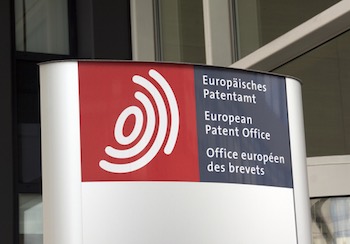 In today’s global economy, securing international patent protection is important for companies seeking to maintain a competitive edge. For U.S. patent practitioners, understanding the nuances of the European patent system is essential for successful patent prosecution abroad. This article aims to provide insights into the European patent system, emphasizing key differences between U.S. and European patent laws, and offering best practices for inventors and patent practitioners to help them file patent applications in the European Patent Office (EPO) effectively.
Overview of the European Patent System
Introduction to the European Patent Office (EPO)
The EPO serves as the executive arm of the European Patent Organisation, which currently comprises thirty-nine member countries and operates from its headquarters in Munich, with branches in The Hague, Berlin, and Vienna. The EPO is a central institution for patent protection in Europe, offering a streamlined process for filing and granting patents across its member states.
Explanation of the European Patent Convention (EPC)
The European Patent Convention (EPC), signed in 1973 and effective since 1977, is the treaty that forms the legal backbone of the EPO’s operations. The EPC sets out the substantive and procedural requirements for obtaining multinational patent protection in its member states, including patentability criteria, application procedures, and opposition mechanisms. When an EPO patent application under the EPC leads to a granted patent, the patent is validated in each designated member state, effectively transforming it into a collection of national patents.
Overview of the Unitary Patent System and the Unified Patent Court (UPC)
A Unitary Patent (UP) is a type of European Patent that offers uniform protection across participating EU member states (currently seventeen states are participating). To obtain a Unitary Patent, an applicant must first apply for and be granted a European Patent through the EPO’s centralized examination process. After the grant, the applicant can request unitary effect to extend the patent’s protection uniformly across all participating states, bypassing the need for individual national validations. This request simplifies the administrative process by eliminating the complex and costly procedures associated with validating a European Patent in multiple countries, such as translation requirements and national fees (Unitary Patent Guide; Applying for a Unitary Patent).
The Unified Patent Court (UPC) is a specialized court established to handle disputes related to Unitary Patents and EPO patents across the participating EU member states. It aims to provide a single, harmonized legal framework for patent litigation, thereby improving efficiency and consistency in the enforcement of patent rights. For patentees, this means addressing infringement issues through a single legal framework, making the enforcement of their rights more straightforward and effective. The benefits unitary patents affect are substantial: simplified administration, reduced costs, broader and uniform protection, and streamlined enforcement through the UPC. The Unitary Patent system thus offers significant advantages for innovators, facilitating comprehensive and efficient patent protection across Europe.
Key Differences Between U.S. and European Patent Law
Patentable Subject Matter
The range of patentable subject matter under the EPO and the U.S. Patent and Trademark Office (USPTO) exhibits notable differences. The EPO follows the EPC, which excludes certain categories from patentability, such as discoveries, scientific theories, mathematical methods, aesthetic creations, and schemes, rules, and methods for performing mental acts, playing games, or doing business. The EPC also excludes “inventions the commercial exploitation of which would be contrary to ‘ordre public’ or morality,” plant or animal varieties or essentially biologically process for the production of plants or animals (not applied to microbiological processes or products thereof), and methods for the treatment of the human or animal body by surgery or therapy and diagnostic methods practiced on the human or animal body (not applied to products, in particular substances or compositions, for use in such methods). In contrast, the USPTO applies a more inclusive approach, allowing patents for a wide array of inventions, including business methods and software-related inventions, provided they meet the requirements of novelty, non-obviousness, and utility, as well as subject matter eligibility requirements. Additionally, the EPO imposes stricter criteria for software patents, requiring that a computer program produce a “technical effect” beyond the normal physical interactions between the program and the computer. Conversely, the USPTO allows software patents if the software is tied to a particular machine or apparatus or transforms a particular article into a different state or thing, known as the “machine-or-transformation” test.
Availability of Applicant’s Public Disclosures and Any Previous EPO Application as Prior Art
In the USPTO, patent applicants can establish a priority date by publicly disclosing the claimed invention anywhere in the world, or by offering the claimed invention for sale in the U.S. However, after a priority date for a U.S. application is established by either of these ways, a U.S. applicant may benefit from the date of the public disclosure or the date of the sale in the US only if the U.S. applicant files a subsequent nonprovisional patent application at the USPTO within one year from the earliest of these dates. If the U.S. applicant fails to file nonprovisional application within a year from the earliest of these dates, then the public disclosure or U.S. sale of the invention becomes available as prior art.
The EPO takes a stricter stance towards patent applicants. Any public disclosure, including those made by the applicant before filing, is deemed part of the “state of the art.” This can invalidate an EPO application for lack of novelty by anticipating it or, when combined with other prior art, disqualify it for lacking an inventive step (roughly the EPO’s equivalent of the USPTO’s obviousness standard). Thus, EPO applicants should be sure to file their applications before any public disclosure.
Further, the EPO considers all published patent applications—including Patent Cooperation Treaty (PCT), EPO, and UPC applications—filed at the EPO before the priority date of the application under examination as part of the “state of the art” for determining whether the claimed invention involves novelty, even if the application is published on or after the priority date. However, for the inventive step analysis, the EPO does not regard these published applications as part of the “state of the art.” The EPO’s approach to treating applications as prior art for novelty purposes, allowing an unpublished EPO application to become part of the “state of the art” upon publication, differs from the USPTO’s practices.
Inventive Step vs. Non-Obviousness
The EPO’s inventive-step analysis and the USPTO’s non-obviousness analysis in the U.S. function similarly but differ in criteria and evaluation methods. In the U.S., the obviousness inquiry is structured around a framework established by the Supreme Court in Graham v. John Deere Co. This framework includes determining the scope and content of the prior art, ascertaining the differences between the claimed invention and the prior art, and resolving the level of understanding of a person of ordinary skill in the pertinent art before the effective filing date of the claimed invention.
Moreover, U.S. patent law incorporates the concept of “analogous art,” which confines the prior art used to demonstrate obviousness to references that are either in the same field of endeavor or reasonably pertinent to the problem addressed by the invention. This approach can be quite nuanced, as the determination of what constitutes analogous art can alter the outcome of an obviousness inquiry. The flexibility in defining the field of endeavor and the interpretation of similar purposes or problems means that USPTO examiners have considerable discretion in applying these criteria.
In contrast, the EPO employs the “Problem-Solution” approach to assess the inventive step. This method involves three steps: (1) determining the closest single prior art reference; (2) establishing the objective technical problem to be solved; and (3) considering whether or not the claimed invention, starting from the closest prior art and the objective technical problem, would have been obvious to a “skilled person in light of the state of the art”—defined similar to the USPTO’s corresponding “person of ordinary skill in the art”—in view of the state of the state of the art on the priority date, when combining prior art references with the closest prior art reference to solve the technical problem. The closest prior art in this context is the single most promising starting point for a problem-solution analysis, chosen based on its relevance to the technical problem at hand.
A critical aspect of the EPO’s inventive-step analysis is the formulation of the “objective technical problem,” which focuses on the technical effects achieved by the invention compared to the closest prior art. This problem must be defined, and the invention must demonstrably solve it. If the claimed invention does not provide a clear improvement over the prior art, the “objective technical problem” may be reformulated to reflect a more general goal, such as providing an alternative solution.
Additionally, the EPO’s “could/would” approach requires not just that the prior art could be combined to reach the invention, but that there would be a motivation for a skilled person to make such a combination with a reasonable expectation of success. The “could/would” approach is similar to the USPTO’s Teaching-Suggestion-Motivation (TSM) consideration, by which a USPTO examiner will determine whether there is a teaching, suggestion, or motivation in the prior art to combine prior art references to cover each element of a patent claim in question to render the claim obvious. While a TSM is one of many factors that can support a USPTO examiner’s finding of obviousness, a key difference between the USPTO and the EPO approaches is that the EPO requires its examiners to show that the “could/would” factor is met before finding that a claim does not meet the inventive step requirement.
Unity of Invention
Unity of invention is more strictly enforced in Europe. A European patent application must relate to a single general inventive concept, with multiple inventions requiring separate filings. This simplifies examination and enhances legal clarity but can increase costs and administrative efforts. The EPO applies a rigorous examination process to ensure that each application complies with this requirement, potentially leading to a “lack of unity” objection if the claims are found too diverse. In such cases, applicants may need to file divisional applications, each subject to additional fees and procedural steps.
U.S. practice is more lenient, allowing multiple related inventions within a single application; however, claims of a U.S application may be required to be restricted to one of two or more claimed inventions only if they are able to support separate patents and they are either independent or distinct. This leniency means that U.S. practitioners often include broader claims and multiple embodiments in one application. However, when filing at the EPO, U.S. applicants must be prepared to strategically divide their applications to comply with European standards. This involves defining the core inventive concept and ensuring that all claims are closely related to this concept.
Additionally, the EPO’s approach to unity can affect the patent prosecution timeline and costs. Applicants should know about the potential need for multiple filings and plan their budget and strategy accordingly. Understanding the EPO’s stricter unity requirement and preparing for possible divisional applications can help avoid delays and additional expenses during the examination process.
U.S. patent practitioners preparing to file in the EPO should be aware of several key considerations and potential pitfalls. First, understand that the range of patentable subject matter differs, with the EPO excluding certain categories that are patentable in the U.S. Second, public disclosures are treated stringently by the EPO; any disclosure before filing is considered part of the “state of the art,” making it essential to file early to avoid invalidation. Third, the EPO’s inventive-step analysis involves a “Problem-Solution” approach, requiring a clear objective technical problem and a motivation for combining prior art references, differing from the USPTO’s Teaching-Suggestion-Motivation (TSM) consideration. Fourth, the EPO enforces unity of invention more strictly, requiring separate filings for multiple inventions, which can increase costs and administrative efforts. By understanding these differences and planning strategically, applicants can enhance their chances of securing robust patent protection in Europe.
Correction: This article was updated on August 28, 2024, to correct an error with respect to the language of Section 54(3) of the EPC.
![[Advertisement]](https://ipwatchdog.com/wp-content/uploads/2025/12/ClearstoneIP-Jan-27-2026-sidebar-700x500-1.jpg)
![[Advertisement]](https://ipwatchdog.com/wp-content/uploads/2026/01/Virtual-PTAB-Masters-2026-sidebar-700x500-1.jpg)
![[Advertisement]](https://ipwatchdog.com/wp-content/uploads/2025/12/LIVE-2026-sidebar-early-bird-new-700x500-1.jpg)






![[Advertisement]](https://ipwatchdog.com/wp-content/uploads/2021/12/WEBINAR-336-x-280-px.png)
![[Advertisement]](https://ipwatchdog.com/wp-content/uploads/2021/12/Ad-4-The-Invent-Patent-System™.png)




Join the Discussion
12 comments so far.
Anon
September 6, 2024 04:55 pmTherein is the difference:
Here, state of the art is the actual state of the art to a legal fiction (NOT to a person of the public).
This is the conflation that you have between real persons and legal fictional persons.
Max Drei
September 3, 2024 04:07 amWhy “necessarily”? The EPC defines the state of the art as everything already “made available” to the public. in the moment when I file a patent application at the USPTO the day before you file your patent application there, I have not yet made its disclosure content “available” to the public.
Anon
September 2, 2024 12:09 pmBut that will not alight upon our own conversations, and how obviousness reflects State of the Art (which necessarily includes that ‘hidden’ prior art that the US captures).
He certainly will NOT be able to discuss your views on how the EPC somehow bends away from the actual legal fiction of Person Having Ordinary Skill towards a ‘type’ of what a real person may or may not be able to grasp.
Max Drei
August 31, 2024 06:50 amNo thanks, anon. Why not let’s ask Theodore Prekop to explain the difference. He might like the opportunity to set his record straight.
He surely knows more than I do about the law of obviousness in the USA. Further, we know how keen he is to tell you and all the other US practitioners, in language you understand, the fundamentals of what you need to know about obviousness under Art 56 of the EPC
Anon
August 30, 2024 08:15 amAn interesting aspect (traveling myself, so caveat that I have not fully engaged this article) from MaxDrei on prior art and the difference between Sovereigns – not on Anticipation (Novelty) but on Obviousness.
MaxDrei, do you want a first shot at explicating the differences?
Max Drei
August 28, 2024 06:03 pmEileen, sorry to be a pest but I would sincerely suggest that you strike the word “unique” from that problem sentence. Why? If only because not only the EPO but also the USPTO can use earlier filed but later published patent applications for novelty attacks, as soon as the earlier filed application gets published.
One only has to think for a moment what it means to grant patents only to the party that was “First to File”. If it emerges during prosecution that some other party filed earlier, do you nevertheless allow the later to file applicant through to issue? Surely not.
Taking comfort from this exchange, I can assure you that a great many experienced US patent attorneys have trouble getting their heads around Art 54(3) EPC (novelty but not obviousness), so this thread might bring real benefit to a good number of your readers too.
Eileen McDermott
August 28, 2024 03:53 pmThat’s fixed too – I was on a six-hour drive home from our conference today and just able to get to it; I’ve let the author know about the mistake.
Max Drei
August 28, 2024 08:24 amSo far, so good, Eileen. But you need to re-write the last sentence of that paragraph too.
By the way, the EPC is not “unique” amongst First to File patent law regimes, in excluding secret prior art from the obviousness analysis. Rather, it is US patent law that is “unique” in permitting it.
Eileen McDermott
August 28, 2024 08:19 amThanks to the commenters for noting the error in wording – I have updated the article.
Max Drei
August 28, 2024 05:46 amA word on “unity”. The EPO is not stricter than the USPTO, just different. In one single European patent you can have a slew of independent claims, apparatus, method, product, use of product, no limit. They just have to be all directed to different aspects of a single common inventive concept. OK?
Max Drei
August 28, 2024 05:30 amThe writer might like to revise the passage he has written that addresses “secret” prior art under Art 54(3) of the European Patent Convention. As I understand what he has written, he has it diametrically the wrong way round. It is available for novelty but NOT for obviousness attacks. See Art 56, EPC. Embarrassing, no?
Oh and by the way, that the EPC (Art 56) shuts out secret prior art from use as obviousness attacks is not unique to the EPO. Rather, it is the USA that is unique, in permitting, in a First to File regime, obviousness attacks based on such secret prior art.
I look forward to publication of a revised version of the post, because I think it helpful to US readers to receive an accurate and informative summary of the provisions of the European Patent Convention that address eligibility/patentability.
Stephen M. Hou
August 27, 2024 10:22 pmThis article states that intervening prior art (so-called “secret prior art”), namely PCT or EPO applications filed before the target application but published after, may be used for an inventive step rejection but not for novelty. However, in fact the reverse is true: Intervening prior art under Art. 54(3) of the European Patent Convention (EPC) can be used to judge novelty, but cannot be used to judge inventive step.