
![[IPWatchdog Logo]](https://ipwatchdog.com/wp-content/themes/IPWatchdog%20-%202023/assets/images/temp/logo-small@2x.png)
Posts Tagged: "Patent Bar Review"
Patent Bar Exam Refresh: PTO Now Testing New Materials
We also know from past history that when the Patent Office first starts to test new material they disproportionately weight it in the database of questions so you are likely to be heavily tested. We anticipate that the newly testable material will generate between 15 to 20 questions on the Patent Bar Exam starting immediately, or nearly immediately. This newly testable information comes on the heels of AIA phase 1 and KSR, Bilski and 112 Guidelines that all started to become tested in April 2011. We anticipate that the newly testable material that has come online since April 2011 will make up approximately one-third of your exam. That is 3o-35 questions.
USPTO Changes Format and Links to MPEP
Not only can’t you find the relevant MPEP sections you are looking for through a Google search, but you also cannot find the relevant statutes or CFR sections using Google. For example, I typed in “35 usc 304” into Google. The first link was to the USPTO.gov website, like it almost always is. Unfortunately, however, upon clicking the link I was taken to another “Page Not Found” screen. Ultimately you can get to it by clicking on the new MPEP link provided, scrolling down to the L Appendix, clicking on the L Appendix link and then scrolling down to Section 304. Not a lot more time, but hardly as easy to find information as it was just a few days ago.
Disjointed Patent Claims and the Search for Prior Art
U.S. Patent No. 6,757,068, which relates to what is described as a sourceless tracking system. See AOP Patent Study DEV-1754. The claims of this patent are extremely broad and suffer from defects not associated with prior art. A patent like the ‘068 patent is cat-nip to the anti-patent community and an all too familiar illustration that the Patent Office makes mistakes. Claim 1 is an example of something that would be deemed inappropriate on the patent bar examination because it is horribly disjointed. It should have received a rejection under 35 U.S.C. 112, 2d paragraph.
Legal Jobs: Patent Job Market Shows Signs of Improvement
Alissa J. Holterman is the Assistant Director of Career Services at Loyola University Chicago School of Law, has been the primary administrator of for the last 5 years. Holterman says there are objective signs of improvement in the patent job market for new and recent law school graduates, and real reason for optimism. “This year there will be 123 employers are coming to PLIP, and they’ve asked for a total of 232 day-long interview schedules. That’s almost a 20% increase in employers since last year, and more than a 20% increase in interviews, ” says Holterman. “That’s more employers and interviews than any year since 2008.”
Becoming Patent Bar Eligible: What Courses are Acceptable?
When determining whether to accept a particular course one particularly important consideration is whether the course has been accepted for college-level credit for a Category A degree at an accredited U.S. college or university. We know that the USPTO will accept courses taken at Community Colleges if those courses would count toward a degree listed on Category A. Indeed, some who are short credits will take them at Community Colleges and then be admitted to take the exam. The same rationale seems to apply when OED is evaluating online courses. So before you take a class at a Community College or online make sure that the credits for the course could be used by someone pursuing a Category A degree. If the answer is that the course would count toward the credit requirements for a Category A degree you should be fine.
Buyer Beware! Counterfeit Patent Bar Review Courses on eBay
The posting says that the purchaser will acquire a version of the course that was first purchased in March 2012 and includes 36 audio CDs, 8 video DVDs and Patware 9.0. That is simply not possible because by March 2012 the courses being sold did not include any of this. John White and I updated the course at the beginning of 2011 to take into account the then newly tested material, which included KSR rationales and guidelines, Bilski guidelines and the 112 guidelines. At this time in the beginning of 2011 audio CDs and DVDs ceased to be provided, and Patware was no longer available in disk form. The last version of Patware on disk was indeed Patware 9.0, but that did not include any questions on KSR, Bilski or the 112 guidelines. Simply stated, a course that included audio CDs, DVDs and Patware on disk had to have been purchased at the very beginning of 2011 or earlier. The claims in this ad are simply false.
PTO Updates Patent Bar Exam to Test AIA & Appeal Rules
Beginning January 31, 2012, the United States Patent and Trademark Office will update the content of the patent registration examination to cover two new rules issued September 26, 2011 that relate to the Leahy-Smith America Invents Act. These new rules permit prioritized examination of patent applications (Track I) and revise the standard for granting inter partes reexamination requests. Additionally, the patent registration examination will also include questions concerning the November 22, 2011 rules governing practice in ex parte appeals before the Board of Patent Appeals and Interferences.
A Law Students Guide to Finding a Patent Law Job
On the other hand, my presentation to the law students at Duquesne and Pitt were remarkably predictable. Whenever I travel to speak at law schools I inevitably get asked questions about what students should be doing to (1) set themselves up in a position to be hired; and (2) how to ultimately land a job. primarily about how to go about finding a job in this, or any other economy. With that in mind I thought it might make sense to do a primer on steps that can be taken in order to find a legal job.
Patent Reform and Patent Bar Review, What You Should Know
Don’t forget that as of the end of the 2011 fiscal year on September 30, 2011, the PTO has a “backfile” of nearly 679,000 patent applications that have not yet been given even a first Office Action. It will take at least 3 to 4 years, likely longer, to resolve all the patent applications currently pending. If you factor in appeals from those cases, continuation applications and requests for continued examination and we are realistically talking about 7 to 8 years for this chunk of applications to work their way through the system, with the inevitable outlier patent application that will take 10+ years thanks to multiple delaying episodes (i.e., chaining RCEs and an appeal together, for example). On top of this, we will still be filing patent applications subject to the old, first to invent system through March 15, 2013. This, as well as reexamination timeline realities (i.e., statute of limitations survives 6 years past a patent falling into the public domain), means that the “old law” will remain relevant to life at the Patent Office for quite some time.
Patent Bar Exam Craziness, Do You Know How Long a Month is?
I’m not suggesting that those who write the patent bar examination questions are testing irrelevant stuff, but what types of questions would you ask if you were writing an exam question that tried to determine whether someone who wanted to be admitted to the club understood the rules well enough to become a member? You would likely ask questions about organization rules and procedures that fell into one of several categories: (1) those that are commonly misunderstood or unknown by current members; (2) those that are of extraordinary importance due to the magnitude of harm that could accompany a misunderstanding or mistake; or (3) those things that are particularly weird. So it isn’t at all surprising that counter-intuitive rules that are commonly misunderstood or misapplied make up a statistically relevant portion of the exam.
5 More Tips for Acing the Patent Bar Exam
The United States Patent Office is now offering the patent bar examination in electronic format, and that means that the way you study for the exam needs to change. In the past test takers were permitted to bring in with them any materials they wanted except for old exam questions. The ability to bring practically anything into the examination lead to people tabbing the Manual of Patent Examining Procedures, creating detailed and easy to use outlines, and bringing easy to follow flow charts and tables. Gone are these days, but when you do take the examination you will be provided with an electronic copy of the Manual of Patent Examining Procedures, so at least a part of your study needs to be centered around familiarizing yourself with search techniques and strategies that have a chance of success come exam day.
5 Tips for Passing the Patent Bar Exam
The Patent Bar Examination is a daunting exam, and one that has gotten a bit more difficult recently as a result of newly testable material coming online. The exam has never been easy, and likely never will be easy, but promises to get even harder in the likely event that patent reform (i.e., the America Invents Act) passes. The America Invents Act will dramatically change the fundamental underpinnings of patentability, as well as add a variety of new processes and procedures. The amount you will need to know once the America Invents Act gets tested will go up dramatically, so if you have been thinking about taking the exam it is probably a good idea to take it sooner rather than later.
The Top 10 Things New Patent Practitioners Should Know
Wherever we go we always get a number of individuals who are currently in law school, have recently graduated law school or are engineers or scientists looking to change careers. During one of the breaks between sessions on day 1 here in San Francisco one of the students taking the course asked me a question that we receive quite a lot, which is this: once I pass the exam how do I learn to actually do this? Like so many things in life experience is the best teacher, but increasingly finding a job without some experience can be extremely difficult.
New Look Patent Bar Examination Continues to Evolve
What I can report is that the USPTO did, in fact, meet the April 12, 2011, deadline and the newly testable material is being tested as advertised. The USPTO is also continuing to update the exam through a rigorous process of writing, vetting, and testing new questions. In addition to covering long-standing areas of patent practice, questions are being added to the database that are directed to new and emerging trends in the law and evolving rules of procedure. The subject matter covered by the exam as a whole will continue to test rules, laws and regulations that have been in existence for years, but will also increasingly include questions testing the changes.
Summer 2011: The PLI Approach to the New Patent Bar Exam
It has always been my belief that the PLI course is the best, and now I think there is absolutely no doubt. Yes, there are some competitors out there but how many other courses have two faculty members that are practicing patent attorneys and law professors? John and I both have a private practice and we have made legal education an important part of our careers. We are even patent attorneys, which might sound like an odd thing to tout but there are actually courses out there that don’t have patent attorneys developing the course and creating materials. The patent bar exam is hard enough as it is, the rules of patent practice are almost ridiculously archaic and you think you can take a patent bar course taught by someone who hasn’t ever even passed the exam let alone represented anyone in real life? Yeah, right. Think again.
Varsity Sponsors
![[Advertisement]](https://ipwatchdog.com/wp-content/uploads/2026/02/Junior-AI-Feb-10-2026-sidebar-CLE-700x500-1.jpg)
![[Advertisement]](https://ipwatchdog.com/wp-content/uploads/2026/02/Anaqua-Feb-12-2026-sidebar-700x500-1.jpg)
![[Advertisement]](https://ipwatchdog.com/wp-content/uploads/2025/12/LIVE-2026-sidebar-regular-price-700x500-1.jpg)

Latest IPW Posts
Federal Circuit Finds In-Store Product Locator Patents Ineligible as Abstract
February 9, 2026 @ 09:15 amPatent Portfolio Economics: Balancing Quality, Cost and Market Coverage
February 8, 2026 @ 01:00 pmCAFC Agrees Content Sharing Patents are Ineligible in Win for Walmart
February 5, 2026 @ 01:32 pmFederal Circuit Affirms Noninfringement Finding in Ladder Patent Dispute
February 5, 2026 @ 12:15 pm
Latest Podcasts
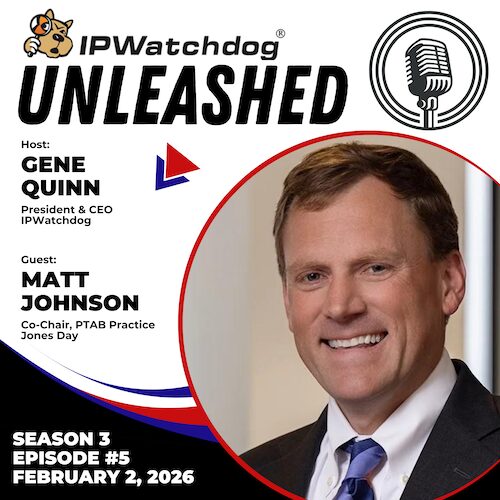

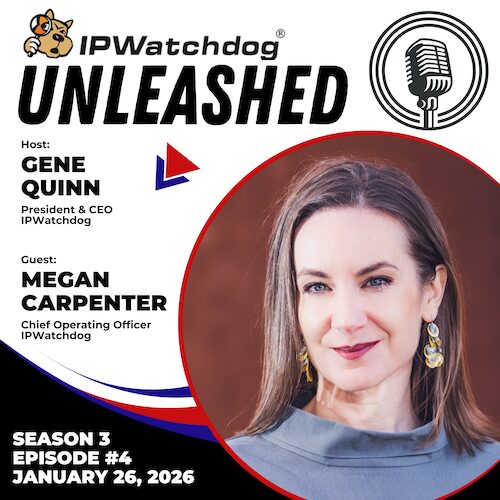
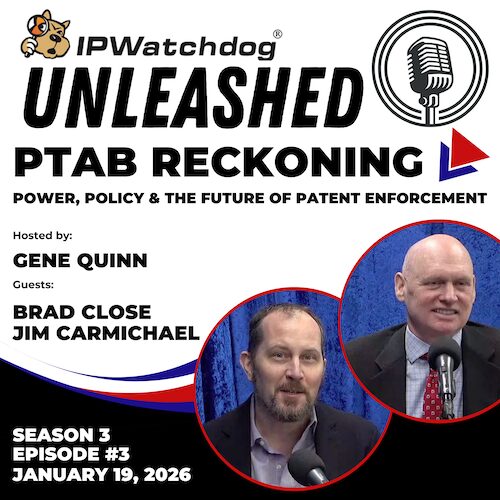


IPWatchdog Events
CLE Webinar: How to Prompt AI – A Hands-On Workshop for Patent Prep and Pros
February 10 @ 12:00 pm - 1:00 pm ESTWebinar: IP at Risk – Avoiding Costly Compliance Mistakes in Export Controls
February 12 @ 12:00 pm - 1:00 pm ESTWebinar: Optimizing the Chemistry Drafting Process – Where AI Actually Helps
February 17 @ 12:00 pm - 1:00 pm ESTWebinar: Resurrecting Antibody Genus Protection – Allowed Claims Through CDR-Scanning
March 5 @ 12:00 pm - 1:00 pm ESTIPWatchdog LIVE 2026 at the Renaissance Arlington Capital View
March 22 @ 1:00 pm - March 24 @ 7:00 pm EDT
Industry Events
From IPWatchdog
![[Advertisement]](https://ipwatchdog.com/wp-content/uploads/2021/12/WEBINAR-336-x-280-px.png)
![[Advertisement]](https://ipwatchdog.com/wp-content/uploads/2021/12/Ad-4-The-Invent-Patent-System™.png)