
![[IPWatchdog Logo]](https://ipwatchdog.com/wp-content/themes/IPWatchdog%20-%202023/assets/images/temp/logo-small@2x.png)
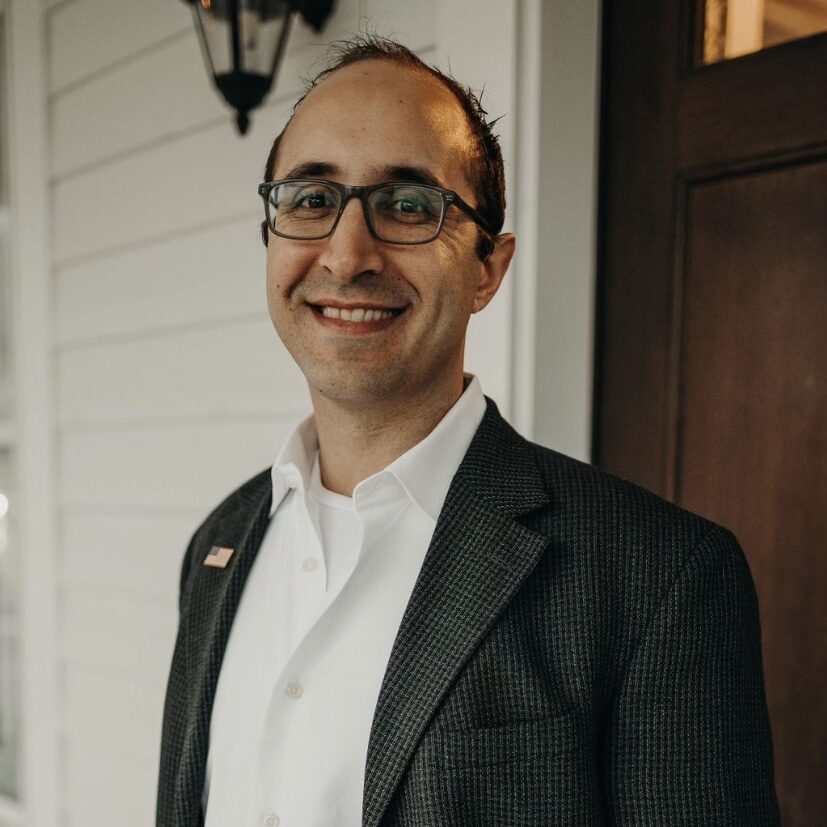
John Powers
Founder
The Powers IP Law Firm
John Powers is the Founder of The Powers IP Law Firm. As an attorney, the majority of John’s time has been devoted to patent procurement, or, getting patents for clients. In his time, he has drafted from scratch around 400 patent applications, and has prosecuted thousands more. Those applications have been in a wide variety of technologies (e.g., mechanical, electrical, biomedical, nuclear, and software), and in the vast majority of cases have secured quality protection, both in the United States and abroad. John has learned a lot about Intellectual Property Law over the years, particularly Patent Law, and is more fired up to protect innovators today than ever been before.
For the entirety of his thirteen-year career since graduating from law school, 100% of his working time has been in the field of Intellectual Property Law. The first eight years were spent at Eckert Seamans Cherin & Mellott, LLC and The Webb Law Firm, both firms of which are in Pittsburgh, PA. The last five years have been at the firm he founded, The Powers IP Law Firm.
John attended law school at and earned a Juris Doctor degree from the University of Toledo, College of Law. He is licensed to practice law in Ohio, Pennsylvania, and before the U.S. Patent and Trademark Office (e.g., he can represent inventors all over the world before the U.S. Patent & Trademark Office). Before law school, John earned an undergraduate degree in Mechanical Engineering, cum laude, from the University of Michigan, Ann Arbor. He was born and raised in Cleveland, OH, and excelled in math and science as a youth. While this led him to pursue an engineering degree at Michigan, toward the end of his undergraduate studies, his passions began to shift from engineering to protection. For example, during laboratory experiments as an undergraduate, he realized that though this is a great world, if inventors are unprotected, others will seize inventions from them without permission and without hesitation; and ordinary business competition will not provide a remedy. Shortly thereafter, he set his course for law school, and made it a mission to protect innovators.

Recent Articles by John Powers
We Need a More Permanent Solution to Inter Partes Review Overreach
U.S. Patent and Trademark Office (USPTO) Director John Squires stated in his Senate confirmation hearing last year that “with born strong patents and robust quality marks we can reclaim America’s primacy, revitalize industry and growth, proudly export our culture, boost national security and improve our lives.” If the goal is to have “born strong patents”, we must be honest about what is born with patents and what is not. For instance, a credible mark of novelty is born with every patent—that much is clear. However, novelty is not just technical newness—it is also market impression. If novelty were only technical newness, people would own patents without their technology ever being used in the market. There would be no point to the patent system. This means that the rest of patents—their assertion power, damages recovery power, term limitation, claim bundling provision, inter partes review (IPR) fee requirement, and more—must also be part of the birth. This is how to create born strong patents.
Opinion: Keep Going Squires USPTO: Inventors Want a Streamlined Claim Set Pilot Program 2.0
Under today’s patent system, inventors are only allowed to procure one type of patent—the standard utility patent. Despite the amount of power in the standard utility patent, this restriction oppresses the American inventor. Large numbers of people cannot afford the costs to procure and enforce the standard utility patent, and for many of the ones who can, it often does not pack enough firepower to allow them to fully recover. Because each invention is different, each instance of infringement is different. A single $20,000-$30,000 utility patent is not even close to being capable of addressing every one of those instances. The solution is very simple—different types of patents must be created.
Why the DOGE Should Take Aim at the USPTO
Donald Trump’s appointment of Elon Musk and Vivek Ramaswamy to head the new Department of Government Efficiency (DOGE) has given hope to many people who are impacted by inefficiency in government. One such group is American inventors, who seem to have been forgotten this election cycle in the midst of all the talk concerning those impacted by the Departments of Education and Labor.
To Make the U.S. Patent System More Efficient, Let’s Obviate Obviousness
Recovering money from users of technology requires movement on the part of inventors of technology. For example, receiving compensation from those who use patented designs without permission often requires patent owners (e.g., inventors) to send cease and desist letters, file complaints in federal district court, and at times endure patent litigation to its completion. All of these movements require the inventor to possess a patent. In this manner, one way to view the patent is as a vehicle in commerce.
A Follow Up on ‘Patent Durability’: A Way to Ensure Just Compensation for Inventors
Inventions are secrets, at least until they are divulged to others. It would be lovely if an inventor could simply tell their secret to the world and receive just compensation in exchange. However, human nature tells us that people are reluctant to pay for something they are using unless someone makes them pay for it. When an inventor files a patent application, the secret of their invention is instantly shared with the world via public disclosure. As a result of the speed with which the inventor’s secret is shared with the world, receiving just compensation from users of that secret is particularly difficult.