
![[IPWatchdog Logo]](https://ipwatchdog.com/wp-content/themes/IPWatchdog%20-%202023/assets/images/temp/logo-small@2x.png)

 0
0 “The Board sustained UNIP’s priority claim based on its ownership of common law rights in the mark MORE THAN AN ATHLETE, which independently predate Game Plan’s filing date.” – CAFC
 The U.S. Court of Appeals for the Federal Circuit (CAFC) on Wednesday issued a precedential decision affirming the Trademark Trial and Appeal Board’s (TTAB’s) cancellation of the registration for the mark I AM MORE THAN AN ATHLETE. GP GAME PLAN. The CAFC also dismissed Game Plan, Inc.’s opposition to Uninterrupted IP, LLC’s (UNIP’s) six intent-to-use applications for marks containing I AM MORE THAN AN ATHLETE and MORE THAN AN ATHLETE. The opinion was authored by Judge Reyna.
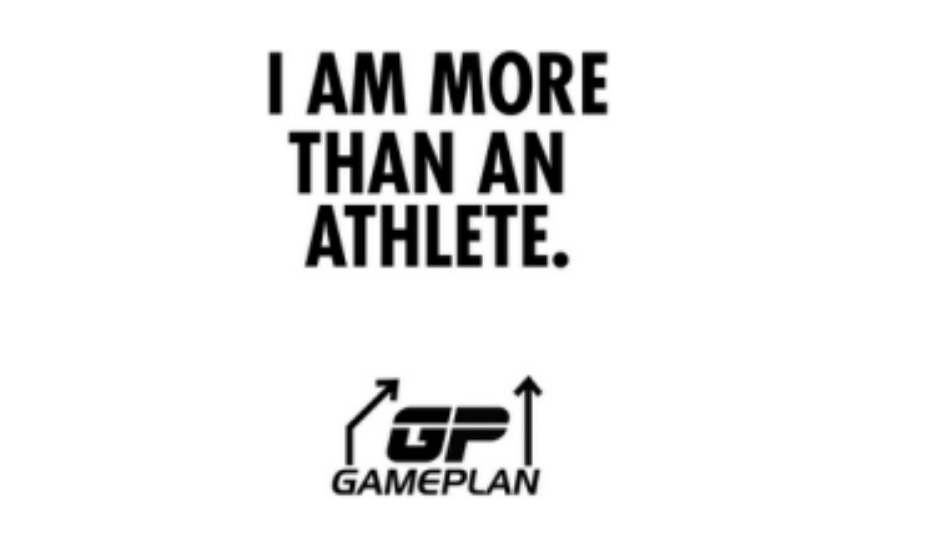
Game Plan, a nonprofit that assists student-athletes in underserved communities., applied to register the pictured mark (left) in 2016 and it was registered in 2018. It covers “[c]haritable fundraising services by means of selling t-shirts to raise funds for educational and entertainment programs.”
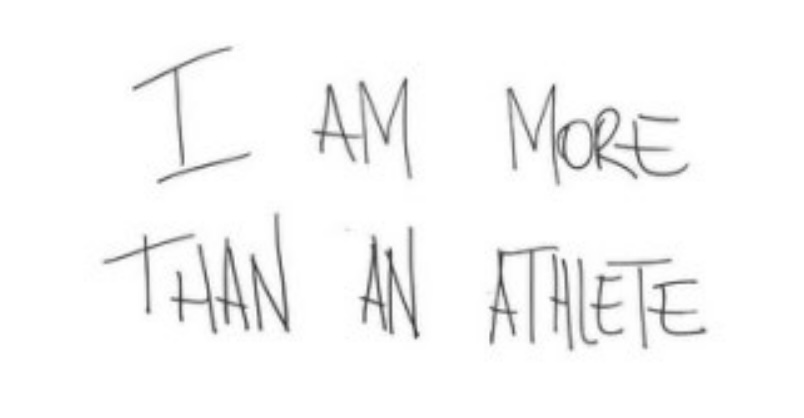
UNIP is a platform where athletes can share personal stories and otherwise express themselves. UNIP filed six intent-to-use applications for marks incorporating the phrases I AM MORE THAN AN ATHLETE and MORE THAN AN ATHLETE as shown (right). The marks cover clothing and entertainment services such as “a website featuring non-downloadable videos, podcasts, films and social media posts in the field of sports.”
Game Plan opposed the marks in November 2018 asserting likelihood of confusion with its own marks. UNIP denied any likelihood of confusion and counterclaimed to cancel Game Plan’s registrations because, if there was likelihood of confusion, UNIP said it had priority based on common law rights, which it acquired via an asset purchase agreement it entered into with DeAndra Alex and her company, More Than an Athlete, Inc., after Game Plan filed the opposition. That agreement (the 2019 Assignment) transferred “all of the goodwill of the business related to” the marks to UNIP.
The TTAB ultimately dismissed Game Plan’s opposition because Game Plan had submitted no evidence at trial and therefore “could not maintain its Section 2(d) claims based on its common law rights alone, noting ‘[i]t is impossible to prevail based on a claim of common law rights in a Board proceeding without evidence or an admission in the record establishing prior use of the mark.’”
The Board also rejected UNIP’s arguments that the assignment of MORE THAN AN ATHLETE to UNIP was invalid because the rights were assigned during the litigation and ultimately said “the assignment of common law rights in connection with clothing was valid and sufficient to sustain [UNIP’s] counterclaim,” thus cancelling Game Plan’s registration.
On appeal, Game Plan first argued that the TTAB erred in determining that UNIP had priority, and second, it argued that the Board failed to review evidence that the 2019 Assignment is invalid.
Game Plan said that the 2019 Assignment was invalid under 15 U.S.C. § 1060(a)(1) because 1) it was an “assignment in gross”; and 2) that Section 1060(a)(1) bars the 2019 Assignment.
As to the first argument, the CAFC rejected Game Plan’s contention that the 2019 Assignment was an assignment in gross, which is “a sale of a trade name or mark divorced from its goodwill.” The CAFC found that there was substantial evidence to support the Board’s finding that the 2019 Assignment was not an assignment in gross, including that it “expressly defined the purchased assets as trademarks, among other intellectual property, ‘together with the goodwill of the business associated therewith.’” There was also evidence to support the TTAB’s finding that “UNIP’s use of the mark was substantially similar to Ms. Alex’s use, and UNIP and MTAA shared a common purpose and audience.”
With respect to the argument that Section 1060(a)(1) bars the 2019 Assignment, the CAFC explained that this was “based on a fundamental misunderstanding” of the statute. Section 1060(a)(1) “restricts the assignment of intent-to-use applications before an amendment to allege use or a verified statement of use is filed,” but here, “UNIP did not assign its pending intent-to-use applications,” wrote the CAFC. “Rather, it received an assignment of preexisting common law rights to an already-used mark.”
Game Plan also said that because the 2019 Assignment occurred after the Notice of Opposition was filed, it was barred under 37 C.F.R. § 2.133(a), which restricts amendments to applications subject to oppositions and registrations subject to cancellation. Game Plan attempted to argue that the Assignment constituted a substantive amendment to UNIP’s intent-to-use applications but the CAFC said Game Plan “cites no authority supporting its claim that the acquisition of common law trademark rights constitutes an ‘amend[ment] in substance’ within the meaning of § 2.133(a),” and that, in any case, the Board did not base its priority determination on the intent-to-use applications. “Rather, the Board sustained UNIP’s priority claim based on its ownership of common law rights in the mark MORE THAN AN ATHLETE, which independently predate Game Plan’s filing date,” said the opinion.
Finally, the CAFC rejected Game Plan’s arguments that the TTAB failed to review evidence supporting its claim that the 2019 Assignment constituted an assignment in gross, explaining that the Board’s finding that Game plan failed to properly introduce any relevant evidence during the trial period was not an abuse of discretion. “In sum, Game Plan was advised of the proper procedures for submitting evidence but failed to follow them, and the Board did not err by excluding evidence not submitted during the designated trial period,” wrote the CAFC. The Board’s decision was therefore affirmed.
![[Advertisement]](https://ipwatchdog.com/wp-content/uploads/2025/12/Harfang-IP-Dec-11-2025-sidebar-700x500-1.jpg)
![[Advertisement]](https://ipwatchdog.com/wp-content/uploads/2025/11/Juristat-Ad-Firm-Cost-Management-Nov-18-Dec-31-2025-Animated-Varsity-Ad-final.gif)
![[Advertisement]](https://ipwatchdog.com/wp-content/uploads/2025/11/PTAB-Masters-2026-sidebar-early-bird-700x500-1.jpg)
![[Advertisement]](https://ipwatchdog.com/wp-content/uploads/2025/12/LIVE-2026-sidebar-early-bird-new-700x500-1.jpg)







![[Advertisement]](https://ipwatchdog.com/wp-content/uploads/2021/12/WEBINAR-336-x-280-px.png)
![[Advertisement]](https://ipwatchdog.com/wp-content/uploads/2021/12/Ad-4-The-Invent-Patent-System™.png)




Join the Discussion
No comments yet. Add my comment.
Add Comment