
![[IPWatchdog Logo]](https://ipwatchdog.com/wp-content/themes/IPWatchdog%20-%202023/assets/images/temp/logo-small@2x.png)

 0
0 “MiniMax’s bootlegging business model and defiance of U.S. copyright law…is a broader threat to the American motion picture industry, which has…contributed more than $260 billion to the nation’s economy.” – Disney complaint
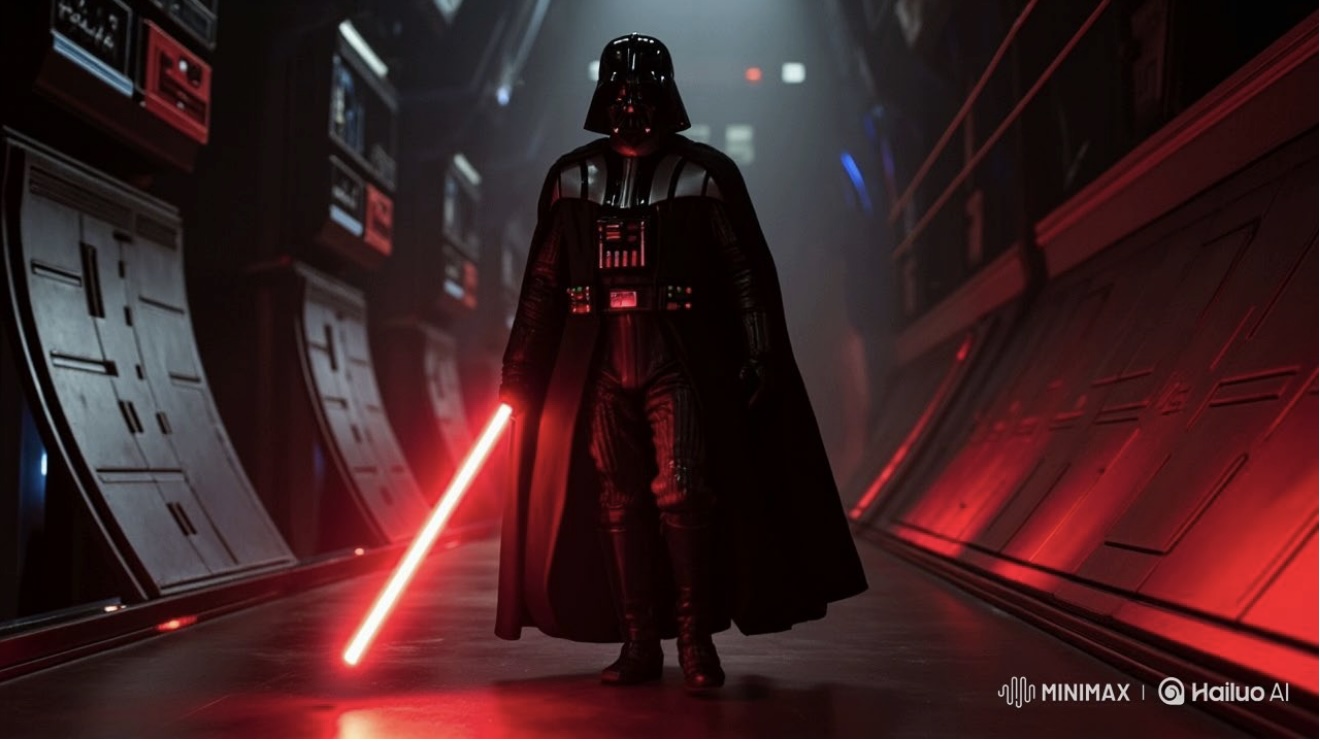
image from complaint
Disney Enterprises and 11 other plaintiffs filed a complaint last week against Chinese artificial intelligence (AI) image and video generator MiniMax in the U.S. District Court for the Central District of California. The complaint alleged direct and secondary copyright infringement by operating a commercial AI service that “pirates and plunders Plaintiffs’ copyrighted works on a massive scale. MiniMax markets Hailuo AI as a ‘Hollywood studio in your pocket.’”
The plaintiffs include Disney subsidiaries Marvel Characters, Lucasfilm, and Twentieth Century Fox, Universal City Studios Productions, DreamWorks Animation, Warner Bros. Entertainment, DC Comics, The Cartoon Network, Turner Entertainment, and Hanna-Barbera Productions.
The studios described the company’s marketing slogan as “an audacious self-anointed nickname,” while building its business on “intellectual property stolen from Hollywood studios,” according to the complaint. Hailuo service provides subscribers with an “endless supply of infringing images and videos featuring Plaintiffs’ famous copyrighted characters,” said the complaint. The studios argued that MiniMax “completely disregards U.S. copyright law and treats Plaintiffs’ valuable copyrighted characters like its own.”
The lawsuit further alleged that MiniMax has not only failed to adopt reasonable measures to prevent infringement that several other AI services have avoided, but “MiniMax has actively engaged in and encouraged infringement.” The complaint characterized MiniMax’s copyright infringement as “willful and brazen.”
The 119-page complaint included specific examples of alleged infringement by MiniMax’s Hailuo AI service. According to the complaint, when a user submits a simple text prompt requesting an image of Darth Vader “in a particular setting or doing a particular action, MiniMax generates and displays high-quality, downloadable images and videos featuring Disney’s copyrighted Darth Vader (along with MiniMax Hailuo branding no less).” The complaint noted that the service can similarly generate content featuring other popular animated characters, including Minions from Universal’s “Despicable Me,” Superman from Warner Bros.’ DC Comics, and “Guardians of the Galaxy” characters from Disney.
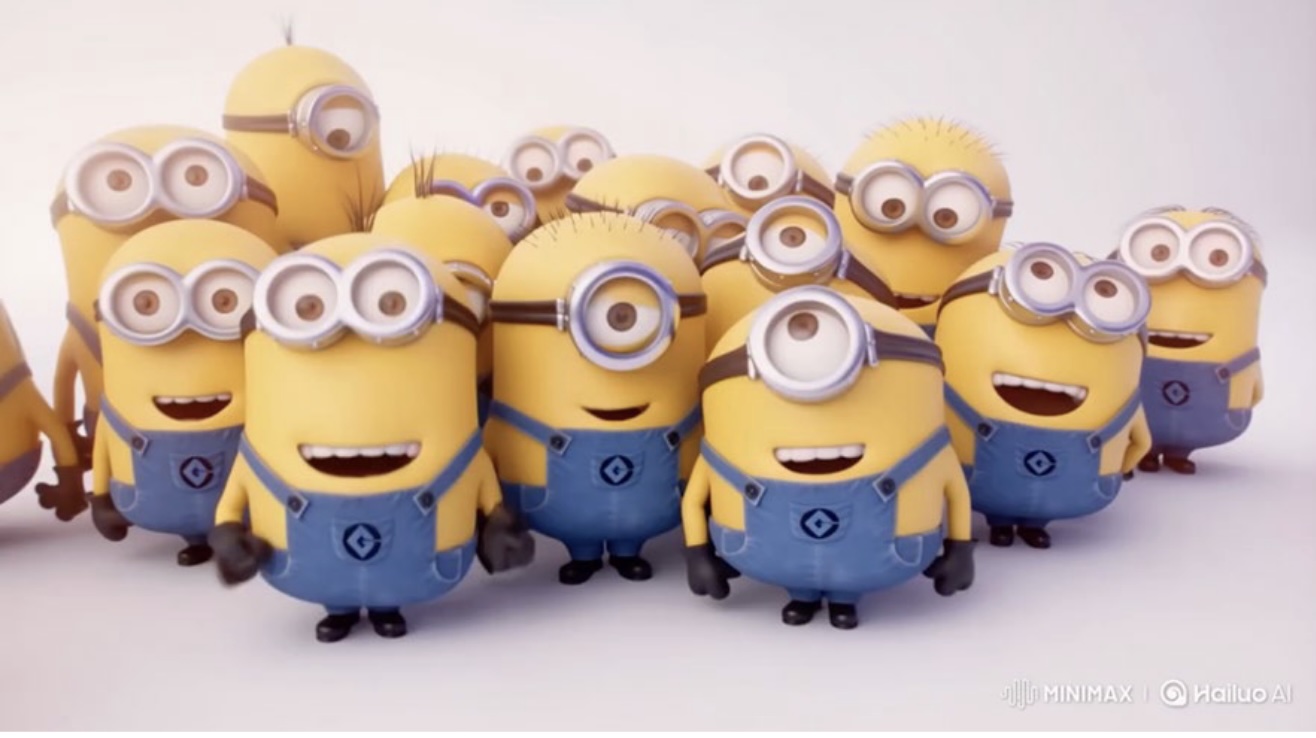
Image from complaint
The plaintiffs emphasized that they are “the largest movie studios in the world and have been fueling the American engine of creativity for more than a century.” They argued that their most successful and critically acclaimed movies are valuable precisely because of the “larger-than-life characters featured in those works,” including heroes such as Spider-Man and Superman, villains such as Darth Vader and the Joker, and Shrek, the Minions, Buzz Lightyear, Bugs Bunny, and Tom and Jerry.
The studios contended that the company’s actions pose a significant threat not just to the plaintiffs but to the entire American motion picture industry. It stated that “MiniMax’s bootlegging business model and defiance of U.S. copyright law…is a broader threat to the American motion picture industry, which has created millions of jobs and contributed more than $260 billion to the nation’s economy.”
The studios also highlighted their investment in innovation and technology, describing their “successful monetization of their copyrighted works and characters across so many different channels and markets is not only a testament to their investment in human creativity, but also to Plaintiffs’ constant innovation.” MiniMax, which is reportedly valued at $4 billion, allegedly failed to respond to the studios’ cease-and-desist requests. The studios argued that MiniMax “could easily stop its theft and exploitation of Plaintiffs’ intellectual property,” noting that other AI services have instituted copyright protection measures.” The complaint stated that the company “blatantly continues to infringe Plaintiffs’ copyrights in favor of its own bottom line.”
The complaint also alleged that MiniMax already possesses the technological capability to implement content restrictions, noting that the company “already has in place technological measures to prevent its distribution and public display and performance of certain images and video, such as violence or nudity.” It further argued that this demonstrates MiniMax’s ability to filter content but that the company has chosen not to extend these protections to copyrighted material, instead prioritizing its business interests over intellectual property rights.
The suit is seeking both direct and secondary copyright infringement claims against MiniMax and related entities. The plaintiffs have requested a jury trial and are seeking unspecified monetary damages or statutory damages of up to $150,000 per infringed work for willful infringement. The plaintiffs also requested preliminary and permanent injunctive relief to stop MiniMax from continuing its alleged infringement.
In a joint statement, the studios said:
“We support innovation that enhances human creativity while protecting the contributions of countless creators and the entire creative industry. A responsible approach to AI innovation is critical, and today’s lawsuit against MiniMax again demonstrates our shared commitment to holding accountable those who violate copyright laws, wherever they may be based.”
Charles Rivkin, Chairman and CEO of the Motion Picture Association, echoed this sentiment, stating that “Companies should know that they will be held accountable for infringing on the rights of American creators wherever they are located.”
The suit represents the latest in a series of high-profile copyright infringement cases brought against AI companies by creative industries. In June 2025, Disney Enterprises, Inc. and Universal City Studios Productions LLLP filed a complaint against Midjourney, describing its service as a “bottomless pit of plagiarism.” Warner Bros. Discovery filed its own separate complaint against Midjourney in early September 2025, alleging “systematic, ongoing, and willful” infringement.
![[Advertisement]](https://ipwatchdog.com/wp-content/uploads/2026/02/Juristat-Feb-26-2025-sidebar-700x500-1.jpg)
![[Advertisement]](https://ipwatchdog.com/wp-content/uploads/2026/02/LIVE-2026-sidebar-regular-price-new-700x500-1.jpg)



![[Advertisement]](https://ipwatchdog.com/wp-content/uploads/2021/12/WEBINAR-336-x-280-px.png)
![[Advertisement]](https://ipwatchdog.com/wp-content/uploads/2021/12/Ad-4-The-Invent-Patent-System™.png)




Join the Discussion
No comments yet.