
![[IPWatchdog Logo]](https://ipwatchdog.com/wp-content/themes/IPWatchdog%20-%202023/assets/images/temp/logo-small@2x.png)

 0
0 “The Budapest Treaty saves applicants money by allowing one biological deposit to satisfy the requirements of each contracting state to the treaty, while establishing uniform biological deposit procedures.”
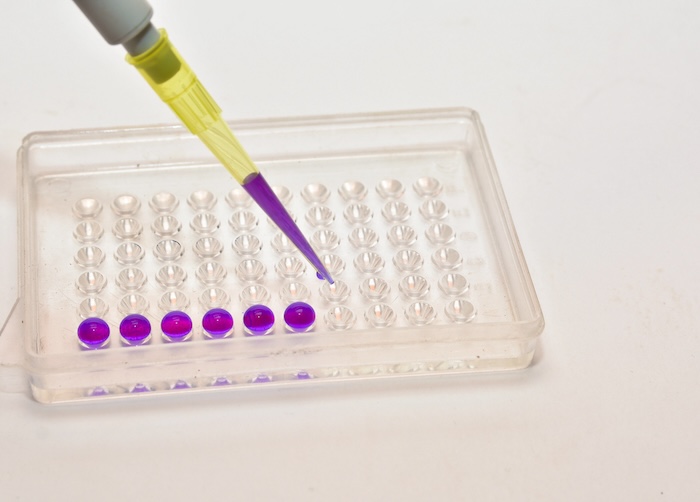 You plan to file a patent application for an invention that uses and/or claims a biological material. Do you need to deposit a sample of the biological material with a recognized depository institution? This article explores the strategic considerations for biological deposits to satisfy the regulations of patent offices in the United States and Europe.
Why Is a Biological Deposit Required?
According to both the United States Patent and Trademark Office (USPTO) and the European Patent Office (EPO), a biological material is any material that is capable of reproducing itself or being reproduced in a biological system. Such materials are often very hard to explain in words alone. However, in order to satisfy the statutory requirements for patentability, i.e., enablement of the claimed invention and sufficiency of the written description, an invention must be described in such a way that a skilled person could make and use the claimed invention (35 U.S.C. § 112; Article 83 in Europe). For many biological inventions, these requirements cannot be sufficiently met without a biological deposit.
Case law in the United States has evolved to allow applicants to supplement the written description of a patent application (“application”) with a deposit of biological material to satisfy these requirements (Ajinomoto; Enzo Biochem). Article 13 of the European Union biotechnology directive provides a legal basis for deposits to support the written description in a European application. In fact, most jurisdictions have a version of the enablement and written description requirements for patentability. As such, rather than requiring biological deposits in every jurisdiction in which patent protection is sought, the Budapest Treaty on the International Recognition of the Deposit of Microorganisms for the Purposes of Patent Procedure (“Budapest Treaty”) was adopted in 1977 to recognize biological deposits with any “international depository authority,” regardless of the jurisdiction. The Budapest Treaty saves applicants money by allowing one deposit to satisfy the requirements of each contracting state to the treaty, while establishing uniform biological deposit procedures to ensure proper submission and validation of samples.
Strategic Consideration #1: Timing of a Deposit
One of the key differences between the USPTO and international jurisdictions such as the EPO is the timing of the deposit.
USPTO: A deposit may be made at any time during the pendency of the application but not later than payment of the issue fee or a time period set by the examiner at the time of the notice of allowance of the application. If a deposit is made after the effective filing date, the applicant must submit a statement from someone able to verify the material deposited is a material specifically identified in the application as filed. A post-filing deposit may occur even if the material was not in existence at the time of filing, as the United States does not require actual reduction to practice prior to filing a patent application. (See MPEP § 2406).
EPO: A deposit must be made by the filing date of the application or not later than the priority date if the priority claim is to be valid with respect to the invention necessitating the deposit (Rule 31(1a) EPC).
Takeaway: If you are filing in both the United States and foreign jurisdictions, you must make a biological deposit prior to the filing date of the application or the priority application. If you are only filing in the United States, you may wait to deposit the biological material until at least a notice of allowance of the application is received wherein the examiner requires a deposit. However, the applicant must ensure that a deposit can be perfected on or before payment of the issue fee, and the intricacies of perfecting a patent deposit may present problems for applicants waiting until allowance.
Strategic Consideration #2: Public Availability of a Deposit
In order to fully satisfy the statutory requirements for patentability, the invention must be accessible to the public such that a person skilled in the art may make and use the invention (see MPEP § 2402; EPO Guidelines for Examination, part F, ch. 3 § 6.3).
USPTO: A deposit becomes publicly available upon issuance of a patent. Prior to issuance of the patent, there are circumstances wherein a deposit may become public under 35 U.S.C. § 122. To mitigate certain circumstances, you may contract with the depository institution to require that samples are only furnished if a request for a sample complies with specific conditions (see 37 CFR § 1.808(b)). This is recommended, as it provides stricter access to a publicly available deposit.
EPO: A deposit is available upon request to any person from the date of publication of the European application (Rule 33(1) EPC). The requester must use the material for experimental purposes only and may not make the biological material or any biological material derived therefrom available to any third party until the application is no longer pending, expired in all designated States, or unless the applicant waives rights (Rule 33(2) EPC). If you are the depositor, you may also take advantage of the “Expert Solution” provision, wherein a sample may only be released to an independent, third-party expert that you nominate (see Rule 32 EPC). A valid request for expert solution may be found on the cover page of a published application, thus it is best practice to make the request at the time of filing and no later than five (5) weeks prior to the publication date. However, the expert solution does not prevent the sample from being released to the public if the application is abandoned after publication, as samples may still be released to the public after patent grant or 20 years after the filing date if the application is refused or withdrawn.
Takeaway: A deposit of biological material for an application filed in both the United States and Europe will become available to the public upon publication of the European application. Thus, care should be taken to consider the patentability of the application as early as possible, as it may be beneficial to withdraw the European application to prevent publication and prevent the public from accessing samples should patentability be in question.
Strategic Consideration #3: Intricacies of Patent Deposits
According to the Budapest Treaty, a deposit must be maintained for a term of at least 30 years and at least five years after the most recent request for a sample received by the depository (MPEP § 2408).
- Viability – A deposit must be viable at the time of deposit and during the entire term of deposit. The depository must determine that the deposit is viable, i.e., capable of reproduction (37 CFR § 1.807(a)). If the deposit is not viable upon receipt or if the Examiner cannot accept the statement of viability, examination of the application proceeds as if no deposit has been made (37 CFR § 1.807(c)).
- Costs – As of September 2024, a patent deposit made with the American Type Culture Collection (ATCC) may cost $2,500 per deposit.
- Survivability – A deposit must remain as described in the specification of the application during the entire pendency of the application or patent term. Biological material may become contaminated or unable to function as described, and the depository may be unable to furnish samples. Once notified of an issue, you must act diligently to replace the deposit and request a certificate of correction, or the application will be treated as if no deposit were made (see 37 CFR § 1.805). Care must be taken to properly submit a replacement or supplemental deposit according to 37 CFR § 1.805 to avoid loss of rights.
Strategic Consideration #4: Is a Patent Deposit Worth It?
Prior to filing an application or priority document, you should determine:
- Are you filing in the United States only or internationally? If internationally, care should be taken to perfect a deposit prior to filing the priority application. However, in some circumstances, this is not possible, as the inventor(s) is unable to furnish samples in time, has not determined preferred embodiments, or an attempted deposit is not viable. The ability of the inventor(s) to perfect a deposit prior to filing the priority application may be a determinative factor in selecting countries to file in.
- Is a patent deposit required? The application should be analyzed to determine if a patent deposit is likely to be required to avoid unnecessarily depositing samples that may become available to the public. For example, you may be able to provide enough written description to support method claims (e.g., method of generating a plasmid or a mutation in a cell …) or broad composition claims (e.g., composition comprising the plasmid generated by the method, or the cell mutated by the method …) without submitting a deposit. However, in an application claiming a novel plasmid or cell, for example, a deposit is likely required. Applicants should engage with both United States and foreign counsels to analyze whether a deposit is required.
- What are your chances of obtaining a patent? If you are unable to obtain or maintain a patent and the application has published, the public may be able to access samples. Thus, an application with low chances of patentability may unnecessarily expose the invention to the public instead of keeping the invention secret.
- Is the invention better protected as a trade secret? Patent monopoly rights may be extremely beneficial to a patent owner. However, the threat of public availability of patent deposits may outweigh patent monopoly benefits. While a trade secret may last indefinitely, a patent deposit will become publicly available for commercial use by third parties after expiry of the patent. If an applicant decides to protect the invention as a trade secret, care must be taken to ensure that the requirements of trade secret protection are satisfied.
- Will all of the patent deposits be claimed? If only a few of the patent deposits (e.g., only a few specific cell lines) are covered within the granted claims, any unclaimed patent deposits will be publicly available for commercial use by a competitor since the deposits are not protected under a granted patent claim. Further, the EPO may consider multiple lines or strains to be separate inventions, each to be examined in separate “divisional” applications. Accordingly, it may be extremely expensive to protect additional deposits in divisional applications at the EPO.
- Will the biological material deposited and claimed be the commercial product? While the decision to deposit a biological material should be made prior to filing the initial priority application, it is possible that the final commercial product has not yet been developed or determined at such an early stage. For example, if the invention is directed to a novel plasmid producing a desired pharmaceutical composition, the exact plasmid used to produce the pharmaceutical composition may not be determined prior to filing. Moreover, if you are still in the research and development phase, it is possible the commercial plasmid has not yet been created. If the claims must be supported by a deposit, you may end up with granted claims to plasmids that are not commercially viable. Moreover, plasmids created post-filing will not be supported in claims filed internationally. In this instance, it may be beneficial to wait to file an application until the commercial product is more developed, albeit risking additional prior art availability.
Image Source: Deposit Photos
Author: sergunt
Image ID: 116054580

![[Advertisement]](https://ipwatchdog.com/wp-content/uploads/2026/02/Ankar-AI-Feb-17-2025-sidebar-700x500-1.jpg)
![[Advertisement]](https://ipwatchdog.com/wp-content/uploads/2026/02/Juristat-Feb-26-2025-sidebar-700x500-1.jpg)
![[Advertisement]](https://ipwatchdog.com/wp-content/uploads/2025/12/LIVE-2026-sidebar-regular-price-700x500-1.jpg)







![[Advertisement]](https://ipwatchdog.com/wp-content/uploads/2021/12/WEBINAR-336-x-280-px.png)
![[Advertisement]](https://ipwatchdog.com/wp-content/uploads/2021/12/Ad-4-The-Invent-Patent-System™.png)







Join the Discussion
No comments yet.